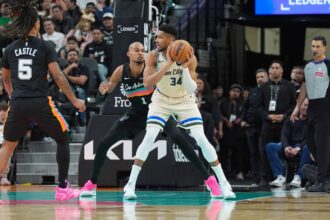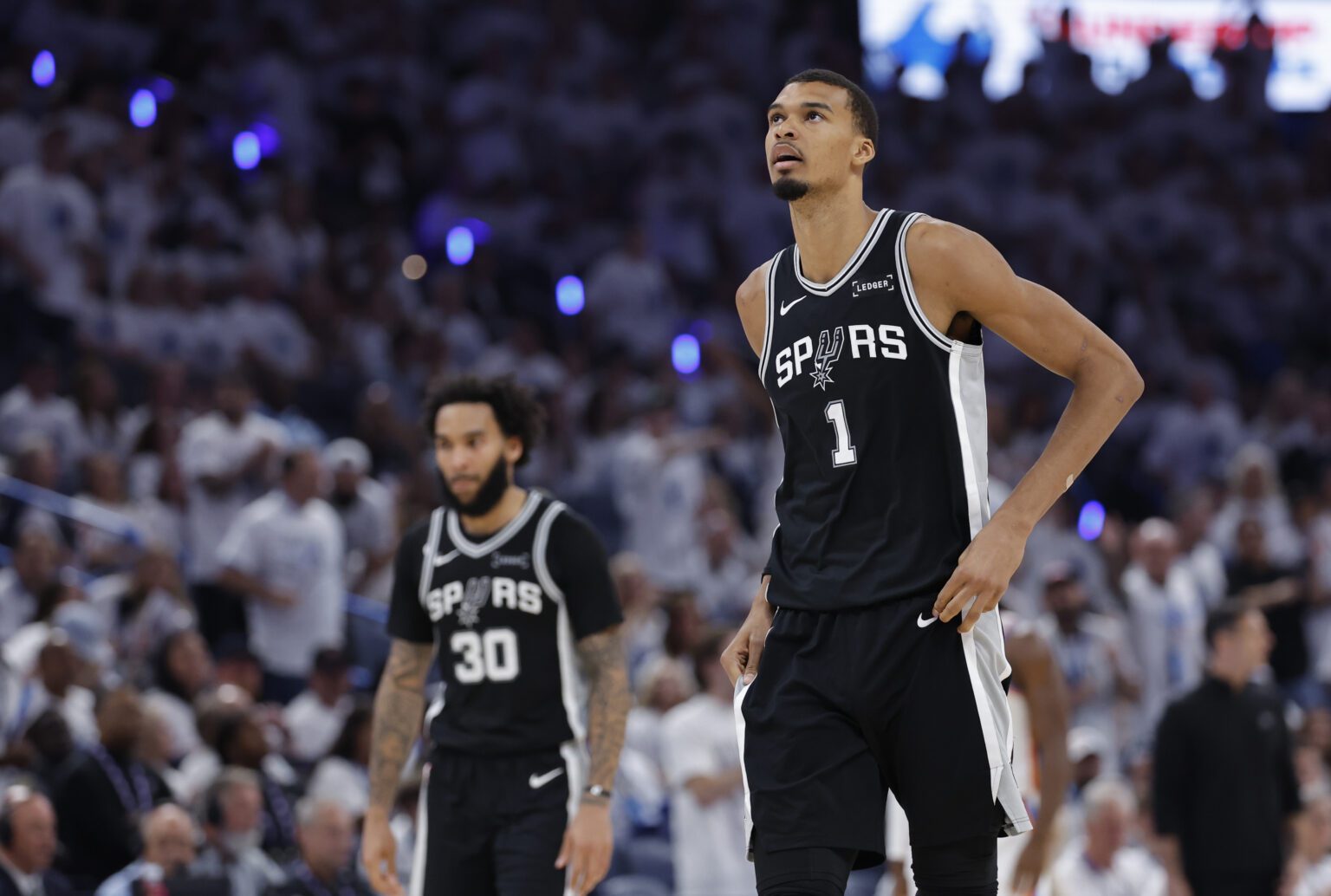
The San Antonio Spurs have completed the upset and eliminated the reigning champions OKC Thunder, with a 111-103 win in Game 7 of the 2026 Western Conference Finals. The Spurs advance to the 2026 NBA Finals, their first Finals appearance in 12 years, while the Thunder’s quest to become the first NBA Champion in eight years to go back-to-back has ended.
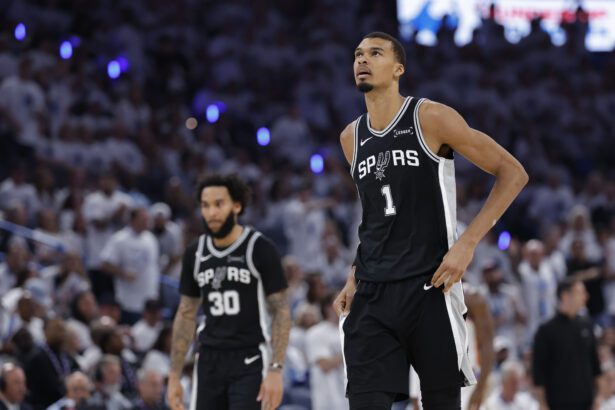
This was a famous night for Victor Wembanyama, who was named the 2026 Western Conference Finals MVP for his efforts in the series, as the 22-year-old will play in the NBA Finals during his first career Playoff run. He had 22 points and seven rebounds on the night, contributing six crucial points in the fourth to ensure this win went their way. De’Aaron Fox shrugged off his poor performances with an efficient 15 points, five assists, and three steals to step up when the team needed him the most.
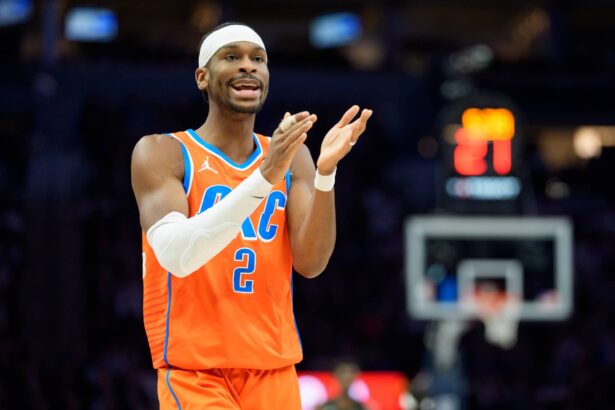
Shai Gilgeous-Alexander did everything he could with 35 points, nine assists, and four rebounds, while Cason Wallace had a huge 14-point fourth quarter to end the night as OKC’s second-highest scorer with 17 points and four assists. The biggest talking point was Chet Holmgren, who had an anonymous performance with four points on 1-2 shooting and four rebounds.
Let’s analyze the five reasons why the Spurs ensured they overcame the Thunder in Game 7 to secure a spot in the 2026 NBA Finals against the New York Knicks.
1. Shooting Tells The Tale
Three-point shooting is one of the most crucial aspects of an NBA game, as it can significantly impact the outcome. The Thunder shot 43.8% from three in Game 5 and beat the Spurs, and then they shot 25.0% from three in their Game 6 loss. Unsurprisingly, their poor shooting compared to San Antonio in Game 7 was simply too much to overcome for the Thunder.
OKC went 37-83 (44.6 FG%) from the field and 12-35 (34.3 3P%) from three compared to San Antonio’s 40-88 (45.5 FG%) and 17-40 (42.5 3P%) from outside. Just the three-point shooting caused a swing of 15 points in this game that the Thunder lost by eight points, so they are performing at a higher level than their shotmaking would indicate. However, the Spurs’ efficiency from that end just allowed them to control the game from the opening tip.
2. Late-Season Injuries Take A Toll On OKC
One of the major reasons for the Thunder’s loss in Game 7 was their roster. They have been without Jalen Williams and Ajay Mitchell for most of the series, heavily increasing the offensive burden on Gilgeous-Alexander. While the Thunder had the likes of Alex Caruso and Jared McCain step up and play significant offensive roles in the series, that production wasn’t as sustainable as what the franchise could’ve gotten if Williams and Mitchell were also in the rotation.
The Thunder were strong enough to put themselves in a clutch Game 7 situation despite these major absences, but not strong enough to seal the win. The fatigue on the core rotation, especially Gilgeous-Alexander, was clear down the stretch. Everybody’s been working hard to cover up for the absences on the roster, and they ran out of steam tonight. The franchise likely still feels confident that they would’ve sealed this series if they were fully healthy.
3. Spurs Outran OKC In Game 7
Another visible indicator of fatigue wearing the Thunder down more than it was wearing San Antonio down was the fastbreak production in Game 7. The Spurs outscored OKC 19-7 in the fast-break, creating another double-digit points swing that the Thunder couldn’t overcome. This, coupled with the shooting, is a pretty comprehensive way of losing an important game, so it’s still remarkable the Thunder were in with a shot until the final minute of the clash, and still lost by just eight points.
The Spurs’ rotation was willing to run up-and-down the court to hound the Thunder’s shooters, while Wembanyama’s presence as a rim protector deterred fast-break opportunities, which end with dunks, unless Wembanyama is out of position. He wasn’t tonight, as the Thunder failed to zip up and down the court in a way that would exhaust Wembanyama and make his defense less reliable. Unfortunately, the Spurs’ rotation was willing to keep attacking at a breakneck pace, which sealed this result.
4. Offensive Rebounding Made A Difference
The Spurs won the rebounding battle 40-38 in Game 7, but this marginal difference shouldn’t take away from how effective the franchise was on the glass. While they did give up some weak offensive rebounds over the game, they outmatched the Thunder 15-10 on the offensive glass over the game. While OKC still led in terms of second-chance points (20-17), San Antonio creating extra possessions as consistently as they did slowed the game down and frustrated the Thunder greatly.
The Spurs’ offensive rebounding rate, with 15 of them on 48 missed shots, is quite an incredible feat for Game 7 of a grueling series. Extending possessions in such a crucial game can create a major difference, and it most certainly did in Game 7 as the Spurs controlled the flow of the offense and got plenty of opportunities to restart offensive plays by virtue of their offensive rebounding.
5. OKC’s Turnovers Cost Them A Lot
The Thunder lost the turnover battle in Game 7 with a small margin, committing 13 while the Spurs committed 12. However, all turnovers aren’t created equal, as it depends on how the opponents maximize those opportunities. Game 7 had the Spurs score 19 points off OKC’s 13 turnovers, while the Thunder managed just nine points out of San Antonio’s 12 turnovers. This disparity creates the third major double-digit difference between the teams in this clash, alongside shooting and the fast-break.
There was no way the Thunder could have overcome their poor shooting and lethargic performance in the fast break if they didn’t play clean basketball with limited turnovers. However, they did exactly the opposite by coughing up the ball with careless turnovers while failing to defend the opportunities those turnovers created. The Spurs were turning it over too, but their defensive effort ensured it didn’t cost them as severely. As a result, they’re going to play the NBA Finals while the Thunder regroups for the offseason.