Carlos Boozer is doing what most fathers in his position would do. He is backing his son. But the way he described Cameron Boozer stands out because of the comparison he chose.
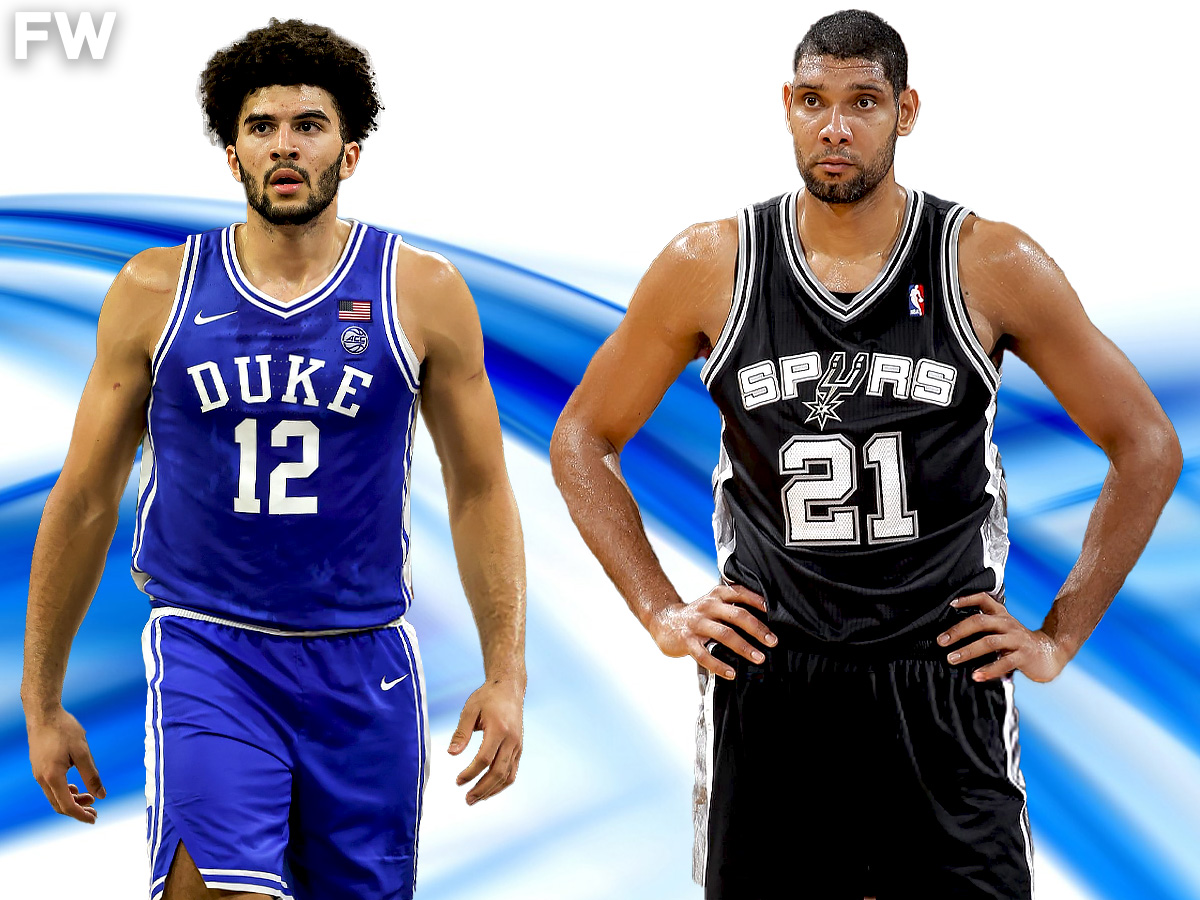
In a feature with Marc J. Spears of AndScape, he called him a modern-day version of Tim Duncan.
“You look at what Tim Duncan did. I’m not comparing Cameron to Tim Duncan, but he was another guy that wasn’t a Kevin Garnett or a Tracy McGrady or a Kobe Bryant or Shaquille O’Neal. But you know what he did? He won five championships in that era [against] those players — the Kobes and the Shaqs, because of his IQ, because of his skill set, and because his team would follow him. “
“That is who Cameron is. He’s a modern-day version of that. People are going to follow him because of what he gives to the team and what he gives to the game. That translates into winning. So, if you want to win, you pick Cameron. And I’m going to tell you this: The GMs that don’t pick Cam, they’re going to regret that 15 years from now.”
When you look at Cameron’s season at Duke Blue Devils men’s basketball, the argument starts to make sense.
He is averaging 22.5 points, 10.2 rebounds, and 4.2 assists while shooting 56.5% from the field and 40.9% from three. Those are not empty numbers. They come with efficiency and control. He is not forcing shots. He is reading defenses and taking what is there.
That is where the Duncan comparison shows up.
Cameron does not rely on highlight plays. He operates within a structure and scores from the elbows, makes quick decisions, and keeps the offense moving. There is a level of calm in his game, which is rare for an 18-year-old playing at that stage.
He has already stacked major honors: Sporting News Player of the Year, ACC Player of the Year, Consensus First-Team All-American and ACC Tournament MVP. Those are not projection-based achievements. Those are results.
The more important detail is how he produces those numbers.
He spaces the floor, which changes how defenses approach him. Shooting over 40% from three on real volume forces defenders to step out. That opens driving lanes and passing angles. Once that happens, he becomes harder to contain because he does not rush decisions. He processes quickly and makes simple reads that lead to efficient shots.
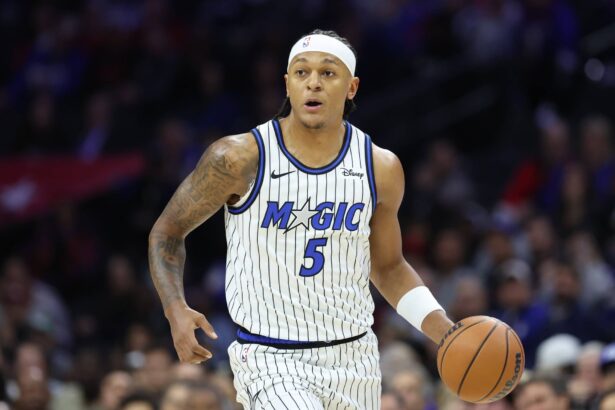
There are shades of Paolo Banchero in how he handles offensive responsibility. Score first, but always ready to pass. There is also a touch of Karl-Anthony Towns in his ability to stretch the floor as a big. Add in the rebounding and connective playmaking similar to Domantas Sabonis, and you start to see the full picture.
Still, the Duncan comparison is not about skill overlap. It is about leadership and winning.
Carlos pointed out that teammates follow Cameron. That matters more than vertical leap or highlight plays. At Duke, where expectations are constant and pressure is high, Cameron has already shown that he can handle that responsibility. He does not look rushed or shrink in big moments.
That is why he is projected as a top-three pick in the upcoming draft.
There are questions, mainly about the athletic ceiling. Some scouts wonder how his game scales against faster and stronger NBA players. But those concerns have existed before with players who rely more on feel and positioning than raw explosiveness.
Carlos believes teams that pass on Cameron will regret it years from now. That is a bold statement, but it is rooted in what he values. IQ, effort, and consistency over flash.
Right now, Cameron Boozer looks like a player built for long-term impact. Not just production, but winning.