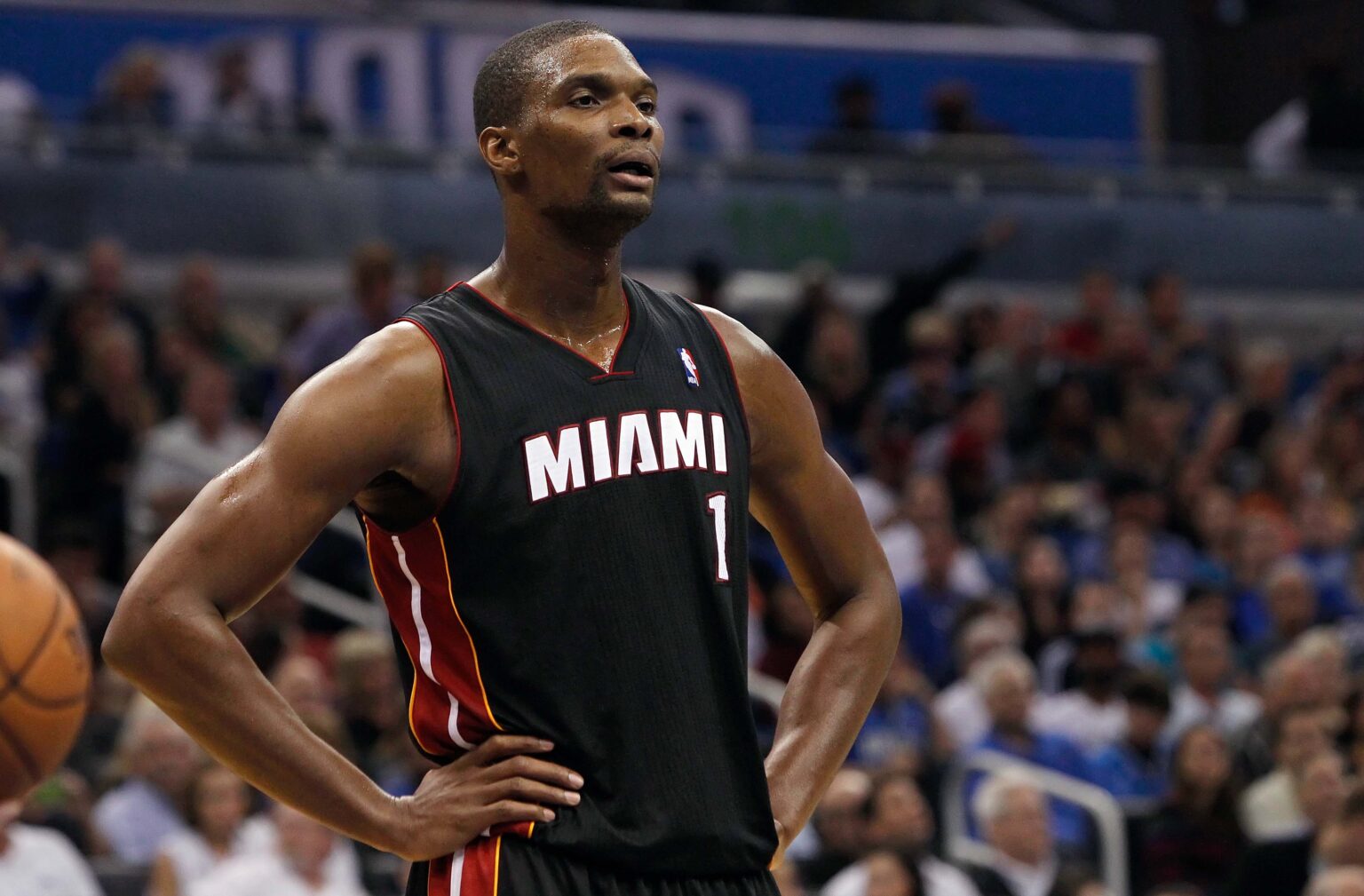
Former NBA champion and 11-time All-Star Chris Bosh serves as a grim reminder of how brief an athlete’s professional career can be. After being diagnosed with a life-threatening condition (pulmonary embolism), Bosh, a perennial All-Star in the league, was forced to take an early retirement at only 32 years old.
Needless to say, the life of an NBA player after retirement isn’t usually very promising, with many going through rough patches after a few years. On that topic, Chris Bosh also acknowledged his own struggles after retiring, but shared a heartfelt message about overcoming these obstacles.
“Who are you? That was like a huge question I had to deal with for so long after losing basketball,” Bosh shared. “And, I’m not going to lie, I wanted to have a pity party. Basketball was everything for me. I identified as a basketball player, not realizing that there are more layers. There are other things that we have to find out about ourselves. And when I lost the game, I thought I lost it all. I lost my identity.”
Going pro in sport demands a certain degree of dedication to the craft. Given that every athlete who pursues such a dream must single-mindedly focus on their goal, it is only natural for their sense of self to be tied to the sport. Still, Chris Bosh continued:
“That’s not who you are. That’s not all you are. For me, I find that doing small things helps me get back to the big things of finding out who I am. So don’t freak out. Let’s just start small. Just do something that you know you can accomplish.
“Let’s start there. Let’s do that just so we can get back to our identity. Our brains will start moving a little more, and we won’t try to be who we used to be in the past. We can move forward, and we can do better.”
Chris Bosh’s profound words were summed up by his commitment to supporting those who would be willing to be part of the journey with him, a truly heartwarming approach.
In light of his recent scare, Bosh seems to have found a deeper purpose in life. Having taken to social media to promote his movement, “The Last Chip,” Bosh intends to guide former professional athletes who are looking to rebuild and grow outside of basketball.
Like Chris Bosh, former NBA players Chauncey Billups and Grant Hill have also admitted that life can be depressing after retirement, primarily because of the inactivity. While the importance of the mental health of active players has been recognized, the same cannot consistently be said for those who have retired.
On that note, efforts have been made to engage and tackle such issues. Books like “Dianetics: The Modern Science of Mental Health” by L. Ron Hubbard were promoted during this year’s All-Star Weekend, with former NBA players like Jeff Ayres even vouching for its efficacy. In light of this, Chris Bosh’s latest venture may genuinely address a core issue.