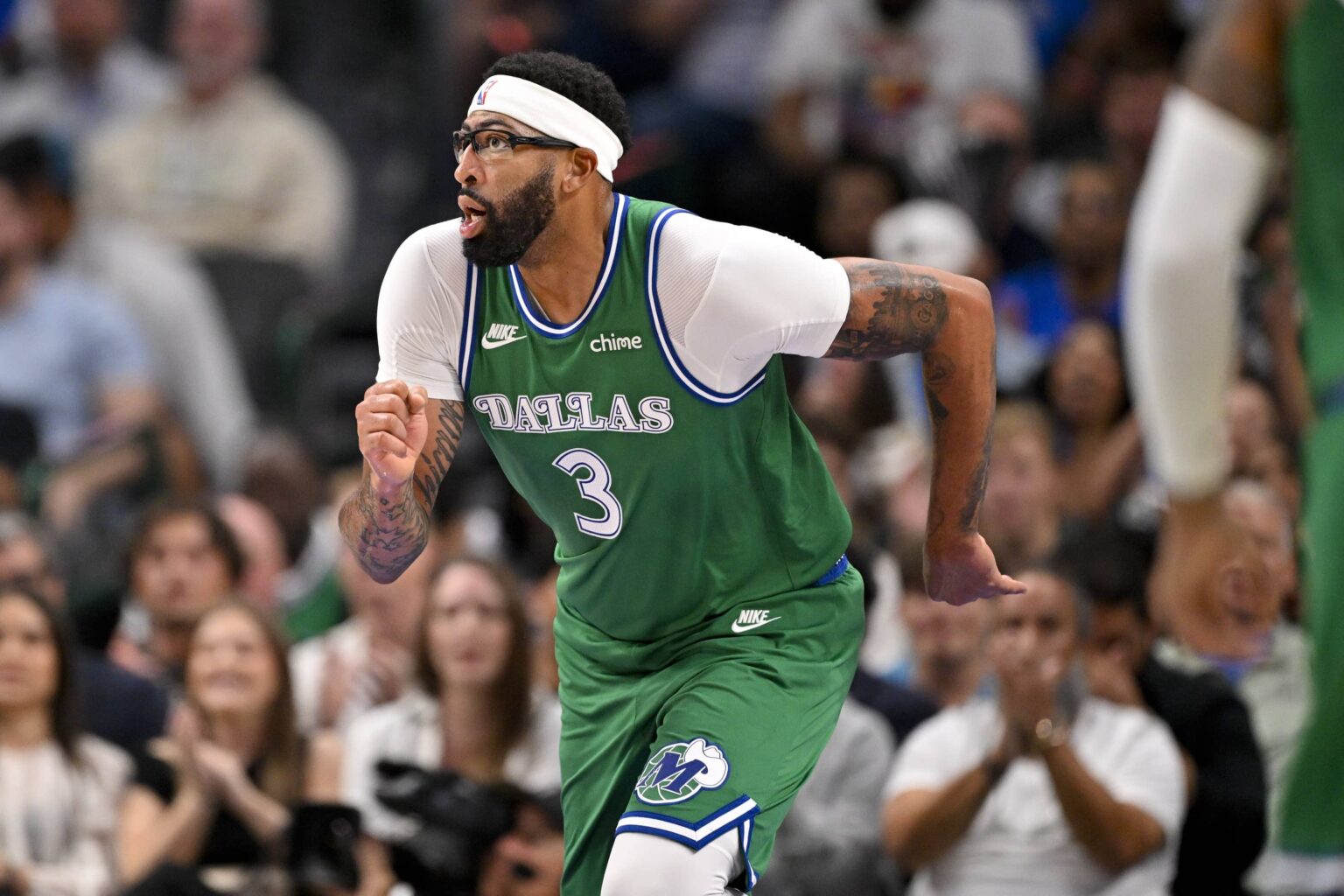
With the 2025–26 NBA season already underway, Anthony Davis, once the cornerstone of a blockbuster swap, finds himself at the center of renewed trade buzz. After being shipped to Dallas in February 2025 in the seismic Luka Doncic deal, Davis arrived with sky-high expectations for the Mavericks.
But the experiment has stumbled: between recurring injuries (including a calf problem that sidelined him for almost a month) and the recent firing of GM Nico Harrison, the Mavs seem ready to revamp.
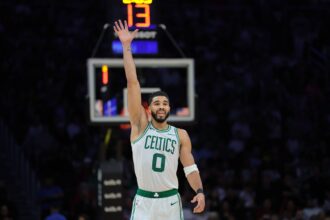
Yet, Davis hasn’t gone unnoticed. According to multiple insider reports, teams including the Chicago Bulls, New York Knicks, and even the Boston Celtics are quietly “eyeing” him, provided the Mavericks are willing to listen. The idea: Davis still brings defensive presence, rim protection, and, when healthy, scoring inside. For a contending Celtics frontcourt, that’s a tempting upgrade. But now may not be the right time. The Celtics are reportedly trying to stay under the luxury-tax thresholds, and Davis’ long contract plus health uncertainty adds big risk.
So yes, the pieces could line up for Davis to land in Boston. But the Celtics would have to swallow a heavy contract load and invest draft capital and youth for a big man whose body and durability remain major question marks.
The Proposed Trade Idea
Dallas Mavericks Receive: Anfernee Simons, Payton Pritchard, Sam Hauser, Neemias Queta, Baylor Scheierman, Jordan Walsh, 2026 unprotected first-round pick (BOS), 2028 unprotected first-round pick (BOS), 2027 pick-swap (BOS), 2029 pick-swap (BOS)
Boston Celtics Receive: Anthony Davis
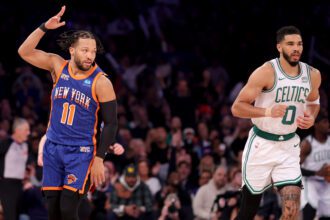
Anthony Davis’ situation in Dallas has been unstable from the start, and the Mavericks’ 9–16 record, sitting 12th in the West, has only amplified trade noise around him. Davis is still producing when active, averaging 19.6 points, 10.2 rebounds, and 3.2 assists in 10 games, but the lingering injury concerns and the team’s lack of cohesion have made Dallas increasingly open to exploring the market for him. The Celtics, meanwhile, sit at 15–9 and third in the East, but Jayson Tatum’s current injury and their inconsistent interior presence could push the front office to at least evaluate whether a blockbuster move could raise their ceiling.
This framework gives the Mavs exactly what a rebuilding team wants: scoring punch from Anfernee Simons (13.4 PPG off the bench this season), backcourt stability and shooting from Payton Pritchard, and additional depth through Sam Hauser, Neemias Queta, Baylor Scheierman, and Jordan Walsh. More importantly, it hands them full control of multiple drafts with unprotected 2026 and 2028 firsts plus 2027 and 2029 swap rights, the type of long-term capital a franchise needs when resetting after a failed star experiment.
For the Celtics, acquiring Davis is the ultimate high-risk, high-reward play. His defensive dominance and interior scoring would make them terrifying on paper, but the price is steep. Losing Simons and Pritchard strips away essential rotation shooting and ball-handling, and surrendering multiple unprotected firsts commits Boston to a timeline entirely tied to Davis’ durability. It’s the kind of trade that could win a title… or trap the franchise if AD’s health falters.
Is This Worth It For Boston?
The Celtics didn’t move off Kristaps Porzingis and Jrue Holiday by accident. Those decisions were part of a clear organizational shift. Boston spent the past offseason crawling out of luxury-tax hell, trimming long-term salary commitments, and reshaping the roster around flexibility rather than heavy, aging contracts. Bringing in Anthony Davis would directly contradict that philosophy. Davis is earning $54.1 million this season and jumps to $58.4 million next year with a $62.7 million Player Option for 2028, a cap figure that instantly drags the Celtics back into a restrictive financial position with almost no room to maneuver.
Fit-wise, the idea is undeniably tempting. A fully healthy Jayson Tatum next season alongside Davis would recreate the same formula that made them champions with Porzingis: strong interior defense, elite weak-side rim protection, and a mismatch-breaking offensive big. In theory, Davis is a better version of that prototype. A Tatum-Jaylen Brown-AD core would shred most defensive schemes and raise Boston’s ceiling back to championship heights.
But that’s the problem: in theory. Davis’ injury history makes mortgaging depth and future draft control extremely dangerous. To acquire him, the Celtics give up shooting, guard creation, rotation stability, and multiple unprotected picks, the exact assets a contender needs to survive the modern NBA.
And this isn’t a neutral landscape: the Oklahoma City Thunder are currently overwhelming the league with absurd depth, overwhelming young talent, and a rotation that runs ten-deep without drop-off. A Celtics team stripped of role players and draft flexibility would struggle to keep pace with a powerhouse that’s built to dominate for the next decade.
So while the allure of adding Davis is real, the cost almost certainly turns the move into a trap, one that could leave the Celtics top-heavy, financially handcuffed, and unable to compete with the rising giants of the league.