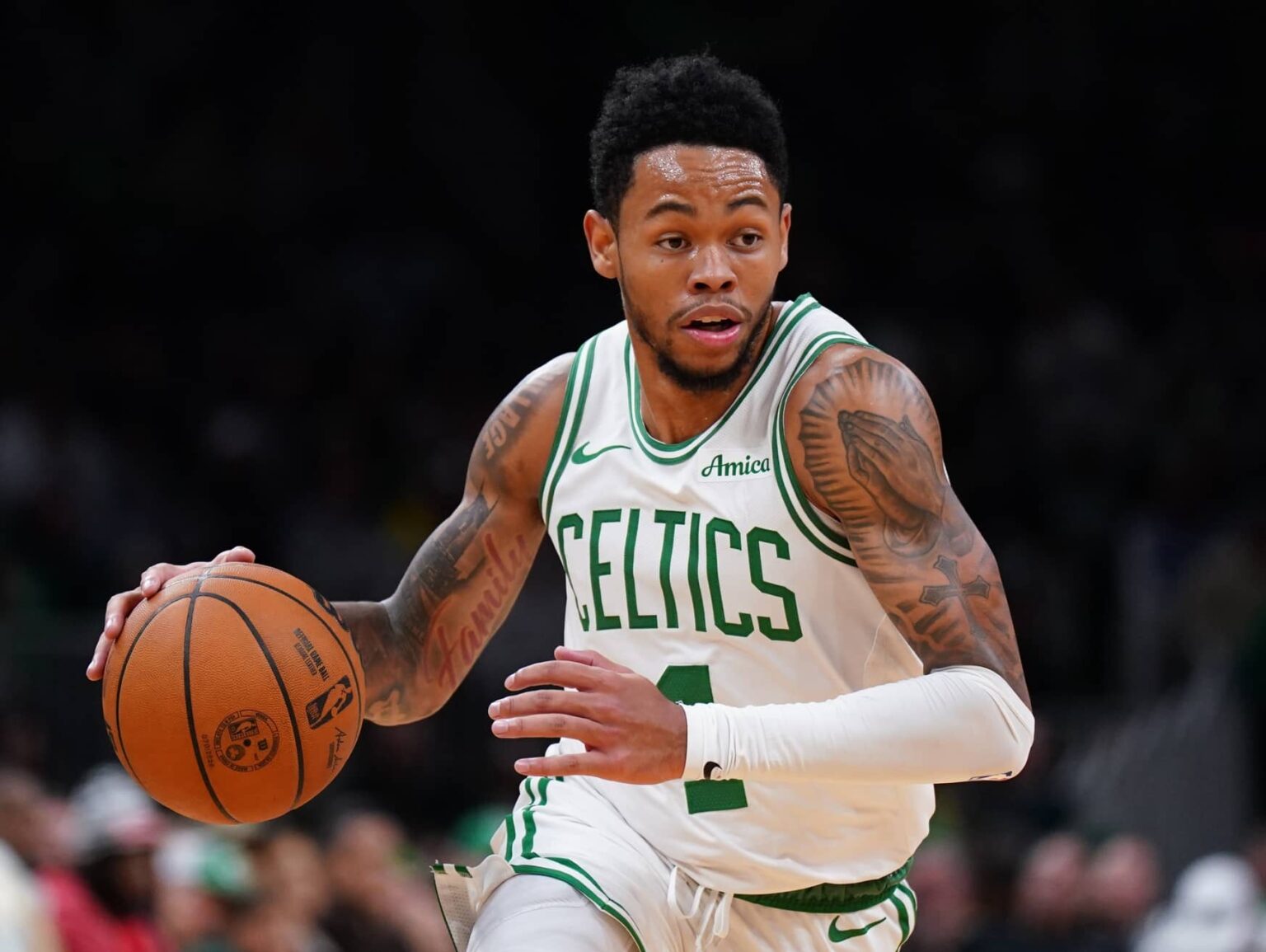
Chris Haynes reported on SiriusXM NBA Radio that Anfernee Simons “is on the trade market,” a clear signal the Celtics are at least exploring how to turn an expiring contract into a piece that better fits a contender’s roster balance. The timing tracks with where the team sits right now: 29-18, third in the East, good enough to be dangerous, but not so dominant that the front office can ignore obvious roster pressure points.
Simons’ on-court case is straightforward. In 2025-26, he’s averaging 13.9 points, 2.4 rebounds, and 2.4 assists, while shooting 43.8% from the field and 39.5% from three. That’s real, bankable spacing with enough self-creation to keep second units functional, and it’s why there will be a market even if his role in Boston has been smaller than the “starting point guard” label implies.
The contract is what makes this feel like a deadline storyline instead of background noise. Simons is on a $27.7 million expiring deal, which is prime matching salary for a meaningful upgrade and a risky contract to simply let expire in July. If the Celtics believe the best version of their team needs more size or a different type of two-way support piece, this is the cleanest mechanism they have to actually do something about it.
1. The Celtics Find A Long-Term Answer At Center

Boston Celtics Receive: Nic Claxton
Brooklyn Nets Receive: Anfernee Simons, 2027 first-round pick, 2031 first-round pick
This is the cleanest version of what the Celtics should be chasing if the Anfernee Simons market is real: a defensive center you can actually build with, not a short-term patch. Nic Claxton is exactly the profile. HoopsHype’s Michael Scotto has consistently tied Claxton to real deadline interest from multiple teams, including the Celtics and Pacers checking in as they look for a long-term answer at center, with Claxton among the names on that list.
Claxton’s production this season backs up why he’d cost real draft equity. He’s at 12.4 points, 7.5 rebounds, 4.1 assists, and 1.4 blocks per game on 57.9% from the field, and he’s doing it while handling more playmaking than most rim-running bigs.
Contract-wise, he’s not a rental. Claxton is making $25.3 million this season and is under contract through 2027-28, with his salary descending after this year, which is a huge part of the appeal for a team trying to stay flexible around a pricey core.
The trade math is simple. Simons gives the Nets a credible rotation guard on an expiring contract, plus the picks are the actual engine of the deal. For the Celtics, the pitch is even simpler: swap a scoring guard who can be redundant in playoff basketball for a switch-capable anchor who cleans up mistakes, finishes everything at the rim, and lets the perimeter defenders stay aggressive. If you’re serious about May and June, this is the kind of consolidation that changes the ceiling.
2. The Clippers Cash In As The Price Keeps Rising
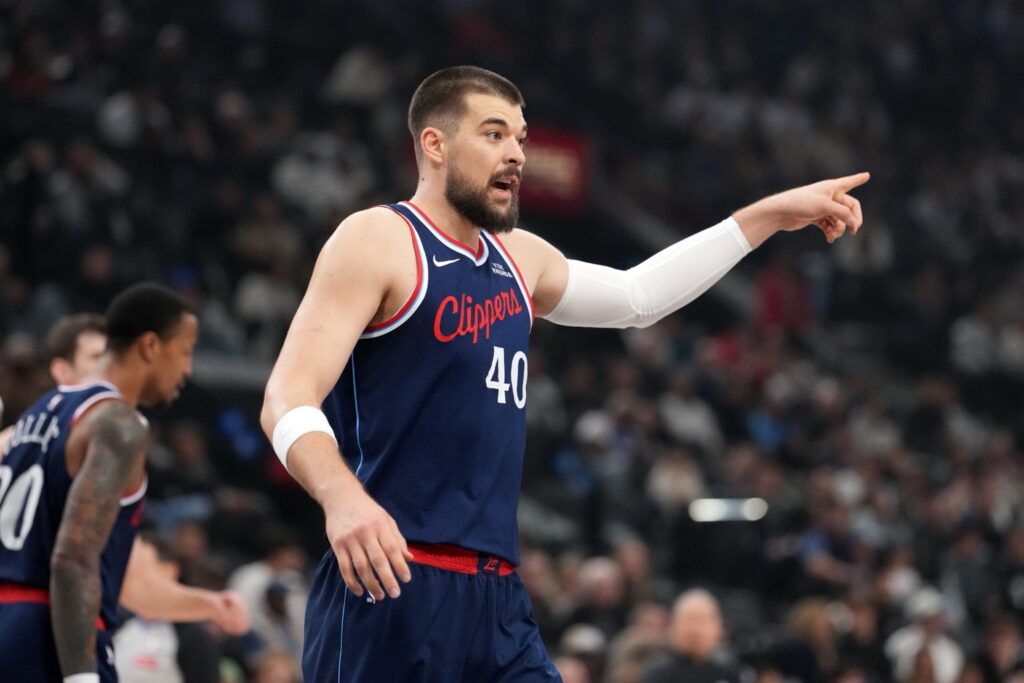
Boston Celtics Receive: Ivica Zubac, Derrick Jones Jr.
Los Angeles Clippers Receive: Anfernee Simons, 2026 first-round pick, 2032 first-round pick
This one is harder today than it was a month ago, because the Clippers’ midseason lift has changed their incentives. HoopsHype’s Michael Scotto reported the Celtics already put a real offer on the table for Zubac, Simons, plus a first-round pick and a first-round swap, and the Clippers declined. The context mattered: Scotto’s reporting framed the rejection in part around the Clippers playing better after a slow start, making them less likely to sell a core piece.
Ivica Zubac is playing like the kind of stabilizer contenders overpay for. He’s at 14.6 points, 10.9 rebounds, and 2.3 assists on 60.6% shooting, and he’s doing it with a nightly workload that actually translates to playoff basketball.
He’s also not a rental: Zubac is on a three-year, $58.6 million extension, with $18.1 million this season and raises coming. Derrick Jones Jr. is the second lever here, a low-maintenance defender who’s giving the Clippers 10.4 points per game while hitting 40.0% from three.
The fit is more than clean. The Celtics convert an expiring $27.7 million deal into a starting-caliber center plus a playoff wing, and they keep their rotation sane when matchups get big. The Clippers only do it if they’re comfortable turning Zubac’s current impact into long-horizon equity, and if they believe Simons can juice their perimeter scoring enough to justify the defensive trade-off.
3. The Bucks Pivot And Turner Becomes The First Domino
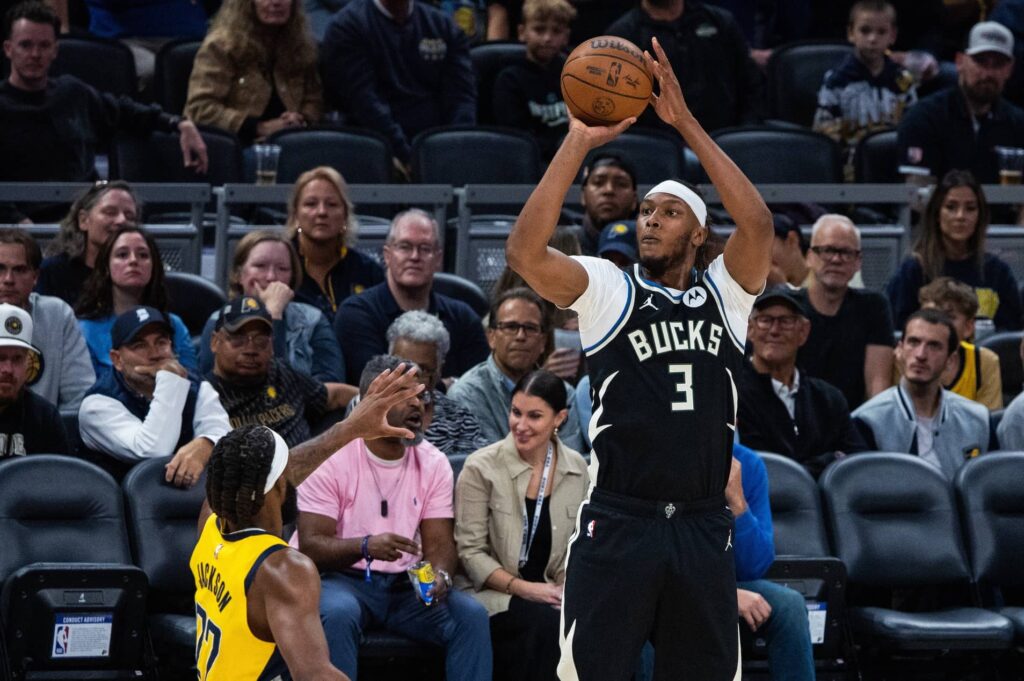
Boston Celtics Receive: Myles Turner
Milwaukee Bucks Receive: Anfernee Simons, 2026 first-round pick
The logic here starts with the reporting, not the math. ESPN’s Shams Charania has reported the Bucks are listening to trade offers for Giannis Antetokounmpo, with multiple teams lurking as suitors. If that door is even cracked open, the roster has to be treated like an asset map, not a “one more tweak” project. In that world, moving Myles Turner is exactly how the Bucks would start clearing future money while stacking optionality.
Turner is still a solid player, and that’s why he has value even as a “rebuild move.” He’s at 12.8 points, 5.3 rebounds, 1.6 assists, and 1.6 blocks while shooting 43.4% from the field and 39.1% from three.
The contract is the key: he’s on a four-year, $108.9 million deal, with $25.3 million this season and raises after. That’s not an albatross, but it’s real long-term money for a team that might be entering a post-Giannis timeline.
Here, the Celtics get a stretch-five who protects the rim and fits modern playoff spacing immediately. The Bucks get an expiring contract plus a first, then they can weaponize that flexibility later by taking on bad money attached to future picks once the full teardown begins. This is the kind of “one move creates five more moves” trade that front offices actually like.
4. The Raptors Load Up For A Bigger Swing, And Poeltl Is The Cost
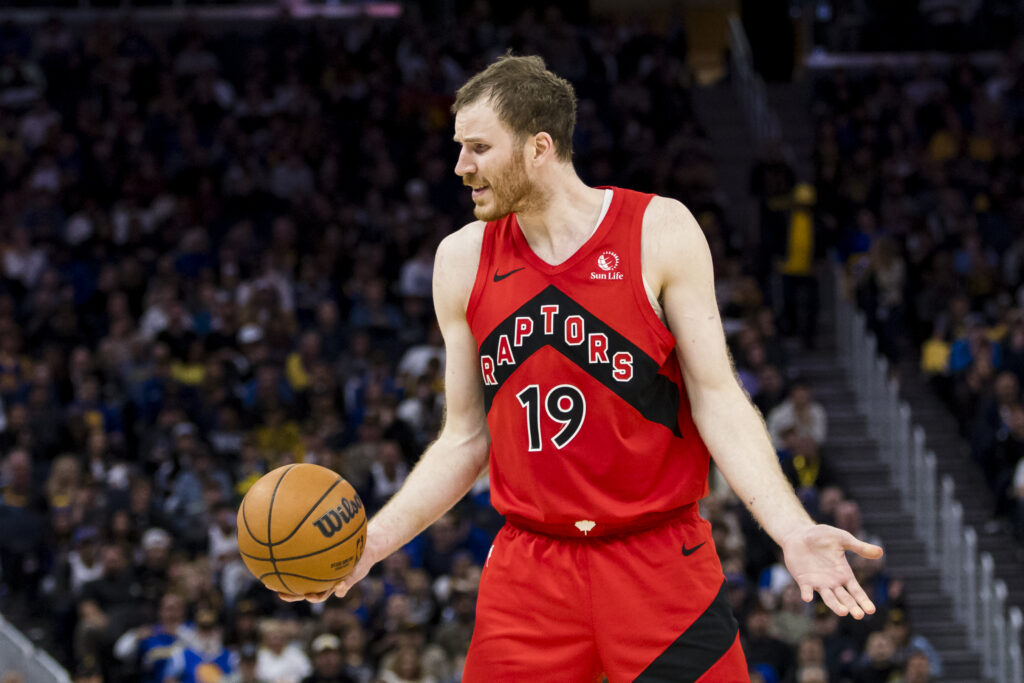
Boston Celtics Receive: Jakob Poeltl, Ochai Agbaji, Jonathan Mogbo
Toronto Raptors Receive: Anfernee Simons, 2026 first-round pick
This one is about chain reactions. Michael Scotto’s reporting has connected the Raptors to big-game upgrade conversations, including Sabonis as a theoretical target, with names like RJ Barrett and Ochai Agbaji discussed in those, talks and Jakob Poeltl and Immanuel Quickley sitting in the middle of the salary mechanics.
If the Raptors are seriously fishing for a true centerpiece, the cleanest way to keep swinging is to consolidate contracts, add a future first, and maintain an expiring contract that can be rerouted in a follow-up deal.
For the Celtics, Poeltl is the anchor. He’s at 9.7 points, 7.7 rebounds, and 2.1 assists while shooting 69.3% from the field this season, a classic interior finisher who can raise the nightly floor against size. He’s also not just a half-season rental: his deal runs multiple years, with $19.5 million this season and future money baked in. Agbaji is a cheap flyer at $6.4 million, and Mogbo is on a rookie-scale number around $2.0 million, basically filler value that still gives you a developmental body.
The Celtics turn one expiring contract into a playable center plus two smaller pieces without touching their core here. The Raptors get the first-round pick they can attach to a blockbuster pitch, and they get a $27.7 million expiring deal they can flip again to match bigger incoming salary when a star actually becomes available.
5. The Bulls Keep Pushing For “Competitive” Upgrades
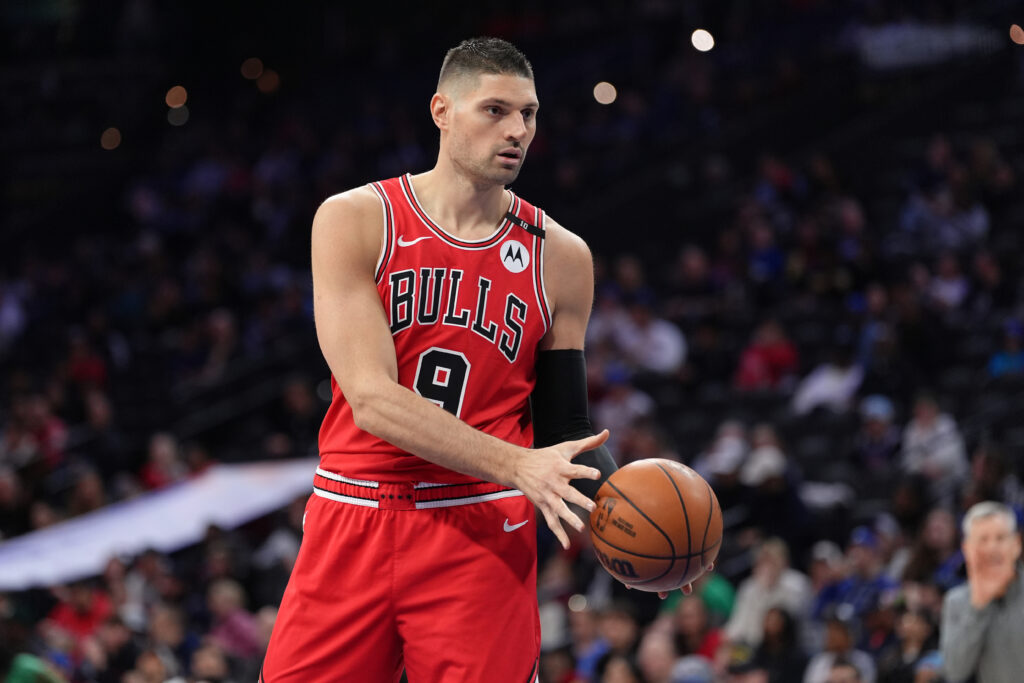
Boston Celtics Receive: Nikola Vucevic, Tre Jones
Chicago Bulls Receive: Anfernee Simons, 2026 first-round pick
The framework makes sense because it aligns with where the Bulls believe they are. Eric Pincus of Bleacher Report reported, citing “multiple league and agent sources,” that the Bulls want to get better this year around what they view as a “core duo,” Josh Giddey and Matas Buzelis.
If that’s the organizational posture, an expiring contract becomes more valuable than the player itself. Simons is on a $27.7 million expiring contract, which keeps next season’s books clean and gives the Bulls a higher-usage perimeter creator to pair with Giddey without committing long-term money at the position.
For the Celtics, this is a pragmatic depth play rather than a splash. Nikola Vucevic is still producing at a starter level: 17.0 points, 9.1 rebounds, and 3.8 assists per game this season while shooting 51.1% from the field and 38.6% from three.
He’s also on a $21.48 million expiring contract, so the Celtics aren’t locking themselves into future center money. Tre Jones covers the other problem Simons leaves behind, minutes management at backup point guard. He’s at 12.4 points, 3.0 rebounds, and 5.8 assists this season, and his $8.0 million salary helps keep the structure workable.
The Bulls trade one rotation big and a mid-tier guard for an expiring deal in Simons plus a first, while preserving flexibility to keep building around Giddey and Buzelis. The Celtics get a floor-spacing five for matchup nights and a steady ball-handler to absorb the “Simons minutes” without forcing the rotation into uncomfortable roles.