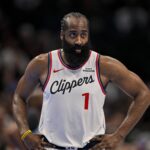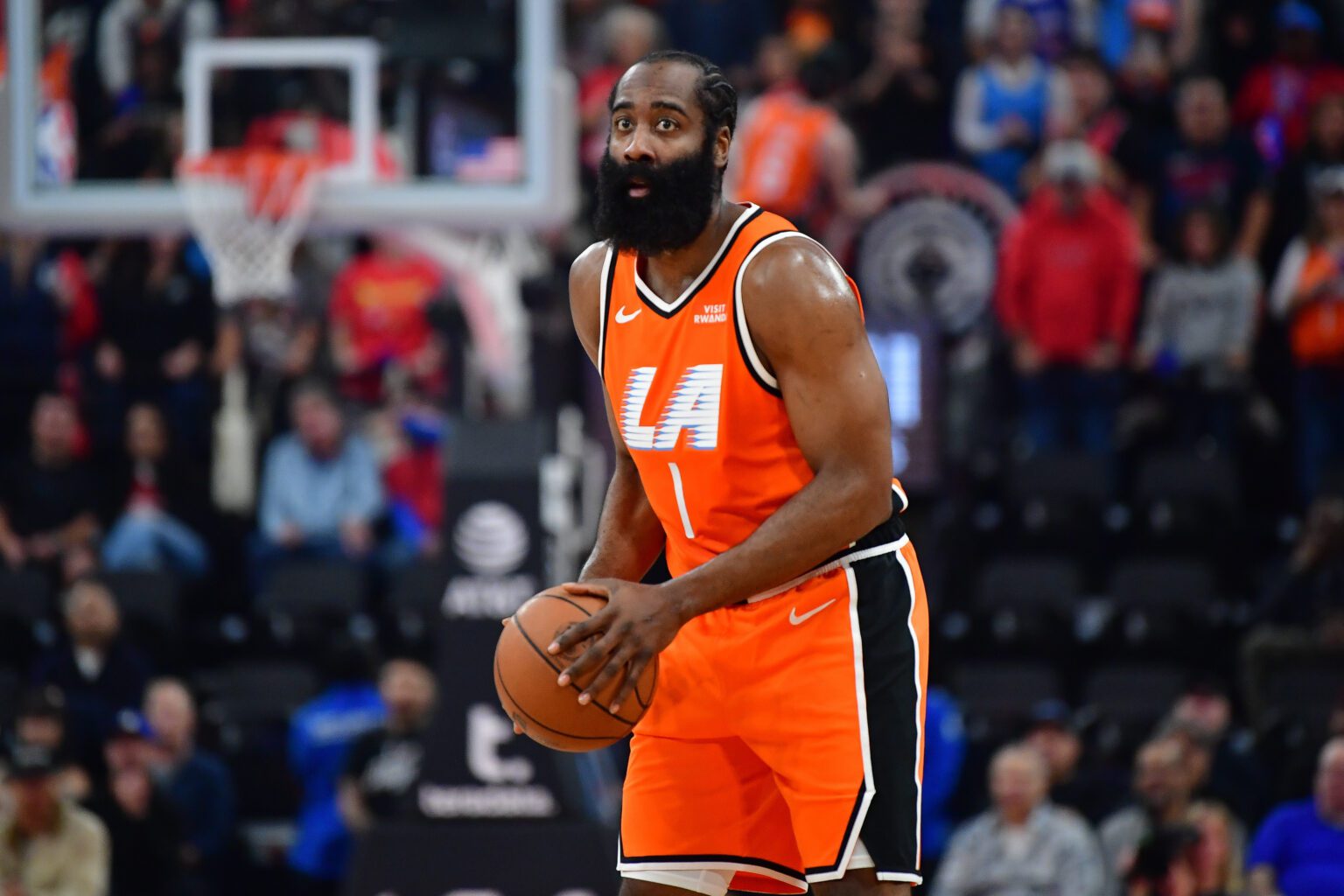
James Harden is no longer a member of the Los Angeles Clippers. After a very short stint with the team that didn’t even last two full seasons, The Beard is on the move again as he heads to the Eastern Conference to join the Cleveland Cavaliers.
After an immediate trade request, likely stemming from the Clippers’ decision to not offer a max extension, Harden wanted to change teams yet again, and the Cavaliers came calling with a swap deal involving former All-Star Darius Garland.
Full Trade Details
Cleveland Cavaliers Receive: James Harden
Los Angeles Clippers Receive: Darius Garland, second-round pick
Garland hasn’t played a ton this season, posting 18.0 PPG and 6.9 APG in only 26 appearances, but he is only 26 years old and has plenty of time to get back on the court to spearhead the new-look Clippers. Meanwhile, Harden gets ready to stay in shape and help Donovan Mitchell, Evan Mobley, and Jarrett Allen climb to the top of the East. Let’s dive right into the grades for the major parties of this trade.
Cleveland Cavaliers: A
Cleveland is clearly done waiting around. After already reshaping the roster by moving De’Andre Hunter, landing James Harden (25.4 PPG, 4.8 RPG, 8.1 APG) signals an all-in push, while Donovan Mitchell (28.8 PPG, 4.6 RPG, 5.8 APG) is in his prime. Harden may not be the isolation monster he was in Houston, but he’s still one of the smartest offensive players in the league.
Pairing his playmaking with Mitchell’s scoring gives the Cavs a backcourt that can bend defenses in completely different ways. Yes, the defense takes a hit compared to a Garland-Mitchell pairing in terms of quickness, but Cleveland is uniquely built to cover for that.
Evan Mobley and Jarrett Allen form one of the best defensive frontcourts in basketball, capable of erasing mistakes at the rim and cleaning the glass. Offensively, Harden’s pick-and-roll chemistry with elite finishers could unlock an even easier scoring diet for the bigs while creating more space for Mitchell to operate off the ball.
There’s also a playoff element here. Late in games, when possessions slow down, and defenses switch everything, you need players who can create something from nothing. Harden still commands double teams and can manipulate defenders, and that should catapult them in a wide-open Eastern Conference.
Los Angeles Clippers: B
The Clippers didn’t exactly operate from a position of strength here. Once Harden made it clear he wasn’t staying without a max extension, their leverage shrank. In that context, getting back a former All-Star point guard who’s still in his 20s isn’t a bad return.
Darius Garland gives them a long-term building block at a premium position instead of losing Harden for a lesser return or future uncertainty. Still, there’s risk all over this. Garland’s health has been a recurring concern, and availability matters when you’re trying to compete in the West.
If he can’t stay on the floor, the Clippers could find themselves stuck between timelines – not bad enough to bottom out, not good enough to contend. The second-round pick is a small sweetener, but it doesn’t dramatically shift the asset picture.
From a basketball standpoint, Garland at least injects pace, shooting, and playmaking into a team that can get bogged down offensively. But in pure talent terms, they likely moved the better current player, which keeps this from being a clear win.
James Harden: A
Harden once again gets exactly what he wants: a fresh situation with real championship equity. Cleveland offers structure, defense behind him, and another elite guard to share the offensive burden. He won’t have to carry a roster the way he did in Houston, and that should help keep him fresher deep into the season and, potentially, the playoffs.
The Eastern Conference path is also far less punishing than the West gauntlet. Instead of navigating multiple 50-win-caliber teams just to reach the playoffs, Harden now sits on a roster that can realistically aim for a top seed and home-court advantage. His playmaking should shine in a system loaded with vertical spacing and shooters around the arc.
Legacy-wise, this is huge. Harden’s resume is stacked with three scoring titles and MVP-level seasons, but postseason validation has always been the missing piece. If he helps push Cleveland to the Finals, it completely reshapes how this late-career chapter is remembered.
Darius Garland: B+
This is a fresh-start opportunity in every sense. Garland goes from sharing the backcourt spotlight to having a real chance to run an offense as the main guy. When healthy, he’s one of the more creative pick-and-roll guards in the league.
The biggest factor is health. If this move gives Garland the runway to fully recover and regain rhythm without constant lineup shuffling, the Clippers could end up with a long-term foundational piece at point guard. He’s still young enough to grow with a retool rather than a full teardown, and that is perfect for him.
There’s also a lifestyle and market element that can’t be ignored. Los Angeles offers a bigger stage and, for many players, a more appealing environment off the floor. If Garland rediscovers his All-Star form, this trade could catapult his career to a different height.
Donovan Mitchell: A
Mitchell finally gets an elite-level playmaker next to him. For years, he’s carried heavy on-ball responsibility, forced to create tough shots late in games and initiate offense under constant defensive pressure. Harden’s presence means Mitchell can work more off movement, attack scrambling defenses, and conserve energy for scoring.
There will be an adjustment period. Both players are used to having the ball, and finding the right balance between Harden orchestrating and Mitchell attacking will be key. But talent usually figures it out, especially when both players are motivated by the same goal.
Mitchell has made it clear he wants to compete for titles, and this move proves the front office is aligned with that urgency. Defenses now face a brutal choice: load up on Mitchell’s downhill scoring or let Harden dissect coverage in the pick-and-roll. Either way, someone is operating with an advantage.
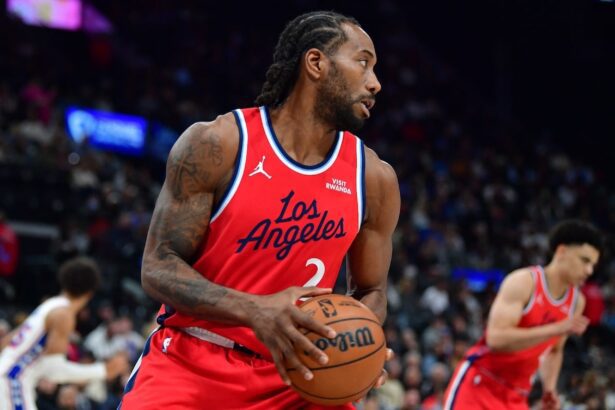
Kawhi Leonard: C
For Kawhi Leonard, this trade is a mixed bag at best. On one hand, the Clippers have still played strong basketball recently and remain in the mix for the Play-In picture. On the other hand, losing Harden removes a high-level creator who could shoulder offensive responsibility when Kawhi sits or faces heavy defensive attention.
Garland helps, but he’s not the same kind of physical, foul-drawing presence Harden is in half-court playoff settings. Kawhi may now have to take on even more scoring and playmaking duties, which isn’t ideal given his own load management history. The margin for error in the West is razor-thin, and this move makes their path steeper in the short term.
Long term, if Garland regains full health and form, this could age better. But for now, it feels like Kawhi is being asked to drag a thinner roster through one of the league’s toughest conferences.
Evan Mobley/Jarrett Allen: A+
This might be the biggest on-court boost of anyone in the deal. Few players in NBA history have elevated big men statistically the way Harden has. His ability to manipulate defenders in the pick-and-roll, throw lobs from impossible angles, and draw help at the rim should lead to a steady stream of easy dunks and layups for both Mobley (17.9 PPG, 8.8 RPG) and Allen (14.0 PPG, 8.0 RPG).
Beyond scoring, Harden’s presence also pulls rim protectors away from the basket because of his floater and step-back threat. That opens offensive rebounding lanes and short-roll opportunities where Mobley, in particular, can make plays in space. Their efficiency could spike simply from the quality of shots they start getting.
Defensively, they’ll also have more support indirectly. If Cleveland’s offense becomes more efficient and controlled, it limits transition chances the other way. That allows Mobley and Allen to stay set in the half-court, where they’re most dominant. In short, Harden makes their lives easier on both ends, and that’s a terrifying thought for the rest of the East.