After the point guards and shooting guards, small forward is the position where the 2026 free agency board is the most constrained. There are fewer starting-caliber wings than teams trying to acquire them, and organizations rarely allow two-way small forwards to reach the market without attempting an extension or a match. As a result, the “top 10” is lacking depth.
This scarcity will concentrate demand. A small group of contenders will compete for the same limited set of wings, and the market is likely to resolve early. Once the best options are retained or signed, the rest of the class profiles more as complementary pieces: shooting specialists, defensive role players, and short-term rotation solutions. For teams that need a true starting small forward, free agency is unlikely to provide enough volume to meet demand.
This list is built around realistic availability and playoff utility, not just positional labels.
10. Ziaire Williams
2026-27 Contract Status: $6.2 million (Team Option)
Ziaire Williams is a wing prospect on the Nets whose value is tied to defense, length, and whether the jumper holds. In 2025-26, he is producing rotation-level offense: 9.5 points, 2.6 rebounds, 0.8 assists in 22.9 minutes, with 40.7% from the field, 31.3% from three, 85.9% at the line.
The contract structure is the reason he shows up on a 2026 list. Williams has a 2026-27 team option around $6.2 million. That is a low number for a 6-foot-9 wing, so the decision is not cost. It is whether the Nets view him as a stable rotation piece or a roster spot they want to reallocate.
His profile is clear. He is not a creator and does not need to be. His pathway to closing lineups is defensive utility plus spacing. The three-point percentage is the swing stat. At 31.3%, he is easier to help off and more matchup-dependent. If that climbs into the mid-30s, he becomes a standard two-way wing rotation player.
What I think happens: the Nets pick up the option, because the contract is favorable, and wings at this price point are scarce. If he becomes available anyway, the most logical fits are contenders that prioritize perimeter defense and can accept a low-usage offensive role: Nuggets, Heat, Lakers, Magic.
9. Nicolas Batum
2026-27 Contract Status: $5.9 million (Team Option)
Nicolas Batum remains a low-usage, playoff-usable small forward because the role is stable: spacing, secondary passing, and defensive positioning. With the Clippers in 2025-26, he is averaging 4.3 points, 2.6 rebounds, and 0.9 assists per game, shooting 39.3% from the field. His scoring is not the point. The value is that he can play within a system, move the ball quickly, and defend in a scheme without needing possessions.
The contract structure makes him relevant for a 2026 list even at age 37. Batum re-signed on a two-year, $11.5 million deal in the 2025 offseason. The second year is a team option for 2026-27, listed at $5.9 million with an option decision date of June 29, 2026.
From a team-building standpoint, that number is small for a rotation wing who can credibly defend bigger lineups and space the floor. The real evaluation is age and availability. Batum is already managed with rest, and his minutes are controlled, which is typical for late-career wings on contenders. Teams are not projecting growth. They are projecting whether he can handle 15 to 20 playoff minutes without being attacked.
What I think happens: the Clippers pick up the team option if Batum wants to keep playing, because the number is favorable and the role is easy to fit next to high-usage stars. If the Clippers decline it, the most likely outcomes are either retirement or a minimum deal with a contender that needs wing defense and playoff spacing. The clean fits are teams that consistently value veterans in this role: Nuggets, Celtics, and Warriors.
8. Gui Santos
2026-27 Contract Status: $2.7 Million (Qualifying Offer)
Gui Santos has become a real rotation wing for the Warriors this season because he fits a simple need: size on the perimeter, quick decisions, and functional shooting without high usage. In 2025-26, Santos is averaging 6.4 points, 3.2 rebounds, and 1.7 assists in 15.8 minutes, while shooting 52.1% from the field and 38.8% from three (2.5 attempts per game). That efficiency is the core of his value. He is not creating offense, but he is finishing possessions, spacing the floor, and keeping the ball moving.
Contractually, this is not a true open-market free agent. Santos is expected to reach the 2026 offseason as a restricted free agent, with cap trackers listing a 2026-27 qualifying offer of $2.7 million. The Warriors can tender the QO and retain matching rights on any offer sheet. The most likely outcome is a return unless another team is willing to price him above “young rotation wing” levels to create a match decision.
The evaluation is straightforward. Santos’ offense works because it is low-maintenance and efficient. The swing is whether his three-point shot stays near this level over a larger sample and against playoff coverage. At 38.8%, he is a positive spacer. If that number dips into the low 30s, he becomes more matchup-dependent and easier to guard.
What I think happens: the Warriors tender the qualifying offer and keep him, then look for a multi-year agreement in the $5.0–$7.0 million annual range if he finishes the season in a stable rotation role. If another team tries to pull him away, the most logical bidders are wing-needy teams with minutes available and a preference for young, low-usage shooters: Magic, Spurs, and Nets.
7. Ochai Agbaji
2026-27 Contract Status: $6.0 Million (Qualifying Offer)
Ochai Agbaji’s 2026 value is being dragged down by a steep year-over-year drop in both role and production. Last season with the Raptors, he had the best year of his career: 10.4 points, 3.8 rebounds, 1.5 assists in 27.2 minutes, while shooting 49.8% from the field and 39.9% from three (1.6 made threes per game). That was starter-level output for a low-usage wing, and the efficiency was strong enough to justify real minutes.
This season has not carried over. In 2025-26, he is at 4.5 points, 2.3 rebounds, 0.8 assists, with 42.3% from the field in a much smaller role. He’s on the Nets now, after being acquired in a three-team deadline trade. Teams may be evaluating him again as a defense-first, low-usage wing, not as a cheap starter candidate.
Agbaji will likely receive the one-year, $6.0 million qualifying offer, which sets him up to reach the 2027 offseason as an unrestricted free agent if he doesn’t reach a long-term deal. That path usually signals a bet on earning a multi-year deal the next year. The problem is the tape, and the numbers are weaker than they were in 2024-25.
What I think happens: he lands a short “prove-it” multi-year contract, not a starter-level payday. The realistic range is 2 years, $10.0–$14.0 million (about $5.0–$7.0 million per year), likely with a team option or partial guarantee on the second season.
The buyers are teams that need a wing who can defend and run the floor, and can live with limited creation: Nuggets, Heat, Pistons, Cavaliers. The upside outcome depends on his three-point shot returning closer to last season’s level before the market opens.
6. Khris Middleton
2026-27 Contract Status: Unrestricted Free Agent
Khris Middleton is no longer being evaluated as a primary wing scorer. He is being evaluated as a playoff wing who can still shoot, pass, and function in high-leverage half-court possessions without needing volume. In 2025-26, Middleton is averaging 10.8 points, 4.1 rebounds, and 3.2 assists in 24.2 minutes, with 44.1% from the field, 33.6% from three, and 85.1% at the line. Those numbers describe a role player, not a No. 2 option.
The contract is clean. Middleton is on an expiring $33.0 million deal and is set up to hit unrestricted free agency in 2026. Teams can treat him as a short-term roster upgrade without future cap commitments, and it also explains why he has been moved around the league recently. His current season has included a late stretch with the Mavericks from the Anthony Davis trade, as he put up 25 points last time against the Pacers.
The on-court value is specific. Middleton still reads the game well, still makes the extra pass, and still punishes soft coverage when defenses load up on stars. The limitation is athletic decline and availability. Teams are not paying for nightly creation anymore. They are paying for lineup fit: a wing who can play 20 to 28 minutes, keep spacing functional, and avoid being a defensive target if the scheme is sound.
What I think happens: Middleton signs a two-year deal in the $18.0–$26.0 million range (roughly $9.0–$13.0 million per year), likely with only one guaranteed year or a team option on the second. The most realistic landing spots are contenders that need a veteran wing connector and can protect him defensively: Lakers, Pistons, Magic, Warriors, plus a Mavericks return if the minutes and role stay stable and the number is reasonable.
5. Kelly Oubre Jr.
2026-27 Contract Status: Unrestricted Free Agent
Kelly Oubre Jr. is a wing scorer whose value comes from shot volume, physical tools, and defensive activity, not playmaking. His 2025-26 production is stable and clearly above replacement level: 14.4 points, 4.7 rebounds, and 1.7 assists per game, shooting 46.4% from the field. He is also at 36.5% from three on 5.1 attempts, which is the most important swing number for his free agency.
Contract-wise, he is positioned to be available. Oubre signed a two-year, $16.4 million deal with the 76ers that included a 2025-26 player option, then exercised that option for 2025-26 at $8.4 million. That sets him up to reach the 2026 offseason as an unrestricted free agent.
The player type is straightforward. Oubre is a scoring wing who can generate points without needing a high-structure offense. He runs the floor, attacks closeouts, and will take the difficult shot when the possession breaks down.
The downside is also consistent: he is not a primary creator, and his team value is sensitive to shot selection and defensive discipline. When the three-point shot is falling and he stays within the role, he fits on a contender. When the shot is off, his offensive impact can flatten, and the margin for defensive mistakes gets smaller.
What I think happens: he signs a short deal in the mid-tier wing market, likely 2 years, $18.0–$24.0 million, with a team option or partial guarantee on the second season. The most realistic outcome is a return to the 76ers, but given the trade rumors this past offseason, landing on a contender like the Warriors, Raptors, or Pacers is a potential scenario.
4. Ousmane Dieng
2026-27 Contract Status: $9.1 Million (Qualifying Offer)
Ousmane Dieng is a developmental small forward who became relevant in this 2026 class because his contract is hitting an inflection point, and his role has expanded. He is 22, 6-foot-9, and profiles as a modern wing: length, secondary ball skills, and enough shooting touch to add spacing if it stabilizes.
Dieng is on the final season of his rookie-scale deal and is set up for restricted free agency in 2026, which means the Bucks can keep matching rights if they tender a qualifying offer. That puts the decision on the Bucks more than the market. If they view him as a rotation wing with upside, the default outcome is retention, because RFA rarely produces clean exits unless a team overpays with an aggressive offer sheet.
The 2025-26 full-season line is modest because his early-season usage was small. He’s putting up 4.8 points, 2.1 rebounds, 1.1 assists, and shooting 44.7% from the field. The larger point is how he has looked since the trade deadline. The Bucks acquired him in a multi-team trade in early February, and his minutes immediately increased because the roster needed another young wing who could defend and keep the ball moving.
What I think happens: the Bucks retain him and move quickly to a multi-year deal rather than playing a one-year qualifying offer game. 3 years, $24.0 million (about $8.0 million per year) could be an offer on the table. The recent Bucks sample supports that direction. In his first six games, Dieng averaged 9.8 points, 4.7 rebounds, and 1.3 assists per game, including two high-usage performances (17 points and 19 points) that showed he can scale up when the lineup needs it.
3. Simone Fontecchio
2026-27 Contract Status: Unrestricted Free Agent
Simone Fontecchio’s value sits in the “useful rotation shooter” tier, not the starting wing tier. In 2025-26 with the Heat, he is posting 8.5 points, 3.2 rebounds, and 1.5 assists in 17.0 minutes, shooting 39.2% from the field and 35.8% from three on 4.9 attempts per game. His true shooting is 55.4%, which is adequate for a low-usage spacer but not strong enough to erase defensive limitations.
The contract path is clear. Fontecchio signed a two-year, $16.0 million deal that pays him $8.3 million in 2025-26, and he will be an unrestricted free agent in the 2026 offseason. He arrived at the Heat in the Duncan Robinson sign-and-trade during the 2025 offseason.
This is a market shaped by his year-over-year volatility. In 2024-25 with the Pistons, he averaged 5.9 points in 16.5 minutes, which depressed his profile going into this season. With the Heat, he has been more productive, but the efficiency is still uneven, and the role remains as a specialist: spacing, quick ball movement, and secondary rebounding. When the jumper is falling, he can play 18 to 22 minutes and keep the floor open. When it is not, he is easier to scheme against because he is not creating advantages off the dribble.
His free agency value is mostly about fit. Teams that already have creators want a wing who can take open threes, avoid mistakes, and hold up enough defensively to stay on the court. Fontecchio can do the first two consistently. The third is matchup-dependent, which keeps his ceiling in the mid-tier salary lane rather than true starter money.
What I think happens: the Heat try to retain him on a short deal, and he stays in that ecosystem unless a team offers a cleaner minutes pathway. The likely contract range is 2 years, $14.0–$18.0 million (about $7.0–$9.0 million per year), with a team option or partial guarantee on Year 2. If he leaves, the most logical fits are contenders that need shooting at the wing without paying starter prices: Lakers, Raptors, Warriors, Bucks.
2. Keon Ellis
2026-27 Contract Status: Unrestricted Free Agent
Keon Ellis is listed as a guard, but he is on this small forward list because of how he has been used since joining the Cavaliers: perimeter stopper minutes, cross-matches onto bigger wings, and low-usage spacing next to high-touch creators. He is not being evaluated as a scorer. He is being evaluated as a defensive wing who can stay on the floor without breaking spacing.
For the full 2025-26 season, Ellis is averaging 5.5 points, 1.5 rebounds, and 0.8 assists in 18.1 minutes, with 41.2% from the field and 35.7% from three. The important split is February, which captures most of his post-trade workload. In February, he jumped to 24.3 minutes and 9.3 points per game while maintaining workable efficiency (45.7% from the field). That is the profile teams pay for: minutes scale up without the role needing the ball.
Ellis arrived via the three-team deadline deal that sent De’Andre Hunter out and brought Dennis Schroder and Ellis in. The contract side is simple. He is on a low-cost $2.3 million deal this season, listed as a 2026 unrestricted free agent, which makes him a realistic target rather than an RFA match situation.
His free agency evaluation is narrow and clear. Offensively, he is a low-turnover, catch-and-shoot guard who can attack a closeout once or twice a game. Defensively, he competes at the point of attack and has been trusted in lineups where the assignment is to take the hardest perimeter matchup. The swing is size. At 6-foot-4, he needs scheme help against true power wings. That is why his best fits are teams with a strong back line and clear defensive rules.
What I think happens: the Cavaliers try to keep him on a multi-year role-player deal because the salary slot is efficient and the team needs perimeter defense around its stars. The number I’d expect is 3 years, $18.0–$24.0 million, with Year 3 as a team option. If he reaches the market, the most logical bidders are teams that prioritize guard defense and spacing in playoff rotations: Lakers, Heat, Hornets, and Magic.
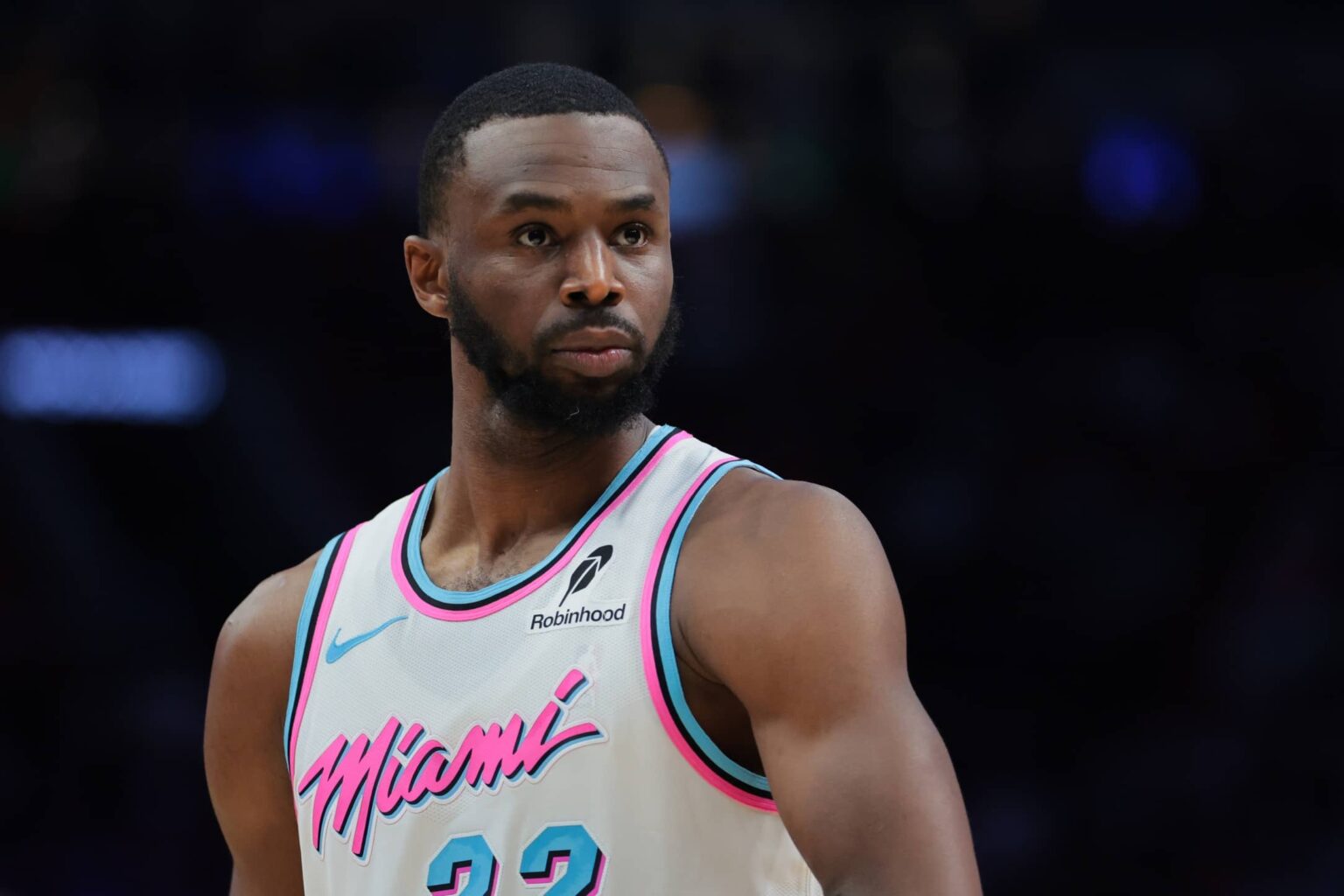
1. Andrew Wiggins
2026-27 Contract Status: $30.2 million (Player Option)
Andrew Wiggins is the top name on this small forward list because he is one of the few realistic “two-way wing starter” outcomes tied to 2026. In 2025-26, Wiggins is averaging 16.1 points, 5.1 rebounds, and 2.8 assists, shooting 47.6% from the field. That production is not superstar-level, but it is the exact profile contenders chase at small forward: a wing who can score efficiently without high usage, defend real matchups, and fit next to stars without changing the offense.
Wiggins has a 2026-27 player option worth $30.2 million, with an option decision date in late June 2026. At that number, opting in is the default outcome unless he has a clear multi-year alternative that he prefers more than the certainty of $30.2 million. That is the practical reason the market for him is complicated: teams may like the player, but most of them would rather pay for him via trade as an expiring contract than bid against a one-year $30.2 million decision.
His on-court value is straightforward. Wiggins is not a primary creator. He is a play-finisher and secondary attacker who can defend across wing assignments. When the jumper is stable and he is engaged defensively, he scales cleanly in playoff lineups because he does not need touches to matter. The Heat also got a reminder recently that his scoring can still spike in single games, including a 28-point performance on Saturday.
What I think happens: Wiggins opts in to the $30.2 million and the Heat treats him as either (1) a core wing they keep, or (2) a trade piece that becomes more movable as an expiring salary. If he does reach free agency, it is more likely in 2027. The teams that would most logically pursue him if he becomes attainable are contenders that need a starting small forward and can justify the salary slot: Lakers, Pacers, Magic, and a Warriors reunion scenario if their roster rebalances.