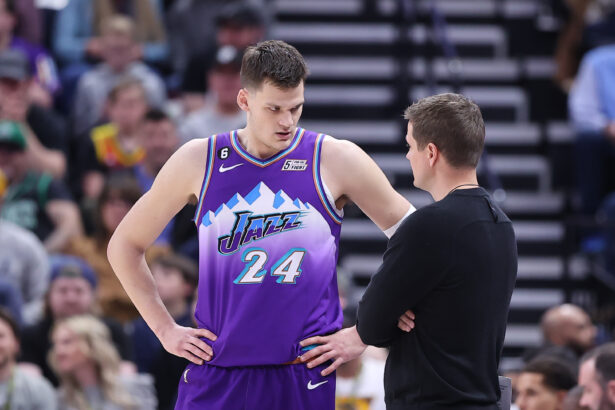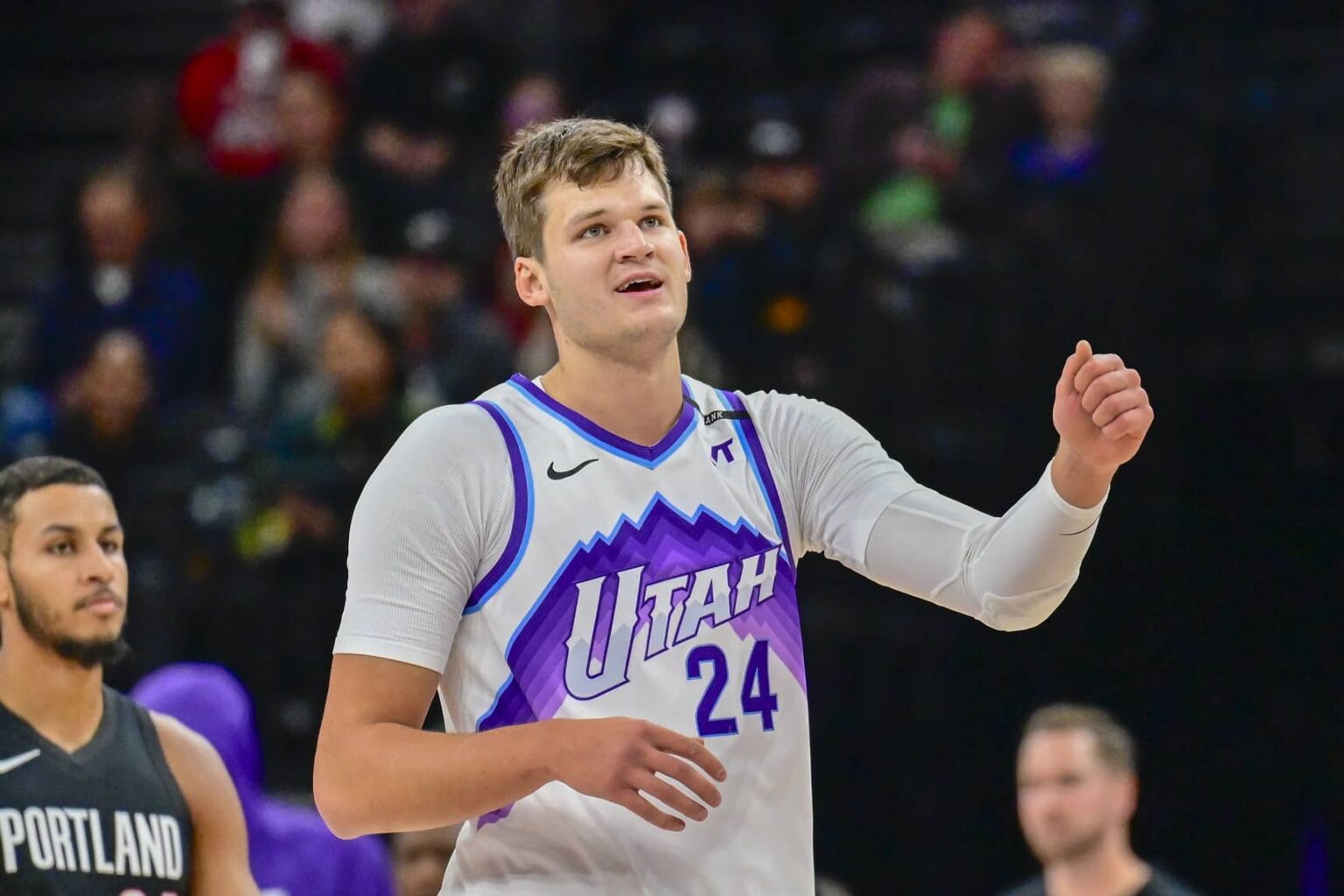
The Los Angeles Lakers may finally have an opening to pursue Walker Kessler, and it comes at a moment when Utah’s internal negotiations appear anything but smooth.
According to ESPN’s Tim MacMahon, there is potential for a ‘very tense and extended’ restricted free agency between Kessler and the Utah Jazz this summer. Utah reportedly feels comfortable paying him around $25 million per year. Kessler’s camp believes he is worth much, much more.
That gap matters.
Before suffering a season-ending shoulder injury just five games into the year, Kessler looked like one of the league’s most efficient young centers. In limited action, he averaged 14.4 points, 10.8 rebounds, 3.0 assists, and 1.8 blocks while shooting an absurd 70.3% from the field. His rim protection, vertical spacing, and defensive instincts make him the exact archetype modern contenders covet.
The Lakers have wanted him for a while.
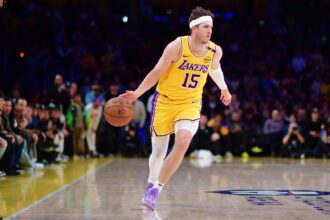
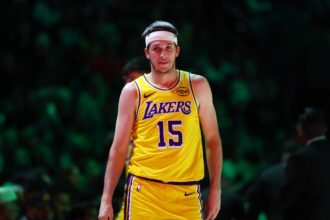
At previous trade deadlines, Utah’s asking price was steep. The Jazz reportedly wanted Austin Reaves plus multiple first-round picks. That was a non-starter for Los Angeles, especially with Reaves emerging as a legitimate co-star alongside Luka Doncic for the future. The Lakers refused to entertain it, and understandably so.
Now the leverage could shift.
Restricted free agency creates a pressure point. The Lakers are projected to have more than $48 million in cap space. That is enough to structure a front-loaded or creatively built offer sheet that pushes Utah well beyond its comfort zone.
If Kessler’s camp truly believes he deserves significantly more than $25 million annually, Los Angeles can test how far the Jazz are willing to go.
Utah can match any offer. That is the reality of restricted free agency. But matching is not always painless.
The Jazz just traded for Jaren Jackson Jr., who will command major money. Lauri Markkanen is already an All-Star-level piece. Keyonte George and Ace Bailey represent young upside. Utah could be positioning itself to re-enter contention sooner than expected. That also means financial flexibility will matter.
Meanwhile, the Lakers need a long-term solution at center. Deandre Ayton has not become the defensive anchor they hoped for. The team has lacked a consistent rim protector who can both defend the paint and thrive without high usage on offense.
Kessler fits perfectly. He rebounds, protects the rim, finishes efficiently, and does not require plays called for him.
The Lakers cannot pry him away via trade without gutting their core. Free agency, even restricted, is different. It forces Utah to make a hard decision rather than setting the price itself.
If the Jazz hesitate or try to play hardball in negotiations, Los Angeles will be waiting with cap space and a clear need.
Sometimes patience is the best strategy. The Lakers might be one summer away from capitalizing on Utah’s internal tension.