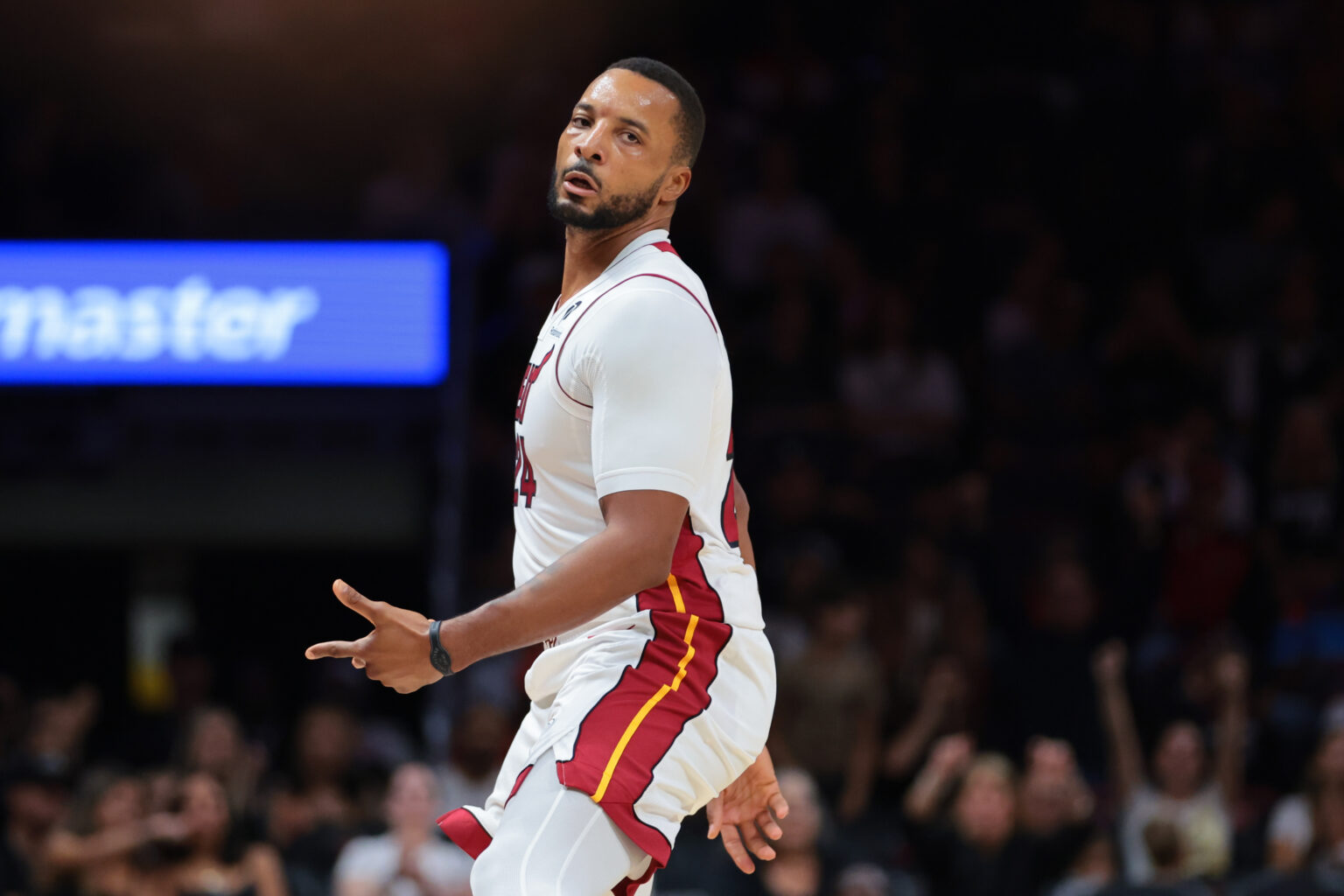
Norman Powell enters free agency in a very interesting position. He is already 33 years old, but he is also coming off an All-Star season. Powell averaged 21.7 points, 3.5 rebounds, and 2.5 assists while shooting 47.0% from the field. He remains one of the better scoring guards available because he can shoot, attack closeouts, run basic pick-and-roll actions, and score without needing the offense built completely around him.
Powell made $20.5 million in 2025-26. ESPN’s Bobby Marks projected a possible three-year, $65.0 million contract, with the final season potentially structured as a team option. That would put his average salary near $21.7 million per season.
The Heat hold Powell’s Bird rights, so they can exceed the salary cap to keep him. Most other contenders cannot offer that type of money directly. That is why a sign-and-trade could become important if Powell wants to leave for another playoff team.
These four teams give Powell a strong combination of role, money, playoff opportunity, and offensive fit.
4. The Nuggets Add A Real Sixth Man
Denver Nuggets Receive: Norman Powell (sign-and-trade, three years, $63.0 million)
Miami Heat Receive: Cameron Johnson
The Nuggets had the best offense in the NBA during the regular season, but their playoff bench was still a major weakness.
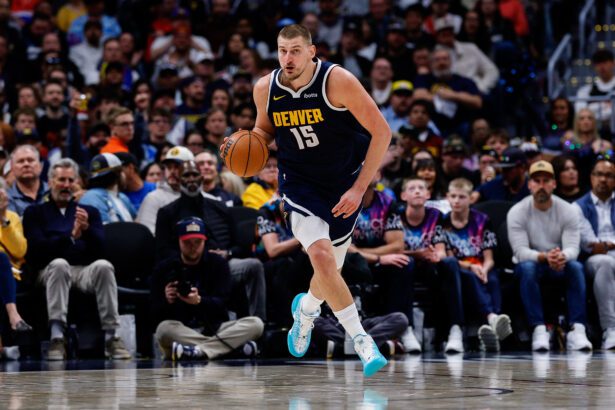
Nikola Jokic averaged 27.7 points, 12.9 rebounds, and 10.7 assists. Jamal Murray added another 25.1 points and 6.4 assists. The starting offense was not the main issue. The problem came when one or both stars sat.
The Nuggets’ bench averaged only 24.2 points during their first-round series. Their reserves shot 33.3% from three and finished with a minus-67 scoring margin. They had role players who could defend, cut, and make open shots, but they did not have a natural scorer who could enter the game and create 15 points without Jokic controlling every possession.
Powell would fix that immediately.
Norman Powell averaged 21.7 points while shooting 47.0% from the field. He can score off handoffs, pull up from three, attack a weaker defender, and run a secondary pick-and-roll. He does not need 20 seconds of possession time to become productive.
That makes him a strong fit next to Jokic. Powell could cut behind defenders, receive handoff passes, and attack when the defense sends two players toward Jokic. He also gives Murray another scoring guard who can take pressure away from him during the regular season.
Powell would probably become the sixth man, but he could also close games next to Murray, Christian Braun, Aaron Gordon, and Jokic. The Nuggets need another perimeter player who can punish teams for loading the paint.
The trade structure is difficult because Powell would be joining through a sign-and-trade. The Nuggets would become hard-capped at the first apron, so they would need to lower the payroll before completing the deal.
Cameron Johnson will make $23.1 million in the final year of his contract. Powell signing for around $21.0 million in the first season would allow the Nuggets to save approximately $2.0 million in direct salary, although they would still need additional moves to stay below the first apron and complete the roster.
Johnson averaged 13.2 points, 4.4 rebounds, and 2.1 assists while shooting 39.1% from three. He remains a strong movement shooter and a better positional fit at forward, but the Nuggets already have Braun, Gordon, Peyton Watson, and other players who can cover wing minutes.
Marc Stein reported that the Nuggets are expected to explore trades involving Johnson or Braun instead, as they try to re-sign Watson and control their tax bill. Johnson is viewed as the easier player to move because his contract expires after next season.
The Heat could like Johnson because he is younger than Powell and gives them more size next to Bam Adebayo. He would also make sense if the Heat lose another forward in a Giannis Antetokounmpo trade or decide to become younger.
The Nuggets might need to include a second-round pick because Johnson is set to expire and already a trade candidate in the offseason. Still, the trade would give them exactly what their second unit missed.
Powell would not solve the defensive issues. He is only 6-foot-4, and the Nuggets already have enough scoring guards who can be attacked. The idea would be to add offense while trusting Braun, Gordon, Watson, and Jokic to cover the defensive side.
The Nuggets should only make this trade after creating enough room below the first apron. From a basketball perspective, the fit is very strong. Powell would become the most proven bench scorer Jokic has had in several seasons.
3. The Timberwolves Give Anthony Edwards Another Scorer
Minnesota Timberwolves Receive: Norman Powell (sign-and-trade, three years, $60.0 million)
Miami Heat Receive: Donte DiVincenzo, Terrence Shannon Jr.
The Timberwolves need another perimeter scorer next to Anthony Edwards. He put up 28.8 points, 5.0 rebounds, and 3.7 assists while shooting 48.9% from the field and 39.9% from three. He carried a huge offensive role, especially late in games.
The Timberwolves still had too many possessions where Edwards had to beat two defenders and create a difficult shot. Julius Randle can score and pass, but he operates more from the frontcourt. Mike Conley is no longer a high-volume scorer. Donte DiVincenzo gives them shooting, but he is sidelined with a long-term Achilles injury.
Powell would add direct scoring pressure. He averaged 21.7 points and remained dangerous as a pull-up shooter and straight-line driver. Defenders cannot leave him to trap Edwards, and Powell can attack the second defender after Edwards gives up the ball.
The pairing would also work in transition. Edwards creates pressure by attacking the rim, while Powell runs hard to the corners and finishes very well around the basket. Powell shot 68.5% at the rim and remained one of the better guards at scoring through contact.
The Timberwolves finished 49-33 and lost in the second round. They were already a good team, but they need more offensive support if they want to move closer to the Finals.
The proposed sign-and-trade would send out Donte DiVincenzo and Terrence Shannon Jr. DiVincenzo will make $12.5 million next season. Shannon will make $2.8 million. Their combined $15.3 million salary would not be enough by itself for a Powell contract starting around $20.0 million under normal matching rules.
The Timberwolves would need to add another small contract or lower Powell’s first-year salary. A contract structured around three years and $60.0 million could start below $20.0 million and rise each season. They could also add a player such as Leonard Miller or another minimum contract to complete the salary matching.
The bigger issue is the first apron. The Timberwolves already have $188.9 million committed to a limited group of players before filling out the full roster. The projected first apron is around $209.0 million. Receiving Powell in a sign-and-trade would hard-cap them at that number.
The Heat would receive a younger replacement shooter in DiVincenzo. He averaged 12.8 points, 3.6 rebounds, and 3.5 assists while shooting 38.3% from three. He can defend, move the ball, and play next to Tyler Herro without needing many touches.
Shannon averaged 5.6 points in a limited regular-season role, but he shot 40.8% from three. He also increased his production to 11.8 points in the playoffs. He gives the Heat an athletic wing who can defend, run in transition, and develop behind the veterans.
The Heat may ask for a second-round pick because they would be helping the Timberwolves acquire Powell without cap space. That would be reasonable.
The basketball fit is easier than the money. Powell would give Edwards a real scoring partner and allow the Timberwolves to use Randle more as a playmaking forward instead of asking him to become the second perimeter creator.
The Timberwolves should pursue it only if they already plan another payroll move. Powell is a strong fit, but a sign-and-trade cannot push them into an impossible cap position.
2. Lakers Replace Austin Reaves With Another 20-Point Scorer
The Lakers signing Powell directly requires a strange situation, but it still deserves a place on this list.
Austin Reaves is expected to decline his $14.9 million player option and become an unrestricted free agent. Jovan Buha and other Lakers reporters have said Reaves is widely expected to return, and he has publicly discussed wanting to stay.
Still, there is a chance another team offers him a massive contract. Bobby Marks projected that Reaves could receive as much as five years and $241.0 million from the Lakers, while teams with cap space could offer four years and approximately $178.5 million.
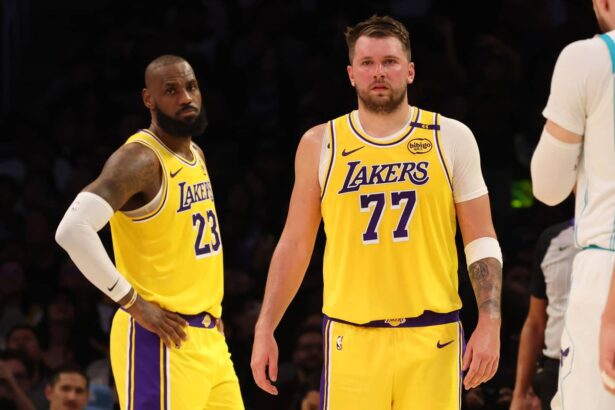
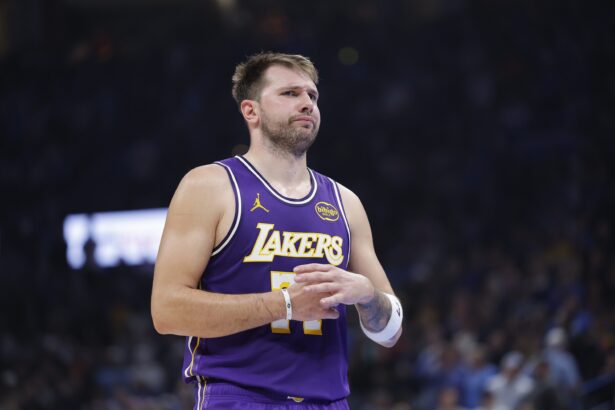
If the Lakers decide that price is too high, they would need a replacement scorer next to Luka Doncic. Powell would be one of the best available options.
Doncic averaged 33.5 points, 8.3 assists, and 7.7 rebounds. He creates open three-pointers for almost every teammate because defenses send help toward his drives and post-ups.
Powell is exactly the type of player who can take advantage. He shot 47.0% from the field and has made 39.8% of his career three-pointers. He can space the floor, attack closeouts, and score without taking the ball away from Doncic.
He is not the same type of player as Reaves. Reaves averaged 23.3 points, 5.7 assists, and 4.6 rebounds and became an important secondary playmaker. Powell only averaged 2.5 assists and is more of a scorer than an organizer.
That means the Lakers would need another guard who can create for the second unit. Powell could replace most of the scoring, but not all of the passing.
The Lakers could create significant cap space if Reaves leaves, LeBron James does not return, and the team loses Rui Hachimura or several other free agents. Depending on the final cap holds and roster decisions, the Lakers could create around $40.0 million to $48.0 million in space. That would be enough to sign Powell without needing help from the Heat.
A three-year, $63.0 million contract would be reasonable. The Lakers should include partial protection or a team option in the final season because Powell will turn 36 before the deal ends.
Powell would likely start next to Doncic. His movement shooting would help the offense, and he could also lead bench units for short stretches. He has championship experience from the 2019 Raptors and has already produced in playoff games.
The defensive fit is less exciting. Doncic and Powell would not create a strong defensive backcourt, so the Lakers would need larger defenders around them. They would also need to spend remaining cap space on a center and defensive wings.
There is no direct reporting connecting Powell to the Lakers right now. This is a conditional fit based on what happens with Reaves.
If Reaves returns, the Lakers have no reason to pay Powell more than $20.0 million. If Reaves leaves, Powell becomes one of the few available free agents who can replace 20 points per game without needing a trade package.
1. The Heat Keep Their All-Star Scorer
The Heat remain the easiest and most realistic destination. Powell joined the Heat before the season and became their most reliable perimeter scorer. He also earned his first All-Star selection. At one point early in the season, he was averaging more than 24 points and giving the Heat a level of scoring they badly needed after moving on from Jimmy Butler.
His production dropped later in the season, and a groin injury affected him near the end. Powell scored only 11 points in the Play-In loss that ended the Heat’s year.
That bad finish should not remove the value of his full season.
The Heat still need scoring. Tyler Herro is a strong offensive guard, but he has dealt with injuries and could be included in a Giannis trade. Bam Adebayo is not a high-volume perimeter scorer. The rest of the roster lacks another player who can create 20 points every night.
Powell also fits the Heat’s style. He competes defensively, attacks the rim, and can play either guard position. He is not a point guard, but he can share the floor with Herro or play as the main scorer in second-unit lineups.
The contract is the main question. Powell made $20.5 million last season. A three-year, $65.0 million deal with a team option in the final season would give Powell around $43.0 million in guaranteed salary over the first two years while protecting the Heat from paying the full amount when he is 35.
The Heat own his full Bird rights. They can re-sign him without cap space, and they can still complete other trades before or after the contract. A starting salary around $20.0 million could allow the Heat to keep Powell, pursue Giannis, and maintain access to part of the non-taxpayer mid-level exception.
Powell has also said he wants to remain with the Heat. His comments became less certain after the season ended, but there has been no clear report that he wants to leave.
The Heat should not give him four guaranteed seasons. Paying an undersized scoring guard into his age-36 season would be a major risk. Three years with a team option is the right structure.
There is also value in avoiding a sign-and-trade. The Heat would not need to take back another team’s contracts, accept weaker players, or help a contender improve. They can simply keep a player who already knows the system and produced at an All-Star level.
Powell may receive interest from teams with cap space, but few can offer the same combination of money, role, and Bird-rights flexibility.
A three-year, $65.0 million deal is not cheap. It is still reasonable for a player who averaged 21.7 points and remains one of the best scoring guards on the market.
The Heat should bring him back unless his contract demands move far above that number.