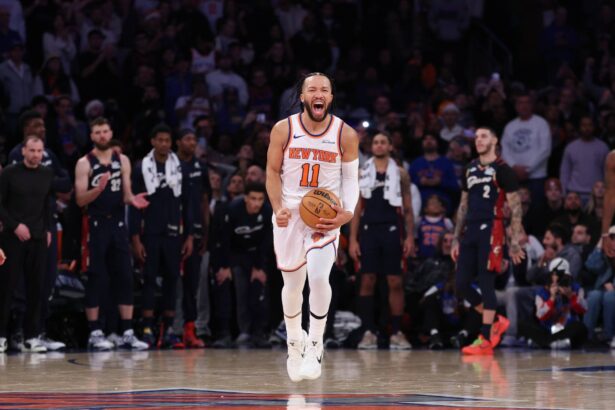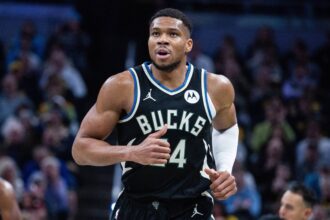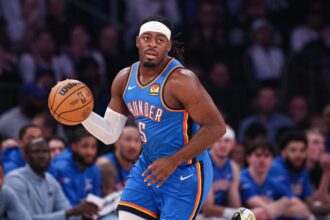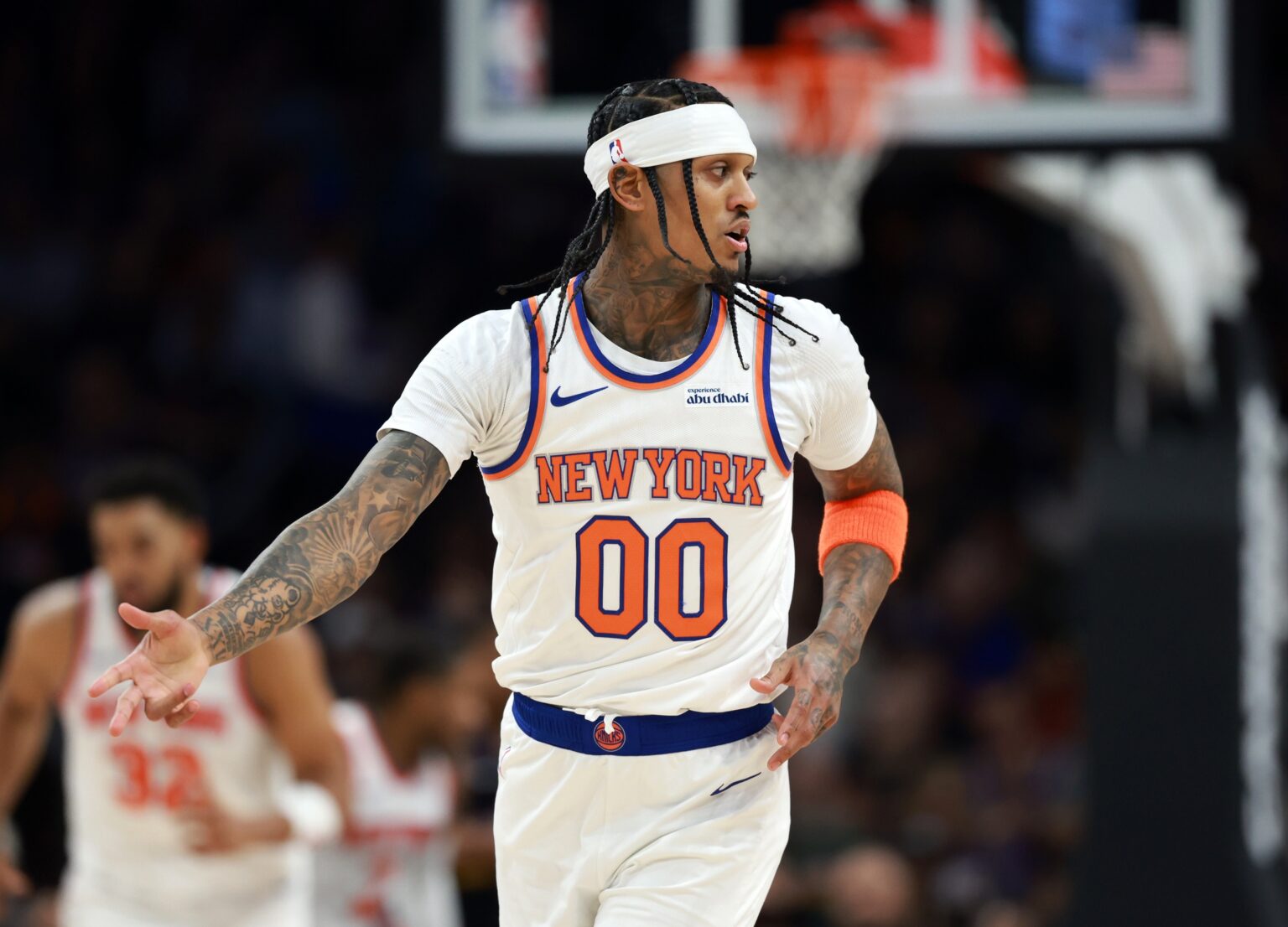
Jordan Clarkson’s situation with the Knicks has shifted fast from “bench scoring option” to “odd man out,” and the reporting around the team has been pretty blunt about why. Kenneth Teape of SI’s Knicks On SI wrote that with the roster finally healthier, Mike Brown has tightened the rotation, and Clarkson is now on the outside looking in. RotoWire Staff flagged the same trend a day earlier, noting his minutes have basically slid into end-of-bench territory in recent games.
When a veteran guard stops playing for a team that’s winning, the league usually doesn’t overthink it. It becomes trade-deadline logic. Michael Zeno at Posting and Toasting framed Clarkson as one of the more movable pieces because he’s fallen out of the rotation, and also because the Knicks’ financial constraints make a simple “one-for-one” reshuffle more realistic than a splash.
Clarkson’s season line explains why it’s been easy for the Knicks to live without him lately: 9.3 points, 1.8 rebounds, 1.3 assists, 42.2% from the field. And the Knicks can afford to be ruthless right now because they’re 31-18, second in the East, and riding a six-game win streak, meaning every rotation decision is getting filtered through “what survives in April.”
1. Stealing Jose Alvarado From The Pelicans
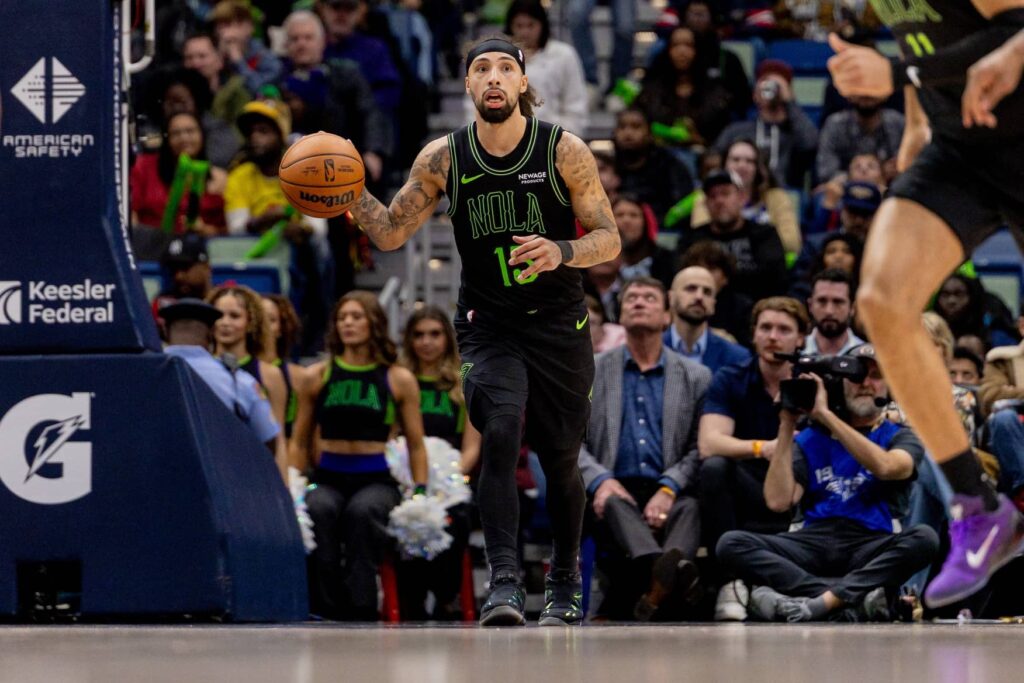
New York Knicks Receive: Jose Alvarado
New Orleans Pelicans Receive: Jordan Clarkson, Pacome Dadiet
This is the one that actually feels connected to real deadline chatter, not just “let’s trade the guy who isn’t playing.” Michael Scotto of HoopsHype, speaking on Ian Begley’s The Putback, said the Knicks have been calling the Pelicans about Jose Alvarado. That’s a pretty direct breadcrumb, because Alvarado is the exact archetype the Knicks keep chasing when things get tight: annoying point-of-attack defense, tempo control, and a guard who doesn’t need the ball to matter.
Alvarado’s season line is clean for that role: 8.0 points, 2.8 rebounds, 3.2 assists on 42.2% from the field. And the contract makes it even easier to talk yourself into it. He’s at $4.5 million this season, with that number staying small enough that you’re not locking yourself into anything messy.
For the Pelicans, this is about reshaping the back end of the roster. Pacome Dadiet is more of a developmental stash right now, 0.4 points, 0.6 rebounds, 0.4 assists, and he’s on $2.8 million, which is the kind of controllable money teams like to carry while they sort out bigger moves.
The key is Jordan Clarkson, because he’s the one whose role has evaporated. The New York Post has been blunt that he’s fallen out of the rotation as the Knicks tightened things up. Clarkson is still producing in the minutes he gets, 9.3 points, 1.8 rebounds, 1.3 assists, and his salary is $2.3 million.
The Pelicans get a young flyer plus a veteran creator who can soak up possessions if they want, and they clear a roster lane for whatever their next step is.
2. Grabbing A New Young Big Man From A Close Rival
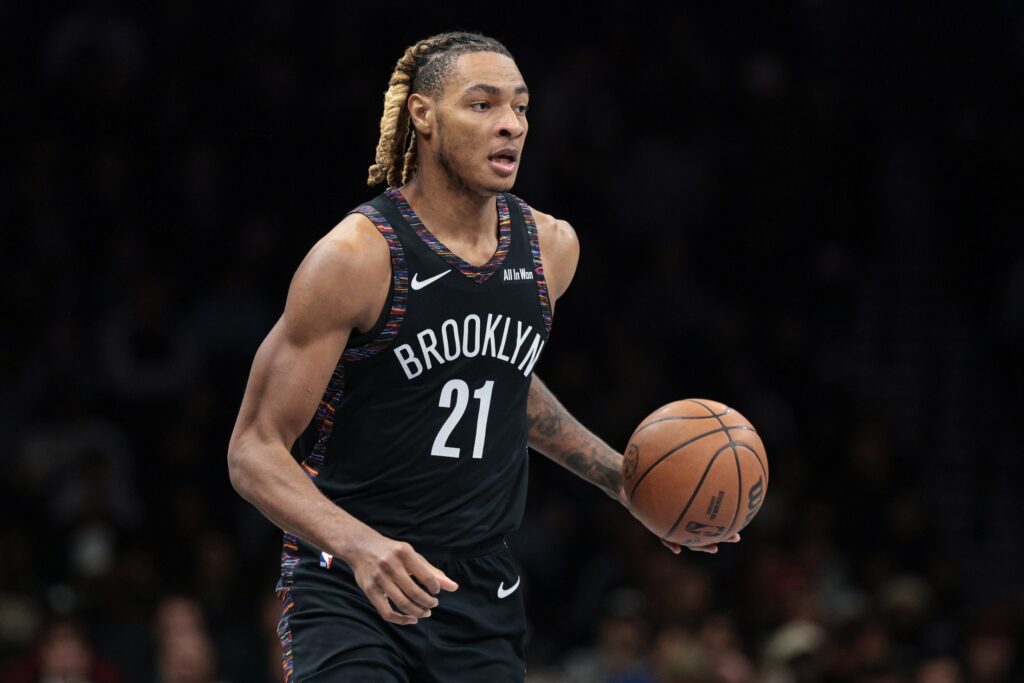
New York Knicks Receive: Noah Clowney
Brooklyn Nets Receive: Jordan Clarkson, Ariel Hukporti
This one is the “get younger, get longer, get weirder” bet, and it’s exactly the type of move teams make when they think their current bench mix isn’t playoff-proof.
Noah Clowney is still raw, but the upside is obvious: 13.1 points, 4.3 rebounds, 1.9 assists on the season. The shot diet and efficiency are a work in progress, but the Knicks aren’t buying perfection here; they’re buying a tool. And the contract is manageable: Clowney is at $3.4 million.
For the Nets, the appeal is simple: you take two pieces you can actually plug into minutes right away, or flip later, without pretending you’re getting a future star. Ariel Hukporti is the “let’s evaluate the big” piece. He’s at 1.7 points, 2.8 rebounds, 0.5 assists on 54.3% from the field, and he makes $2.0 million.
Clarkson is the other half of the equation, and you already know the story: the Knicks have squeezed him out as the rotation solidified. If the Nets want an adult shot-creator to keep possessions organized for their young guys, he’s functional. If they don’t, his contract slot is still useful as a trade chip.
Clowney gives the Knicks a real upside forward they can develop without paying real money, and they don’t have to pretend he’s ready to be perfect today. The Nets add a center they can actually look at and a guard who can either play, mentor, or get re-routed at the next deadline.
3. An Underrated Forward Could Help The Knicks
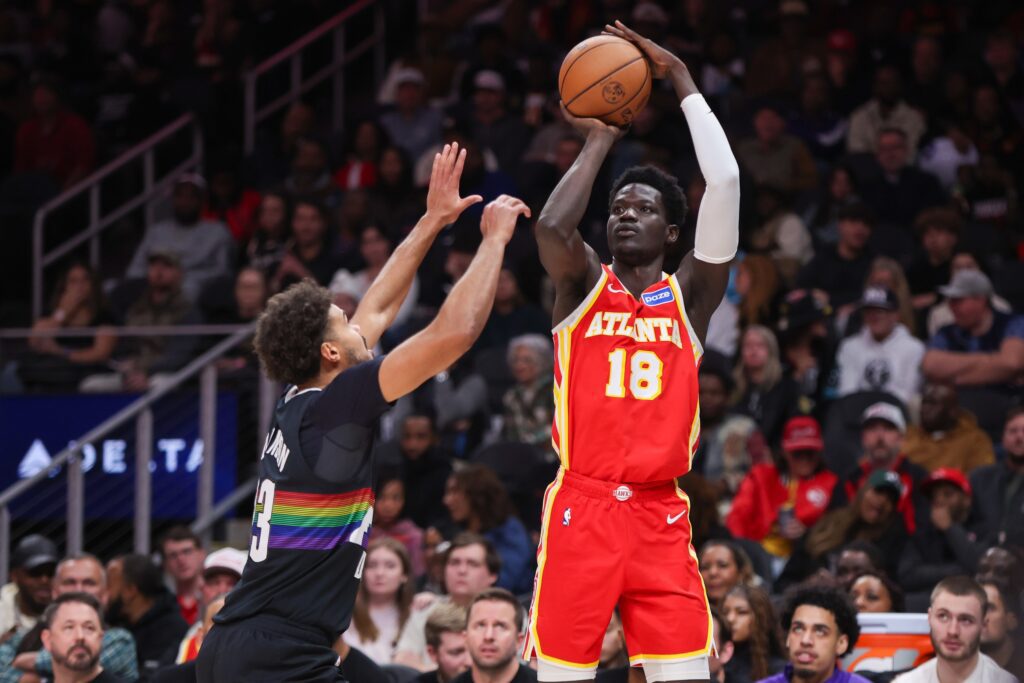
New York Knicks Receive: Mouhamed Gueye
Atlanta Hawks Receive: Jordan Clarkson, 2026 second-round pick (swap rights)
This is the kind of deal that looks small until you watch the Knicks in a game where the energy dips, the legs get heavy, and you realize they could use one more rangy forward who plays like every possession is a job interview.
Mouhamed Gueye is not a scorer; he’s a connector. He’s averaging 4.9 points, 3.6 rebounds, and 1.0 assists on 43.6% from the field, and he’s on $2.2 million. That profile matters because the Knicks aren’t trying to add another “needs the ball” guy. They’re trying to add someone who can run, switch, contest, and not melt when the game gets loud.
For the Hawks, this is basically a reallocation: they’d be turning Gueye into Clarkson’s bench shot-making plus a small pick perk. The swap-rights detail isn’t sexy, but teams take those because it’s still an asset. If the Knicks keep winning, those seconds can get nudged into more valuable territory later.
The Knicks convert a squeezed-out veteran into a forward who fits the “play hard, defend, don’t complicate it” mandate, as the Hawks take a guard who can create his own shot for second units, and add a minor pick incentive on top.
It’s not a headline trade. It’s a rotation trade. And those are the ones that quietly decide playoff series when the eighth and ninth men actually have to survive minutes.
4. Jared McCain Is A True Buy-Low Candidate
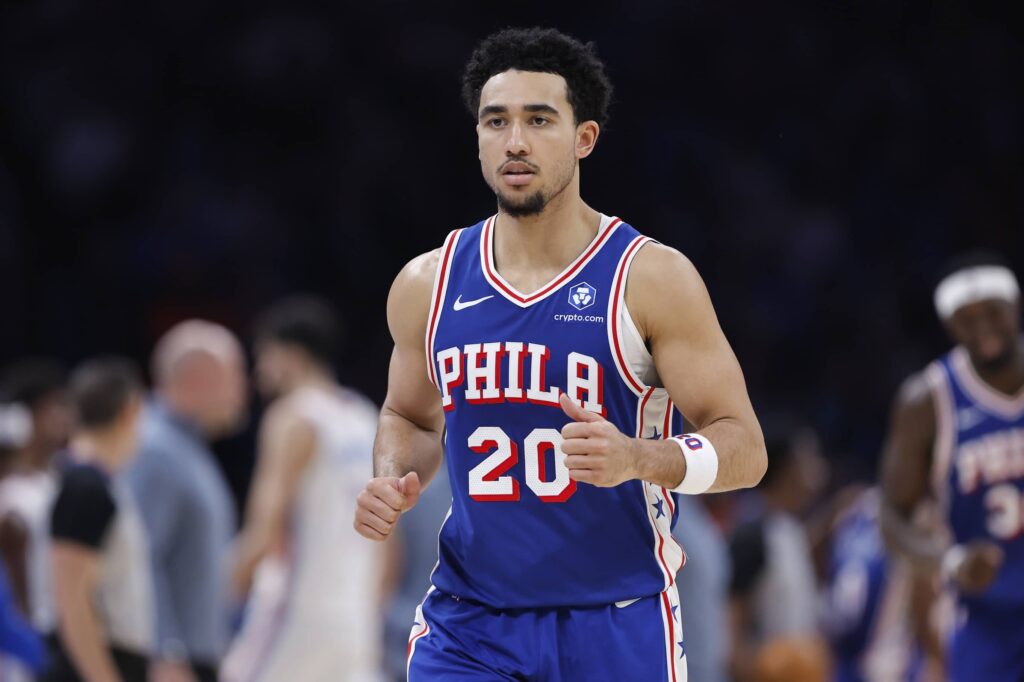
New York Knicks Receive: Jared McCain
Philadelphia 76ers Receive: Jordan Clarkson, Pacome Dadiet, 2026 first-round pick (via WAS)
This is the only framework here that costs real draft value, so it has to be about conviction. The Knicks would be betting that Jared McCain is being undervalued because his minutes have been inconsistent.
CBS Sports recently noted he went unused off the bench as he’s been trending out of the rotation. There’s also been online chatter since the 76ers assigned him to the Blue Coats in the G-League, which only adds to the “uncertain role” vibe around him right now.
The talent is still the sell. McCain is at 6.8 points, 2.1 rebounds, 1.6 assists on 38.3% from the field, and his contract is $4.2 million, which is exactly the kind of number contenders love in young guards. If the Knicks think they can develop him into a starting shooter/handler, that’s worth paying for.
Dadiet is the smaller developmental piece going out again, $2.8 million and barely playing. The first-rounder is what makes the 76ers listen, because if they’re not fully committed to McCain’s role, cashing him out into a pick plus depth is a very real deadline move.
This is how you steal a young guard before he pops. The 76ers turn a player they’re not consistently using into a clean asset and immediate roster flexibility.
5. A Seasoned Overseas Bet For The Rotation
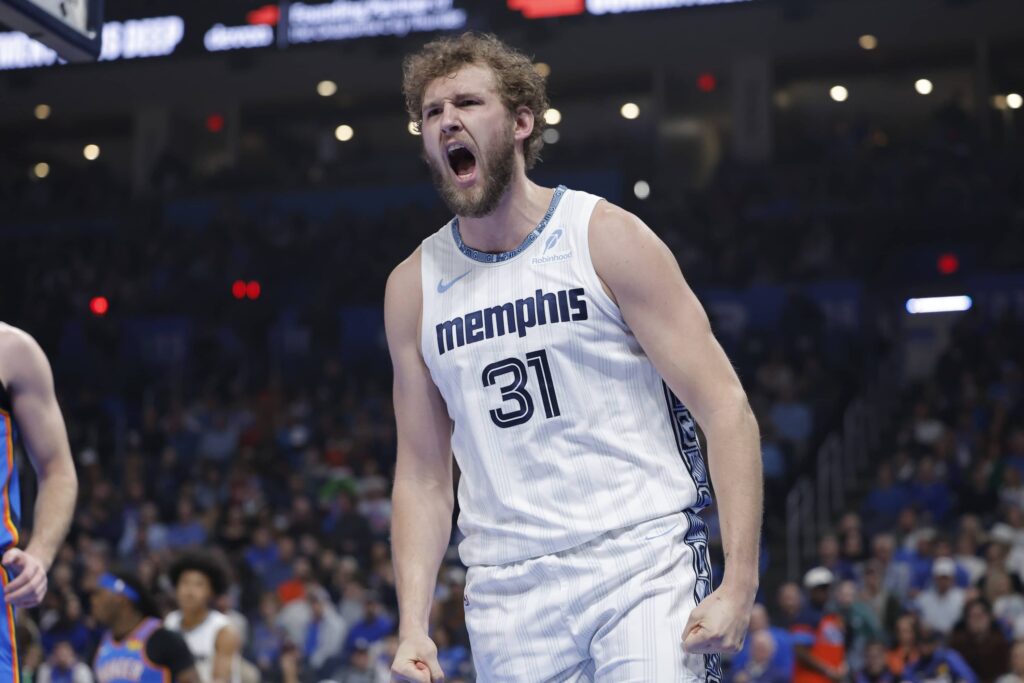
New York Knicks Receive: Jock Landale
Memphis Grizzlies Receive: Jordan Clarkson, 2026 second-round pick (swap rights)
This is the pragmatic one. The Knicks don’t need a star big man; they need a backup center they can play without holding their breath.
Jock Landale fits that: 11.5 points, 6.5 rebounds, 1.7 assists on 51.8% from the field. That’s not theoretical production, that’s real “keep us afloat for 12 minutes” production.
The contract is also clean. Landale is at $2.3 million, which keeps this in the “simple matching, no drama” lane. For the Grizzlies, the logic is basically asset management: if they’d rather redistribute those minutes elsewhere, turning Landale into Clarkson plus a small pick sweetener is a reasonable pivot. The swap-rights second is, again, minor, but it’s still valuable.
The Knicks should go after Landale because he gives them stability at the five, plus an actual offensive skill set that doesn’t die in the half-court. While the Grizzlies keep losing and stay in the Ja Morant rumor mill, they get a guard shot-creator for the bench and a small draft perk, while freeing up the center minutes for their younger rotation.
It’s not flashy. It’s useful. And if you’ve watched enough Knicks games this year, you know “useful” is exactly what they should be shopping for around the margins.