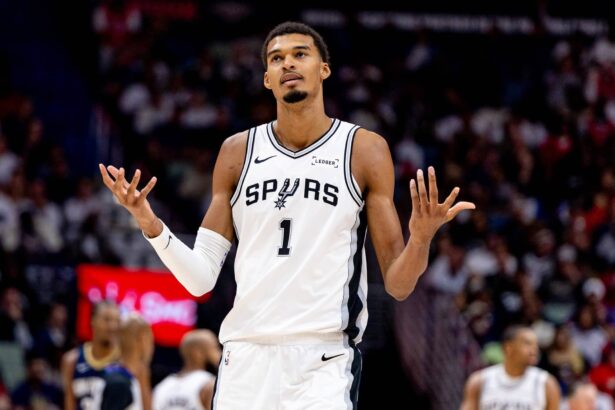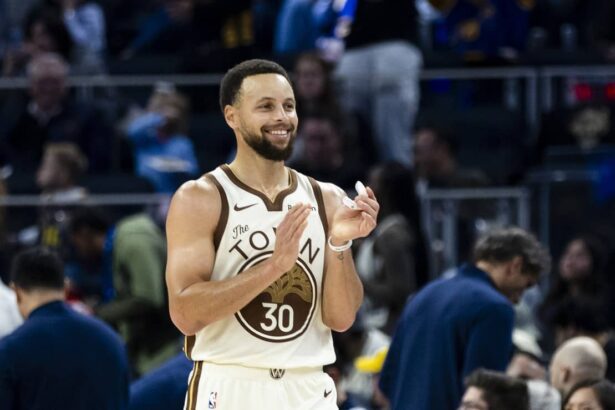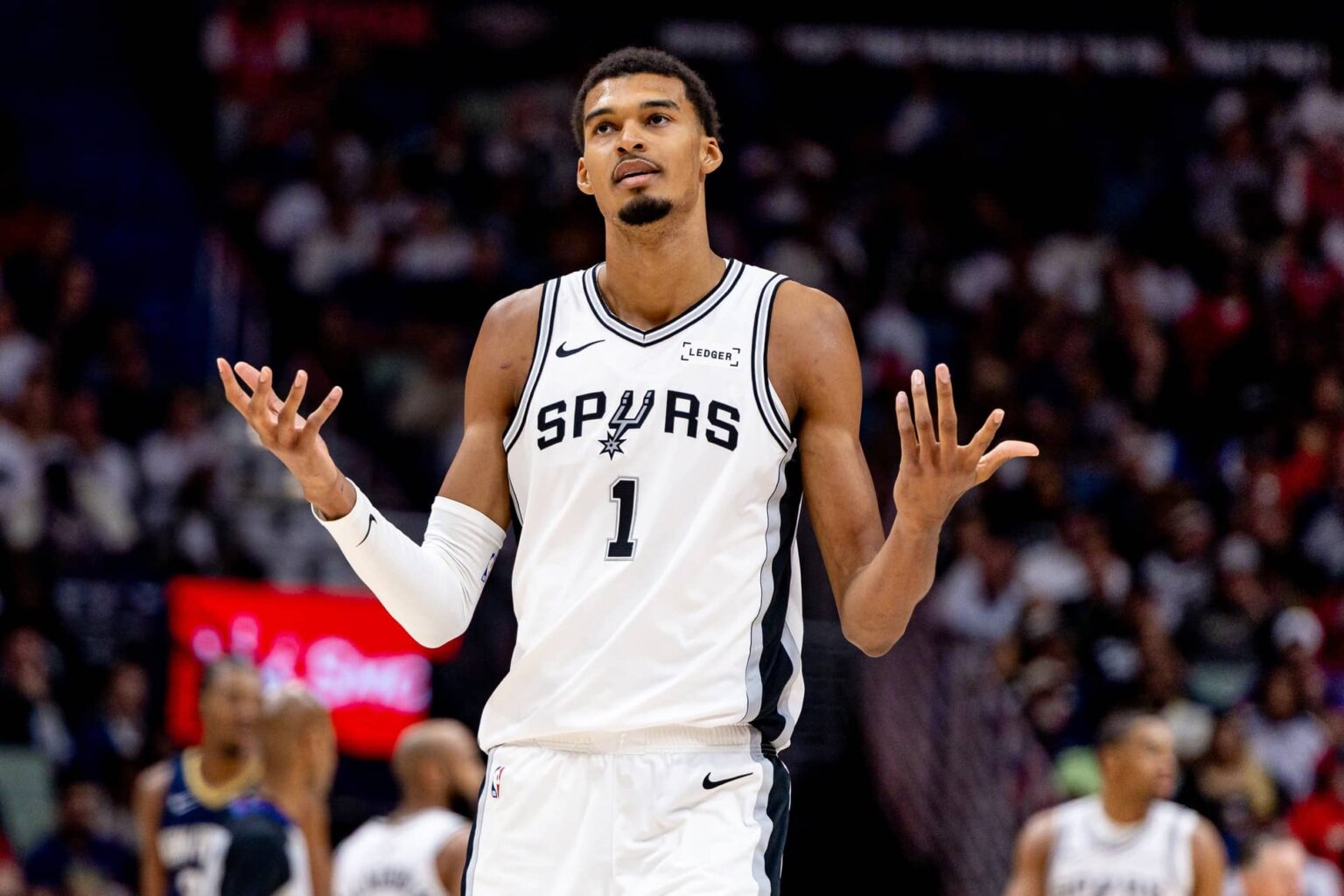
Victor Wembanyama looked ready to win Defensive Player of the Year last season before a blood clot ended the race for him. He averaged 24.3 points, 11.0 rebounds, 3.7 assists, and an NBA-best 3.8 blocks in 46 starts in 2024-25 before deep vein thrombosis in his right shoulder shut him down in February. That injury did not just end his season. It cost him his first claim for this award.
Now he is back, healthy, and in an even stronger position. Wembanyama is averaging 24.9 points, 11.6 rebounds, 3.1 assists, 1.0 steals, and 3.1 blocks in 62 games, while the Spurs enter April 6 at 59-19, good for the No. 2 seed in the West. He is also the clear favorite for Defensive Player of the Year, which tells you where this race stands entering the final week of the regular season.
After doing our Coach of the Year, Most Improved Player, MVP, Rookie of the Year, and Sixth Man of the Year rankings, here are our Defensive Player of the Year power rankings.
10. Derrick White
2025-26 Stats: 16.7 PPG, 4.5 RPG, 5.5 APG, 1.1 SPG, 1.3 BPG, 39.5% FG, 32.6% 3P
Derrick White makes this list because few perimeter defenders affect games in as many ways. The Celtics are 53-25 and sitting second in the East, and White has again been one of the main reasons their defense has stayed near the top of the league all year.
His box-score line does not scream traditional DPOY candidate, but 1.1 steals and 1.3 blocks from a guard is not normal production. Add that to his nightly workload, his point-of-attack role, and his ability to clean up mistakes behind the play, and the case becomes easy to see.
The cleanest argument for White is this: no guard blocks shots like he does. He leads all guards in blocks per game this season at 1.3, which is absurd value from that position. White is not just surviving switches or chasing shooters over screens.
He is ending possessions at the rim, rotating into the paint, and giving the Celtics a layer of back-line resistance that most teams do not get from a guard. They also rank fourth in defensive rating, so this is not empty activity on a mediocre defense. He is producing those plays inside a real top-tier team structure.
That said, this is still a hard award for a guard to win unless the steal numbers are overwhelming or the narrative gets very loud. White’s defensive rating sits at 112.9, strong but not dominant enough to push him into the very top tier of this race by itself.
And when you compare him to the big men and jumbo wings above him, the raw defensive ceiling is just different. So No. 10 feels right. He deserves to be in the conversation, and he has been one of the best defensive guards in the league. He just has not had the kind of season that should beat the true front-runners.
9. Dyson Daniels
2025-26 Stats: 11.8 PPG, 6.7 RPG, 5.9 APG, 2.0 SPG, 0.4 BPG, 51.9% FG, 18.2% 3P
The ball pressure still jumps off the screen. Dyson Daniels is averaging 2.0 steals per game, which puts him in a tie for the league lead, and that remains the foundation of his case. He turns routine actions into live-ball turnovers, blows up handoffs, jumps passing lanes, and changes pace for opposing guards from the opening possession.
Even in a season where his steal rate came down from the absurd 3.0 he posted last year, he is still one of the few perimeter defenders who can bend an entire game with his hands and anticipation alone. Daniels also carries a 112.2 defensive rating, which is strong considering his workload and minutes.
Team context helps him. The Hawks are 45-33, fifth in the East, and they have climbed to ninth in defensive rating. That is a big factor here, because Daniels is not stacking steals on a bad defense that gets ignored in this award. He is doing it on a playoff team that has defended at a top-10 level. He was also last season’s Defensive Player of the Year runner-up, so this is not a fluke year or a random hot stretch. Voters already view him as a real defensive force.
Still, this season’s resume is a little lighter than the one he brought into the race a year ago. The steals are still elite, but not historic. The blocks are modest for a top-tier candidate, and Hawks do not have the kind of dominant defense that usually pushes a guard into the inner circle of this award. That is why Daniels belongs in the top 10, but not higher. He has been disruptive, valuable, and consistently difficult to play against. The names above him just have stronger total cases.
8. Scottie Barnes
2025-26 Stats: 18.1 PPG, 7.5 RPG, 5.9 APG, 1.5 SPG, 1.5 BPG, 50.2% FG, 29.2% 3P
Scottie Barnes has one of the cleanest all-around defensive profiles in this race. The rare part is not just that he produces steals and blocks. It is that he does both at the same level while carrying a big offensive role. Barnes is at 1.5 steals and 1.5 blocks per game, and his individual defensive rating sits at 110.2.
That combination points to the kind of defender who can switch across positions, close out to wings, hold up against stronger forwards, and still make plays as a helper around the rim. He does not defend one spot. He solves multiple problems in the same game.
The team case is real, too. Raptors are 43-35 after Sunday’s loss to the Celtics, and their defense has held up as one of the better units in the league with a 113.2 defensive rating, sixth in the NBA. That matters for Barnes because this is not a case built only on versatility clips or reputation. There is actual team value attached to it.
The Raptors have been competitive in the East, and Barnes has been central to the identity of that group on both ends. When a forward gives you nearly 18-8-6 on offense and still anchors this much defensive flexibility, he deserves serious recognition.
The reason he lands at No. 8 instead of higher is simple. Barnes has been excellent, but the candidates above him bring a stronger signature. Some have bigger rim-protection numbers. Others are driving top-five defenses or carrying a louder game-to-game shutdown role. Barnes belongs in the top 10 because of the breadth of his impact. He just has not had the kind of overwhelming defensive season that should place him in the inner circle of this award.
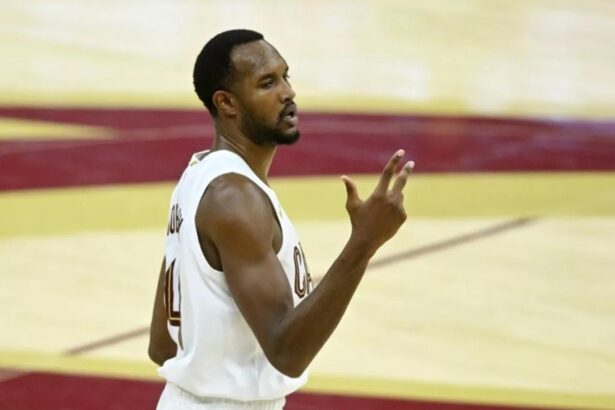
7. Evan Mobley
2025-26 Stats: 18.1 PPG, 9.0 RPG, 3.6 APG, 0.8 SPG, 1.8 BPG, 54.4% FG, 29.9% 3P
Evan Mobley is in a strange spot in this race because the standard is different for him now. He won Defensive Player of the Year last season after averaging 18.5 points, 9.3 rebounds, 3.2 assists, 0.9 steals, and 1.6 blocks with a 108.3 defensive rating.
This year, his offensive production is still strong, and the rim protection is actually a little better at 1.8 blocks per game, but the overall defensive case does not hit quite the same level. That is the problem when you are being measured against your own award-winning season.
The individual value is still obvious. Mobley remains one of the most versatile big defenders in the league. He can play at the level, recover to the paint, switch when needed, and still clean up possessions at the rim.
His 112.3 defensive rating is solid, and his profile still looks like that of a top-tier anchor rather than a good starter on a decent defense. He also gives the Cavaliers real stability because he is not just a shot blocker. He covers space, erases mistakes, and lets them play more aggressively around him.
The part that holds him back is team context. The Cavaliers are 49-29 and fourth in the East, but their 114.9 defensive rating is nowhere near the level you usually want from a true DPOY favorite. Last season, the Cavaliers defended at a 112.2 mark. This year, the end of the floor has slipped, and that matters in an award like this. Mobley still belongs comfortably in the top 10, and he has had a very good defensive season. It just has not been strong enough to beat the names above him.
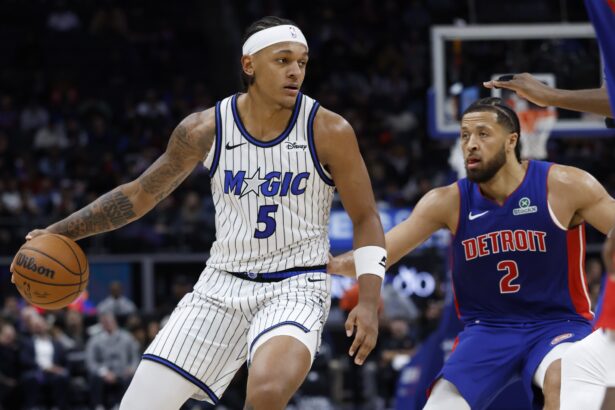
6. Amen Thompson
2025-26 Stats: 17.9 PPG, 7.8 RPG, 5.3 APG, 1.5 SPG, 0.6 BPG, 52.7% FG, 22.3% 3P
Amen Thompson’s case starts with range. He is not building this case as a classic rim protector or as a steals-only guard. He is doing it as one of the most flexible defenders in the league. The Rockets use him on lead ball-handlers, bigger wings, and scramble assignments, and he has the size and speed to hold up in all three.
That matters more than the 0.6 blocks might suggest. Thompson is the kind of defender who can switch a possession late, recover if he gets screened, and still finish the play with a contest or a turnover. His 1.5 steals per game only tell part of that story.
The team environment strengthens the argument. The Rockets are 49-29 after Sunday’s win over the Warriors, and they have won six straight entering the final stretch of the season. They have also defended at a strong level all year, posting a 113.3 defensive rating. That is important here because Thompson is not piling up defensive highlights on a bad team with no stakes. He is one of the main perimeter weapons on a playoff team that has built much of its identity around physicality, switching, and pressure.
There is also clear year-to-year growth. Last season, Thompson averaged 14.1 points, 8.2 rebounds, 3.8 assists, 1.4 steals, and 1.3 blocks with a 108.1 defensive rating. This season, the offensive role is bigger, the minutes are heavier, and he is still carrying major defensive responsibility. That is hard to do, especially for a young player.
The reason he stays at No. 6 instead of pushing higher is that the names above him bring either stronger team-defense numbers, more traditional anchor value, or both. Still, Thompson has absolutely played like one of the best defenders in the league.
5. Luguentz Dort
2025-26 Stats: 8.5 PPG, 3.7 RPG, 1.2 APG, 0.8 SPG, 0.4 BPG, 38.5% FG, 34.2% 3P
Luguentz Dort has the strongest perimeter-stop case in this tier because the role is so hard and the team results are so strong. Thunder are 62-16 with the best defense in the league at a 107.3 defensive rating, and Dort is the guy who gets the worst assignment on the floor almost every night.
Big men usually have the cleaner statistical argument, but elite point-of-attack defenders still deserve real weight when they are driving an elite defense and doing it for a contender that is about to lock up the No. 1 seed in the West.
His raw box-score numbers are not going to wow anybody. The 0.8 steals and 0.4 blocks look modest next to the wings and bigs around him. But Dort’s case is built on something else. He takes the toughest guards, absorbs physical matchups, fights through screens, holds his line on switches, and lets the Thunder keep their entire defensive structure intact.
That kind of work does not always show up in a simple stat line, but it is central to why the Thunder can pressure the ball without breaking behind the play. When a team is this dominant defensively, the lead perimeter stopper deserves to be in the middle of the conversation.
The reason he lands at No. 5 instead of higher is that the award still tilts toward players with bigger numbers or more obvious rim protection value. Dort has a great case, just not the cleanest one. He is not going to overpower voters with steals, blocks, or defensive rebound totals. What he does is make life miserable for star scorers and give the Thunder a tone-setter on the ball every night. On a league-best defense, that is enough to put him firmly in the top five.
4. Rudy Gobert
2025-26 Stats: 11.0 PPG, 11.5 RPG, 1.7 APG, 0.8 SPG, 1.6 BPG, 68.5% FG, 0.0% 3P
Rudy Gobert enters this race with more defensive accolades than anyone in the league. He already owns four Defensive Player of the Year awards, which tied the NBA record when he won again last season, so the standard for him is not basic top-10 value. It is dominance.
This year, the core pieces of his case are still there. He is averaging 11.5 rebounds and 1.6 blocks, and his 109.7 defensive rating is strong for a center carrying this kind of nightly paint responsibility. Gobert still does what he has always done well: erase drives, finish possessions, control the glass, and force offenses to think twice about attacking the rim.
The team argument is solid, but not overwhelming. The Timberwolves are 46-32 after three straight losses, and their defense has been good rather than elite at 113.1, which puts them outside the very top tier of this conversation.
Gobert’s strongest DPOY cases usually come when his team is sitting near the top of the league defensively, and his presence clearly defines the entire structure. He still does that to a large extent, but this version of the Timberwolves has not defended at the same level as the best groups in the league.
That is why No. 4 feels right. Gobert remains one of the safest defensive anchors in basketball, and there are still nights when he completely shuts off the paint. But the resume is a little lighter than the one he needed to win this award in the past. The rebounding is elite, the rim protection is good, and the impact is real.
The problem is that the candidates above him have either bigger team success, more disruptive statistical profiles, or both. Gobert absolutely belongs in the top five. He just does not have the strongest total case this season.
3. Ausar Thompson
2025-26 Stats: 9.9 PPG, 5.8 RPG, 3.0 APG, 2.0 SPG, 0.9 BPG, 51.8% FG, 26.1% 3P
Ausar Thompson has the strongest wing case in this race because the defensive production is not normal for his position. He is averaging 2.0 steals and 0.9 blocks, and that blend is rare. Most perimeter defenders lean heavily one way.
They either live in passing lanes or survive on-ball. Thompson does both, and he adds weak-side rim protection on top of it. His 105.2 defensive rating is elite, and it matches the eye test. He covers ground fast, blows up actions early, and still has the length to recover when a possession gets scrambled.
The team backdrop pushes the case even higher. The Pistons are 57-21 and locked into the No. 1 seed in the East, and they have done it with the second-best defense in the league at a 109.5 defensive rating.
Thompson is not putting up flashy stock numbers on a middle-tier defense. He is doing it on one of the best teams in basketball, inside one of the best defensive environments in the league. When a team wins at this level, and a wing defender is leading the NBA in steals while posting the best defensive rating on the roster, that is a real DPOY argument.
What keeps him at No. 3 instead of higher is role and scale. As dominant as Thompson has been, the award still tends to lean toward bigger defenders who shape every possession near the rim. Wembanyama and Holmgren bring that kind of anchor value while also playing on elite defenses.
Thompson has still had a massive season. He has been one of the best defensive playmakers in the league, one of the most versatile wing stoppers in basketball, and one of the biggest reasons the Pistons turned into a real contender.
2. Chet Holmgren
2025-26 Stats: 17.0 PPG, 8.8 RPG, 1.6 APG, 0.6 SPG, 1.9 BPG, 55.3% FG, 35.6% 3P
Chet Holmgren has a real No. 1-level case in most seasons. The problem for him is that this is not most seasons. The Thunder are 62-16, they have the best defense in the league at a 107.3 defensive rating, and Holmgren has been one of the main reasons that structure has held all year.
His individual numbers do not need inflation. Nearly two blocks per game from a big man who also moves this well in space is elite value, and his 104.1 defensive rating is exactly what you want from a center anchoring a top defense on a title-level team.
What pushes Holmgren this high is the kind of defense he gives the Thunder. He is not just a shot blocker waiting under the rim. He can meet drivers early, recover if a play breaks, contest vertically without fouling, and still clean the possession up on the glass.
That versatility is a key skill for a team that asks a lot from its back line because of how aggressive it is on the perimeter. He gives the Thunder both coverage flexibility and mistake erasure, which is why his case is stronger than the guards and wings below him.
The reason he stops at No. 2 is simple. Holmgren has been great. Victor Wembanyama has been more overwhelming. Holmgren’s team case is excellent, and his anchor value is obvious, but Wembanyama beats him in block volume, overall defensive intimidation, and sheer statistical force. In another year, this profile could win the award. This year, it looks like second place.
1. Victor Wembanyama
2025-26 Stats: 24.9 PPG, 11.6 RPG, 3.1 APG, 1.0 SPG, 3.1 BPG, 50.9% FG, 35.0% 3P
Victor Wembanyama has turned this award into a near-formality. The Spurs are 59-19 and second in the West, and they have risen to a top-tier defense with Wembanyama at the center of everything.
His stat line alone is absurd for a Defensive Player of the Year candidate: 3.1 blocks, 11.6 rebounds, 1.0 steals, and a 100.8 defensive rating, all while carrying MVP-caliber offensive numbers. That is not just elite rim protection. That is full-court defensive control from a player who changes where opponents drive, when they shoot, and what kinds of shots they even think are available.
The strongest part of Wembanyama’s case is that the numbers and the team results line up perfectly. He leads the league in blocks, the Spurs have the third-ranked defense, and he has won Western Conference Defensive Player of the Month three straight times. In March alone, the Spurs allowed just 102.9 points per 100 possessions with him on the floor. That is not a hot week or a nice stretch. That is award-winning dominance from the best defensive talent in basketball.
And then there are the odds, which usually tell the truth this late in the season. Wembanyama is the absolute favorite to win the award, which is another way of saying the race is basically over. Holmgren has a strong case. Ausar Thompson has a strong case. Nobody has Wembanyama’s total case. He should have had the award before the blood-clot setback last season. This year, he has finished the job.