The Wizards finished the 2025-26 season with an NBA-worst 17-65 record, but their current roster makes another rebuilding season difficult to justify. They own the No. 1 pick in the 2026 NBA Draft, with AJ Dybantsa widely projected as the favorite to become the first selection. The Wizards could also listen to trade offers if the front office isn’t convinced Dybantsa can become its long-term franchise player.
The Wizards still have one of the NBA’s stronger young groups. Alex Sarr produced 16.3 points, 7.4 rebounds, and 2.0 blocks per game. Kyshawn George added 14.8 points, 5.1 rebounds, and 4.5 assists while shooting 38.1% from three. Tre Johnson finished his rookie season with 12.2 points per game. Adding the No. 1 pick gives the Wizards another major asset.
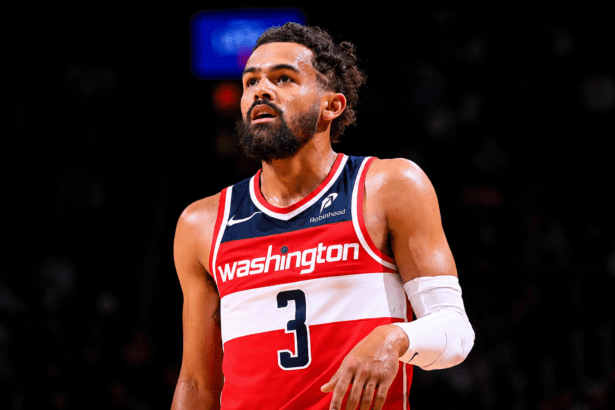
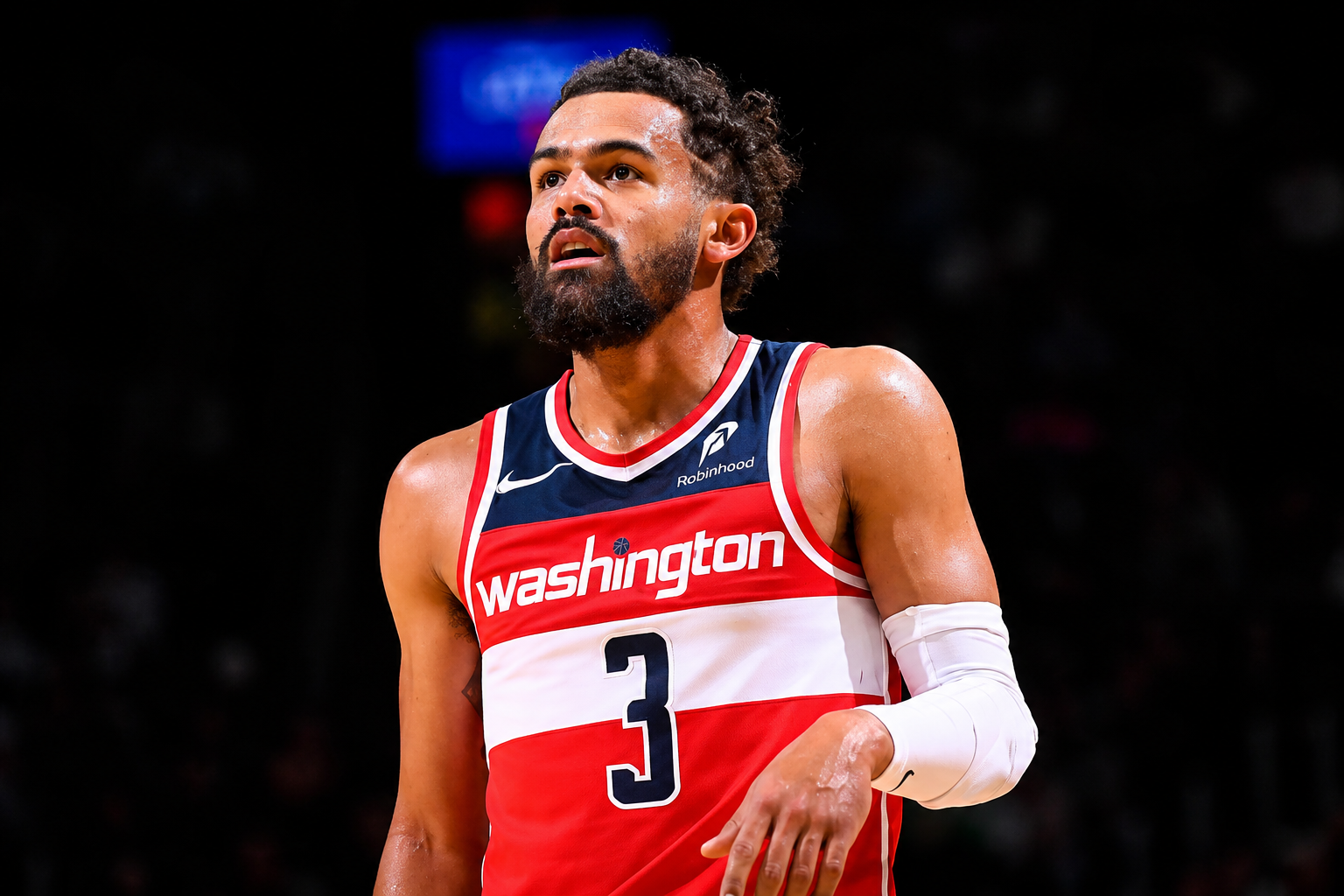
However, the trades for Trae Young and Anthony Davis changed the timeline. Young owns a $49.0 million player option for 2026-27, while Davis will earn $58.5 million. Together, they could occupy approximately $107.4 million in salary next season. The Wizards entered the year as a rebuilding team, but acquiring two established stars showed clear expectations of becoming competitive quickly.
That pressure is already present. Anthony Davis has said he wants detailed discussions with the front office about its plan to compete, while Chris Haynes reported there is a good chance Davis could be traded again before next season. The Wizards can’t rely only on internal development if they want to keep Davis and build a playoff roster around Young.
The Wizards won’t have meaningful cap space because of their two largest contracts. Their best options will likely be the mid-level exception, minimum contracts, and possible sign-and-trade structures. Here are the four most realistic free agents the Wizards should target this offseason.
1. Ayo Dosunmu
Ayo Dosunmu should be the Wizards’ first call when free agency begins. He provides the perimeter defense, efficient shooting, and secondary ball-handling needed beside Trae Young.
Dosunmu finished the 2025-26 season with 14.8 points, 3.4 rebounds, and 3.6 assists per game. He shot 51.7% from the field, 43.9% from three, and recorded a 63.0% true shooting percentage across 69 appearances.
His production increased when he received a larger role. Dosunmu posted 17.7 points, 5.5 rebounds, and 4.5 assists across 19 starts. After joining the Timberwolves at the trade deadline, he recorded 14.4 points, 4.2 rebounds, and 3.5 assists while shooting 52.1% from the field and 41.4% from three.
The Wizards need a guard who can defend the opposing team’s best perimeter creator. Young remains one of the NBA’s weakest defensive point guards, while Tre Johnson projects as an offense-first scorer. Starting another limited defender beside Young would place excessive pressure on Anthony Davis, Alex Sarr and the rest of the frontcourt.
Dosunmu can defend either guard position and several wings. At 6-foot-4, he has enough size to protect Young from difficult defensive assignments. He can also attack transition opportunities, reach the rim, and create secondary offense without requiring consistent isolation touches.
His improved shooting changes his value. Defenses previously helped away from Dosunmu because he wasn’t a reliable three-point threat. Shooting 43.9% from three now allows him to function beside Young without damaging spacing.
Dosunmu also has postseason experience. He produced 15.6 points, 3.6 rebounds, and 4.1 assists during the Timberwolves’ playoff run while shooting 50.0% from the field and 42.5% from three, including a masterpiece with 43 points off the bench. That production showed he could remain effective against stronger defenses.
The financial issue is his expected market. The Wizards’ strongest offer without creating cap space or completing a sign-and-trade would likely be the full non-taxpayer mid-level exception, starting at approximately $15.1 million. ESPN projected Dosunmu to receive a three-year, $51.0 million contract, starting at $17.0 million.
The Wizards may need to offer the full four-year mid-level contract and a significant role to compete with the Timberwolves and other playoff teams. A deal around four years and $64.0 million would be reasonable for a 26-year-old guard entering his prime.
Dosunmu wouldn’t become another star, but he would address the largest weakness created by building around Young. His defense, shooting and ability to play without the ball make him the strongest realistic target.
2. Rui Hachimura
A reunion with Rui Hachimura would give the Wizards an efficient frontcourt shooter who already understands the organization.
Hachimura produced 11.5 points, 3.3 rebounds, and 0.8 assists across 68 regular-season games for the Lakers. His scoring volume wasn’t high, but his efficiency remained excellent. He shot 51.4% from the field, 44.3% from three, and finished with a 62.0% true shooting percentage.
Hachimura has now shot at least 40.0% from three in three consecutive seasons. Defenses can’t consistently leave him open to help against Young pick-and-rolls or Davis post touches. He can operate from the corners, convert above-the-break threes, and attack defenders who close out too aggressively.
That offensive profile fits beside Sarr and Davis. Both big men can defend multiple positions, protect the rim, and operate inside the arc. Hachimura would provide the spacing required to use bigger lineups without hurting the offense.
The Wizards could play Young, Kyshawn George, Hachimura, Sarr, and Davis together. That lineup would have size at four positions, two strong interior defenders, and enough shooting around Young.
Hachimura also showed that he can increase his production during the postseason. He gave the Lakers 17.5 points and 4.0 rebounds per game in the playoffs while shooting 54.9% from the field and 56.9% from three.
His limitations remain the same. Hachimura isn’t a strong rebounder for a 6-foot-8 forward, doesn’t create many shots for teammates, and can struggle when defending quicker wings. Signing him wouldn’t address the Wizards’ need for another perimeter stopper.
His role could also become complicated if the Wizards select AJ Dybantsa with the No. 1 pick. Dybantsa, George, Bilal Coulibaly and Hachimura would all need minutes at the forward positions.
Still, teams attempting to compete need more than five starters. Hachimura could start, become the sixth man, or provide scoring when Davis misses games. His offensive efficiency would help a Wizards team that ranked 28th in scoring.
ESPN projected Hachimura to receive a four-year, $64.0 million contract, which is approximately the full non-taxpayer mid-level exception. That price would be reasonable for a proven 28-year-old forward who can shoot and play in postseason rotations.
The Lakers hold his Bird rights and can offer more money, but their other free-agent decisions could make retaining him difficult. If Hachimura reaches the open market, the Wizards should explore a return.
3. Luke Kennard
Luke Kennard would be the most direct solution to the Wizards’ need for elite shooting.
Kennard recorded 8.4 points, 2.3 rebounds, and 2.2 assists in 78 regular-season games. He shot 53.3% from the field, 47.8% from three, and 91.3% from the free-throw line, producing a league-leading-level 68.9% true shooting percentage.
He remained productive after joining the Lakers at the trade deadline. Kennard gave them 9.0 points, 2.6 rebounds, and 2.4 assists while shooting 44.8% from three across 32 games.
The Wizards finished the season shooting 35.9% from three. That percentage ranked around the middle of the league, but opponents would still have several options to help away from their weaker shooters. Adding Kennard would change defensive spacing immediately.
The fit with Young would be strong offensively. Young creates a high number of open three-point attempts through pick-and-roll possessions and drives. Kennard has converted 44.2% of his career three-point attempts and would punish defenses for sending additional help.
Kennard also offers some secondary playmaking. He doesn’t create enough offense to lead a bench unit, but he can attack closeouts and make the next pass. His 2.2 assists against only 0.8 turnovers per game showed that he can make efficient decisions.
Still, a Young and Kennard backcourt would be difficult to use against strong offensive teams. Neither player should defend the opposing team’s primary guard. The Wizards would need Coulibaly, George, Sarr, and Davis to cover several defensive weaknesses.
For that reason, Kennard should be viewed as a bench shooter rather than a permanent starter. He could play 20 to 25 minutes per game and become especially useful when Young rests or when the Wizards need additional offense.
Kennard earned $11.0 million last season. A two-year contract worth between $16.0 million and $20.0 million would be a reasonable target, although his elite shooting could increase his market.
The Wizards shouldn’t use the entire mid-level exception on Kennard, but they should pursue him if he is available for part of it. Few players can improve an offense without requiring the ball as often as Kennard.
4. Matisse Thybulle
Matisse Thybulle would be the lowest-cost target and the strongest defensive specialist available to the Wizards.
Thybulle finished the season with only 5.8 points, 2.0 rebounds, and 0.9 assists per game. Those numbers are limited, but his defensive production remained unusual. He recorded 2.0 steals and 0.5 blocks in only 16.0 minutes per game.
Across 36 minutes, that production translates to 4.5 steals and 1.1 blocks. Thybulle also led the NBA in deflections per 36 minutes and finished with the best net rating among Trail Blazers players.
His defensive activity would be valuable beside Young. Thybulle can pressure ball-handlers, deny passing lanes, and create transition opportunities without requiring offensive touches. He is one of the few guards capable of producing steals and blocks at high rates.
The Wizards could use Thybulle as Young’s defensive partner against teams with elite guards. He could also play beside Johnson when the rookie scorer needs help against stronger perimeter players.
Thybulle shot 39.8% from three during the regular season, but that number came on limited volume. Opposing defenses still regularly ignore him in the half-court. His shooting also collapsed during the playoffs, when he made only 9.1% from three across four appearances.
That offensive limitation prevents Thybulle from becoming a reliable starter. Teams can place a center or weaker defender on him and use that player to help against Young and Davis.
Availability is another concern. Thybulle appeared in only 30 games this season and has played just 45 regular-season games across the past two years. Thumb surgery and knee problems have prevented him from maintaining a consistent role.
Those problems should reduce his market. Thybulle earned $11.6 million last season, but his next contract could fall near the projected $5.5 million bi-annual exception.
At that price, the risk would be acceptable.
The Wizards don’t need Thybulle to score 15 points or play 30 minutes. They need a defensive option capable of changing specific matchups. He could defend the opposing team’s best guard, create turnovers, and help protect Young during important possessions.
If Thybulle remains healthy, he could become one of the roster’s most useful defensive players. If the injuries continue, the financial commitment wouldn’t damage the team’s long-term flexibility.