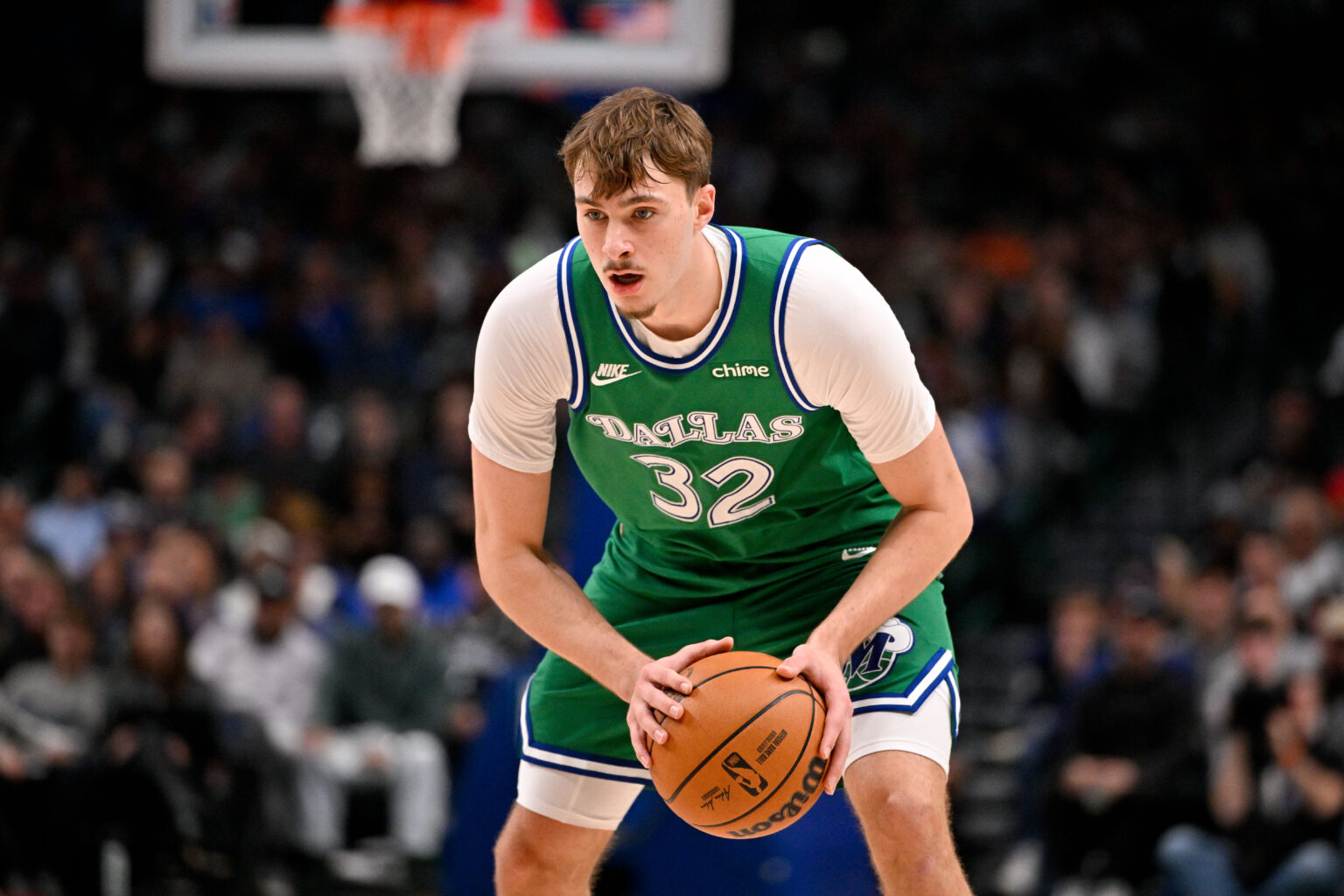
The Dallas Mavericks didn’t overwhelm the Brooklyn Nets with star power alone, they beat them with teamwork and a rookie who looked far more comfortable than his draft status might suggest. Cooper Flagg delivered another complete professional performance, finishing with 27 points en route to a 113-105 win.
Brooklyn kept things close early behind a hot shooting night from Michael Porter Jr., but Dallas steadily wore the Nets down. The Mavericks shot 50.6% from the field, knocked down 15 three-pointers, and turned defense into offense when it mattered most. By the time the fourth quarter arrived, the game had tilted firmly in Dallas’ favor.
Cooper Flagg Looked Like The Best Player On The Floor
Flagg dictated this one. The rookie poured in 27 points on 10-of-17 shooting, added five assists, and didn’t commit a single turnover in 35 minutes. His shot selection stood out immediately. He punished switches inside, knocked down two of his three attempts from deep, and calmly got to the free-throw line when Brooklyn tried to play him physically.
What separated Flagg from everyone else, though, was his two-way presence. He finished with three steals and a block, frequently jumping passing lanes and disrupting Brooklyn’s rhythm. When Dallas needed a steadying possession or a defensive stop, Flagg was involved almost every time. It looked less like a rookie breakout and more like a player announcing himself again.
Michael Porter Jr. Scored, But Dallas Controlled Him Late
Michael Porter Jr. did everything he could to keep Brooklyn afloat. He scored a team-high 28 points on 9-of-17 shooting and buried six three-pointers, stretching Dallas’ defense well beyond the arc. His early shot-making was the primary reason the Nets stayed within striking distance through the first three quarters.
But the Mavericks adjusted late. Dallas sent help earlier, forced Porter into tougher looks, and capitalized on his six turnovers. While the scoring numbers were impressive, Porter finished with a minus-three plus-minus and struggled to create clean looks once Dallas increased the defensive pressure. His night summed up Brooklyn’s problem, production without control.
Dallas’ Ball Movement Was The Difference
The Mavericks didn’t rely on isolation to win this game. They assisted on 28 of their 43 made field goals, consistently shifting the defense and forcing Brooklyn to scramble. Naji Marshall was a huge part of that flow, tallying 22 points and nine assists while shooting 9-of-14 from the field.
Ryan Nembhard also quietly kept things organized, finishing with eight assists in 22 minutes. Dallas repeatedly turned simple passes into high-quality shots, especially from beyond the arc. Their 44.1% from three wasn’t just hot shooting, it was the result of clean looks generated by unselfish play.
Brooklyn Won The Glass, But Lost Everywhere Else
On paper, the Nets did some things well. They outrebounded Dallas 43-37 and grabbed 13 offensive boards, led by Day’Ron Sharpe’s 12 rebounds and Nic Claxton’s interior activity. Brooklyn also shot an excellent 90.0% from the free-throw line, which helped keep the score respectable.
But those advantages never translated into control. Brooklyn committed 17 turnovers, many of them live-ball mistakes that fueled Dallas fast breaks. The Nets scored just eight fast-break points while allowing 22, and their 24.3% from three-point range erased much of the value gained on the boards.
Dallas Played With Pace And Confidence
From the opening minutes, the Mavericks looked comfortable playing fast. They pushed the ball after misses, attacked before Brooklyn’s defense was set, and consistently found shooters in rhythm. Klay Thompson’s 18 points off the bench, including six made threes, swung momentum every time the Nets threatened a run.
Dallas led for 97% of the game and built its largest advantage to 14 points without ever feeling rushed. Even when Brooklyn made shots, the Mavericks responded calmly. This was a performance rooted in execution rather than emotion, a sign of a team beginning to trust its identity.