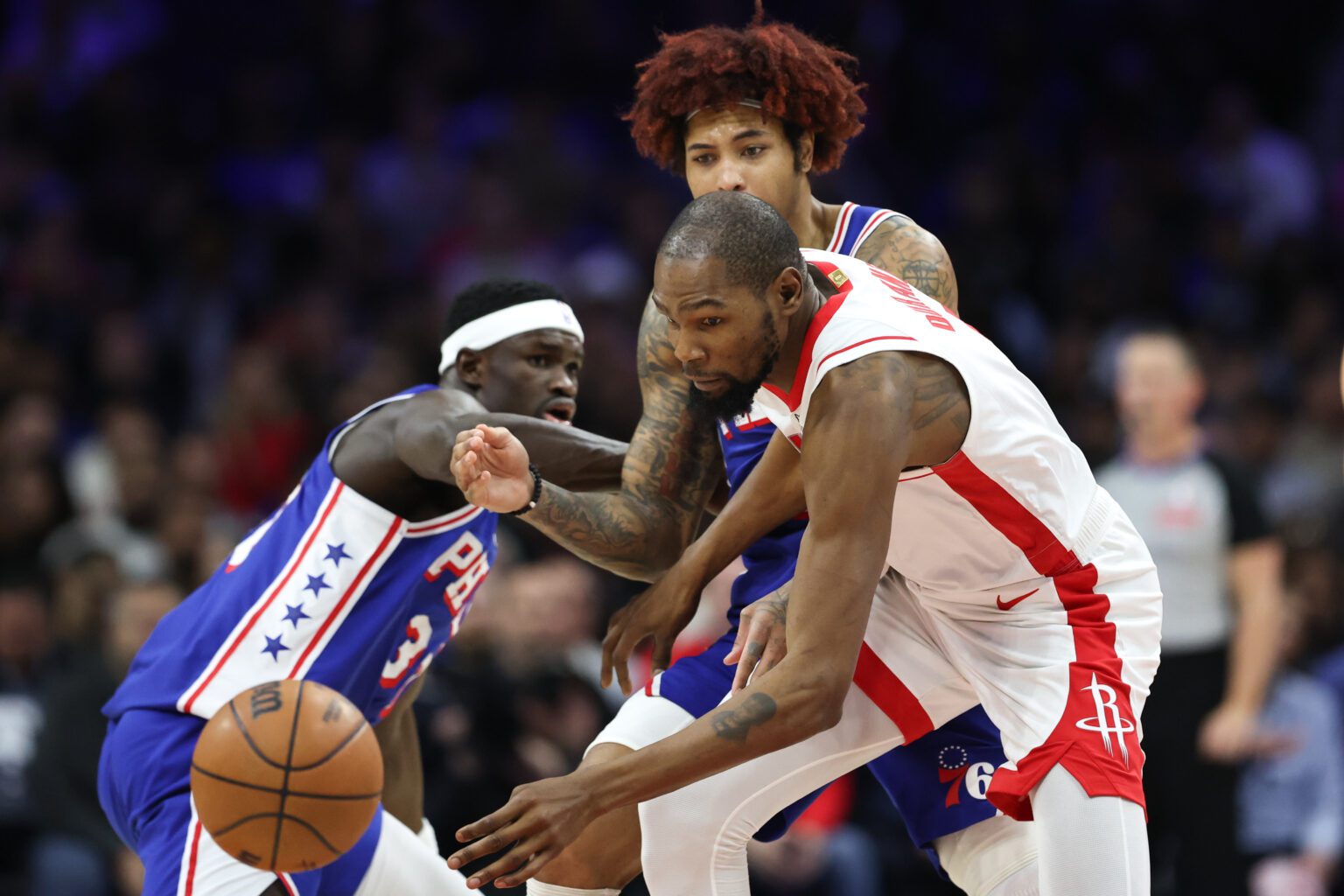
Houston’s offense slowed to a crawl down the stretch, possessions dragged on too long, and clean looks turned into rushed decisions. They even appeared to get a break when Tyrese Maxey’s potential game-winning layup in regulation was swatted away, a block that replays strongly suggested should have been ruled goaltending. No whistle came. The game went to overtime anyway.
And that’s where it fell apart completely. The 76ers regrouped. The Rockets didn’t. The 76ers executed, got to the rim, lived at the free-throw line, and walked away with a 128-122 overtime win while the Rockets continued to sputter when it mattered most.
1. Houston’s Offense Disappeared When The Game Tightened
For three quarters, the Rockets moved the ball well and played with pace. Late in the fourth and into overtime, everything stalled.
Houston finished the night shooting 46.5% overall, but that number hides how rough the final minutes were. They missed 12 free throws, including key ones late, and went just 12-for-24 at the line overall. That alone loomed large in a game decided in overtime.
Over the final five minutes of regulation and OT combined, Houston struggled to create advantages. Possessions often ended with late-clock jumpers or bailout attempts instead of decisive drives. They scored 122 points, but it never felt like enough once execution started slipping.
2. The Missed Goaltending Wasn’t The Story, Houston’s Response Was
Yes, the no-call mattered. It just wasn’t the excuse.
Maxey’s late layup clearly hit glass before being blocked, and Houston caught a break when officials let play continue. But instead of capitalizing, the Rockets failed to take control in overtime. They didn’t attack early. They didn’t pressure the rim. They didn’t impose themselves physically.
Philadelphia, meanwhile, flipped the switch. The Sixers scored efficiently in OT and forced Houston into fouling. Missed opportunities turned into momentum, and once it swung, Houston never pulled it back.
3. Kevin Durant Carried The Load And Paid For It Late
Kevin Durant did almost everything Houston needed him to do.
He poured in 36 points on 13-for-21 shooting and knocked down five threes, playing 44 exhausting minutes. He was aggressive early, decisive in the midrange, and consistently punished mismatches. But the workload caught up with him late.
Durant committed eight turnovers, several of them coming during high-leverage moments. Philadelphia shaded help toward him late, forced him to make tougher reads, and Houston didn’t consistently punish those rotations. By overtime, Durant looked spent, still dangerous, but no longer controlling the game.
4. Embiid And Maxey Took Over When It Mattered
This is where the difference showed.
Joel Embiid finished with 32 points, 15 rebounds, and 10 assists, bullying his way to the free-throw line and controlling the paint late. Houston had no real answer once he decided to attack downhill. He went 11-for-12 from the stripe and punished every mistake.
Tyrese Maxey matched him with 36 points and 10 assists, playing through contact and pressure without backing down. Even after the missed goaltend call, Maxey stayed aggressive, pushing the pace in overtime and making Houston chase. Together, they closed the door.
5. Free Throws, Paint Points, Discipline, Decided It
This game came down to basics.
Philadelphia shot 86.4% from the free-throw line. Houston shot 50.0%. The Sixers scored 66 points in the paint. The Rockets managed 44. Philadelphia also recorded 41 assists, consistently turning pressure into clean looks.
Houston did some good things, 33 assists, 13 steals, strong offensive rebounding, but the margins flipped late. Missed free throws. Missed rotations. Missed chances to apply pressure when Philadelphia wobbled. In a game that was even most of the night, those details became everything.