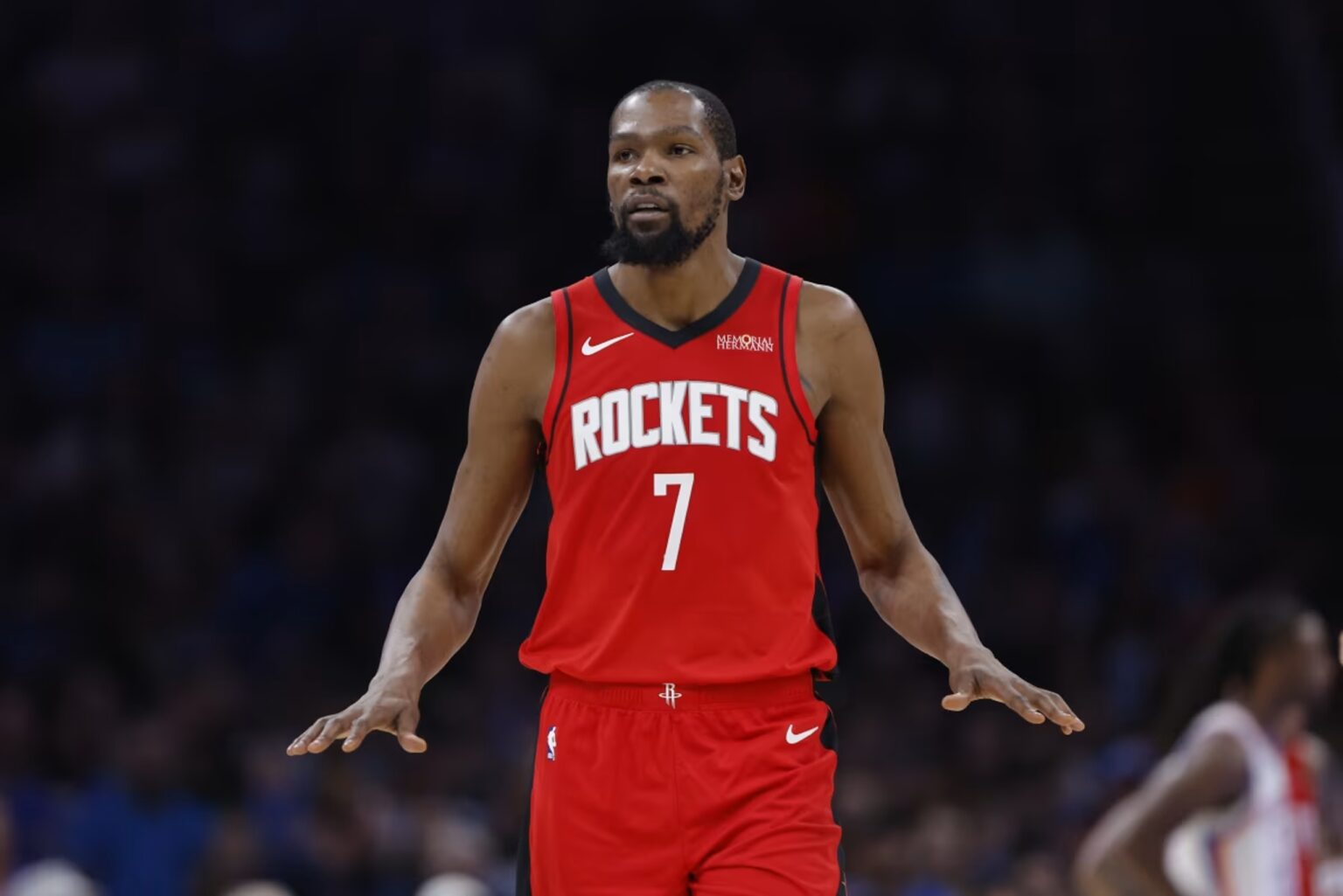
A late-season measuring-stick game lands at Toyota Center on Tuesday night, when the Rockets host the Knicks on Tuesday, March 31, at 8:00 p.m. ET.
The Rockets are 45-29 and sixth in the West, while the Knicks are 48-27 and third in the East. The Rockets are 25-10 at home, and the Knicks are 20-18 on the road.
The two teams come in from different spots. The Rockets just handled the Pelicans 134-102 on Sunday, while the Knicks dropped a 111-100 game to the Thunder.
The season series already has one tight result attached to it. The Knicks won the first meeting 108-106 on February 21, so they lead 1-0. In that game, the Rockets crushed the glass 44-29, but the Knicks forced 20 turnovers and finished the cleaner game late.
For the Knicks, Jalen Brunson is at 26.3 points and 6.7 assists per game, while Karl-Anthony Towns has given them 20.0 points, 11.9 rebounds, and 2.8 assists.
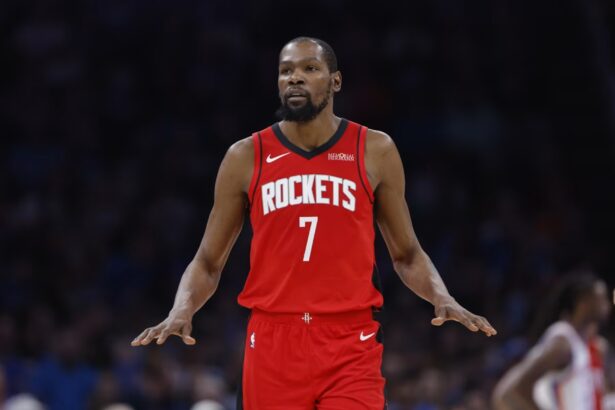
For the Rockets, Kevin Durant is putting up 25.9 points, 5.4 rebounds, and 4.6 assists, and Alperen Sengun has produced 20.7 points, 9.0 rebounds, and 6.2 assists.
The standings angle is easy to see. The Knicks are trying to protect a top-three spot in the East, while the Rockets are trying to stay on the safe side of the West bracket.
Injury Report
Rockets
Steven Adams: Out (left ankle surgery)
Isaiah Crawford: Out (G League two-way)
Tristen Newton: Out (G League two-way)
Fred VanVleet: Out (right knee ACL repair)
Knicks
Landry Shamet: Out (right knee tibial plateau contusion)
Ariel Hukporti: Questionable (G League on assignment)
Dillon Jones: Questionable (G League two-way)
Miles McBride: Questionable (pelvic core muscle surgery)
Why The Rockets Have The Advantage
The first Rockets case starts with how balanced they have been over the full season. They rank ninth in offensive rating at 117.7, eighth in defensive rating at 113.2, eighth in net rating at plus-4.4, and eighth in three-point percentage at 36.3%. Add in a 25-10 home record, and there is a clear picture here: this is a team that usually plays with structure on both ends in its own building.
The second edge is on the glass, and this is where the matchup can tilt. The Rockets lead the league in rebounds at 48.3 per game and also lead the league in blocks at 5.8 per game. That combination can squeeze a team two ways. It can erase a possession at the rim, and it can end the trip with one clean rebound. Against a Knicks group that got outworked on the boards in the first meeting, that is a real swing area.
The first meeting also gave the Rockets a very obvious correction point. They lost by two, even after winning rebounds 44-29, because they turned it over 20 times and gave up 11 steals. If they take better care of the ball this time, the same size advantage can look very different. The Knicks do a lot of damage when they turn defense into easy offense. If the Rockets cut off those live-ball mistakes, they force the Knicks to score against set size over and over.
There is also a recent form angle working for the home side. The Rockets have won two straight and three of their last four, including a 119-109 win over the Grizzlies and the 134-102 blowout over the Pelicans. Those last two wins were built on rebounding, second chances, and a steadier half-court flow around Durant and Sengun. That is the exact formula they need again here.
Why The Knicks Have The Advantage
The Knicks walk in with the better top-end offensive profile. They rank third in offensive rating at 119.6, seventh in defensive rating at 113.2, fifth in net rating at plus-6.5, and fourth in three-point percentage at 37.5%. They also score 116.8 points per game. That gives them more pure shotmaking than the Rockets, and that can clean up a lot when games slow down late.
They also defend the scoreboard at a very high level. The Knicks are second in opponent points allowed at 110.5 per game, and that is one reason they stay competitive even when the offense gets a little sticky. Against a Rockets team that can still drift into long half-court possessions when the ball sticks on one side, that defensive baseline gives the Knicks a stable floor.
The passing profile is another point in their favor. The Knicks hand out 27.4 assists per game, and when that number stays healthy, the offense usually looks sharp because Brunson can get the first crack and Towns can punish the second rotation. The Rockets have size, but they also send help aggressively. That opens the door for kick-out threes and quick extra passes if the Knicks stay patient.
The first meeting showed the cleanest Knicks blueprint. They lost the rebound battle badly, but still won because they forced 20 turnovers, took care of the ball themselves with only 12 giveaways, and got enough from their guards late. That kind of script is still available. If the Knicks can keep the Rockets from turning the game into a rebounding war and instead make it about decisions, they have enough perimeter control to steal another one.
X-Factors
Josh Hart could end up deciding whether the Knicks can survive the size disadvantage. Hart has posted 12.3 points, 7.6 rebounds, and 5.0 assists this season while shooting 41.5% from three. He is not there to dominate possessions. He is there to glue them together. If Hart rebounds like a forward and moves the ball fast enough to beat the Rockets’ second layer, the Knicks become much harder to pin down. If he gets swallowed on the glass, the whole game starts leaning the other way.
Miles McBride is the other one to watch, mostly because his status changes the shape of the Knicks’ backcourt. McBride has put up 12.5 points, 2.6 rebounds, and 2.7 assists while hitting 41.5% from three, but he is listed as questionable. If he plays and looks right, the Knicks get another guard defender and another shooter who can keep the floor spaced around Brunson. If he cannot go, the guard depth gets thinner in a game that already asks for a lot of perimeter resistance.
Jabari Smith Jr. fits this game because he can punish the exact help the Knicks like to send. Smith is at 15.6 points, 6.9 rebounds, and 1.9 assists this season, and he scored 21 in the first meeting. If the Knicks load toward Durant and Sengun, Smith is the one who can make that decision expensive with pick-and-pop jumpers and weak-side threes. If he is quiet, the Rockets lose one of their cleanest counters to the Knicks’ rotations.
Amen Thompson adds a different kind of pressure. He brings 17.9 points, 7.9 rebounds, and 5.2 assists, but the bigger issue is his pace, his cutting, and the extra possessions he creates around the rim. The Knicks can handle a game that stays in front of them. They are far less comfortable when an athletic wing keeps turning broken plays into paint touches and offensive rebounds. If Thompson bends the floor with that kind of activity, the Rockets get a much more dangerous version of their offense.
Prediction
This feels like a Rockets spot. The Knicks have the more polished offensive record, and they already won the first meeting, but the matchup points back to the home side. The Rockets are 25-10 at home, they rank first in rebounds, first in blocks, and they carry a top-10 profile in offensive rating, defensive rating, net rating, and three-point percentage. The first game was decided by turnovers. At home, with the healthier bench rotation and a clear size edge, the Rockets look better positioned to flip that script.
Prediction: Rockets 114, Knicks 109