This had the feel of a tune-up game early, and by the second half, it turned into exactly that. The Los Angeles Lakers didn’t just beat the Washington Wizards 120-101; they methodically pulled the game apart piece by piece until it wasn’t competitive anymore.
The Lakers leaned on the production of their stars and role players, while Washington simply couldn’t generate enough clean offense to keep up. By the time the fourth quarter rolled around, the only real question left was how big the margin would get.
1. LeBron Controlled Everything Without Forcing It
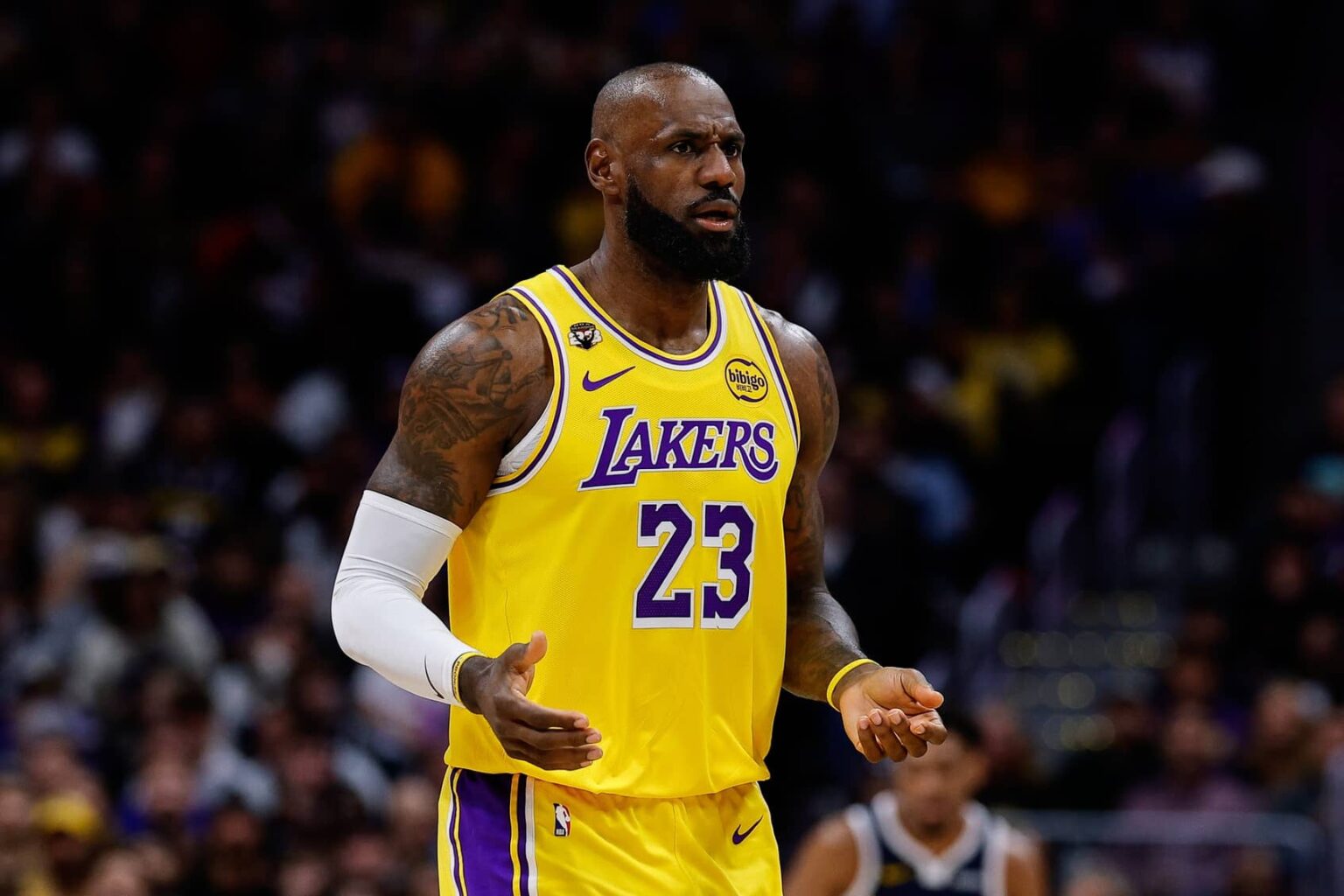
LeBron James dictated the game like a veteran who’s seen every coverage imaginable. He had 21 points, 10 rebounds, and 12 assists (triple-double) on
8-16 shooting (50%). He also had a team-best +25 plus/minus.
What stood out wasn’t just the stat line; it was the pacing. LeBron picked his spots, got others involved early (Lakers had 29 assists), and never let Washington speed the game up. When he was on the floor, the Lakers were completely in control.
2. Lakers’ Efficiency Gap Was Overwhelming
The biggest separator in this game was shot quality and execution. The Lakers had an impressive 56% FG (44-79) compared to the Wizards 44% FG (41-93). That’s 14 fewer makes on 14 more attempts for Washington – a brutal combination.
The Lakers got clean looks all night, especially inside; 56 points in the paint, shot 44-79 overall, compared to Washington’s volume-heavy, inefficient attack. Meanwhile, the Wizards settled far too often, especially from deep.
3. Washington’s Three-Point Shooting Sank Them Early
There’s no way around it; this game was lost from the perimeter. The Wizards went 7-35 from three (20%) as multiple starters struggled: Tristan Vukcevic: 1-6, Will Riley: 1-7, and Tre Johnson: 1-6, specifically.
Even when they generated decent looks, nothing dropped. That allowed the Lakers to stay home in the paint and control the glass without paying a price.
4. Lakers’ Frontcourt Dominated The Interior
This was a physical mismatch, and it showed up everywhere. The Lakers won the rebounds 48-33. They had nine offensive rebounds and 39 defensive rebounds while finishing with 7 blocks. Deandre Ayton, in particular, was perfect from the field: 12 points on 5-5 shooting to go along with 7 rebounds and 3 blocks.
And the bench bigs piled on; Jaxson Hayes had 19 points and 7 rebounds on 8-8 shooting. Washington simply didn’t have the size or physicality to hold up inside.
5. Bench Production Turned It Into A Blowout
Once the starters built control, the second unit blew the game open. The Lakers’ bench highlights included Jaxson Hayes’ 19 points (8-8 FG), Luke Kennard’s 19 points on 4-5 from three, and the team finished with 21 fast-break points.
The Wizards, meanwhile, got scattered production but no real momentum shifts. Their bench couldn’t string together stops, and every small run was answered immediately.