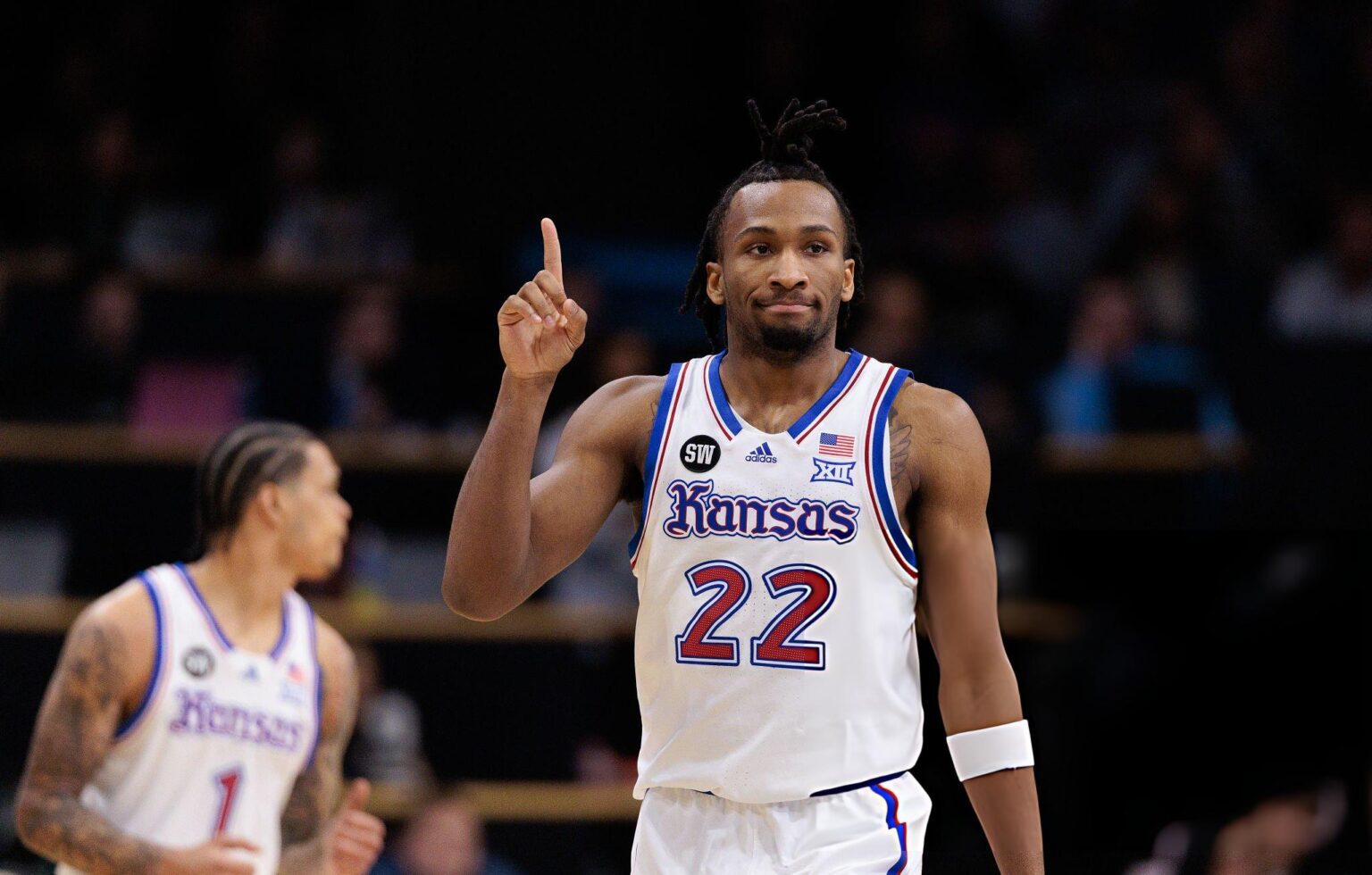
The 2026 NBA Draft cycle is already taking shape around a small group of prospects with clear NBA-level tools and increasingly defined roles. After publishing our own mock draft, the next step is narrowing the gap between projection and reality.
Context still decides everything: usage, spacing, coaching, physical growth, and which skills translate against NBA size and pace. But when the tape and the indicators line up, comparisons can clarify what a team is really drafting.
With that in mind, we are breaking down the 2026 class by NBA standards, starting with Darryn Peterson, AJ Dybantsa, and Cameron Boozer, then expanding into the rest of the top tier. The goal is simple: define the player through the NBA roles that already exist, and make the evaluation easier to see.
1. Darryn Peterson
Player Info: Guard (SG/PG), 6-foot-6, Kansas
College Stats: 19.5 PPG, 3.8 RPG, 1.4 APG, 1.1 SPG, 0.5 BPG, 47.2 FG%, 40.5 3P%
NBA Comparisons: Devin Booker, Anthony Edwards, Mikal Bridges
Darryn Peterson’s freshman tape at Kansas reads like an NBA scoring template with fewer possessions to organize than the production suggests. The foundation is shotmaking that holds up against set defenses: he is at 40.5 3P% while carrying real scoring responsibility, and the efficiency is supported by clean mechanics and repeatable footwork rather than streak-only shot difficulty. The relevant translation point is not just the percentage, but the way the attempts are generated. Peterson gets to pull-ups without wasted dribbles, and he is comfortable taking contested looks when the possession demands it, which is typically the first separator between high-level college scorers and NBA-caliber ones.
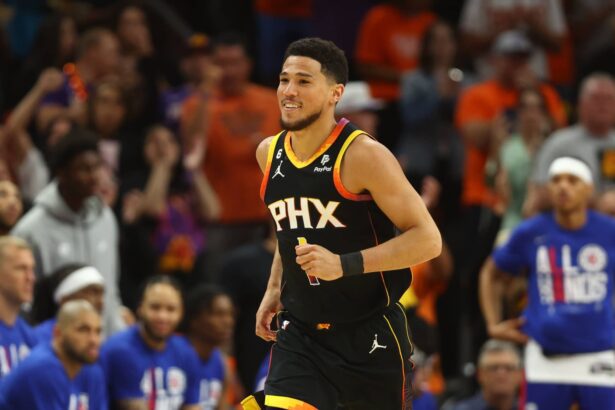
The Devin Booker comparison is about scoring craft and pace control. Peterson does not yet operate as a full-time table-setter, and his assist volume reflects that. But the overlap is clear in the shot diet: balance into midrange pull-ups, compact release windows, and an ability to punish defenders who try to top-lock him off movement. Booker is a more advanced playmaker and manipulator, so the comp is an archetype, not a role claim. Peterson’s next step is proving he can consistently bend the defense enough to create for others, not only for himself.
The Anthony Edwards comparison is about power and scoring pressure. Peterson is not the same explosive athlete, but he plays with a similar intent as a downhill scorer, turning small advantages into paint touches rather than settling early. That matters for projection because it suggests his points are not entirely dependent on jumpers falling. When Peterson’s handle is tight and his decision-making is disciplined, the possession quality rises quickly.
The Mikal Bridges comparison is the defensive and role scalability lane. Peterson’s steal and block rates are not elite indicators on their own, but combined with his frame they point to a plausible outcome where he stays on the floor through two-way utility, not only scoring. If his off-ball focus and screen navigation become consistent, the floor looks like a high-minute wing-guard who shoots, defends, and fits across lineups.
A primary-scoring guard prospect with legitimate top-of-the-draft equity, Peterson is poised to become the No. 1 pick in 2026. The swing is creation for others and defensive consistency. The shooting baseline is already strong enough to keep his NBA translation case intact even if the rest develops more slowly.
Projection: Multi-time All-Star ceiling, high-level starter floor.
2. AJ Dybantsa
Player Info: Wing (SF), 6-foot-9, BYU
College Stats: 24.9 PPG, 6.7 RPG, 4.0 APG, 1.1 SPG, 0.4 BPG, 53.3 FG%, 36.3 3P%
NBA Comparisons: Brandon Ingram, Paul George, Jimmy Butler
AJ Dybantsa’s freshman season at BYU already looks like an NBA primary wing workload, not a typical “future” profile. The production is not empty. He is creating offense at a star rate (24.9 points per game) while staying efficient (53.3 FG%) and adding real connective value as a passer at 4.0 assists per game. That combination matters because it suggests he is not only a scorer living on difficult shots, but a player who can bend the defense and still make the correct second-side decision.
The cleanest overlap with Brandon Ingram is the way Dybantsa wins in the middle of the floor. Ingram’s 2025-26 line (21.9 points, 5.7 rebounds, 3.8 assists on 47.2 FG% with 37.1 3P%) is built on rhythm pull-ups, length at the release point, and the ability to keep possessions alive when the first action stalls. Dybantsa is not as polished as a shot-maker yet, but the structure of his scoring is similar: he gets to his spots with patience, uses size to shoot over contests, and rarely looks rushed even when the defense is loaded.
Paul George fits as the two-way wing template more than a direct stylistic match. George is at 16.0 points, 5.1 rebounds, 3.7 assists with 38.2 3P% this season, and the value comes from being able to play either wing spot without breaking spacing or defense. Dybantsa’s frame and mobility give him the same developmental lane: a wing who can scale up to high-usage stretches, then scale down next to another star without losing impact, because the jumper and the passing hold.
Jimmy Butler is the physicality reference point. Butler’s efficiency and pressure come from turning advantages into paint touches and free throws, while still impacting games defensively (20.0 points, 5.6 rebounds, 4.9 assists, 1.4 steals on 51.9 FG%). Dybantsa is not that level of contact finisher yet, but he already plays with a similar seriousness in how he attacks closeouts and collapses the defense. If the three-point shot remains stable around the mid-30s and the defensive engagement becomes consistent possession-to-possession, he profiles as the type of wing teams build around: large, efficient, and capable of running an offense without monopolizing it.
Projection: All-NBA ceiling, multi-time All-Star floor.
3. Cameron Boozer
Player Info: Forward (PF), 6-foot-9, Duke
College Stats: 22.7 PPG, 10.1 RPG, 4.0 APG, 1.7 SPG, 0.6 BPG, 58.3 FG%, 40.8 3P%
NBA Comparisons: Paolo Banchero, Karl-Anthony Towns, Domantas Sabonis
Cameron Boozer has played like a finished college offensive hub from opening week. The production is obvious, but the more important detail is how cleanly it is produced: 22.7 points on 58.3 FG% with a real perimeter shot (40.8 3P% on 3.7 attempts per game) and enough passing volume to keep the defense honest. When a freshman can score efficiently without shrinking the floor, it changes the entire evaluation. You are not projecting a jumper that might arrive. You are evaluating how big the role can become once the game speeds up.
The Paolo Banchero reference point shows up in the passing and the way Boozer solves possessions from the elbows and the nail. Banchero is averaging 21.8 points, 8.5 rebounds, and 5.0 assists in the NBA this season, and that “score first, pass second, still punish you” structure is the same lane Boozer is already operating in. Boozer is not as dribble-heavy, but he processes quickly, keeps his base under control, and makes simple reads that turn into high-value shots.
Karl-Anthony Towns is the spacing and shot-profile pathway. Towns is at 20.0 points and 11.7 rebounds per game in the NBA this season, and the value proposition has always been a big who stretches coverage and forces a defensive choice. Boozer’s 40.8 3P% is the number that matters for that comparison, because it suggests he can be a frontcourt scorer without being a frontcourt constraint.
Domantas Sabonis is the rebounding-plus-connector angle. Sabonis averaged 15.8 points, 11.4 rebounds, and 4.1 assists this season, and the overlap is the combination of physical rebounding and offense that does not die when the first action gets taken away. Boozer’s defensive playmaking (1.7 steals, 0.6 blocks) is not a rim-protector indicator, but it does show activity and timing that should translate into positive defensive possessions when his responsibilities scale up.
Projection: Multi-time All-Star ceiling, high-level starter floor.
4. Caleb Wilson
Player Info: Forward (SF/PF), 6-foot-10, North Carolina
College Stats: 19.8 PPG, 9.4 RPG, 2.7 APG, 1.5 SPG, 1.4 BPG, 57.8 FG%, 25.9 3P%
NBA Comparisons: Chris Bosh, Jermaine O’Neal, Jalen Johnson
Caleb Wilson’s profile is built on two-way frontcourt production that already carries NBA-level physicality and pace. Offensively, he is not a perimeter-first forward. His value comes from how consistently he converts advantages near the rim and in the middle of the floor, and the efficiency supports that: 57.8 FG% on starter minutes while also taking on a primary usage burden for a high-level program. The three-point number (25.9 3P%) is the current limitation, and it matters because it shapes his early NBA role. Right now, he projects as a pressure scorer and play-finisher more than a spacing forward.
The Chris Bosh reference point is the modern big-forward outline, not a one-to-one stylistic match. Bosh’s career baseline was scoring and rebounding with enough skill to scale into different roles, and Wilson’s early college line shows that same “do a lot without forcing it” footprint, especially with his ability to score efficiently while still contributing on the glass and as a passer. Wilson is not yet the shooter Bosh eventually became, which is why the comp is more about offensive versatility potential than present spacing.
Jermaine O’Neal is the defensive and interior scoring lane. O’Neal’s NBA value was built around rim protection and paint scoring, and Wilson’s 1.4 blocks plus his rebounding volume signal a similar foundation: he can end possessions and he can be a real deterrent when he is set. The important distinction is that Wilson’s defensive translation will depend on discipline and coverage flexibility, not just tools.
Jalen Johnson is the closest active template for how Wilson can amplify his ceiling if the handle and playmaking keep trending up. Johnson is producing star-level all-around numbers for the Hawks this season (23.4 PPG, 10.8 RPG, 8.1 APG) while staying efficient (49.4 FG%), and that blend of size, transition pressure, and connective passing is the clearest pathway for Wilson to reach a true top-tier outcome.
Projection: Multi-time All-Star ceiling, high-level starter floor.
5. Kingston Flemings
Player Info: Point Guard, 6-foot-4, Houston
College Stats: 16.6 PPG, 3.8 RPG, 5.1 APG, 1.6 SPG, 0.4 BPG, 48.2 FG%, 37.9 3P%
NBA Comparisons: Jrue Holiday, Derrick White, Jalen Brunson
Kingston Flemings reads as an NBA guard because the game is already organized around decision quality. He is producing starter-level offense for a program that does not inflate numbers: 16.6 points, 5.1 assists on 48.2 FG%, and 37.9 3P%, with an 85.1 FT% marker that supports the shot as a stable long-term skill. The efficiency is tied to shot selection and pace control more than pure burst. He gets into ball screens with patience, keeps his dribble alive until the second defender declares, then makes the simple pass early enough for teammates to play advantage basketball. That is the shared DNA with Jrue Holiday and Derrick White: lead-guard competence that does not require heliocentric usage to matter.
The defensive indicators are not cosmetic. Flemings is at 1.6 steals per game, and Houston’s environment places real value on ball pressure, deflections, and being able to guard the point of attack without gambling. The Holiday comp is earned on that end first. Holiday has built a career on strength-based containment and late-clock discipline; Flemings is not an NBA-ready defender yet, but the posture is similar. He competes, he anticipates, and he is comfortable defending multiple actions in a single possession, which is often the separator for young guards trying to stay on the floor early.
Jalen Brunson is the offensive counterpoint because Flemings’ scoring is not built on rim-only speed. Brunson wins through angles, footwork, and timing, and Flemings shows the same preference for controlled creation: getting two feet in the paint, playing off the inside shoulder, and creating a clean pull-up when the rim is taken away. The gap is physical strength and shot difficulty at volume, which is exactly why the comparison is useful. It frames what has to improve.
The swing skill is high-level rim pressure. If he becomes a consistent paint-touch guard against NBA length, the passing and shooting scale into a primary creator. If not, the floor is still a starting-caliber connector who defends, shoots, and keeps an offense functional without mistakes.
Projection: All-Star ceiling, high-end starter floor.
6. Mikel Brown Jr.
Player Info: Point Guard, 6-foot-5, Louisville
College Stats: 18.9 PPG, 3.4 RPG, 4.8 APG, 1.2 SPG, 0.2 BPG, 41.8 FG%, 35.7 3P%
NBA Comparisons: Darius Garland, Jamal Murray, Immanuel Quickley
Mikel Brown Jr. profiles as a high-usage lead guard whose value is tied to pull-up shooting, pace control, and functional passing under pressure. Louisville has not sheltered him. He is carrying a primary scoring role (18.9 points per game) while also handling real creation volume (4.8 assists), and the shot diet is already pro-aligned: a heavy share of attempts coming from behind the arc, plus a steady stream of off-the-dribble threes when defenders go under or late-switch screens. The efficiency is not perfect (41.8 FG%), but that is consistent with the type of shots he is taking. The more important marker for translation is that the jumper is credible at volume (35.7 3P%), which forces defensive coverage decisions and keeps his handle-and-shot combination relevant even when he is not getting to the rim at will.
Darius Garland is the cleanest stylistic touchpoint because the advantages are created the same way: probing off the dribble until the big commits, then punishing the window with a pull-up or a simple pass to the release valve. Garland is at 18.0 points and 6.9 assists on 45.1 FG% this season, which frames the developmental target: keep the shotmaking while improving the efficiency and playmaking volume that separate “scoring guards” from full-time engines.
Jamal Murray gives the more optimistic pathway if Brown’s shotmaking scales to high-leverage possessions. Murray is producing 25.5 points and 7.5 assists on 48.3 FG% this season, and the relevant overlap is the ability to live in two-man actions without rushing, then turn one misstep into a made jumper. Brown is not that physically strong yet, but his timing and comfort taking difficult pull-ups already resemble that mold more than the typical freshman guard.
Immanuel Quickley is the early-career role translation comp: a guard whose scoring and shooting gravity can anchor units, while the playmaking is good enough to keep spacing intact and avoid empty possessions. Quickley is at 17.2 points and 6.1 assists on 44.8 FG% this season, which is a realistic benchmark for Brown’s median outcome if he becomes a cleaner finisher and reduces the possession volatility that comes with high-difficulty shot creation.
Projection: All-Star ceiling, high-end starter floor.
7. Darius Acuff Jr.
Player Info: Point Guard, 6-foot-3, Arkansas
College Stats: 22.2 PPG, 3.0 RPG, 6.2 APG, 0.7 SPG, 0.4 BPG, 50.5 FG%, 44.1 3P%
NBA Comparisons: De’Aaron Fox, Jalen Brunson, Tyrese Maxey
Darius Acuff Jr. is already playing with a lead-guard workload that translates, because the production is tied to decision-making, not just shotmaking. He is running a heavy diet of ball screens, creating paint touches, and still finishing possessions efficiently, reflected in 50.5 FG% while carrying 22.2 points and 6.2 assists per game. The three-point number is the separator. At 44.1 3P%, defenses are not being invited to go under screens, and that forces a more NBA-like coverage environment around him than most freshman guards see.
The recent ceiling flash is obvious. In Arkansas’ double-overtime loss at Alabama on February 18, he played all 50 minutes and put up 49 points on 16-of-27 shooting with 6-of-10 from three. The point is not the number itself. It is the shot spectrum and stamina, plus the ability to keep producing as the defense loads up deeper into the game.
De’Aaron Fox is the speed-pressure template. Fox is averaging 19.1 points and 6.3 assists on 48.0% from the field this season, and the overlap is how Acuff collapses the first line, forces rotation, and turns that advantage into either a finish or a clean kickout. Jalen Brunson is the pacing comp. Brunson is at 26.7 points and 6.1 assists, and the similarity is the ability to play off angles, change speeds, and still get a shot without burning the possession with extra dribbles. Tyrese Maxey is the scoring guard reference point, as the shared idea is a guard who can score at volume without abandoning playmaking responsibility.
Projection: All-NBA ceiling, multi-time All-Star floor.
8. Nate Ament
Player Info: Forward (SF/PF), 6-foot-10, Tennessee
College Stats: 17.9 PPG, 6.5 RPG, 2.5 APG, 1.0 SPG, 0.5 BPG, 41.7 FG%, 32.8 3P%
NBA Comparisons: Brandon Ingram, Franz Wagner, Jonathan Isaac
Nate Ament’s case is built on role elasticity. Tennessee has used him as a primary scorer in stretches, a secondary creator on the wing, and a play-finisher when the offense tilts toward guards. The season line is not “clean” efficiency, but it is NBA-relevant volume and responsibility: 17.9 points in 30.8 minutes, with 2.5 assists that reflect real reads rather than bailout passes.
The recent run is the clearest signal for where this is going. Tennessee’s forward had multiple high-end scoring spikes, including 29 points at Kentucky (4-of-6 from three) and 29 against Oklahoma (8-of-8 at the line), which shows he can carry offense without needing a perfect shot diet.
The Brandon Ingram connection is about shot creation geometry. The similarity is the way both players get comfortable looks from awkward angles: one hard dribble into a pull-up, a shoulder dip to protect the release, then a high release point that reduces contest quality. Ament is not that polished yet, but the blueprint is visible when Tennessee gives him late-clock touches and he can operate at his own pace.
Franz Wagner is the cleaner modern wing template. Wagner is at 21.3 points, 5.8 rebounds, and 3.6 assists while shooting 47.9% from the field and 36.5% from three, and the overlap is the two-level utility: scoring that does not break spacing, plus passing that keeps the offense connected. Ament’s three-point percentage (32.8%) is the swing variable here. If that stabilizes closer to league-average NBA wing shooting, his offensive role scales quickly because he already sees the floor like a wing who belongs in structured offense.
Jonathan Isaac is the defensive outcome comp. Isaac’s value in the league has been defensive playmaking and coverage versatility, and Ament’s steal and block rates (1.0 steals, 0.5 blocks) plus his size point to a pathway where he stays playable early through defense even if the shot takes time to settle.
Projection: All-Star ceiling, high-end starter floor.
9. Keaton Wagler
Player Info: Guard (SG/PG), 6-foot-6, Illinois
College Stats: 18.2 PPG, 5.0 RPG, 4.3 APG, 0.9 SPG, 0.3 BPG, 45.6 FG%, 42.0 3P%
NBA Comparisons: Brandon Roy, Tyrese Haliburton, Austin Reaves
Keaton Wagler’s freshman season has already crossed the line from “interesting” to “draft-defining,” because the production is paired with role difficulty. Illinois is 22-6 and in the Big Ten race, and Wagler has not been a complementary scorer. He has been the engine for long stretches, playing 33.3 minutes per night and carrying a profile that looks like a primary creator who also spaces the floor.
The shooting is the cleanest translation point. Wagler is at 42.0 3P% on 5.8 attempts per game, with a release that gets off quickly and enough range to punish coverages that try to go under. That changes how defenses guard his ball screens and isolations. He is not just a scorer hitting open threes. He is bending possessions with shot threat, then using tempo and passing to attack the rotation. That is the connective tissue to Tyrese Haliburton: a lead guard who creates advantages with processing speed and spacing gravity, even without living at the rim on raw burst.
Brandon Roy is the scoring archetype. Roy’s value was built on controlled creation, getting to pull-ups and midrange pockets without wasting dribbles, then punishing late-clock defense with balance and shot-making. Wagler’s best possessions look similar in structure, especially when the play breaks, and he has to manufacture something without help. The single-game spike that got everyone’s attention, his 46-point outburst against Purdue, fits that lens: not a gimmick performance, but a demonstration of how many scoring answers he already has.
Austin Reaves is the modern, practical comp for how this skill package can scale in the league if the athletic margin is not elite. Reaves is averaging 25.0 points, 5.0 rebounds, and 5.6 assists on 50.4 FG% in 2025-26, built on craft, angles, and manipulating defenders into mistakes rather than simply beating them with speed. Wagler’s 4.3 assists against 1.7 turnovers per game suggests he is already trending toward that “create without bleeding possessions” guard archetype.
Projection: All-Star ceiling, high-end starter floor.
10. Labaron Philon Jr.
Player Info: Guard (PG/SG), 6-foot-4, Alabama
College Stats: 21.3 PPG, 3.3 RPG, 5.0 APG, 1.2 SPG, 0.2 BPG, 50.3 FG%, 38.7 3P%
NBA Comparisons: Dennis Schroder, De’Aaron Fox, Immanuel Quickley
Labaron Philon Jr. has the type of sophomore jump that usually separates “draftable guard” from “lead guard prospect.” Alabama’s pace and spacing help, but his production is not system-only. He is creating real advantages off the dribble, and he is doing it without bleeding possessions: 21.3 points, 5.0 assists, 50.3 FG%, and 38.7 3P% with a shot profile that includes pull-ups and live-dribble threes, not just spot-ups.
The recent signature game matters because it shows what the ceiling looks like when the shotmaking is on, and the reads stay clean. Philon posted a season-high 35 points and seven assists in Alabama’s 117-115 double-overtime win over Arkansas on February 18, carrying late-clock offense deep into the game.
Dennis Schroder is the stylistic baseline: a quick-change guard who lives in gaps, gets downhill, and can run an offense in stretches. Schroder is at 12.0 points and 5.1 assists this season, and the connective tissue is the change-of-pace handle and the ability to create a shot without a play being “called” for him.
De’Aaron Fox is the higher-end pressure comp. Fox is averaging 19.1 points and 6.3 assists on 48.0 FG%, and the overlap is in how Philon collapses the first line with speed, then makes the simple pass early enough for teammates to finish the possession. Immanuel Quickley is the role translation if you want the cleanest modern pathway: a guard who can anchor lineups with shot gravity and secondary creation. That’s a reasonable benchmark for Philon’s early NBA impact if the efficiency holds when the floor shrinks.
Projection: All-Star ceiling, high-end starter floor.
11. Hannes Steinbach
Player Info: Forward (PF/C), 6-foot-11, Washington
College Stats: 17.6 PPG, 11.4 RPG, 1.5 APG, 1.0 SPG, 1.0 BPG, 54.0 FG%, 35.9 3P%
NBA Comparisons: Alperen Sengun, Domantas Sabonis, Jonas Valanciunas
Hannes Steinbach’s freshman season has been unusually translatable for a 6-foot-11 big because it is built on the two things that tend to survive the jump: scoring efficiency inside the arc and possession control on the glass. A double-double baseline at 17.6 points and 11.4 rebounds with a 54.0 FG% tells you he is not living on low-leverage touches. Washington is using him as a primary frontcourt option, and he is still producing without sinking team spacing, which is the more important detail than any single-game line.
The recent Rutgers game is a clean snapshot of what he does when the physicality ramps up. Last night, he put up 24 points and 16 rebounds in a road win, controlling the paint and finishing possessions late. It is not just a “big game,” it is evidence of functional stamina and role tolerance, since that is the workload NBA teams want to see from a young big.
Alperen Sengun is the highest-skill offensive reference point. Sengun is at 20.3 points, 9.1 rebounds, and 6.3 assists this season, and the comp is about how a big can create advantages without vertical explosion: footwork, angles, and short-roll processing. Steinbach is not that level of passer yet (1.5 assists), but the idea is similar. His best possessions are not “catch, jump, dunk.” They are “catch, pivot, finish,” with enough touch to make defenses pay for single coverage.
Domantas Sabonis fits as the rebounding and hub pathway. Sabonis averaged 15.8 points, 11.4 rebounds, and 4.1 assists in his shortened season, and the parallel is the possession economy: end defensive possessions, create extra ones, and keep offense flowing with quick decisions. Steinbach does not have the same playmaking volume, but the rebounding base is already in that tier for college impact.
Jonas Valanciunas is the pragmatic floor comp. Valanciunas is at 8.9 points and 5.2 rebounds on 56.9 FG% in a reduced role, and the relevance is role acceptance: a strong, physical big who can win minutes through finishing and rebounding even when the usage comes down.
Projection: All-Star ceiling, high-level starter floor.
12. Braylon Mullins
Player Info: Shooting Guard, 6-foot-6, UConn
College Stats: 12.3 PPG, 3.5 RPG, 1.2 APG, 1.1 SPG, 0.6 BPG, 45.7 FG%, 38.6 3P%
NBA Comparisons: Klay Thompson, Desmond Bane, Kevin Huerter
Braylon Mullins’ evaluation is straightforward: he is a spacing wing who already shoots at a pro volume and, just as important, can get to those attempts in ways that translate. He’s taking 6.3 threes per game and converting 38.6 3P%, with a 62.9% three-point attempt rate that signals a role built around perimeter gravity. UConn has treated him like a real rotation piece, and the recent production supports the idea that this is more than “freshman shooting noise.” He just won Big East Freshman of the Week again after averaging 17.5 points across two games, highlighted by a 25-point night with six made threes against Creighton.
The Klay Thompson lane is about job description, not stardom. Thompson this season is at 11.5 points per game and 37.5% from three, still living off relocation shooting, quick-trigger catch-and-shoots, and the threat that bends a defense even when he is not taking a dribble. Mullins’ college version of that is already visible: he is comfortable sprinting into looks, taking shots without needing to “gather,” and keeping his base consistent off movement.
Desmond Bane is the higher-usage version of the same archetype. Bane is at 20.1 points per game this season while still functioning as a spacing pillar, which is the ceiling outline if Mullins keeps adding strength and develops enough on-ball creation to punish aggressive closeouts.
What separates Mullins from the usual specialist prospect is that the defensive indicators are not empty. He is at 1.1 steals and 0.6 blocks, and UConn’s staff is not hiding him. If that holds as the competition tightens, he projects as the type of two-way shooter teams can close with, not just play in bench units.
Projection: High-end starter ceiling, top-eight rotation floor.
13. Brayden Burries
Player Info: Guard (SG/PG), 6-foot-4, Arizona.
College Stats: 15.5 PPG, 4.6 RPG, 2.6 APG, 1.6 SPG, 0.2 BPG, 49.2 FG%, 37.2 3P%.
NBA Comparisons: Donovan Mitchell, Norman Powell, Jaylen Brown.
Brayden Burries has the build and scoring profile teams keep drafting in the mid-to-late lottery: a strong 6-foot-4 guard who can score off the bounce, get to the line, and defend with real physicality. The efficiency is the tell. He is at 49.2 FG% with 37.2 3P%, and his free-throw attempt rate (0.366) captures how often he converts contact into points instead of settling.
The timing is also right. On Tuesday night, Burries dropped 24 points with five rebounds and four assists in Arizona’s comeback win over Baylor, which is the kind of Big 12 road production that moves a prospect from “interesting” to “real first-round conversation.”
Donovan Mitchell is the stylistic best-case scenario because the scoring pressure is created the same way: downhill bursts into pull-ups, violent changes of speed, and a willingness to take big shots without breaking offensive structure. Mitchell is at 28.6 points and 5.9 assists this season, and that is the template for what a smaller scoring guard looks like when the handle, shot difficulty, and decision-making all scale together.
Norman Powell is the cleaner role translation, especially early. Powell is averaging 22.9 points this season in a scoring-heavy role, living on tough pull-ups, rim attacks off advantage, and punishing second units. Burries’ college profile already fits that scoring-wing guard lane, with the swing being whether his passing (2.6 assists) climbs enough to keep defenses honest when they load up.
Defensively, the steal rate (1.6) and the scouting consensus on his competitiveness point to a comparison with Jaylen Brown, a combo guard who can survive on that end, which raises his floor and gives him a runway to become a better two-way, all-around guard at some point.
Projection: All-Star ceiling, high-level starter floor.
14. Yaxel Lendeborg
Player Info: Power Forward, 6-foot-9, Michigan
College Stats: 14.2 PPG, 7.3 RPG, 3.3 APG, 1.2 SPG, 1.4 BPG, 49.6 FG%, 30.9 3P%
NBA Comparisons: Julius Randle, Pascal Siakam, Kyle Anderson
Yaxel Lendeborg’s appeal is that he checks three NBA boxes at once: frontcourt physicality, defensive playmaking, and connective offense. The 2025-26 line at Michigan is not built like a pure scorer, but it is built like a modern combo forward who keeps possessions alive. He is at 14.2 points and 7.3 rebounds with 3.3 assists, and the defensive production is real, not cosmetic, with 1.2 steals and 1.4 blocks per game. That blend is why he keeps showing up in the middle of first-round boards. The NCAA lists him at 6-foot-9.75 with a 7-foot-4 wingspan, which explains how he can influence plays without being a true center.
Julius Randle is the cleanest scoring-process comp. Randle’s 2025-26 production sits at 21.9 points, 6.9 rebounds, and 5.3 assists on 48.9% from the field, and the shared idea is a forward who can initiate offense, play through contact, and still find teammates when help collapses. Lendeborg is not that level of on-ball creator, but his 3.3 assists and low turnover count suggest he already understands how to play advantage basketball rather than forcing isolations.
Pascal Siakam is the mobility and two-way template. Siakam is at 23.9 points, 6.8 rebounds, and 3.9 assists on 48.3% shooting, and the comparison is about how a forward can defend across matchups while still being a reliable scorer in transition and on quick-hit actions. Lendeborg’s current limitation is the jumper consistency (30.9 3P%), which is the swing variable for whether he becomes a high-end starter or a matchup-dependent piece.
Kyle Anderson is the defensive playmaking and connective offense pathway. The shared value is doing high-leverage work without needing high-leverage shots, while not being the most athletic forward on the floor, and sometimes struggling against faster and smaller players on defense. Lendeborg’s steals-plus-blocks profile hints at that kind of impact if the shooting stabilizes enough to keep him on the floor in playoff spacing environments.
Projection: High-end starter ceiling, top-seven rotation floor.