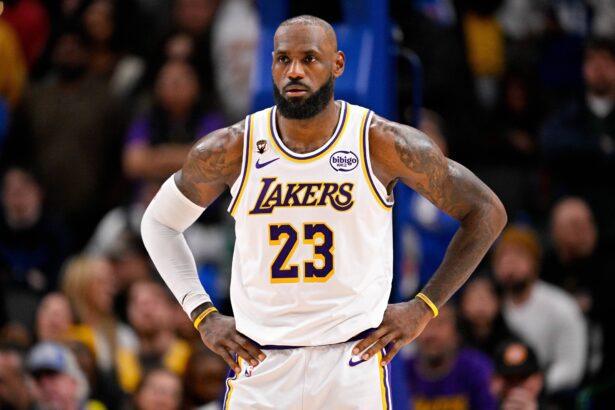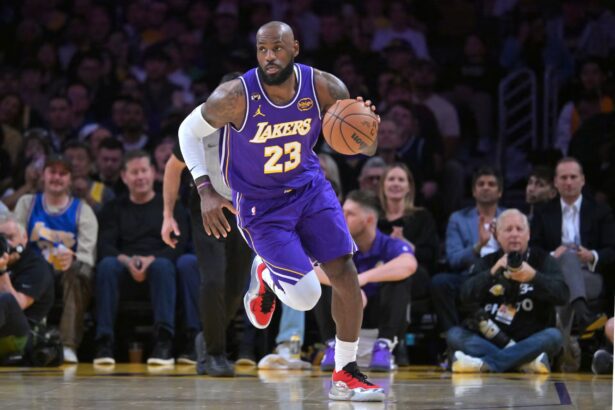
The era debate is alive again, and this time, Byron Scott is not holding back.
During a recent appearance on Power 106 FM’s Brown Bag Mornings, the former Lakers guard and coach openly challenged LeBron James’ claim that it is harder to play 82 games in today’s NBA than it was in the 1980s and 1990s. Scott made it clear that while he respects LeBron, he strongly disagrees with him.
“Listen, you know I’m a big LeBron fan. I don’t think he’s the greatest to ever play, but I’m a big LeBron fan. But that was laughable to me. When I heard that, I said, wait a minute. So you’re saying it was easier to play in the 80s than it is today? Back then, it was ‘no blood, no foul.’”
“You’d get knocked down, get up, shoot your free throws, and keep playing. The game was so much more physical. Now you can sit back and say, well, the score wasn’t as high. Go back and look. We probably had 12 to 15 teams averaging over 100 points a game. The pace of the game was just as fast as it is today.”
“We played 94 feet because everything was predicated on getting the ball inside and out. Today they play 60 feet because everything is predicated on shooting threes. You’re not going up and down the way we did back in the day. And as far as the physicality of the game, it’s not even close.”
“So I just thought it was laughable. You’re talking about one of the greatest players to ever play the game saying it’s harder now than it was then.”
Scott’s argument centers on physicality. He described the 80s as an era of ‘no blood, no foul,’ where players routinely got knocked to the floor, picked themselves up, shot free throws, and kept playing. In his view, the game was far more physical and punishing possession to possession.
LeBron’s comments came on the Mind the Game podcast, where he framed the conversation differently. His point was not about hand-checking or hard fouls. It was about pace, space, and workload.
LeBron pointed to the rise in soft tissue injuries, particularly calf and Achilles issues, arguing that the modern game demands more constant movement. Tracking data supports part of his case. In 2014- 15, the average team covered roughly 16.8 miles per game. In 2024-25, that number has climbed above 18 miles per game. The floor is spaced wider, the three-point line stretches defenses, and players sprint into action repeatedly rather than battling in a congested paint.
Scott countered that scoring and pace were not dramatically lower in his era. He noted that 12 to 15 teams were averaging over 100 points per game in the 80s and argued that teams played 94 feet, not 60, because the offense flowed inside out rather than orbiting around the three-point line.
The disagreement ultimately comes down to definition. Scott is measuring difficulty through contact and toughness. LeBron is measuring it through movement, speed, and cumulative strain.
While Scott acknowledged LeBron’s greatness, he disagreed with the premise and seemed to suggest that James should leave the Lakers after this season. Reports suggest that Luka Doncic and Austin Reaves will have a significant influence on whether LeBron returns to Los Angeles next season.
Neither side is completely wrong. The 80s and 90s featured more body-to-body collisions and fewer freedom of movement calls. Today’s game, however, demands constant defensive rotations, longer closeouts, and more explosive deceleration on drives and cuts. The injury patterns have changed accordingly.