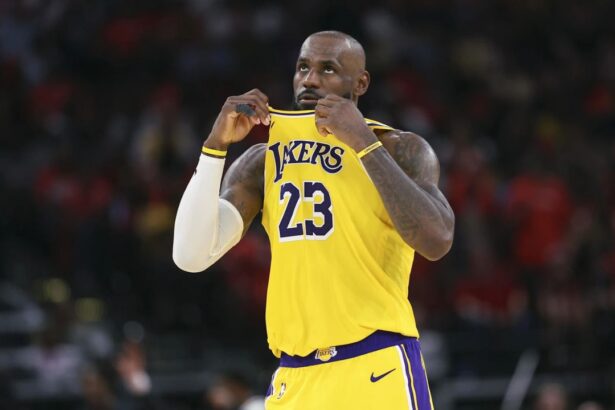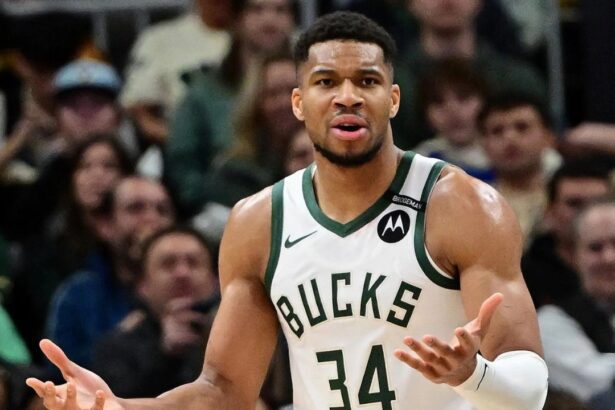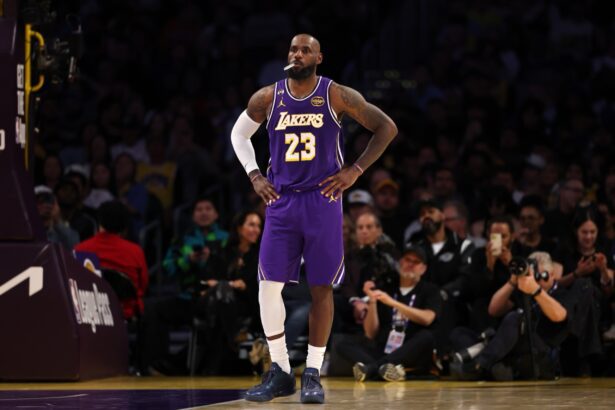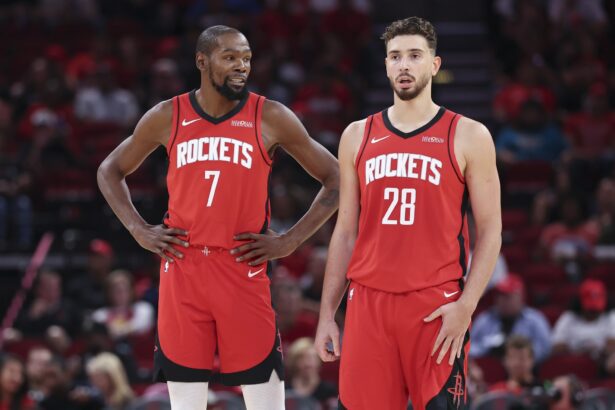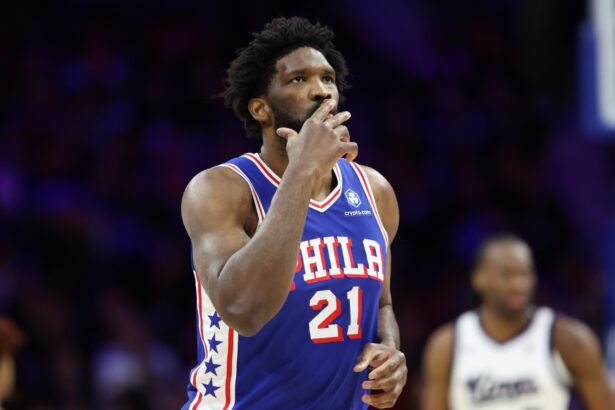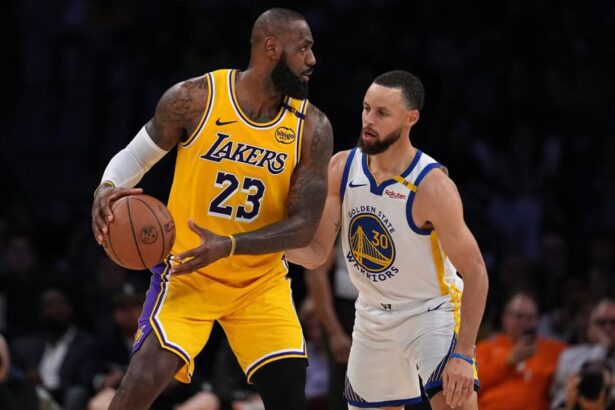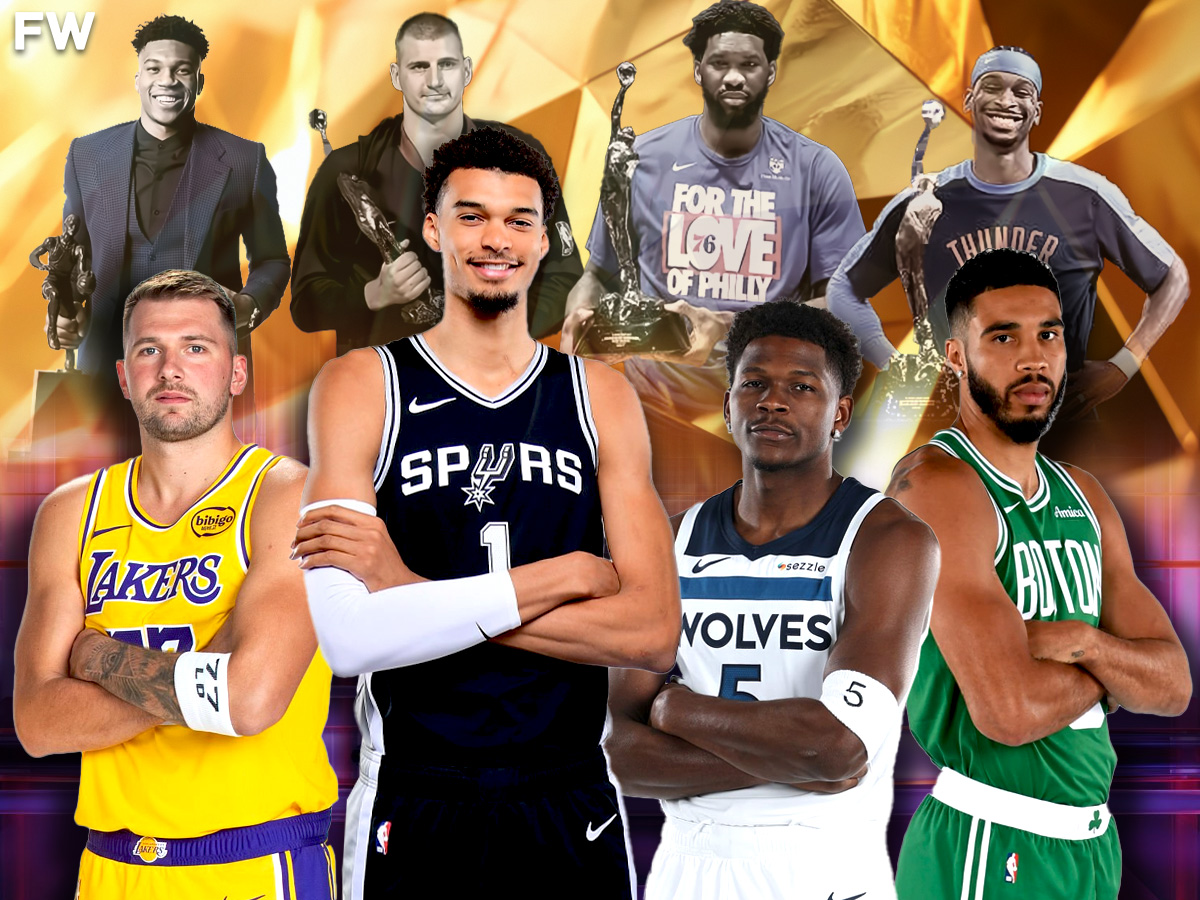
Foreign-born stars have taken control of the MVP race, and the American drought is no longer a small trend. James Harden was the last U.S.-born MVP in 2018. Since then, the award has belonged to Giannis Antetokounmpo, Nikola Jokic, Joel Embiid, and Shai Gilgeous-Alexander.
Now Gilgeous-Alexander has gone back-to-back at 27 years old after averaging 31.1 points, 6.6 assists, and 4.3 rebounds for a 64-win Thunder team. He is not leaving the race soon.
The field behind him is just as difficult. Antetokounmpo played only 36 games this season, but he still averaged 27.6 points, 9.8 rebounds, and 5.4 assists on 62.4% from the field. He is 31, a two-time MVP, and still physically dominant when healthy.
Jokic is also 31, already has three MVPs, and just produced 27.7 points, 12.9 rebounds, and 10.7 assists as a finalist again. Luka Doncic is 27 and led the league at 33.5 points per game. Victor Wembanyama is 22, averaged 25.0 points, 11.5 rebounds, and a league-best 3.1 blocks, and has already reached the MVP finalist stage.
That leaves a narrow American path. Anthony Edwards has the best case if the Timberwolves win at an elite level and he jumps into the 30-point range. Cade Cunningham can enter the race only if the Pistons become a top-tier regular-season team again. Jayson Tatum and Jaylen Brown need the Celtics to have the best record in the league, and one of them has to separate clearly. The talent is there. The best MVP cases are still international.
So here are our MVP predictions through 2030, with several American stars trying to finally end the drought and reclaim the award.
2027 NBA MVP Race
Winner – Nikola Jokic
2nd Place – Victor Wembanyama
3rd Place – Shai Gilgeous-Alexander
Nikola Jokic winning his fourth MVP in 2027 makes a lot of sense, actually. Jokic is still in the middle of a ridiculous statistical stretch, and his game is built to age better than almost every other superstar in the league. He does not need elite burst. He does not depend on vertical athleticism. He controls pace, shot quality, passing angles, and half-court structure better than anyone.
The voter fatigue argument is real, but it only matters if the gap is small. If Jokic produces another season near 27.0 points, 12.0 rebounds, and 10.0 assists while keeping the Nuggets near the top of the West, the case becomes too strong to ignore. A fourth MVP would put him in Kareem Abdul-Jabbar, Michael Jordan, Bill Russell, Wilt Chamberlain, and LeBron James territory. That sounds extreme, but his production already belongs in that class.
Victor Wembanyama finishes second because his rise is coming fast. He has the defensive impact, the scoring jump, and the league-wide attention to win soon. The only reason he falls short here is timing. He may already be the most terrifying two-way player in the league by 2027, but MVP voters usually need more offensive dominance to go with the defensive numbers.
Shai Gilgeous-Alexander takes third because a three-peat is very difficult. He would need another monster season, another elite Thunder record, and no major voter fatigue after back-to-back MVPs. That is possible, but not the strongest prediction.
2028 NBA MVP Race
Winner – Victor Wembanyama
2nd Place – Luka Doncic
3rd Place – Shai Gilgeous-Alexander
Victor Wembanyama winning in 2028 feels like the stronger timeline. By then, he should be 24 years old, fully established as the league’s best defensive player, and far enough into his offensive development to remove the last doubts about volume and efficiency. This is where the full MVP profile should arrive.
The path is direct. If Wembanyama is near 28.0 points, 12.0 rebounds, 4.0 assists, and 3.0 blocks with a top-three seed, the race probably ends there. No other candidate can match that two-way shape. Jokic can match the offensive value. Gilgeous-Alexander can match the scoring control. Doncic can beat almost everyone in raw production. But Wembanyama has the extra defensive layer that makes his case different.
Doncic finishes second because his numbers will always be MVP-level. At 29, he should still be in his best years, and if the Lakers have a strong regular season, he could win this award instead. The difference here is defense and narrative. Voters will likely be waiting for Wembanyama’s first MVP once his offensive output completely puts the Spurs above everyone else.
Gilgeous-Alexander remains in the top three because his floor is too high. He will still have elite scoring, efficiency, and team success. But after two MVPs already, he will need a major statistical gap to win again.
This is the year where Wembanyama takes over the award. Not as a future idea anymore, but as the league’s most complete regular-season force.
2029 NBA MVP Race
Winner – Luka Doncic
2nd Place – Victor Wembanyama
3rd Place – Shai Gilgeous-Alexander
Luka Doncic winning in 2029 feels like the right delayed MVP moment. He already has the statistical profile. In 2025-26, he averaged 33.7 points, 7.8 rebounds, and 8.2 assists while shooting 47.6% from the field and 36.6% from three. That is MVP production already. The only missing piece is the record. If the Lakers finish as a top-two seed by 2029, the race becomes very hard to deny him.
Doncic will be 30 during the 2028-29 season, which should still be close to his peak. His game is not built on speed. It is built on strength, pace, touch, passing, and shot control. That ages well. If he is still around 31.0 points, 9.0 assists, and 8.0 rebounds with strong efficiency, he will have the most traditional MVP case in the league: elite usage, elite numbers, and a major-market contender.
Victor Wembanyama finishes second because he will probably have the best two-way profile in basketball. By 2029, he could be the league’s best defender and a 28.0-point scorer at the same time. The only reason he does not win here is voter rhythm. If he wins in 2028, the bar for a repeat becomes higher. He would need a dominant Spurs record and another statistical jump.
Shai Gilgeous-Alexander stays third because he will still be in the race every year if the Thunder remain near the top. He already won back-to-back MVPs after averaging 31.1 points, 6.6 assists, and 4.3 rebounds for a 64-win team. The issue by 2029 is voter fatigue. After two MVPs, he will need a clear gap over Doncic and Wembanyama to win another one.
This is the year Doncic finally gets the award that has been sitting in front of him for years.
2030 NBA MVP Race
Winner – Anthony Edwards
2nd Place – Victor Wembanyama
3rd Place – Luka Doncic
Anthony Edwards is the best pick to finally end the American drought in 2030. He will be 28 during the 2029-30 season, right in the middle of his physical prime, and his scoring base is already close to MVP level. In 2025-26, he averaged 28.8 points, 5.0 rebounds, and 3.7 assists while shooting 48.9% from the field and 39.9% from three. That is already strong enough to build from.
The next step is team dominance. Edwards cannot win only with highlights and scoring. The Timberwolves need to be one of the best teams in the league, probably a top-two seed, and Edwards has to push closer to 33.0 points, 6.0 rebounds, and 5.0 assists. If that happens, the case becomes serious. He has the athletic force, shot-making, defensive tools, and face-of-the-league energy that voters usually reward when the record matches.
Wembanyama finishes second because his statistical case may be stronger on paper. By 2030, he could be putting up numbers that look almost unfair: elite scoring, elite rebounding, league-leading rim protection, and defensive impact that no guard can match. The reason Edwards wins this prediction is narrative and fatigue. If Wembanyama wins in 2028 and stays near the top in 2029, voters may look for the next story.
Doncic takes third because he will still be producing monster numbers if healthy. His game should age well into his early 30s, and the Lakers’ record will keep him in the conversation. But after winning in 2029, he faces the same problem Gilgeous-Alexander had earlier: repeating is hard unless the gap is obvious.
This is where the American drought ends. Not because the international stars fall off, but because Edwards finally gets the record, the numbers, and the voter story at the same time.
Final Thoughts
Anthony Edwards is the best American pick because his path is the least complicated. He does not need a strange narrative. He needs the Timberwolves to win at an elite level and his production to move from All-NBA scoring to full MVP class.
The production is already close. Edwards has the volume, athletic force, shot creation, defensive tools, and playoff credibility. He can score 30.0 points per game without looking stretched. He can guard when the matchup demands it. He can carry the personality of a No. 1 team. That matters in MVP voting because the award is not only about numbers. It is also about control of the season.
Cade Cunningham has a path, but the Pistons must become a credible top-tier team first after their disappointment this season. Jayson Tatum and Jaylen Brown have a path, but the Celtics’ shared-star structure makes individual separation harder. Ja Morant has the talent, but the potential and availability have faded away over the past three years. Edwards is the one American star with the best mix of scoring, team competitiveness, health upside, and voter appeal.
Still, the international group is not going away. Gilgeous-Alexander is already a two-time MVP in his prime. Jokic can stay elite because his game is based on skill, touch, passing, and control. Doncic will always have the numbers. Wembanyama is the biggest long-term problem because he can own both sides of the floor in a way no American candidate can match.
That is why the drought may end, but the control of the race probably stays international. Edwards is the best American answer. He is not the favorite over the field.