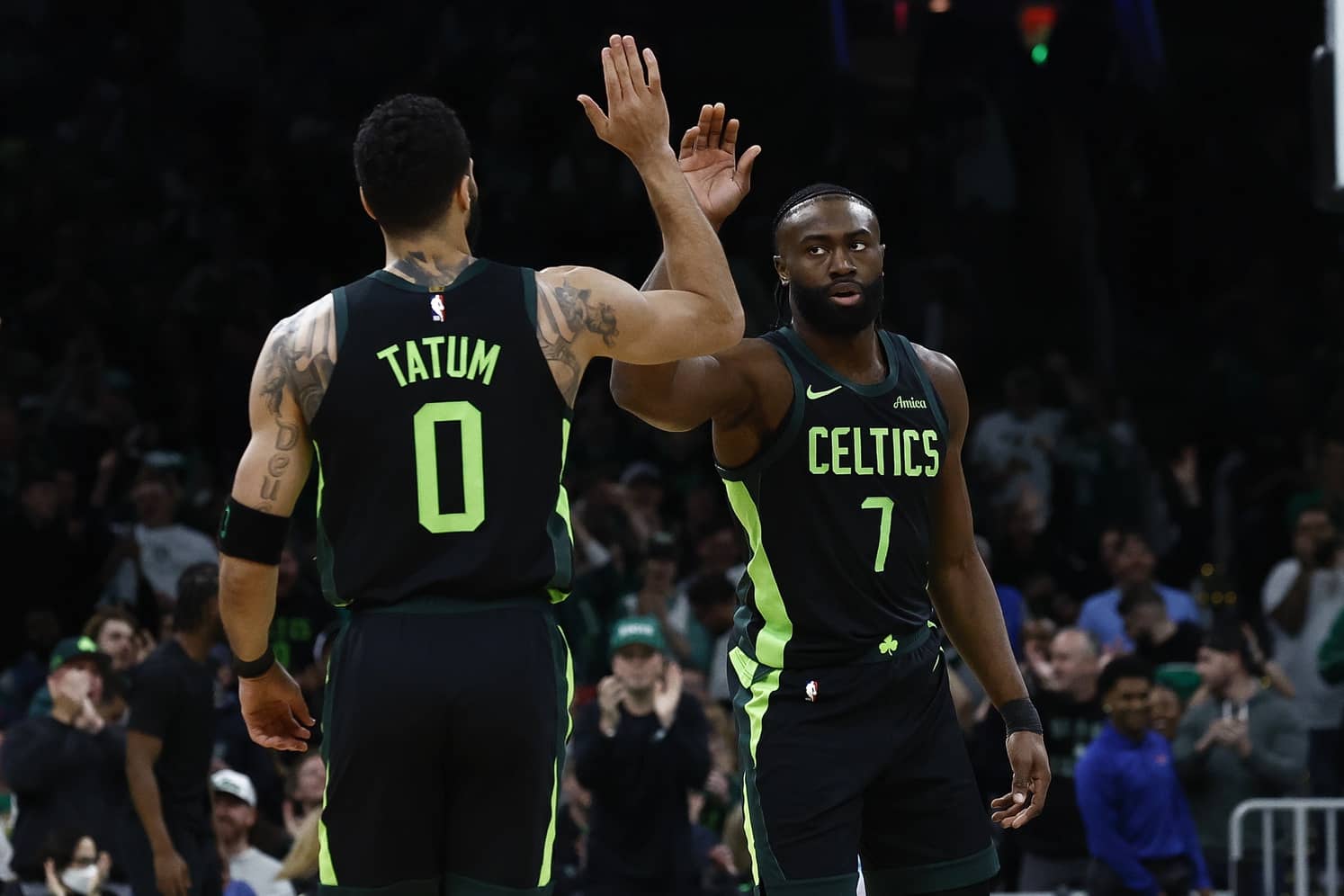
The Celtics surpassed expectations this season. This was supposed to be a transition year, or at least a year where the ceiling was lower because Jayson Tatum was recovering from a torn Achilles. Instead, they went 56-26, finished as the No. 2 seed, and got 16 regular-season games from Tatum at the end of the year after he returned 298 days after the injury. He averaged 21.8 points, 10.0 rebounds, and 5.3 assists in those 16 games, which was more than the Celtics had any right to expect that fast.
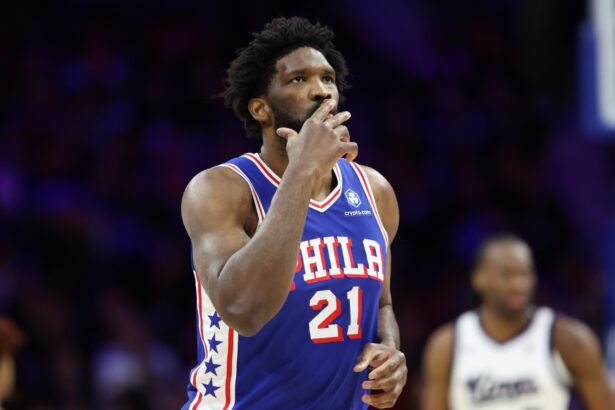
That is why the playoff loss was so strange. The Celtics did not collapse because their entire roster was bad. They lost because they could not close a series. They blew a 3-1 lead against the 76ers in the first round, lost Game 7 by nine, and became the first Celtics team to lose a playoff series after leading 3-1. That changes the offseason talk, but it should not force a full roster destruction.
The Celtics still have a strong core. Tatum, Jaylen Brown, Derrick White, and Payton Pritchard are good enough to keep them in the East race. The issue is the money around them. Tatum, Brown, and White alone are owed about $145.9 million combined in 2026-27, and Pritchard is still on one of the better value contracts in the league. The Celtics do not have cap space to chase stars. Their realistic path is the mid-level exception, smaller contracts, and value bets on players who fix specific playoff problems.
The full non-taxpayer mid-level exception is expected to sit around $15.0 million. Using it would hard-cap the Celtics at the first apron, so they cannot just throw the full number at any decent name. They need to be careful. The right target must add defense, size, rim pressure, shooting, or secondary creation without forcing the team into another expensive mistake.
Here are five realistic free-agent targets for the Celtics in the 2026 offseason.
1. Robert Williams III
Contract Status: Unrestricted Free Agent
Robert Williams III is still the best fit if the Celtics want to fix the frontcourt without pretending they can afford a star center. This is not about nostalgia. It is about profile. The Celtics need a center who can protect the rim, finish above the basket, rebound in traffic, and give Joe Mazzulla a different defensive shape when the game slows down.
Williams averaged 6.7 points, 7.0 rebounds, 1.0 assists, and 1.5 blocks in 17.1 minutes this season while shooting 70.8% from the field. He played 59 games, which is important because his recent career has been defined by availability questions. The production is not huge in raw volume, but the per-minute impact is exactly what the Celtics lacked in the 76ers series.
The Celtics were too dependent on smaller lineups and half-answers at center. Neemias Queta gave them energy, Nikola Vucevic gave them offensive touch, and Luka Garza gave them depth, but none of them gave the team high-end defensive verticality. Williams does. He can play at the level of the screen, recover to the rim, block shots from the weak side, and force ball handlers to think twice before turning the corner.
The offensive fit is also simple. Williams does not need post touches. He sets screens, rolls hard, catches lobs, crashes the offensive glass, and keeps the ball moving from the elbow or short roll. That helps Tatum and Brown because it creates another problem for the defense near the basket. The Celtics became too jump-shot heavy in the first round, including a 13-for-49 night from three in Game 7. Williams would not solve every half-court issue, but he would give them a real paint threat.
The contract should be short because of the injury history. Two years and $24.0 million is fair. It beats his old $12.0 million salary without locking the Celtics into a long medical gamble. If another team offers three guaranteed years, the Celtics should hesitate. If the market stays around $10.0 million to $12.0 million per season, this should be their first call.
2. Ayo Dosunmu
Contract Status: Unrestricted Free Agent
Ayo Dosunmu is the best guard target if the Celtics want more than a shooter. He gives them size, downhill pressure, transition speed, secondary playmaking, and enough defensive ability to fit with their main group. He is also a coveted unrestricted free agent coming off a $7.0 million salary with the Timberwolves.
Dosunmu averaged 8.6 points, 2.8 rebounds, and 2.6 assists in 80 games this season while shooting 49.3% from the field, 31.2% from three, and 80.5% at the line. Those full-season numbers undersell the player he became after the trade deadline. With the Timberwolves, he averaged 14.4 points, 4.2 rebounds, 3.5 assists, and 1.0 steals in 28.9 minutes while shooting 52.1% from the field, 41.4% from three, and 92.5% at the line.
That 43-point sample in the playoffs is why he belongs here. The Celtics do not need another small guard who only survives if the jumper falls. They need someone who can get into the paint, defend bigger guards, and run offense for short stretches without turning the second unit into a mess. Dosunmu can play next to Pritchard because he has enough size. He can play next to White because he can guard either backcourt spot. He can play with Brown because he runs the floor and does not hold the ball.
The risk is the three-point shooting. His full-season number was only 31.2%, and the Celtics cannot ignore that. The Timberwolves version was much better, but the Celtics should not pay him like a guaranteed 40.0% shooter. They should pay him like a two-way guard with growth, playoff utility, and some shooting variance.
Three years and $44.0 million is aggressive but still realistic. It keeps him under the full mid-level range and gives the Celtics a 26-year-old rotation guard who can hold value. If the market pushes him to $16.0 million or more per year, the Celtics probably lose. But after the year he had, he is worth the push.
3. Keon Ellis
Contract Status: Unrestricted Free Agent
Keon Ellis is the most Celtics-type target on this list. He is not a big name, but the basketball logic is strong. He defends, he can shoot, he does not need usage, and he gives the roster another perimeter body who can play real minutes without taking the ball away from the top players.
There is also past reporting here. Jake Fischer reported in January that the Celtics were among the playoff teams that checked in on Ellis before the trade deadline. But since Ellis was heading toward unrestricted free agency, any trade for him became more complicated. That interest should carry into free agency if the price stays in a normal range.
Ellis averaged 6.7 points, 1.9 rebounds, 1.0 assists, 1.2 steals, and 0.6 blocks in 72 games this season while shooting 44.0% from the field, 36.3% from three, and 72.9% from the line. Those numbers are not loud, but the defensive indicators are strong for a guard-wing role player. He generates steals, blocks shots for his position, and can guard up better than most players with his salary range.
The Celtics need that type of player because their playoff defense cannot depend only on White, Brown, and Tatum. They need more point-of-attack resistance. They need someone who can pick up a ball handler, chase through screens, and not get played off the floor because he cannot shoot. Ellis does not fix the frontcourt, but he fixes part of the perimeter problem.
The offensive role would be limited. He would stand in the corner, run in transition, attack closeouts, and move the ball fast. That is enough. The Celtics do not need him to create late-clock offense. They need him to punish help and defend with effort.
Three years and $27.0 million is the right kind of swing. It is not cheap, but it is not reckless. At $9.0 million per season, Ellis would be a rotation bet with upside. If he becomes a 38.0% three-point shooter again with strong defense, that contract becomes valuable fast.
4. De’Anthony Melton
Contract Status: $3.5 Million Player Option
De’Anthony Melton is a risk, but it is the right type of risk. He has a $3.5 million player option, and reporting around the Warriors has already framed him as likely to opt out and test the market. That makes sense. He should be able to beat that number if teams trust the knee and the defensive impact.
Melton averaged 12.3 points, 3.2 rebounds, 2.6 assists, and 1.6 steals in 49 games this season while shooting 40.7% from the field, 29.4% from three, and 82.6% at the line. The three-point number is the problem. There is no way around it. A 29.4% season from three changes the contract conversation, especially for a Celtics team that cannot waste mid-level money.
Still, Melton helps in ways the Celtics badly need. He pressures the ball. He digs at drivers. He rebounds well for a guard. He creates turnovers without gambling on every possession. He can play next to Pritchard, White, or Smart if the Celtics somehow bring both back. His defensive activity would give Mazzulla another option against guards who forced the Celtics into rotations too early.
The contract must reflect the shooting risk. If Melton wants the full MLE, the Celtics should pass. That is too much after a season below 30.0% from three. But two years and $18.0 million makes sense. It gives Melton a raise, gives the Celtics a short-term defender with bounce-back shooting potential, and avoids a long-term mistake.
This is also a bet on role. Melton would not be asked to run the offense. He would defend, attack second-side gaps, make the easy pass, and take open threes. In a smaller offensive role next to Tatum and Brown, his shooting number could move back toward his career baseline. If it does, he becomes one of the best value guards on the market.
5. Marcus Smart
Contract Status: $5.4 Million Player Option
Marcus Smart is the hardest name to evaluate because the emotion is obvious. The Celtics should not sign him because of his past. They should only sign him if the 2026 version still fills a key role. At the right number, he does.
Smart has a $5.4 million player option with the Lakers, and the Lakers surely have interest in keeping him, whether he opts in or tests free agency. That makes this more complicated than a simple reunion idea. If he wants to stay with the Lakers, the Celtics may never get a real shot. If he wants another multi-year contract and a familiar basketball environment, the Celtics should be in the conversation.
Smart averaged 9.3 points, 2.8 rebounds, 3.0 assists, and 1.4 steals this season while shooting 39.5% from the field, 33.1% from three, and 82.2% at the line. The shooting is still uneven, and that is why the Celtics cannot overpay. He is not a spacing solution. He is a defensive guard, a communicator, and a connector who can help organize messy playoff possessions.
The Celtics missed that kind of edge in the 76ers series. Not noise. Not speeches. Actual defensive force. Smart can still blow up actions, switch onto bigger wings for short stretches, and make ball handlers uncomfortable. He also gives the Celtics another passer in bench-heavy lineups, which is important because their offense became too static when the main shot creators were not controlling every possession.
The concern is shot selection. Smart still takes some shots the opponent will accept. The Celtics know that. They lived with it for years. That is why the role has to be clear from the start. He cannot return as a high-usage guard. He would need to be a 20-minute playoff piece who defends, passes, screens, and takes open threes without hijacking possessions.
Two years and $20.0 million is the upper limit. Anything beyond that becomes too emotional. At $10.0 million per season, he is a real rotation player with leadership value. At $13.0 million to $15.0 million, the Celtics might walk away.
Final Take
The Celtics should not chase the biggest names in free agency. That is not where they are financially. They have expensive top-end talent, a hard cap issue if they use the full mid-level exception, and a roster that needs specific repairs instead of a full teardown.
Williams is the best fit because the Celtics need rim protection and vertical pressure. Dosunmu is the best offensive guard target because he brings size, speed, and secondary creation. Ellis is the best value wing-guard defender. Melton is the best buy-low bet if the shot lowers his price. Smart is the emotional option, but also a real basketball fit if the contract stays under control.
The Celtics got farther than expected without Tatum for most of the season. That should not be ignored. But they also blew a 3-1 lead in a series they should have closed. This offseason should be about discipline: add one big, add one defensive guard or wing, keep the books flexible, and start again next season with an improved roster in the key missing spots.