Winning in the regular season is not the same as surviving the playoffs. Since 2000, several teams built elite statistical cases, won 60-plus games, had MVP-level stars, and still failed to reach the NBA Finals.
This ranking looks at single-season teams, not franchises. The question is simple: which teams were the best since 2000 but did not make the Finals that year?
The list is based on record, stats, star power, playoff path, injury context, and how close each team came. Some lost because of one bad matchup. Some lost because of injuries. Some had one weak playoff series after an elite regular season. Others ran into a better team at the worst time.
1. 2017-18 Houston Rockets
The 2017-18 Rockets are the best team since 2000 not to reach the NBA Finals. The statistical profile is strong enough by itself: 65-17 record, No. 1 offensive rating at 114.7, No. 6 defensive rating at 106.1, and No. 1 net rating at plus-8.7.
This was not just a James Harden isolation team. Harden won MVP after posting 30.4 points, 5.4 rebounds, and 8.8 assists. Chris Paul gave the Rockets a second elite shot creator with 18.6 points, 5.4 rebounds, 7.9 assists, and 1.7 steals. Clint Capela added 13.9 points, 10.8 rebounds, and 1.9 blocks while shooting 65.2% from the field. The team had shooting, switching defense, rim finishing, and two late-clock creators.
The playoff case is also the strongest. The Rockets led the Warriors 3-2 in the Western Conference Finals, but Paul suffered a right hamstring injury in Game 5 and missed Games 6 and 7. That injury changed the series.
Game 7 became the most famous part of their season. The Rockets went 7-of-44 from three, missing 27 straight three-point attempts at one point. They still had a real chance because their defense was good enough to slow the Warriors in stretches.
That is why they are No. 1. They were not exposed over a full series. They were one healthy Chris Paul hamstring and a few made threes away from beating a Warriors team with Stephen Curry, Kevin Durant, Klay Thompson, and Draymond Green.
2. 2025-26 Oklahoma City Thunder
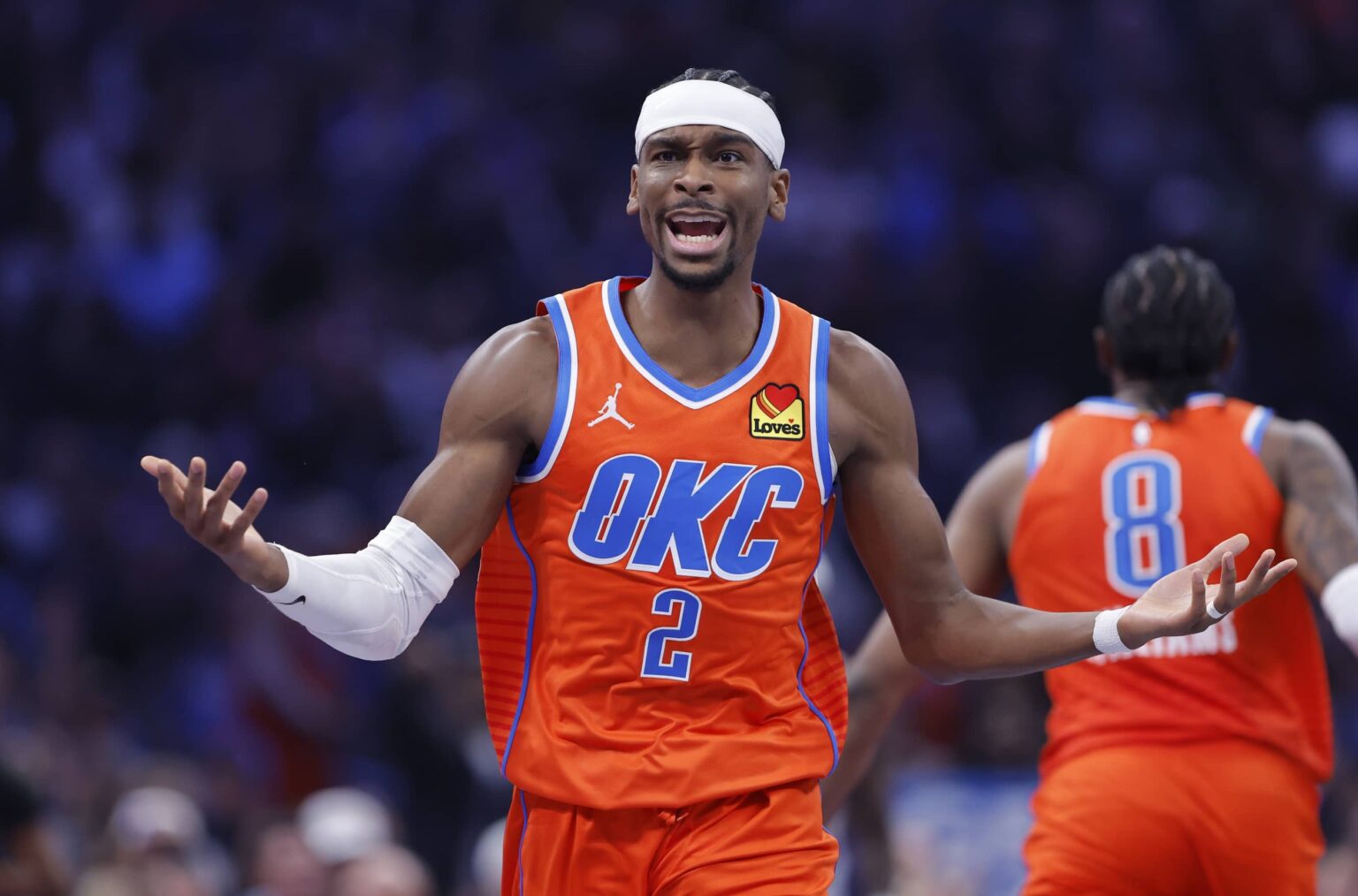
The 2025-26 Thunder had a title-level regular season. They went 64-18, had the best adjusted net rating in the league at plus-10.94, and finished with an 11.04 adjusted margin. Their offensive rating was 118.9, and their defensive rating was 107.8. That is elite on both sides.
Shai Gilgeous-Alexander was the engine. He put up 31.1 points, 4.3 rebounds, and 6.6 assists while shooting 55.3% from the field. He won his second MVP this season and gave the Thunder 35 points and nine assists in Game 7 against the Spurs. Chet Holmgren and Jalen Williams gave them two more high-end young pieces, and the depth around them was one of the best in the league.
The loss came in the Western Conference Finals. The Thunder lost Game 7 to the Spurs, 111-103. The context is important. Williams was out with a hamstring injury. Ajay Mitchell was also unavailable with a calf injury. Holmgren had only four points and two field-goal attempts in Game 7. That is a bad combination against Victor Wembanyama.
The reason this team ranks so high is simple. The Thunder were the defending champions, had the best record in the West, had the best statistical profile in the NBA, and lost a close Game 7 while missing a major creator.
The series also showed the future problem. Wembanyama averaged 27.3 points, 10.9 rebounds, and 2.7 blocks in the series. The Thunder were great. They just ran into the new standard in the West before the Finals.
3. 2015-16 San Antonio Spurs
The 2015-16 Spurs are one of the strangest teams on this list because they didn’t even reach the conference finals. The regular season was still too dominant to ignore.
They went 67-15 and finished with the league’s No. 1 defense. Their defensive rating was 99.0, and their net rating was plus-11.3. That net rating was better than the 73-win Warriors. The Spurs allowed only 92.9 points per game, first in the league.
Kawhi Leonard was already a two-way star. He had 21.2 points, 6.8 rebounds, 2.6 assists, and 1.8 steals while shooting 50.6% from the field and 44.3% from three. LaMarcus Aldridge added 18.0 points and 8.5 rebounds. Tim Duncan, Tony Parker, Manu Ginobili, Danny Green, Boris Diaw, Patty Mills, and David West gave the Spurs experience and depth.
The issue was the playoff matchup. The Spurs lost 4-2 to the Thunder in the second round. Kevin Durant and Russell Westbrook gave the Thunder more top-end shot creation, and the Spurs did not get enough offense late in the series.
Game 5 was the swing point. The Spurs lost by one at home, then dropped Game 6 by 14. For a team with 67 wins and the best defense in basketball, that exit was brutal.
The ranking is high because of the numbers. A 67-win team with a plus-11.3 net rating and the league’s best defense is a Finals-level team. The playoff result was bad. The regular-season profile was historic.
4. 2006-07 Dallas Mavericks
The 2006-07 Mavericks had one of the best regular seasons ever by a team that lost in the first round. They went 67-15, finished with the best record in the league, and had Dirk Nowitzki as the MVP.
Nowitzki averaged 24.6 points, 8.9 rebounds, and 3.4 assists while shooting 50.2% from the field, 41.6% from three, and 90.4% from the free-throw line. That was elite scoring efficiency for a high-usage big. Josh Howard, Jason Terry, Jerry Stackhouse, and Devin Harris gave the Mavericks enough two-way balance around him.
The team was strong. The Mavericks ranked ninth in points per game and fourth in opponent points per game. They had a good defensive base under Avery Johnson. This was not a soft offensive team with no defense. It won with balance.
The problem was the Warriors’ matchup. The Mavericks lost the regular-season matchup 0-3, then lost the playoff series 4-2. The Warriors played smaller, faster, and with more pressure. They took Nowitzki out of rhythm and forced the Mavericks into uncomfortable offense.
Nowitzki dropped from his MVP regular-season level to 19.7 points per game in the series while shooting 38.3% from the field and 21.1% from three. In Game 6, he had eight points on 2-of-13 shooting.
That exit damages the case. But 67 wins, an MVP, and an elite regular-season profile still put the Mavericks in the top five.
5. 2008-09 Cleveland Cavaliers
The 2008-09 Cavaliers were built around peak LeBron James force. They went 66-16, had the best record in the NBA, and entered the playoffs with a clear statistical case as a title team.
James won MVP with 28.4 points, 7.6 rebounds, and 7.2 assists. He also made the All-Defensive First Team. That combination gave the Cavaliers one of the strongest single-player engines of the decade. Mo Williams added 17.8 points and 4.1 assists while shooting 43.6% from three. Zydrunas Ilgauskas, Delonte West, Anderson Varejao, and Ben Wallace gave the roster size and defensive structure.
The team ranked fourth in offensive rating and third in defensive rating. The Cavaliers also swept the first two rounds, beating the Pistons and Hawks 8-0 combined. That part matters. They looked like a Finals team until the Magic series.
The Eastern Conference Finals exposed the roster. The Magic had Dwight Howard inside and four-out spacing around him. The Cavaliers did not have the right frontcourt mobility or wing shooting depth to handle that structure. James was unreal in the series, but the roster around him could not win enough possessions.
The Cavaliers lost 4-2. James averaged 38.5 points, 8.3 rebounds, and 8.0 assists in the series. That is the important part. The best player did enough. The matchup and roster limits were the problem.
6. 2018-19 Milwaukee Bucks
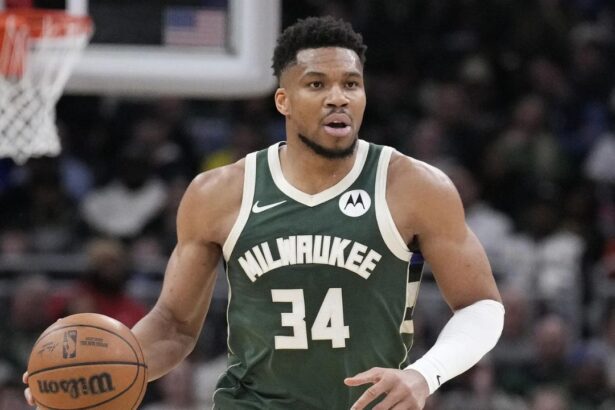
The 2018-19 Bucks were the first version of the Giannis Antetokounmpo title template. They went 60-22, had the best record in the NBA, and built a dominant system around spacing, rim pressure, and drop coverage.
Antetokounmpo won MVP with 27.7 points, 12.5 rebounds, and 5.9 assists while shooting 57.8% from the field. Khris Middleton gave them 18.3 points, 6.0 rebounds, and 4.3 assists. Brook Lopez added floor spacing and rim protection. Eric Bledsoe, Malcolm Brogdon, Nikola Mirotic, George Hill, Ersan Ilyasova, and Pat Connaughton gave the Bucks real depth.
The team numbers were elite. They had the No. 4 offensive rating, the No. 1 defensive rating, and the best point differential in the league. They were not just winning because Antetokounmpo was great. They had a system that crushed the regular season.
The playoff run started well. The Bucks swept the Pistons, beat the Celtics 4-1, and went up 2-0 on the Raptors in the Eastern Conference Finals. Then the series changed. The Raptors built a wall against Antetokounmpo, used Kawhi Leonard as the main defensive body, and forced the Bucks into worse half-court possessions.
The Bucks lost four straight. The offense became too dependent on Antetokounmpo’s drives, and Bledsoe’s shooting problems hurt spacing. This team was title-quality, but the half-court counters were not ready. Jrue Holiday arrived a year later. The 2019 version was close, but not complete enough.
7. 2006-07 Phoenix Suns
The 2006-07 Suns were the best Nash-era team for this list. The 2004-05 team changed the league, but the 2006-07 version had Amar’e Stoudemire back and a stronger playoff case.
The Suns went 61-21. They had the No. 1 offense in the league with a 113.9 offensive rating and 110.2 points per game. Steve Nash was a two-time MVP already and averaged 18.6 points and 11.6 assists while shooting 53.2% from the field, 45.5% from three, and 89.9% from the line. Stoudemire added 20.4 points and 9.6 rebounds on 57.5% from the field. Shawn Marion put up 17.5 points and 9.8 rebounds.
That is a real title-level core. Nash controlled the pace. Stoudemire gave them elite rim pressure. Marion defended, rebounded, and finished in transition. Leandro Barbosa won Sixth Man of the Year. Raja Bell and Boris Diaw gave them more shooting and passing.
The playoff exit came against the Spurs in the second round. The Suns lost 4-2, but the context still hurts. Nash had the cut nose issue in Game 1. Robert Horry’s hip check in Game 4 led to suspensions for Stoudemire and Diaw in Game 5. The Suns lost Game 5 at home by three, then lost Game 6 by eight.
This team had a real path to the Finals. The offense was elite. The top-end talent was strong. The series had enough strange events that it still feels unresolved. The defense was not elite, which keeps the Suns below the top six. But the offensive profile was championship-level.
8. 2010-11 Chicago Bulls
The 2010-11 Bulls had the youngest MVP in NBA history and the best defense in the league. That is enough to make this list.
The Bulls went 62-20 and had the best record in the NBA. Their defensive rating was 100.3, first in the league. They allowed only 91.3 points per game, second in the NBA. Tom Thibodeau built a defense that was physical, disciplined, and elite on the glass.
Derrick Rose won MVP with 25.0 points, 4.1 rebounds, and 7.7 assists. He carried a huge shot-creation burden because the roster did not have another elite perimeter creator. Luol Deng gave them 17.4 points and strong wing defense. Carlos Boozer gave them 17.5 points and 9.6 rebounds. Joakim Noah, Taj Gibson, and Omer Asik helped drive the defensive identity.
The playoff issue was half-court scoring. The Bulls beat the Pacers and Hawks, then lost 4-1 to the Heat in the Eastern Conference Finals. Rose saw traps, size, and late-game pressure. The Heat had LeBron James, Dwyane Wade, and Chris Bosh, and their athletic defense cut off Rose’s driving lanes.
Rose averaged 23.4 points in that series, but he shot only 35.0% from the field and 23.3% from three. That was the whole problem. The Bulls’ defense could compete, but the offense became too dependent on one guard.
The team was elite, but not balanced enough offensively to rank higher.
9. 2021-22 Phoenix Suns
The 2021-22 Suns had the best record in the league and looked like the most stable regular-season team in the NBA. They went 64-18, finished first in the West, and had the groove of a team that expected to return to the Finals.
Devin Booker had 26.8 points, 5.0 rebounds, and 4.8 assists. Chris Paul added 14.7 points and 10.8 assists. Deandre Ayton had 17.2 points and 10.2 rebounds while shooting 63.4% from the field. Mikal Bridges was an elite wing defender and efficient low-usage scorer. Cameron Johnson, Jae Crowder, Cameron Payne, and Landry Shamet gave them depth.
The team was prolific: 114.8 points per game, 107.3 opponent points per game, and a top-five level net rating. The Suns were not carried by one player. They had two guards who could run offense, a productive center, and strong wing defense.
The collapse is why they rank ninth instead of higher. The Suns lost to the Mavericks in the second round after leading the series 2-0 and 3-2. Game 7 was a disaster: 123-90 at home. Booker had 11 points on 3-of-14 shooting. Paul had 10 points and four assists. The Suns trailed 57-27 at halftime.
That ending damages the full case. A 64-win team should not lose a home Game 7 by 33 points. Still, the regular-season sample was too good to ignore. The Suns were a real title contender for most of the season. They just had the worst possible final game.
10. 2020-21 Utah Jazz
The 2020-21 Jazz were one of the best three-point teams of the modern era. They went 52-20 in a shortened season, which translates to roughly a 59-win pace over 82 games. They had the best record in the NBA.
The profile was strong on both sides. The Jazz scored 116.4 points per game and allowed 107.2. They made 16.7 threes per game (No.1) on 43.0 attempts (No.1) and shot 38.9% from three (No.4). That combination of volume and accuracy was elite.
Donovan Mitchell averaged 26.4 points, 4.4 rebounds, and 5.2 assists. Rudy Gobert had 14.3 points, 13.5 rebounds, and 2.7 blocks and won Defensive Player of the Year. Mike Conley, Bojan Bogdanovic, Jordan Clarkson, Joe Ingles, Royce O’Neale, and Georges Niang gave the Jazz shooting, ball movement, and lineup continuity.
The regular season worked because the spacing was wide, and Gobert protected the rim behind everything. The playoff loss showed the limits. The Jazz led the Clippers 2-0 in the second round, then lost four straight. Kawhi Leonard missed the last two games of the series, and the Jazz still couldn’t close it.
Game 6 was the main collapse. The Jazz lost 131-119 after leading by 25. The Clippers went small, pulled Gobert away from the rim, attacked the corners, and forced rotation mistakes.
That is why the Jazz are No. 10. The regular season was elite, but the playoff adjustment problem was too harsh. They were excellent at their identity. They were not flexible enough when that identity was attacked.
Final Thoughts
The main point is that most of these teams were not fake contenders. The Rockets were one healthy Chris Paul away from maybe ending the Warriors’ run. The Thunder had the best squad in the league and lost Game 7 without one of their main creators. The Spurs, Mavericks, and Cavaliers all had records that usually belong to Finals teams.
That is what makes this list different. These were not just good teams that lost. Most of them had a real title case based on wins, point differential, MVP-level talent, or playoff matchups. Some were stopped by injuries. Some ran into a bad matchup. Some had one awful shooting night. Some had a system that looked elite for 82 games, but became easier to attack in a seven-game series.
The NBA usually remembers only the teams that get to June. This list is about the teams that had the numbers, the stars, and the season-long proof, but still fell short before the Finals. That gap is small, but it changes how history talks about them.