The MVP award is the biggest regular-season measure of individual dominance. Since 2000, it has moved through different eras: interior power, all-around forwards, scoring guards, elite shooters, and modern offensive engines who run everything through their decisions.
Some winners carried average rosters higher than expected. Others turned great teams into league-best machines. Some seasons were built on scoring titles. Others came from efficiency, defense, passing, rebounding, durability, or a mix of everything.
That is what makes the team ranking interesting. It shows which franchises had the highest superstar peaks over the last 25-plus years. Not every great team had an MVP. Not every MVP team won the championship. But every team on this list had at least one player who defined a regular season.
Here is the complete ranking of NBA teams with the most MVP-winning seasons since 2000, with the players, years, stats, records, and context behind each case.
1. Oklahoma City Thunder – 4 MVPs
Kevin Durant – 2014
Russell Westbrook – 2017
Shai Gilgeous-Alexander – 2025, 2026
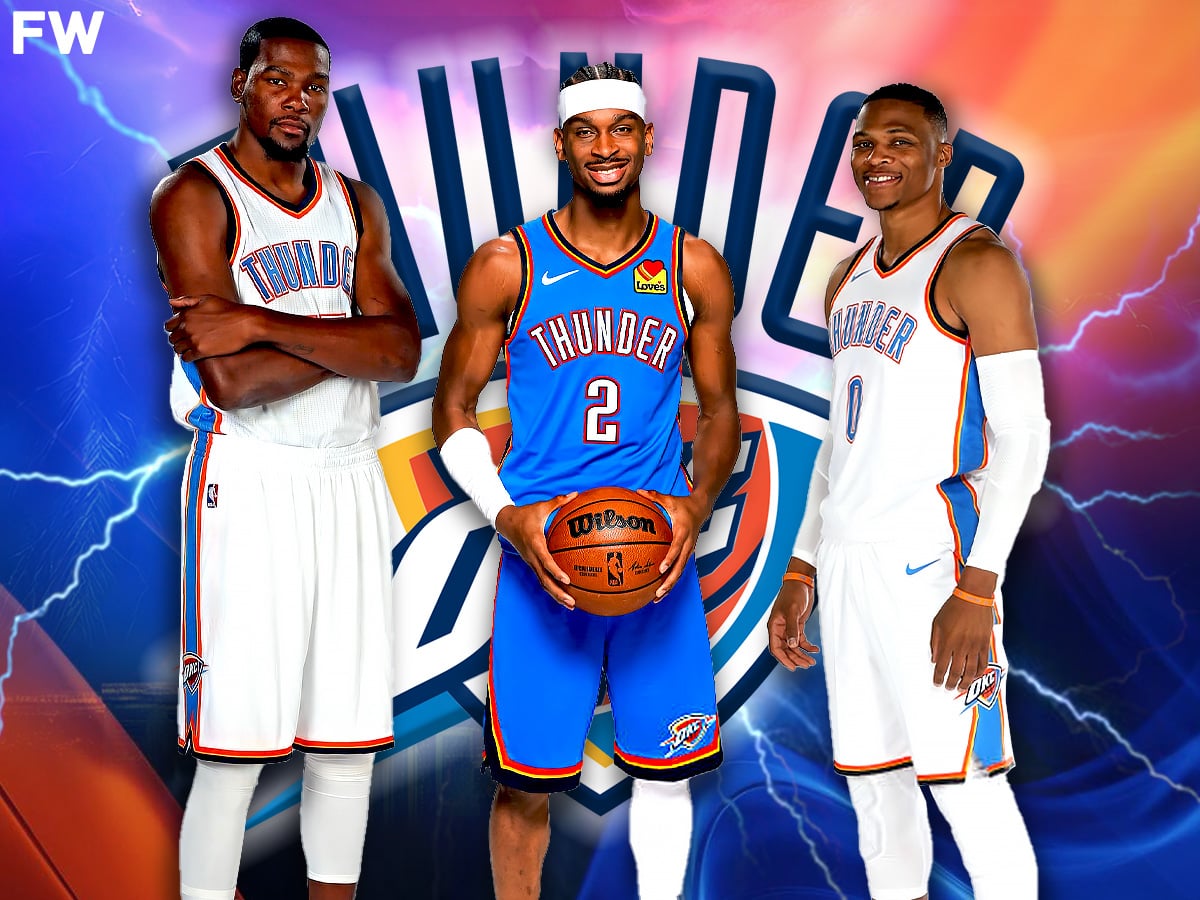
The Thunder sit alone at the top because they have three different MVP winners since 2000. That is the best part of their case. This is not one player carrying the full number across a long run. It is Kevin Durant, Russell Westbrook, and Shai Gilgeous-Alexander all winning MVPs while playing for the Thunder.
Durant won in 2013-14 after averaging 32.0 points, 7.4 rebounds, and 5.5 assists while shooting 50.3% from the field and 39.1% from three. That season was pure scoring control. He carried a massive offensive burden, won the scoring title, and kept the Thunder among the best teams in the league.
Westbrook won in 2016-17 with one of the loudest statistical seasons ever. He averaged 31.6 points, 10.7 rebounds, and 10.4 assists. The efficiency was not perfect, but the production was historic. He became the first player since Oscar Robertson to average a triple-double for a full season, and the award became a direct reward for volume, pressure, and nightly responsibility.
Then SGA pushed the Thunder into a different category. Gilgeous-Alexander won in 2024-25, then repeated in 2025-26. In 2025-26, he averaged 31.1 points, 6.6 assists, and 4.3 rebounds while shooting 55.3% from the field and 38.6% from three. The Thunder also went 64-18 and finished with the best record in the NBA once again.
That is why the Thunder are No. 1. Durant was the elite scoring wing. Westbrook was the triple-double engine. SGA is the modern efficiency guard with elite rim pressure, midrange control, and foul-drawing power. The Thunder have produced three different MVP archetypes in 12 years. No other team has matched that since 2000.
2. Denver Nuggets – 3 MVPs
Nikola Jokic – 2021, 2022, 2024
The Nuggets are second with three MVPs, all from Nikola Jokic. His first came in 2020-21, when he averaged 26.4 points, 10.9 rebounds, 8.4 assists, and 1.3 steals while shooting 56.6% from the field, 38.8% from three, and 86.8% from the line. He played all 72 games, led the NBA with 60 double-doubles, ranked second with 16 triple-doubles, and took the Nuggets to a 47-25 record and the No. 3 seed in the West. That was the first MVP in franchise history.
His 2021-22 MVP was even more extreme statistically. Jokic averaged 27.1 points, 13.8 rebounds, 7.9 assists, 1.5 steals, and 0.9 blocks in 74 games while shooting 58.3% from the field. He led the league in total rebounds with 1,019 and defensive rebounds with 813. He also became the first player in NBA history to record at least 2,000 points, 1,000 rebounds, and 500 assists in a season. The Nuggets finished 48-34 without Jamal Murray for the full season and with Michael Porter Jr. limited to nine games, which made Jokic’s carry job stronger than the team record looked.
Jokic won again in 2023-24 after averaging 26.4 points, 12.4 rebounds, and 9.0 assists in 79 games. The Nuggets went 57-25, matched the franchise record for wins, and tied for the best record in the West. He ranked top 10 in the NBA in points, rebounds, and assists per game, finished second in double-doubles with 68 and triple-doubles with 25, and became the second player ever with at least 2,000 points, 900 rebounds, and 700 assists in one season.
That is the Nuggets’ case. It is not based on variety like the Thunder. Jokic gave the Nuggets three different MVP cases: full-season durability in 2021, historic carry-job production in 2022, and title-defending dominance in 2024. That is enough to put the Nuggets clearly at No. 2 since 2000.
T3. Los Angeles Lakers – 2 MVPs
Shaquille O’Neal – 2000
Kobe Bryant – 2008
The Lakers have two all-time players in very different stages of the franchise as their MVPs. Shaquille O’Neal won in 1999-00 after averaging 29.7 points, 13.6 rebounds, 3.8 assists, and 3.0 blocks while shooting 57.4% from the field. It was one of the most physically dominant MVP seasons ever.
Kobe Bryant won in 2007-08 after averaging 28.3 points, 6.3 rebounds, and 5.4 assists. That was not his biggest scoring season, but it was the year his individual production matched team success at the right level. The Lakers became a true title contender again, and Bryant’s value was obvious on both ends.
The Lakers’ count feels smaller than their brand power because several of their best stars won MVPs outside this exact window or with other teams. Still, two MVPs from O’Neal and Bryant is a heavy result. It is also one of the cleanest examples of how the award can honor different types of dominance: one through interior force, the other through perimeter shot creation and elite shot-making.
T3. San Antonio Spurs – 2 MVPs
Tim Duncan – 2002, 2003
The Spurs are tied with two MVPs, both from Tim Duncan. Duncan won in 2001-02 and 2002-03. The numbers were never empty. He averaged 24.4 points, 12.8 rebounds, 3.8 assists, and 2.7 blocks in 2001-02, then followed with another dominant two-way season in 2002-03.
Duncan’s MVP case was simple. The Spurs were elite because he gave them structure every night. He was the post scorer, the defensive anchor, the rebounder, and the late-game option. His game did not have extra noise, but it had almost no wasted movement.
The Spurs’ two MVPs fit the franchise. Controlled. Efficient. Defensive. Built around repeatable basketball. Duncan was not a regular-season showman, but he was one of the safest high-end players in NBA history. His MVP years also came during a period where the Spurs were already becoming the league’s model of stability.
Since 2000, no other Spurs player has won MVP. That shows how high Duncan’s peak was, but also how difficult it is to replace that kind of two-way certainty.
T3. Phoenix Suns – 2 MVPs
Steve Nash – 2005, 2006
Steve Nash won back-to-back awards in 2004-05 and 2005-06. His basic scoring numbers were not huge by modern MVP standards, but the team context was strong. Nash was the engine of the Seven Seconds or Less Suns. He controlled pace, spacing, passing angles, and shot quality.
Nash’s case was about offensive organization. The Suns played fast, spread the floor, and created efficient shots before many teams fully understood the value of that style. He averaged 15.5 points and 11.5 assists in 2004-05 while shooting at elite efficiency, then kept the Suns near the top even after roster changes the next year.
The debate around Nash’s MVPs still exists. That is fair. Kobe Bryant, Shaquille O’Neal, and Dirk Nowitzki all had strong arguments in that era. But the official count is clear. The Suns had two MVP seasons, and both came from a player who changed how modern offenses were discussed.
The Suns are tied with several teams at two, but Nash gives them one of the most distinct MVP identities on the list.
T3. Cleveland Cavaliers – 2 MVPs
LeBron James – 2009, 2010
The Cavaliers have LeBron James in his first stint as a two-time MVP winner. He won in 2008-09 and 2009-10, during the strongest regular-season stretch of his first Cavaliers era. The Cavaliers did not win the title in either season, but LeBron was clearly the league’s most complete regular-season force.
In 2008-09, he averaged 28.4 points, 7.6 rebounds, and 7.2 assists. In 2009-10, he averaged 29.7 points, 7.3 rebounds, and 8.6 assists. The scoring, playmaking, transition pressure, and defensive versatility made his case hard to break.
The important point is that LeBron was carrying a roster that depended on him for everything. He created shots, bent defenses, finished at the rim, defended multiple positions, and controlled tempo. The Cavaliers were built around his physical advantage and decision-making.
The Cavaliers’ count could have been even higher if LeBron had stayed longer in that first run. Instead, the MVP total splits across teams. That is why the Cavaliers have two and the Heat have two.
T3. Miami Heat – 2 MVPs
LeBron James – 2012, 2013
The Heat also have LeBron James as their only MVP winner of the century. He won in 2011-12 and 2012-13, and both seasons came during the strongest statistical stretch of his career. The Heat went 46-20 in the 2011-12 lockout season, finished with the No. 2 seed in the East, and reached the NBA Finals. LeBron averaged 27.1 points, 7.9 rebounds, 6.2 assists, 1.9 steals, and 0.8 blocks while shooting 53.1% from the field and 36.2% from three.
That season was the first clear peak of the Heat version of LeBron. He still had elite burst, but his shot profile was better than it had been earlier in his career. He attacked the rim, posted smaller defenders, defended multiple positions, and carried a major scoring load without losing efficiency. His 30.7 PER led the NBA, and his two-way value made the MVP case direct.
The 2012-13 season was even stronger. The Heat went 66-16, finished with the best record in the NBA, and had a 27-game winning streak, the second-longest winning streak in league history at the time. LeBron averaged 26.8 points, 8.0 rebounds, 7.3 assists, 1.7 steals, and 0.9 blocks while shooting 56.5% from the field and 40.6% from three. That was the most efficient scoring season of his MVP run.
His advanced numbers also backed it up. LeBron led the league with a 31.6 PER, finished with 19.3 win shares, and had a .322 win shares per 48 minutes mark. He also finished second in Defensive Player of the Year voting, which shows how complete his regular season was.
The Heat’s two MVPs were not based on volume alone. LeBron had elite production, elite efficiency, a top team record, and real defensive value. The Heat only had him for four seasons, but they got two MVPs, four Finals appearances, and two championships. That is one of the strongest four-year superstar windows since 2000.
T3. Golden State Warriors – 2 MVPs
Stephen Curry – 2015, 2016
Stephen Curry completely changed the game and the course of the league with the Warriors. His first MVP award came in 2014-15, when he averaged 23.8 points, 4.3 rebounds, 7.7 assists, and 2.0 steals while shooting 48.7% from the field, 44.3% from three, and 91.4% from the line. The Warriors went 67-15, finished with the best record in the NBA, ranked second in offensive rating, first in defensive rating, and won the championship.
The 2015-16 season was the historic one. Curry averaged 30.1 points, 5.4 rebounds, 6.7 assists, and 2.1 steals while shooting 50.4% from the field, 45.4% from three, and 90.8% from the line. The Warriors went 73-9, the best regular-season record in NBA history. Curry led the league in scoring, steals, free-throw percentage, player efficiency rating, and true shooting percentage among high-volume stars.
The three-point volume made the season different from any previous MVP year. Curry made 402 threes, breaking his own NBA record by a massive margin. No player had ever combined that level of shooting efficiency with that level of volume. His 66.9% true shooting was absurd for a guard averaging more than 30 points per game, especially with so many attempts coming off the dribble.
That is why the Warriors’ two MVPs are stronger than a normal two-award case. Curry did not just have great numbers. He led a 67-win team, then a 73-win team, while changing the league’s offensive math. The Warriors’ count is two, but the impact of those two seasons is larger than the number.
T3. Milwaukee Bucks – 2 MVPs
Giannis Antetokounmpo – 2019, 2020
The Bucks have two MVPs from Giannis Antetokounmpo. He won in 2018-19 and 2019-20, and both seasons were built on two-way force. Giannis was not a polished shooter, but he did not need to be. His rim pressure, transition power, rebounding, defense, and free-throw volume made the Bucks one of the league’s best regular-season teams.
In 2018-19, Giannis averaged 27.7 points, 12.5 rebounds, and 5.9 assists. In 2019-20, he averaged 29.5 points, 13.6 rebounds, and 5.6 assists in only 30.4 minutes per game. He also won Defensive Player of the Year in 2019-20, which makes that season one of the strongest two-way regular seasons of this era.
The Bucks’ two MVPs were the foundation for their title window. Before the championship came the regular-season machine. Giannis gave the Bucks a simple identity: protect the rim, run, attack the paint, and overwhelm teams physically.
That formula had postseason questions before 2021, but the MVP case was always clear. Giannis made the Bucks elite every night.
T3. Philadelphia 76ers – 2 MVPs
Allen Iverson – 2001
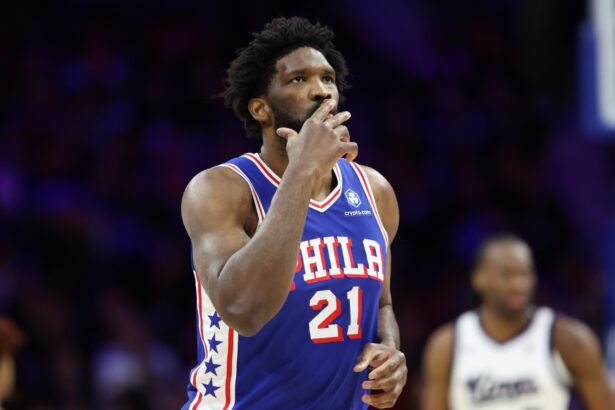
Joel Embiid – 2023
The 76ers have two very different players in very different eras as their MVPs. Allen Iverson won in 2000-01. Joel Embiid won in 2022-23. One was a small guard carrying a low-spacing offense through shot volume and pressure. The other was a dominant scoring center with foul-line control and improved playmaking.
Iverson averaged 31.1 points, 3.8 rebounds, 4.6 assists, and 2.5 steals in 2000-01. His efficiency was not modern, but his burden was huge. The 76ers needed him to create late-clock offense, pressure the rim, draw fouls, and carry the scoring every night.
Embiid averaged 33.1 points, 10.2 rebounds, and 4.2 assists in 2022-23 while shooting 54.8% from the field. That was one of the best scoring seasons ever by a center. He won the scoring title and gave the 76ers a half-court hub who could score from the post, elbows, midrange, and free-throw line.
The 76ers’ two MVPs do not come from one era. That makes the profile interesting. Iverson and Embiid had completely different bodies, roles, and styles. The common point was usage. Both were asked to carry huge offensive responsibilities.
T11. Dallas Mavericks – 1 MVP
Dirk Nowitzki – 2007
The Mavericks have one MVP since 2000. Dirk Nowitzki won in 2006-07 after averaging 24.6 points, 8.9 rebounds, and 3.4 assists while shooting 50.2% from the field, 41.6% from three, and 90.4% from the line.
Nowitzki’s MVP was about offensive efficiency and regular-season team success. The Mavericks went 67-15, and Nowitzki was the clear center of their offense. His shooting changed frontcourt defense because traditional bigs had to follow him away from the rim. That spacing gave the Mavericks a different offensive shape.
The playoff loss to the Warriors hurt how the season is remembered. It should not erase the regular-season case. Nowitzki was elite, efficient, and durable. He gave the Mavericks a full offensive identity.
T11. Minnesota Timberwolves – 1 MVP
Kevin Garnett – 2004
Kevin Garnett gave the Timberwolves their only MVP since 2000 with a season that had everything in the box score and the standings. In 2003-04, he played all 82 games and averaged 24.2 points, 13.9 rebounds, 5.0 assists, 1.5 steals, and 2.2 blocks in 39.4 minutes per game. He shot 49.9% from the field and 79.1% from the free-throw line. He also led the NBA in rebounds per game and total rebounds with 1,139.
The Timberwolves went 58-24 and finished as the No. 1 seed in the West. Garnett was the center of that entire season. He led the team in points, rebounds, blocks, and minutes, and he was second in assists behind Sam Cassell. His value was not only scoring or defense. The Timberwolves used him as a scorer, passer, rebounder, rim protector, and defensive organizer.
His advanced numbers made the MVP case even stronger. Garnett led the NBA with 18.3 win shares and finished with a 29.4 PER. He was First Team All-NBA, First Team All-Defense, and finished sixth in Defensive Player of the Year voting. The Timberwolves have only one MVP in this period, but Garnett’s 2003-04 season was strong enough to stand alone: elite production, elite durability, elite defense, and the best record in the West.
T11. Chicago Bulls – 1 MVP
Derrick Rose – 2011
The Bulls’ only MVP since 2000 came from Derrick Rose, and it was one of the most important young-star seasons in NBA history. In 2010-11, he averaged 25.0 points, 4.1 rebounds, 7.7 assists, and 1.0 steals while playing 37.4 minutes per game. He shot 44.5% from the field, 33.2% from three, and 85.8% from the free-throw line. At 22 years old, he became the youngest MVP ever.
The Bulls went 62-20 and finished with the best record in the NBA. Rose was the full offensive engine. The Bulls ranked first in defensive rating, but their offense depended on him to create advantages off the dribble. He led the team in points and assists, controlled late-clock possessions, attacked the rim, and gave the Bulls a reliable scorer when the half-court offense got tight.
The advanced numbers were not as strong as LeBron James that season, which is why the debate still exists. But Rose had the team record, the creation burden, and the narrative of carrying the Bulls to the No. 1 overall seed. His MVP case was built on responsibility more than efficiency: 25.0 points, 7.7 assists, 81 games played, 62 wins, and the youngest MVP season ever.
T11. Houston Rockets – 1 MVP
James Harden – 2018
James Harden put the Rockets on this list with one of the strongest offensive seasons of the modern era. In 2017-18, he averaged 30.4 points, 5.4 rebounds, 8.8 assists, and 1.8 steals in 35.4 minutes per game. He shot 44.9% from the field, 36.7% from three, and 85.8% from the free-throw line. He also led the NBA in scoring and finished first in total points with 2,191.
The Rockets went 65-17 and finished with the best record in the NBA. Harden was the full offensive system. The Rockets played through isolation, high pick-and-roll, spread spacing, and shot selection built around threes, layups, and free throws. Harden led the team in points and assists, controlled late-clock offense, and made switching defenses pay with step-back threes, drives, and foul pressure.
His advanced numbers supported the MVP case. Harden had a 29.8 PER, led the NBA with 15.4 win shares, and finished with a .289 win shares per 48 minutes mark. The Rockets were not just good. They were elite, and Harden was the reason the offense worked at that level. His case was simple: scoring title, 65 wins, heavy creation load, elite efficiency for his usage, and the best regular-season team in the league.
Complete Ranking Since 2000
1. Oklahoma City Thunder – 4 MVPs
2. Denver Nuggets – 3 MVPs
T3. Los Angeles Lakers – 2 MVPs
T3. San Antonio Spurs – 2 MVPs
T3. Phoenix Suns – 2 MVPs
T3. Cleveland Cavaliers – 2 MVPs
T3. Miami Heat – 2 MVPs
T3. Golden State Warriors – 2 MVPs
T3. Milwaukee Bucks – 2 MVPs
T3. Philadelphia 76ers – 2 MVPs
11T. Dallas Mavericks – 1 MVP
11T. Minnesota Timberwolves – 1 MVP
11T. Chicago Bulls – 1 MVP
11T. Houston Rockets – 1 MVP
Final Take
The list shows how rare MVP production is, even for strong franchises. Since 2000, only a small group of teams have produced more than one MVP season, and most of them did it through one generational player. The Nuggets had Nikola Jokic, the Warriors had Stephen Curry, the Bucks had Giannis Antetokounmpo, and the Heat had LeBron James during a short but dominant window.
The Thunder finish first because they have four MVPs from three different players, but the bigger story is how different each case is across the list. Some MVPs were built on team dominance, like Curry in 2016 and Derrick Rose in 2011. Others were built on historic individual production, like Russell Westbrook in 2017 and Jokic in 2022. Some came from two-way control, like Tim Duncan, Kevin Garnett, Giannis, and peak LeBron.
That is what makes the full ranking interesting. MVPs are not won one way. They can come from scoring volume, efficiency, defense, playmaking, team record, or all of those things together. Since 2000, the teams at the top of this list are the ones that had a superstar peak high enough to define an entire regular season.