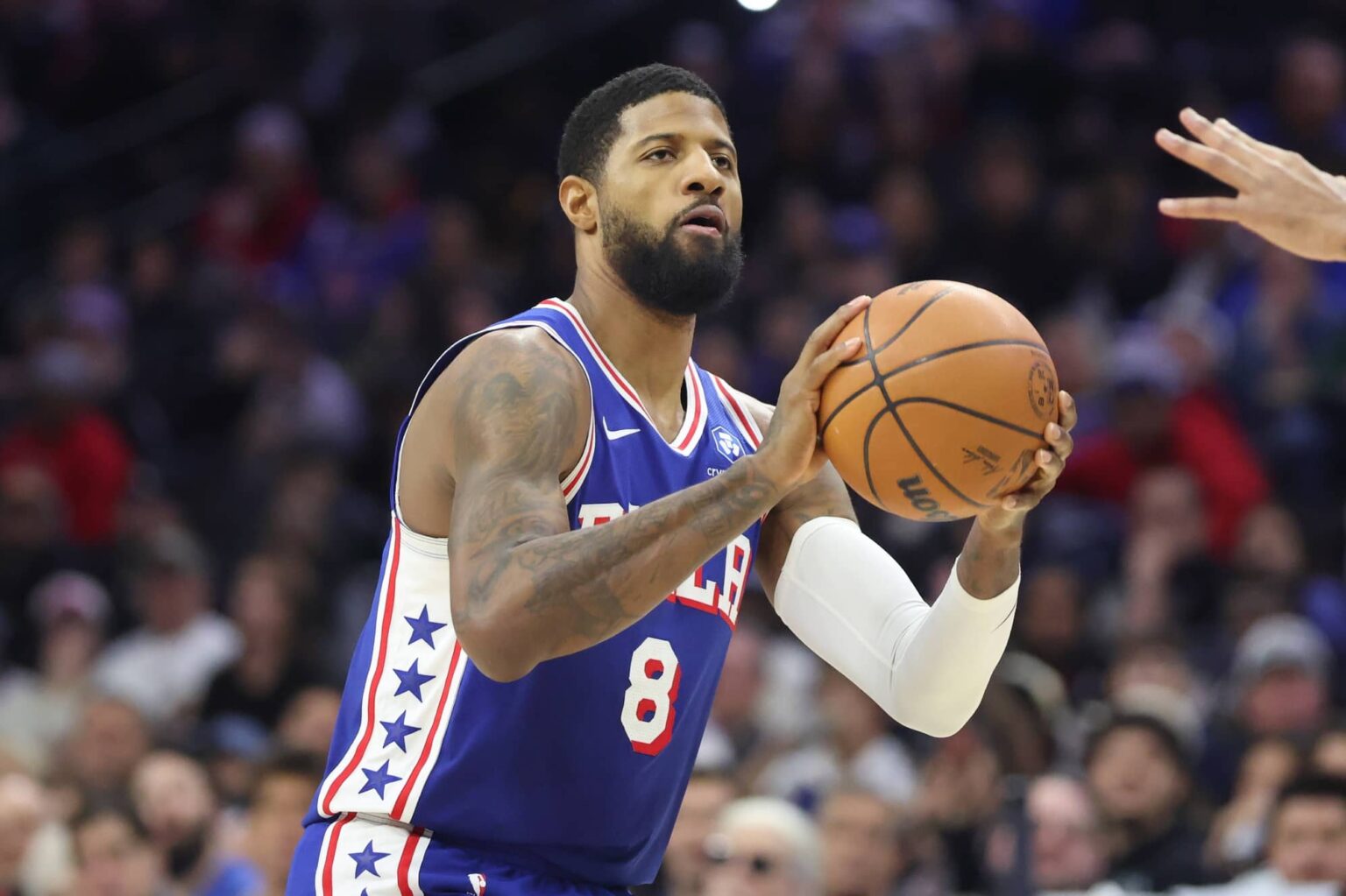
Paul George has been suspended for 25 games after violating the NBA’s Anti-Drug Program, a significant blow for both the player and the Philadelphia 76ers as they push through the heart of the season. The news was first reported by Shams Charania of ESPN, and the league confirmed the suspension.
In a statement provided to ESPN, George took responsibility for the violation and emphasized that it stemmed from a mistake made while seeking treatment for a personal issue.
“Over the past few years, I’ve discussed the importance of mental health, and in the course of recently seeking treatment for an issue of my own, I made the mistake of taking an improper medication. I take full responsibility for my actions and apologize to the Sixers organization, my teammates, and the Philly fans for my poor decision-making during this process.”
“I am focused on using this time to make sure that my mind and body are in the best condition to help the team when I return.”
The NBA did not reveal the substance involved, which is standard under league policy. A 25-game suspension indicates a first violation under the current agreement between the NBA and the National Basketball Players Association. Even so, the penalty is substantial. George will forfeit $11,742,293 in salary over the course of the suspension, a massive financial hit for the nine-time All-Star.
There is also a cap-related ripple effect for Philadelphia. The 76ers will receive a tax variance credit worth $5,871,147, partially offsetting the financial impact of George’s absence. From a roster mechanics standpoint, George will remain on the active roster for the first five games of the suspension.
After that point, he will be moved to the suspended list, which opens up flexibility for the front office. Once he is officially on the suspended list, the Sixers will be allowed to sign an additional player to help cover minutes during his absence.
On the floor, the timing could hardly be worse. Philadelphia entered the weekend with a 26–21 record, sitting sixth in the Eastern Conference and fighting to stay out of the play-in mix. The team is 16–11 when George plays and just 10–10 when he does not, a clear indicator of his impact even in a season where his raw numbers have been modest by his standards.
George has averaged 16.0 points, 5.2 rebounds, 3.7 assists, shooting 42.4% from the field and 38.2% from three-point range, across 27 games. He was also trending upward. Earlier this week, George erupted for 32 points against Milwaukee, drilling nine three-pointers in one of his sharpest performances of the season.
George is projected to be eligible to return on March 25 against Chicago, leaving Philadelphia with only 10 regular-season games to reintegrate him before the playoffs.
For now, the Sixers must steady themselves without one of their most experienced pieces, while George focuses on accountability and returning in the best possible shape.