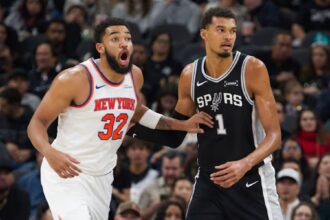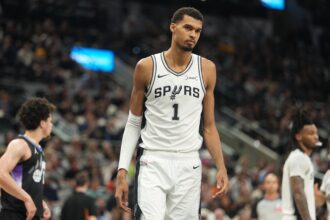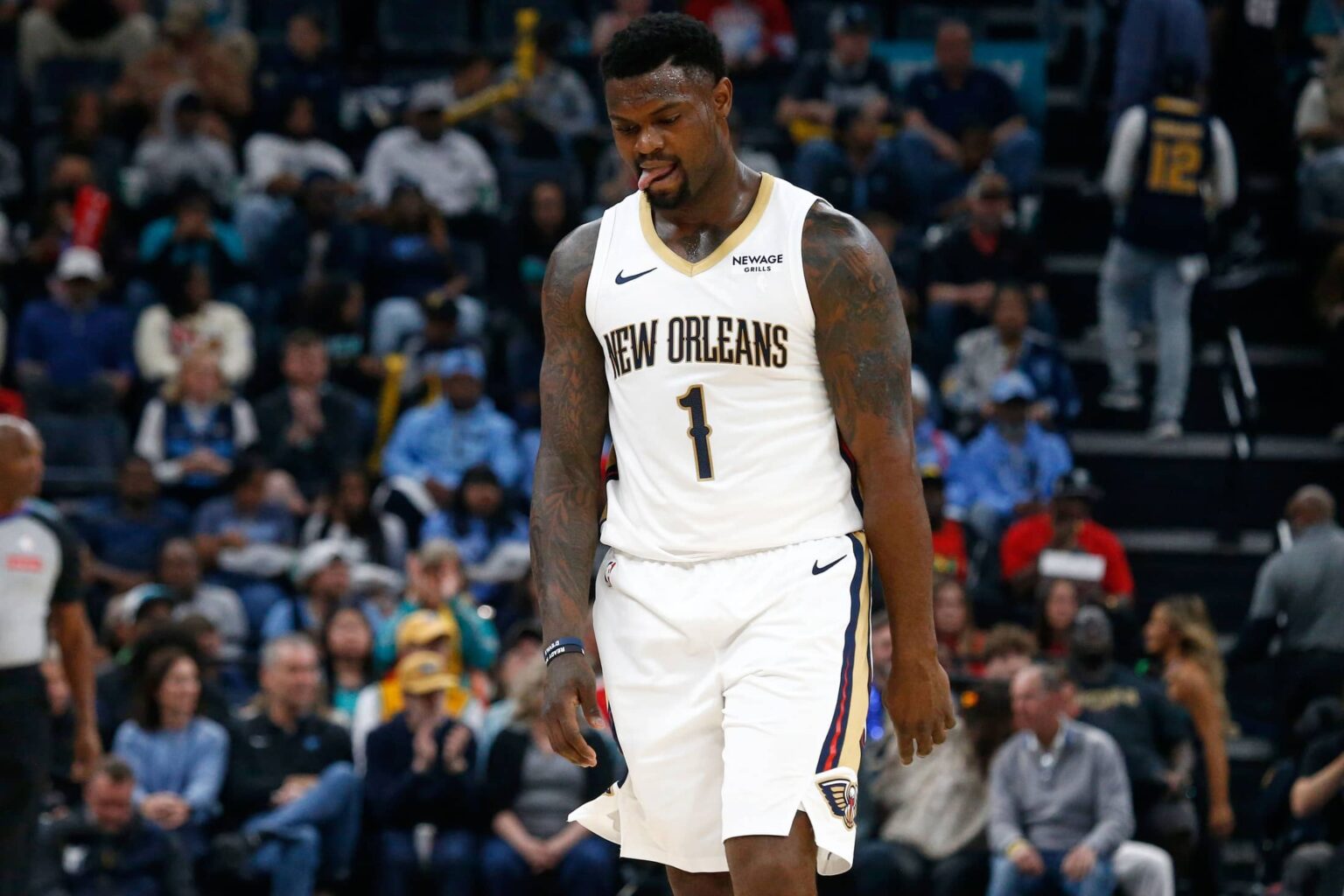
At some point, every star hits the same wall. It’s not always a dramatic cliff; sometimes it’s just a slow bleed: fewer games played, less burst, more “maintenance” nights, and a team situation that stops bending around them like it used to.
That’s what makes this conversation uncomfortable. These guys can still hoop. Some of them can still look like monsters for a two-week stretch. But the league doesn’t hand out All-Star nods for flashbacks; it rewards availability, momentum, and the feeling that you’re still a franchise-level engine. And in 2025-26, that bar is vicious.
Here are five names who might never get back to true All-Star form again, even if they’re still capable of reminding everyone how good they used to be.
1. Zion Williamson
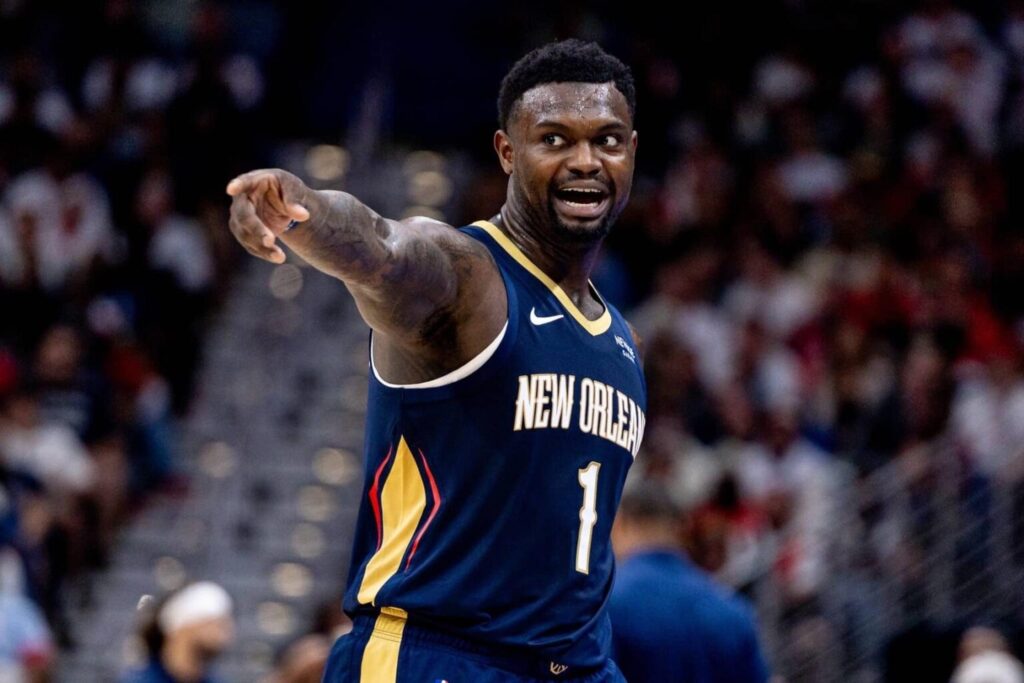
Zion Williamson is the cleanest example of “the talent is obvious, the reality is brutal.”
On paper, he’s still productive. He’s averaging 20.7 points, 5.4 rebounds, and 4.0 assists this season while shooting 50.0% from the field. That’s not washed. That’s not even bad. But the New Orleans Pelicans are 7-22, 13th in the West, and the vibes have been straight-up grim most of the year.
And here’s the real problem: Zion can’t stack games. The Pelicans literally had to announce an adductor strain situation this month, and he already missed time earlier with a hamstring issue and had missed 12 of the team’s first 22 games at that point.
That’s the same story on repeat. Lower body stuff, stop-start rhythm, the team trying to protect him, and Zion never fully getting to build that “every night, fear me” momentum that All-Star campaigns run on.
The depressing part is that we’ve already seen the peak. In 2020-21, Zion averaged 27.0 points, 7.2 rebounds, and 3.7 assists while shooting 61.1% from the field. That version looked like a future MVP candidate who could bulldoze playoff defenses until they cracked. It felt inevitable.
Now it doesn’t feel inevitable. It feels fragile.
He last made an All-Star team in 2023. And if we’re being honest, that might be the last time the league collectively looks at Zion and says, “yeah, we’re doing this again.” Because at some point, production stops being the argument and availability becomes the entire case.
It’s not just missed games either. It’s the way the Pelicans have to use him. Bench stints, careful minutes, matchup management, constantly recalibrating. That stuff kills the narrative. Coaches and fans want to reward a player who’s carrying a real load, not a guy who plays 55 games and looks amazing in 30 of them.
Zion can absolutely still dominate a night. He just dropped 29 points off the bench in a win against the Pacers last night. But dominance in bursts isn’t All-Star form. All-Star form is being the guy every week, every month, without the constant “will he play” cloud hanging over you.
Until Zion strings together a full season where he looks like the same athletic force and actually stays on the floor, it’s hard to believe the league will keep giving him the benefit of the doubt.
2. Kawhi Leonard
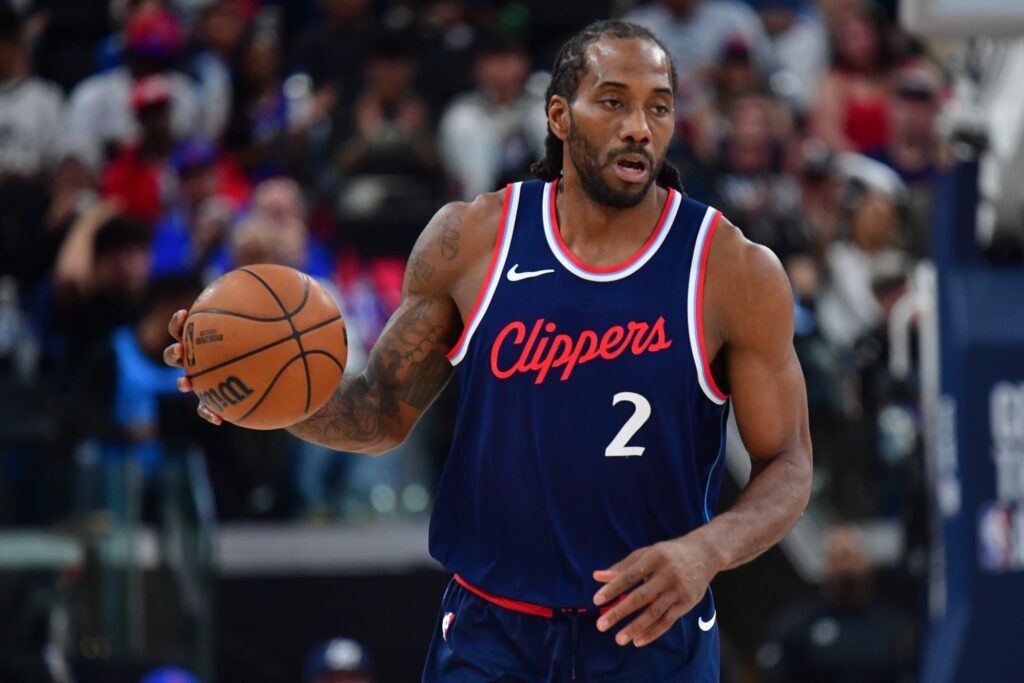
Kawhi Leonard is the weirdest name on this list because, on a per-game basis, he still looks like a star.
He’s putting up 25.2 points, 6.1 rebounds, and 3.2 assists this season on 47.9% from the field. That’s legit. That’s better than a lot of guys who will probably sneak into All-Star conversations.
But the Los Angeles Clippers are 7-21, near the bottom of the West, and the whole season has felt like a slow-motion disaster. It’s hard to sell an All-Star case when your team is drowning, and your star’s schedule looks like a medical plan.
Kawhi’s last All-Star selection came in 2024, and before that, just in 2021. And since then, the league has basically moved on. Not because he forgot how to play, but because people are tired of building narratives around “if healthy.”
That’s the curse. Kawhi is still capable of playing at a high level, but the durability tax is constant. The Clippers can’t plan around him like they used to, and voters can’t trust that he’ll be there enough to matter. Even when he’s on the floor, the team has to treat him like a precious resource.
Peak Kawhi was different. In 2016-17, he averaged 25.5 points, 5.8 rebounds, and 3.5 assists in 74 games. Seventy-four games. That’s the part that matters. He had the two-way aura, the nightly presence, the feeling that you were watching a machine.
Now it’s more like: he’ll give you 33 minutes one night, sit the next, then come back and look great, then disappear again. That might be smart long-term, but it doesn’t line up with what the All-Star process rewards.
And it doesn’t help that the Clippers don’t look like a winning product right now. When a team is losing, people start nitpicking everything. Fair or not, that bleeds into how the public sees your season.
Kawhi can still cook. But All-Star form isn’t just about cooking. It’s about being the headliner of a relevant team, week after week, without the “is he available” caveat.
With the Clippers spiraling and Kawhi’s body still dictating the calendar, it’s hard to see him ever fully re-entering that All-Star tier the way he once owned it.
3. Jimmy Butler
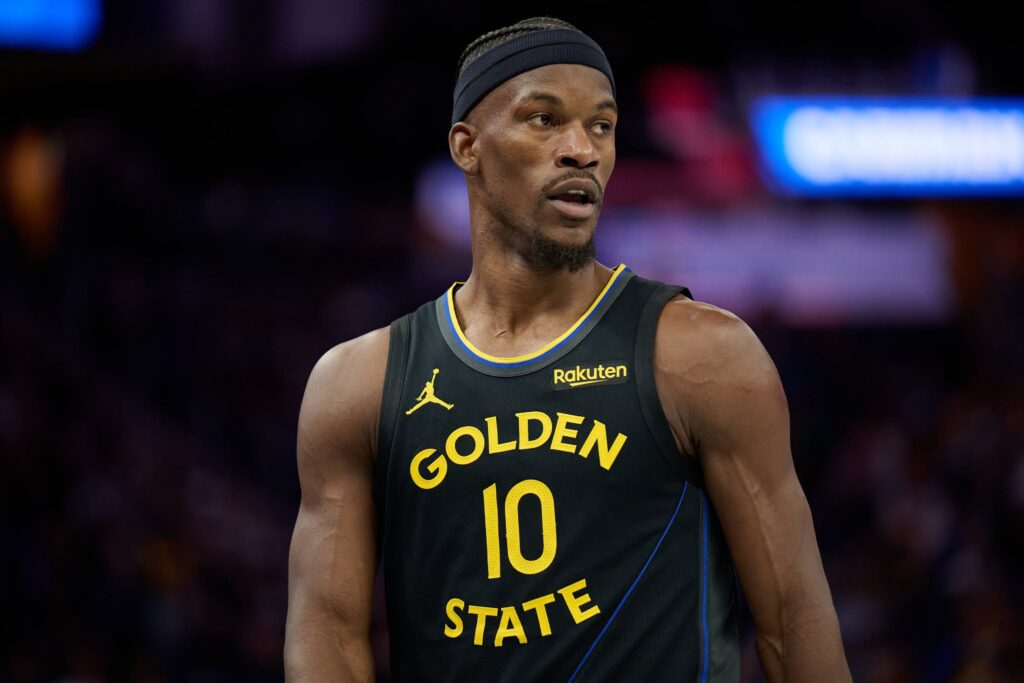
Jimmy Butler has always been a vibe-based superstar. He’s never been the cleanest box-score All-Star. He’s been the guy who turns games into fist fights, lives at the line, and scares teams in May.
But regular season All-Star form? That’s slipping.
He’s averaging 19.8 points, 5.6 rebounds, and 4.8 assists this season while shooting 51.5% from the field. Again, those are solid numbers. The issue is that the Golden State Warriors are 14-15 and sitting eighth in the West, and the season has been a constant clutch-time mess.
Also, Butler is 36. At that age, you don’t “bounce back” into prime form; you pick your spots. And that’s basically been his entire career, even when he was younger. He’s the definition of “wake me up when it matters.”
His last All-Star selection was in 2022. Since then, his reputation has stayed massive, but the regular season case hasn’t. And if the Warriors hover around the play-in line, it’s even harder to justify sending a spot to a star whose best argument is still “he’s terrifying in the playoffs,” especially when an All-Star is a midseason snapshot.
Peak Butler looked like a real top-10 guy. In 2016-17, he averaged 23.9 points, 6.2 rebounds, and 5.5 assists. He had more lift, more defensive range, and more of that nightly takeover energy.
Now? He’s still smart and crafty, but the athletic edge is thinner. The free-throw pressure matters less if you don’t have the same burst getting downhill. The defense matters less if you can’t do it every night at the same intensity.
Butler can still swing a game, and he’s still one of the most competitive dudes in the league. I’m not questioning that at all. I’m questioning whether he can look like an All-Star for two straight months, without the “conserving energy” vibe that follows him everywhere.
And if the Warriors keep playing tight, ugly games and living in the margins, the league is going to look at their situation and reward the guy who feels like the future, not the guy who feels like the last boss from a previous era.
4. Anthony Davis

Anthony Davis is the toughest one to write, because he can still do everything.
He’s averaging 19.6 points, 10.8 rebounds, and 3.1 assists this season while shooting 50.5% from the field. That’s still high-level impact, and the Dallas Mavericks clearly rely on him as a defensive backbone.
But the Mavericks are 11-18 and sitting in the lower half of the West, and that matters. At some point, team context starts deciding who gets the nods, especially when the league is overflowing with new stars putting up ridiculous lines on teams that feel more relevant.
Davis made the All-Star team last season. So this isn’t some ancient history thing. The problem is that the direction of his career has become defined by two words: elite, but breakable.
Peak AD was terrifying. In 2017-18, he averaged 28.1 points and 11.1 rebounds with 2.6 blocks. That’s an All-Star lock. That’s an All-NBA lock. That’s “best big in basketball” territory.
Now he’s not that guy every night, and it’s not just age, it’s mileage and the constant wear-and-tear that comes with being a big who does everything on defense. Even when he plays, he’s always one awkward landing away from the next absence. And the league notices.
The other part is that Davis’ dominance used to be obvious. You could watch one quarter and feel him controlling the game. These days, a lot of his value is quieter, it’s positioning, deterrence, defensive IQ, and cleaning up messes. That’s real basketball value, but it’s not always All-Star hype value.
And if the Mavericks aren’t winning, it becomes even easier to shrug and say, “Yeah, but do we really need to reward this again?” That’s unfair, but it’s real.
I still think Davis can have monster stretches. I just don’t know if he can stack enough games and enough headline nights to beat out the flood of newer names who are healthier, louder, and carrying teams in a way that fits the All-Star narrative better.
5. Paul George
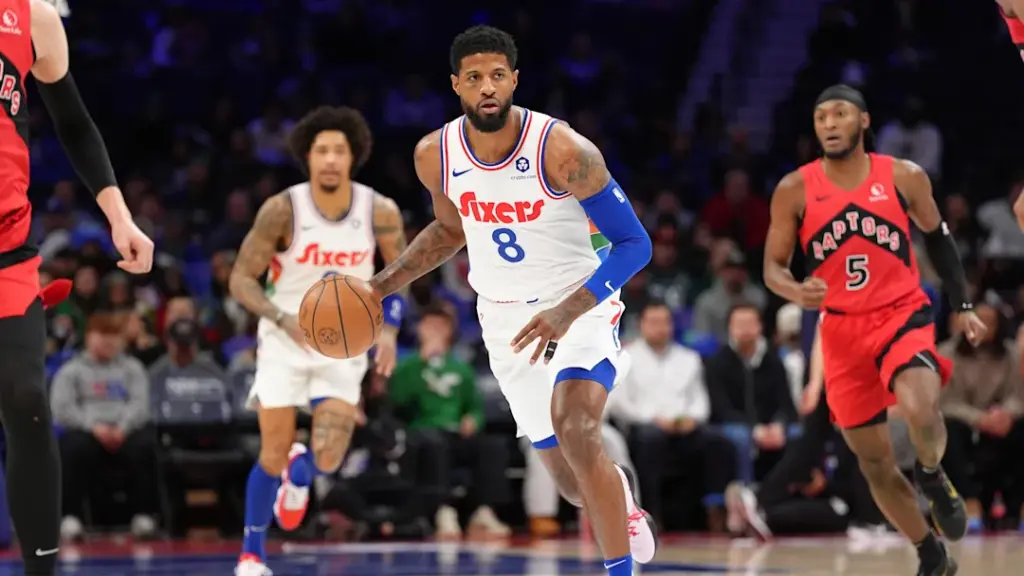
Paul George is the name that makes people mad because his decline came out of nowhere once he signed with the 76ers.
He’s averaging 16.2 points, 5.1 rebounds, and 3.4 assists this season while shooting 42.4% from the field. That’s the kind of line that screams “good role player,” not “All-Star.”
The Philadelphia 76ers are 16-11 and sitting fourth in the East, so the team is fine. But that’s part of the issue: George isn’t the engine. He’s not even the loudest story. He’s in the mix, but he’s not driving the car.
His last All-Star selection came in 2024. So again, not ancient history. But it’s hard to see him getting back there when the production has dipped, and the injuries keep showing up in the background.
Peak Paul George was a monster. In 2018-19, he averaged a career-high 28.0 points, 8.2 rebounds, 4.1 assists, and 2.2 steals. That was MVP-level noise. That was a guy who could dominate both ends and hit you with a 35-piece like it was routine.
Now he’s 35, and the athletic pop isn’t the same. The burst to separate is harder to find. The defensive range isn’t as constant. And when your shot diet gets tougher because you can’t blow by people as easily, efficiency tends to dip too.
The league is also stacked at his position. Wings are everywhere now. Two-way wings are the most valuable archetype in basketball, which means the competition for those All-Star spots is a bloodbath.
George can still have a “Paul George game” where he looks like vintage PG for a night. He even dropped a season-high 35 in a recent loss against the Hawks. But All-Star form is not one big night. It’s the full body of work, the consistency, the feeling that you’re still one of the 20 best players in the league.
Right now, George feels more like a high-end supporting star than a true headliner. And once you fall into that category, climbing back into All-Star form is way harder than people want to admit.