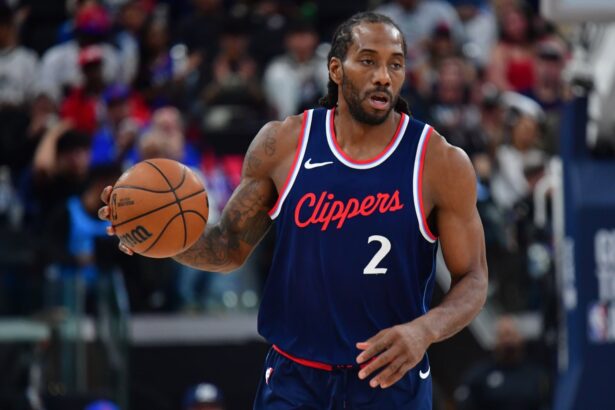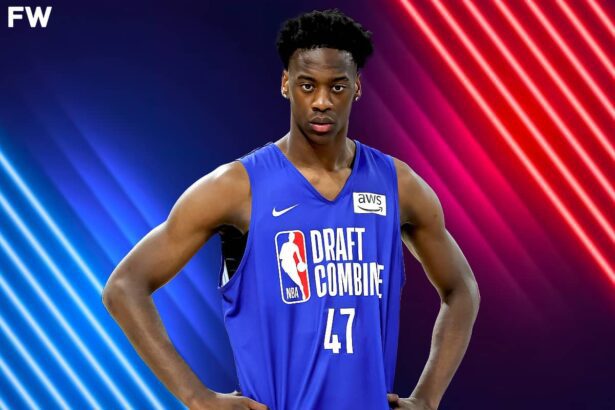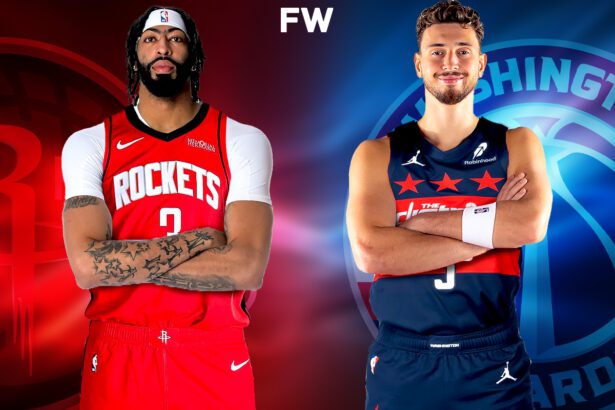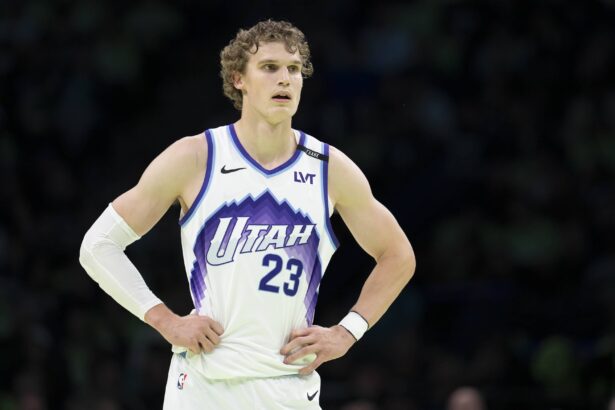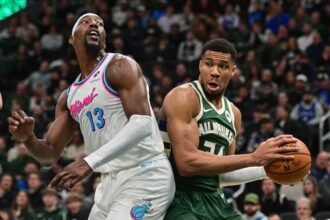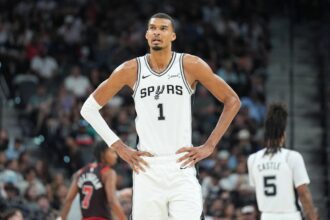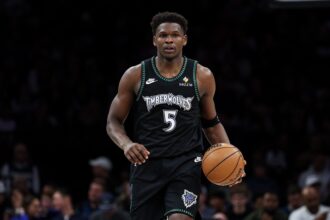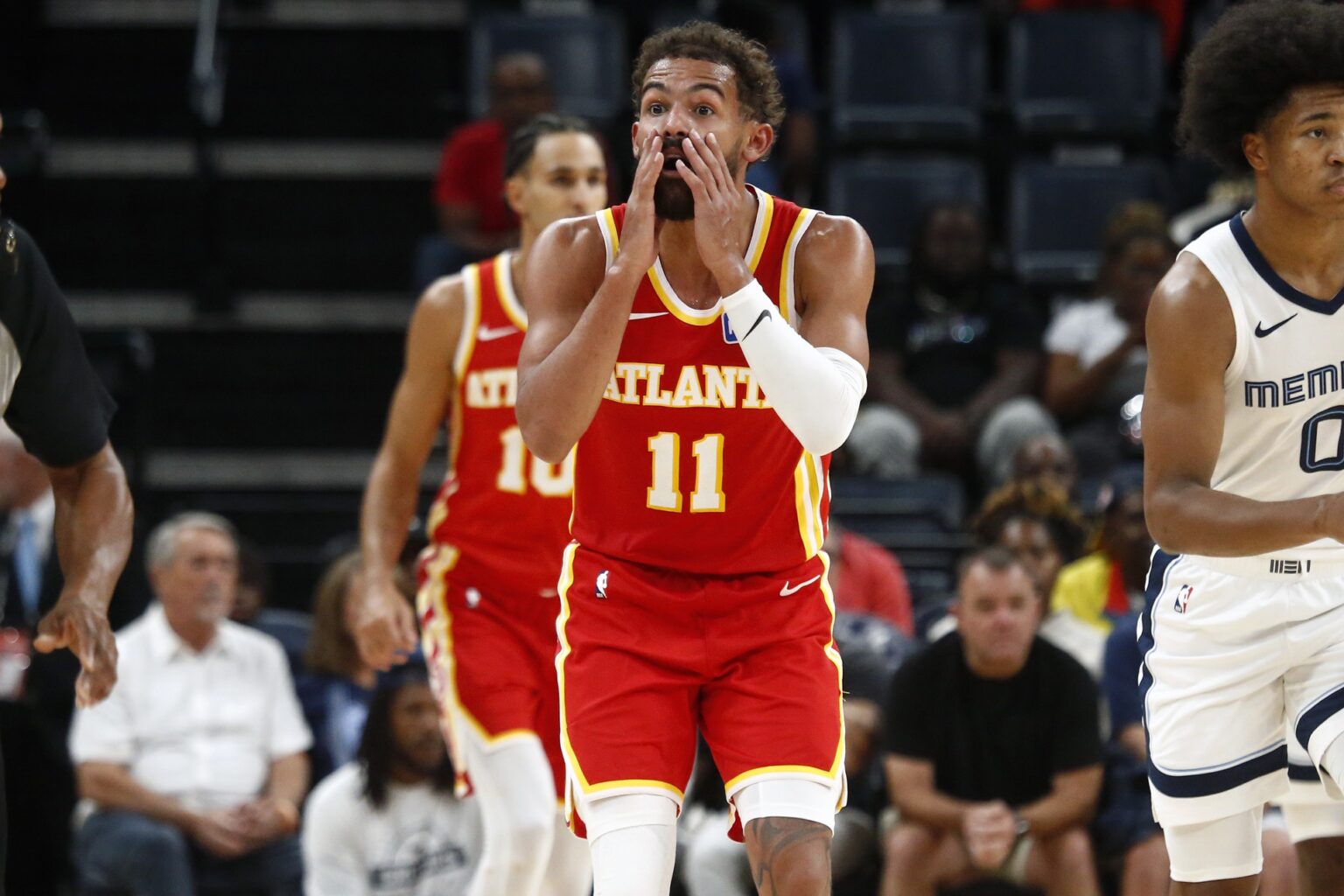
Trae Young is back, and the return itself matters because it instantly re-opens the biggest question hanging over the Atlanta Hawks this season: are they building around him, or are they quietly setting up a deadline pivot?
Young returned on December 18 after missing 22 games with a sprained right MCL. He started, played 20 minutes, and finished with eight points and 10 assists in a 133-126 loss to the Charlotte Hornets.
The Hawks actually held up during his absence, going 13-9 without him, which is why his comeback doesn’t automatically feel like “they’re saved.”
Right now, the Hawks are 15-14 and sitting ninth in the Eastern Conference, basically living on the play-in line with no margin for a cold week. The other reason the league is watching their direction is Jalen Johnson looking like an All-NBA-level force.
He’s at 23.3 points, 10.5 rebounds, and 8.2 assists per game while shooting 52.1% from the field. He also exploded for 43 points, 11 rebounds, and nine assists in that same Hornets game, which only amplifies the “do they need to revolve around Trae the same way?” debate.
Young’s own numbers are part of why rumors keep bubbling. He’s at 16.2 points and 8.2 assists per game, shooting 37.2% from the field, a clear dip from last season when he averaged 24.2 points and 11.6 assists.
Contract-wise, the uncertainty is real. Multiple cap and rumor breakdowns note Young is extension-eligible and has a $49 million player option for 2026-27, with the expectation that his next decision will shape the Hawks’ timeline.
1. The Minnesota Timberwolves Would Become A Thunder-Level Threat
Hawks Receive: Julius Randle, Donte DiVincenzo, Rob Dillingham
Timberwolves Receive: Trae Young
This is the kind of swing that turns a “really good” team into a nightmare matchup. The Minnesota Timberwolves are already 17-10, and they just beat the Oklahoma City Thunder 112-107 with an 8-0 run in the final minute, which is exactly the type of closing punch contenders need.
If the Timberwolves can play that level of defense and composure now, adding an elite primary ball-handler is how you get into that Thunder-level conversation where every possession feels scripted, and every mistake gets punished.
The obvious fit is Anthony Edwards getting a cleaner life. Edwards is averaging 28.5 points, 5.2 rebounds, and 3.8 assists while shooting 49.8% from the field this season. He’s already a top-shelf scorer, but the biggest leap for the Timberwolves is reducing the “every late clock possession is a wrestling match” possessions.
A Young-Edwards pairing gives Minnesota two different ways to break you: pure downhill violence from Edwards, and high-level pick-and-roll orchestration that forces defenses to choose between giving up floaters, lobs, or corner threes.
And the Wolves have been sniffing around this exact archetype. Reporting and rumor chatter have consistently tied the Timberwolves to the idea of adding a high-profile guard, with mentions of them exploring different backcourt targets before the deadline. This trade is basically that idea, but on the loudest volume.
For the Hawks, this is a reset that still feels competitive. Julius Randle is putting up 22.9 points, 7.2 rebounds, and 5.7 assists on 48.2% from the field. That’s instant frontcourt production, and it takes pressure off the Hawks’ rising core to create every half-court possession from scratch.
Donte DiVincenzo adds a real two-way rotation piece, with 13.9 points, 4.4 rebounds, and 3.7 assists while shooting 41.3% from the field. Dillingham is the upside lottery ticket, a young guard the Hawks can develop or flip later.
The money also lines up in a clean, realistic way. Young’s 2025-26 salary sits at $46.0 million, while Randle is at $30.9 million, DiVincenzo is at $12.0 million, and Dillingham is at $6.6 million. That’s not fantasy math, that’s workable trade math.
Most importantly, the Hawks have a real contract timeline decision coming with Young, and multiple reports have framed his future as one of the biggest dominoes of the next year, including the $49 million player option for 2026-27.
If the Hawks decide they’re not extending him on their terms, a package like this lets them re-balance the roster fast without falling into a full tank.
2. The Brooklyn Nets Finally Get A Real Franchise Engine
Hawks Receive: Michael Porter Jr., 2027 first-round pick (via NYK)
Nets Receive: Trae Young
This is the cleanest “reset with purpose” move the Hawks can make, and it’s also the type of swing the Brooklyn Nets actually need if they ever want to stop feeling like a development program.
The Nets are 7-19 and sitting 13th in the East, which is why you keep seeing rebuilding talk around them in national coverage. At some point, a team like that has to decide if it wants to keep stacking prospects or if it wants a face of the franchise that instantly changes the conversation.
This trade gives them that. It puts a true primary creator in the building, someone who can run elite pick-and-roll every possession, create easy shots for role players, and make the Nets relevant in a way a slow rebuild rarely does.
It also fits their current roster reality. Michael Porter Jr. has been awesome as a featured option, averaging 25.7 points, 7.3 rebounds, and 3.2 assists while shooting 49.3% from the field. But that’s also why he’s constantly in trade chatter. Shams Charania flat-out framed Porter Jr. and Cam Thomas as the names most likely to move, and Sports Illustrated reported that the Nets are expected to gauge Porter Jr.’s market amid his hot start. When a rebuilding team has a high-scoring wing on a big contract, the league calls. That’s just how this works.
For the Hawks, this is the rare deal where you get a legitimate star-level scorer without needing a perfect on-ball ecosystem. Porter Jr. can score as a movement shooter, a spot-up weapon, and a mismatch finisher, and he immediately gives the Hawks size shooting that travels in the playoffs.
His contract is also clear and short, with $38.3 million due this season and $40.8 million in 2026-27, which matters because it’s not a mystery asset. The 2027 first-round pick via the Knicks is the cherry on top, because it gives the Hawks another real future chip for the next move.
On the Nets side, the appeal is simple: a star guard becomes available with an uncertain contract timeline, and you get in the room before someone else does. If the Nets want to stop tank conversations and start building an actual identity, this is the type of deal that flips the switch overnight.
3. The Rockets Add A Real Point Guard Without Touching The Core
Hawks Receive: Fred VanVleet, Steven Adams, Dorian Finney-Smith, 2027 first-round swap rights (via BKN), 2029 first-round pick (via DAL/PHX)
Rockets Receive: Trae Young
The Houston Rockets are already 17-8, and that matters because this trade is not a rebuild move. This is a “we’re contending right now, let’s get dominant” move.
The whole pitch is simple. The Rockets don’t have an old-school table-setter available every night. Fred VanVleet is rehabbing after ACL surgery and has openly talked about the possibility of a return later in the season, which tells you the Rockets can’t plan their identity around him being present in January and February.
That’s why Amen Thompson and Reed Sheppard have been soaking up those guard minutes. Thompson brings size and chaos, Sheppard brings shooting pop, and it can work in spurts, but neither is the “bend the defense, control the pace, spam pick-and-roll until you break them” type of creator.
Now imagine adding Trae Young to a team that already has Alperen Sengun and Kevin Durant. Sengun is sitting at 23.7 points, 9.5 rebounds, and 7.2 assists on 49.5% from the field, basically playing like a point center. Durant is at 25.1 points per game on 51.3% from the field, and he just dropped 31 in a road win over the Denver Nuggets.
That is two All-Star-level guys already. Adding Young is how you turn that into an offense with no air in it. You’d have three different players who can create advantages, and defenses would be stuck choosing which poison they want to drink.
It also matters that the Rockets have proven their young guards can still impact games without being forced into full-time orchestration. Sheppard just erupted for 28 points off the bench in that same Nuggets game, including 6-of-9 from three. That’s exactly the role you want for a young guard on a contender. Not “save us,” more like “kill them when they help.”
For the Hawks, this is the kind of return that lets them pivot without pretending it’s nothing. VanVleet’s contract becomes a salary anchor, Adams gives real center minutes with Porzingis currently sidelined, Finney-Smith adds a plug-and-play wing, and the draft package is the real juice. A 2027 swap plus a 2029 first gives the Hawks two future levers for the next star chase or the next reset move.
If the Rockets ever decide they want to jump from “great contender” to “no one wants to see them in May,” this is the exact type of trade that does it.
4. The Orlando Magic Could Become A Real Playoff Problem
Hawks Receive: Jalen Suggs, Jonathan Isaac, 2029 first-round pick (swap rights held by Grizzlies), 2032 first-round pick
Magic Receive: Trae Young
The Orlando Magic are already in the mix at 15-12, and that’s the scary part. This isn’t a team trying to crawl into relevance. The Magic are winning now, sitting sixth in the Eastern Conference, and they’ve done it with defense, size, and a young core that’s starting to look like it belongs in the top tier.
What they still don’t have is a reliable, every-possession offensive organizer. Paolo Banchero is at 20.8 points, 8.4 rebounds, and 4.1 assists on 44.7% from the field, and he just posted a triple-double in Denver, so the “No. 1 option” part is real.
But the Magic can still get sticky in the half-court because the shot creation comes in waves, not in a steady stream.
That’s where this trade hits. Trae Young would give the Magic a constant advantage creator, and it would change how defenses guard Banchero and Franz Wagner. Suddenly, you can’t load up early because the ball is getting moved to the right place before the help even arrives. It becomes cleaner basketball, and clean basketball wins playoff games.
For the Hawks, the return is substantial, and it actually makes sense structurally. Jalen Suggs is averaging 15.4 points, 3.7 rebounds, and 4.8 assists while shooting 47.1% from the field, and his defensive reputation is already established around the league.
He’s the kind of guard you can build around next to a bigger creator like Dyson Daniels, because he competes like a maniac and doesn’t need the ball every second to matter, as both together would be a nightmare matchup on defense.
Jonathan Isaac is the more complicated piece. His counting stats are tiny, 2.9 points and 3.2 rebounds, but teams don’t pay him for points. They pay him for disruptive defense and matchup versatility, and he’s also a clean $15 million contract slot this season. That matters for the Hawks if they want flexibility.
Then come the picks. A 2029 first with swap rights already tied up, plus a 2032 first, gives the Hawks real long-term ammo for their next big move. And if this whole Trae Young market keeps warming up as the deadline approaches, the idea of a team like the Magic actually pushing their chips in starts to feel a lot less crazy.
5. The Bucks Find Another Star To Try And Make Giannis Stay
Hawks Receive: Kyle Kuzma, Bobby Portis, Ryan Rollins, Gary Trent Jr.
Bucks Receive: Trae Young
This is the kind of “shake the table” move the Milwaukee Bucks only consider when the season starts screaming at them.
The Bucks are 11-17 and outside the playoff picture in the East, and the Giannis Antetokounmpo noise has gotten loud enough that he had to address it publicly. Giannis called himself “locked in” with the Bucks while pushing back on the idea that he’s personally involved in trade talks, but reports also noted he’s been putting pressure on the Bucks amid a potential exit.
That’s the backdrop for why this trade makes sense as a narrative, even if it would be a league-shaker. The Bucks need a move that changes the ceiling, not one that just rearranges the bench.
ESPN’s Shams Charania wrote this month that they are monitoring veterans like Zach LaVine, and that’s important because the Bucks keep getting framed as “big-game hunting” as trade season opens. The message is clear: The Bucks are looking for a difference-maker, and if you’re trying to keep a superstar happy while you’re losing, you go star shopping.
On the Hawks side, the return isn’t a teardown. It’s a pivot that instantly patches real roster needs. Kristaps Porzingis will miss at least two more weeks with an illness, which has left the Hawks thin up front. Bringing in Portis gives them immediate frontcourt scoring and energy, and he’s been producing all year with 12.3 points and 5.9 rebounds per game. Kuzma adds size and a flexible forward slot, and he’s putting up 13.5 points on a very strong 51.5% from the field.
The sneaky value here is the backcourt depth. Ryan Rollins has looked like a real breakout guard, with 17.0 points and 5.9 assists per game, which is the type of production that either becomes a building block or a trade chip later. Gary Trent is the plug-and-play 3-and-D swing, and even in a smaller role, he’s still at 9.9 points per game.
For the Bucks, the pitch is the loudest one possible. Pair Giannis with another All-Star-level guard and try to drag the season back from the edge. And if the Bucks are serious about star hunting, this is the kind of swing that tells Giannis the front office is not accepting to waive the white flag.