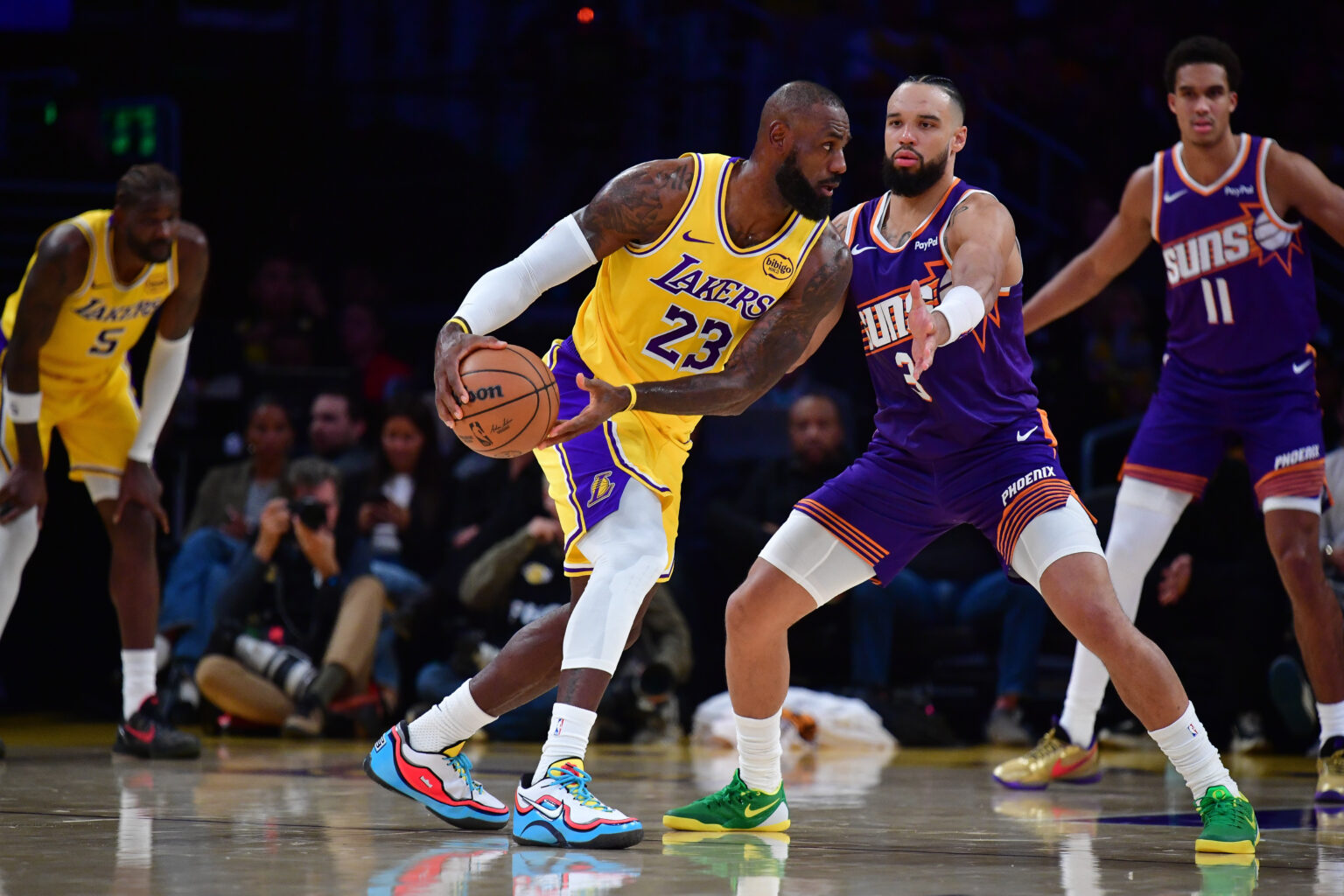
The Lakers came into Monday night feeling good about themselves, winners of seven straight and finally looking like a group building real momentum. But the energy that carried them through the past two weeks never showed up in an 108-125 loss. Instead, Los Angeles spent most of the night chasing a Phoenix team that played with far more urgency, even after Devin Booker went down early.
Luka Doncic lit up the first quarter, LeBron James worked just to extend his decades-long scoring streak, and the Lakers still found themselves buried under a wave of Suns threes, turnovers, and fast-break pushes. By the time the fourth quarter hit, the building was quiet, and the Lakers looked exactly how they played: tired, sloppy, and a step behind. After an ugly Monday night loss, let’s dive into the three major takeaways.
1. Sloppy Ball Movement Put The Lakers In A Hole
If the Lakers needed one stat to explain the loss, it was their 22 turnovers. Every time they looked ready to make a run, another loose pass or mishandled possession killed the momentum. Phoenix didn’t just take the ball; they turned it into points. The Suns piled up 32 points off those giveaways, while L.A. managed only 13 off the Suns’ mistakes. Doncic was brilliant scoring the ball, but his nine turnovers were costly, especially when Phoenix ramped up pressure on the perimeter.
Those mistakes fueled the biggest gap of the night: transition scoring. The Suns ran at every opportunity, converting them into 28 fast-break points, while the Lakers had a shocking two. With Phoenix shooting 57% from the field and knocking down 17 threes, giving them extra possessions turned a tough matchup into an uphill climb the Lakers never came close to solving.
2. Doncic Did His Part, But The Defense Didn’t
Doncic once again played the role of offensive lifeline, finishing with 38 points, 11 rebounds, and five assists. But for every tough shot he hit, Phoenix seemed to answer with an open three or a back-cut layup. Collin Gillespie caught fire with eight threes and 28 points, and Dillon Brooks added 33 while attacking mismatches whenever the Lakers switched. Even without Booker, Phoenix kept the floor spaced and made L.A. scramble from one rotation to the next.
The Suns also owned the middle of the floor. They scored 56 points in the paint, and center Mark Williams barely missed, going 6-for-8 with 13 points. The Lakers’ defensive breakdowns weren’t just about effort; they came from poor communication and slow recovery, something you rarely survive against a team that finished the night with 35 assists. Outside of Doncic and Reaves, L.A.’s perimeter coverage couldn’t keep anyone in front, and the Suns punished every late rotation.
3. The Supporting Cast Didn’t Help Luka
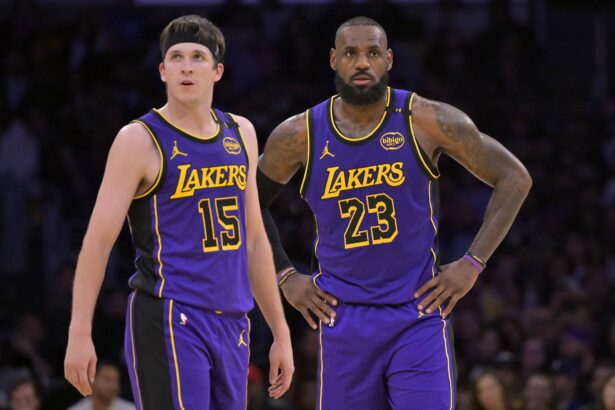
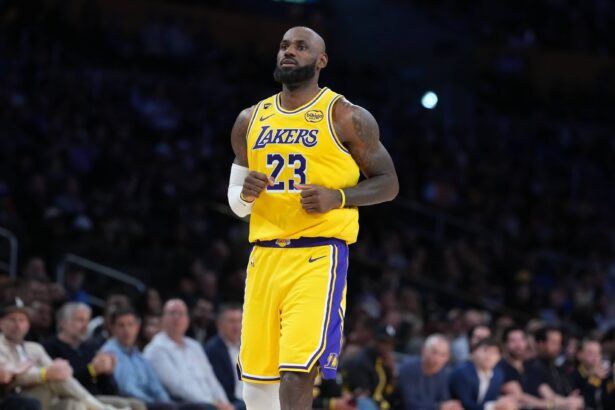
Outside of Doncic’s scoring burst, the Lakers never found a second consistent source of offense. LeBron struggled to get going, finishing with 10 points on 3-of-10, and needed a late three just to keep his months-long double-digit streak alive. Rui Hachimura didn’t score at all, and the bench, while efficient in moments, never swung momentum. Dalton Knecht chipped in 13, but too many rotation players had quiet nights in a game where the Lakers needed someone to lift the load off Doncic.
Oddly enough, the Lakers actually won the rebounding battle 39-33, and Ayton grabbed nine boards while Doncic hauled in 11. But the extra rebounds never translated to sustained scoring. L.A. finished with just 18 assists, a number that shows how often the offense drifted into isolation or late-clock heaves. Meanwhile, Phoenix’s bench outscored the Lakers 41–32, thanks to Jordan Goodwin’s 13 and steady contributions from Nigel Hayes-Davis and Ryan Dunn. It was a classic example of one team playing in sync and the other trying to win through individual talent.