The NBA season is long enough to reveal when a player’s production has drifted from their usual standard. That applies to role players, and it applies even more to stars, who see the most aggressive coverages and carry the heaviest offensive burden. Over time, most elite talent stabilizes. But this season has still produced a clear group of high-profile names who have been less effective than expected.
This isn’t about overreacting to a bad week. It’s about what the numbers and the on-court impact show so far: efficiency drops, colder jump shooting, less rim pressure, more turnovers, or defensive influence that has slipped. Some of it is health. Some is fit. Some is simply performance.
Here are 10 NBA stars who, for different reasons, are genuinely struggling relative to what they normally provide.
1. Ja Morant
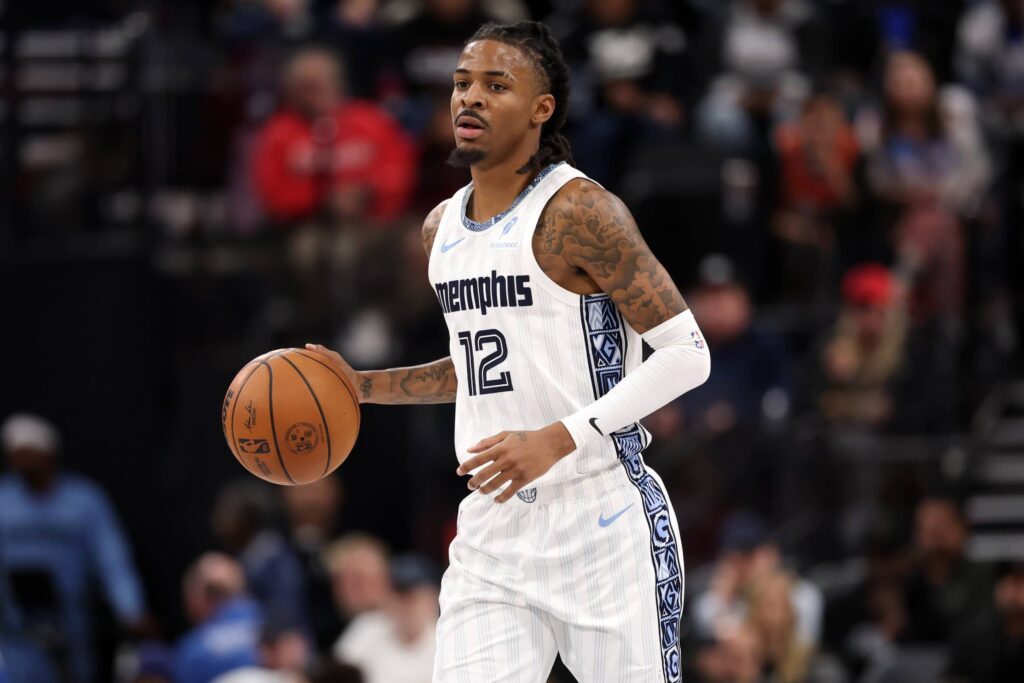
Ja Morant is struggling this season because the two things that make him special, rim pressure and rhythm, haven’t been consistent. The baseline production is still recognizable, but the efficiency collapse is the headline.
Morant is averaging 19.5 points, 3.3 rebounds, and 8.1 assists. He’s also shooting 41.0% from the field in 20 games. The bigger red flag is how defenses are treating him right now. He’s down at 20.8% from three, which is basically a green light for teams to go under screens, pack the paint, and force him into tougher pull-ups instead of clean downhill drives.
When Morant’s jumper is not respected, every possession gets more crowded. The Grizzlies’ spacing shrinks, his angles at the rim get cut off earlier, and his passing windows tighten because help defenders can stunt and recover without fear. That’s how you end up with a star guard who still creates assists but doesn’t bend the defense the same way. The 8.1 assists are real. The quality of his shots, and the quality of the shots he creates has been less clean.
The other part is availability and stop-start momentum. Morant’s season has been interrupted enough that it shows up in touch, timing, and finishing. Even small gaps matter for a guard whose game is built on split-second reads and explosive first steps. If the legs are not fully there, the floaters get short, the hang-time finishes turn into awkward releases, and the pull-up becomes the fallback. That’s the exact shot profile defenses want.
As for the trade-rumor saga, when Shams Charania reports a team is entertaining offers for its franchise guard, it changes the temperature around everything, even if nothing happens. Morant’s problems are on the court, but the coaching drama, game suspension, and overall disgruntled vibe have effectively played a role.
Until Morant gets back from elbow injury to being a credible threat from deep, even if it’s just league-average, opponents will keep building a wall. Right now, he’s having to score through it instead of around it. That’s why the season looks heavier than it should for a player with his talent.
2. Trae Young
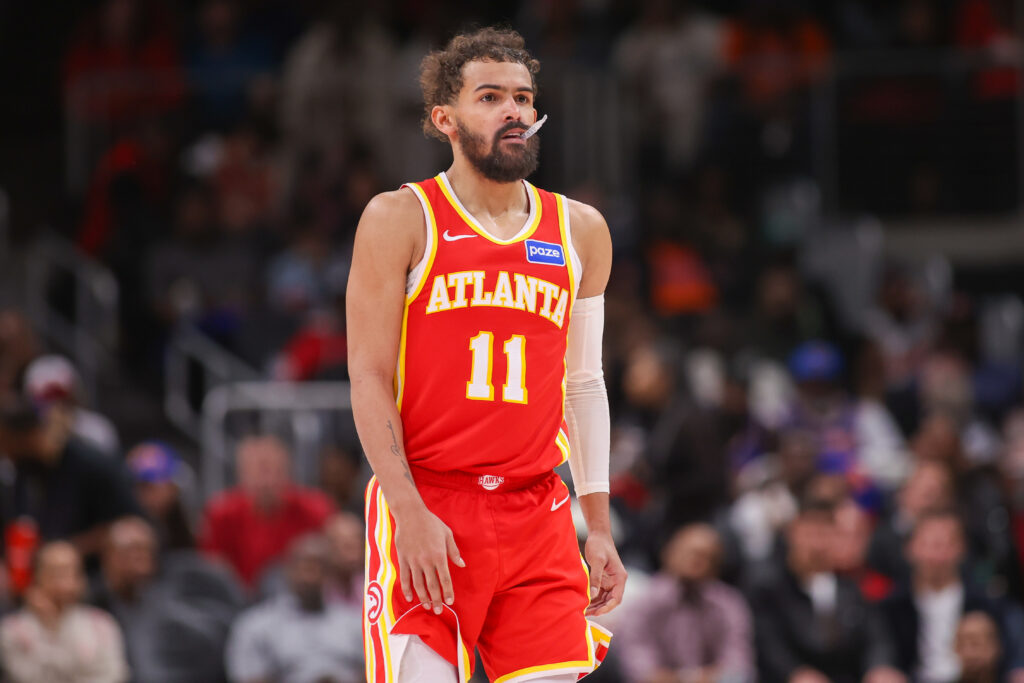
Trae Young has a clean case for this list because the dip is obvious in both the numbers and the way defenses are guarding him. In 10 games this season, Young is at 19.3 points and 8.9 assists in 28.0 minutes, but he’s shooting 41.5% from the field and 30.5% from three.
For a player whose value is built on elite offensive control, that shooting line changes everything. The moment Young’s pull-up three stops scaring people, opponents get to play the coverage they actually want: go under, keep a second defender planted near the nail, and make his drives feel crowded before he even turns the corner. That doesn’t just lower his scoring efficiency. It also shrinks his passing windows. Young can still hit the obvious read, but the “two defenders commit, and the corner is wide open” possessions show up less often when teams don’t have to chase over the top.
The other thing that jumps out is how little margin he has right now. Young is still getting to the line (7.3 free throws per game, 86.3% at the stripe), but his shot-making from the floor has been uneven enough that the nights start to swing hard based on whistles and floaters. When that’s your recipe, the bad games look ugly, fast.
Then there’s the simple availability issue. Young’s season got chopped up by a right MCL sprain, and after he was traded to the Wizards, he still hasn’t debuted for them while also dealing with a quad contusion, with the expectation he’ll be re-evaluated after the All-Star break. If your game is built on short-area burst and sudden stops, any knee limitation turns your best weapon into something defenses can absorb.
My read is that this version of Young has been playing in tighter spaces with less separation. That pushes him into more difficult midrange pull-ups and late-clock shot creation, which is exactly where the percentages can crater. The good news is the playmaking hasn’t disappeared. The bad news is that until his legs are right and the three-ball stabilizes, teams are going to keep defending him like a scorer they can contain instead of a scorer they have to fear.
3. Domantas Sabonis
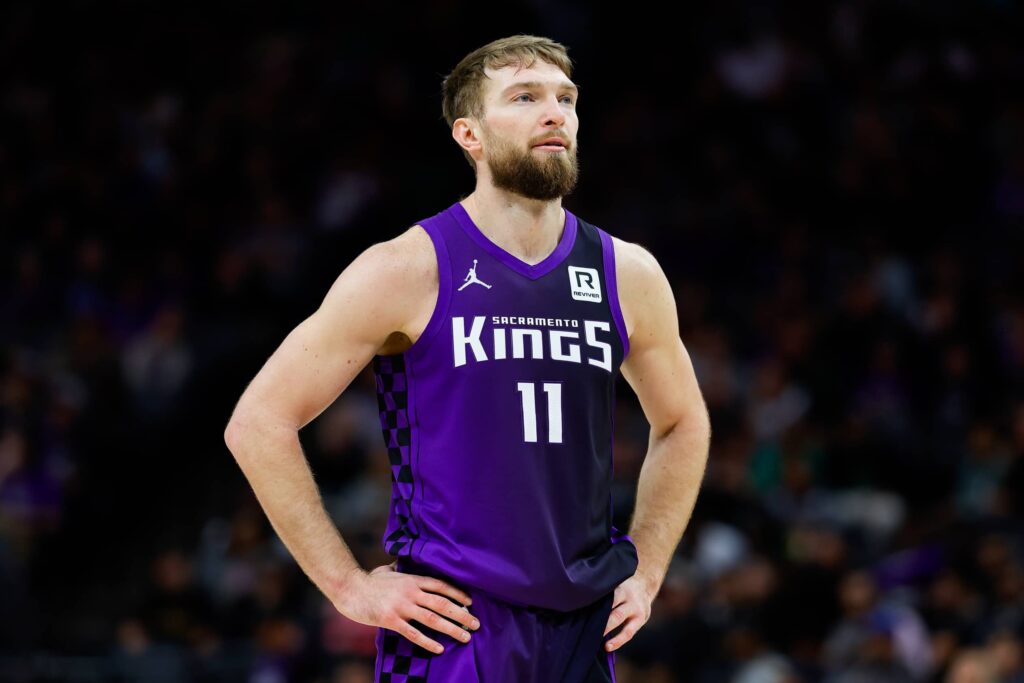
Domantas Sabonis is on this list for a different reason: the season hasn’t let him build momentum. He’s averaging 15.8 points, 11.4 rebounds, and 4.1 assists while shooting 54.3% from the field, which looks solid until you add the context that he’s played only 19 games.
The availability is the story. Sabonis missed 27 games with a partially torn meniscus in his left knee, returned in mid-January, and now he’s back on the injury report again, including a current stretch tied to back issues. When a big man’s base, balance, and lower-body strength get interrupted like that, the “Sabonis stuff” becomes harder: carving out deep seals, finishing through contact, and playing with constant force on both ends.
You can also see the impact in the team environment around him. The Kings are 12-43 and sitting 15th in the West, and they just hit a franchise-era 13-game losing streak. In that kind of spiral, even a strong rebound total can feel empty, because opponents don’t have to make hard choices. They can crowd the paint, send extra bodies at the elbows, and dare everyone else to beat them from the outside.
And Sabonis, specifically, hasn’t been able to compensate with his usual connective playmaking. The assist number (4.1) is fine in isolation, but it’s down from the level you expect when he’s functioning as a true offensive hub. When his knee and back are both in the conversation, the handoff game gets slower, the rolls get shallower, and the passing angles get easier to sit on.
Sabonis isn’t “declining.” He’s trying to be himself without a stable body or stable context. The Kings need him to be a nightly engine, not a guy managing soreness and minutes. Until he’s fully healthy and playing with consistent rhythm, his impact is going to look smaller than his reputation, even if the box score still has rebounds in it.
4. Paolo Banchero
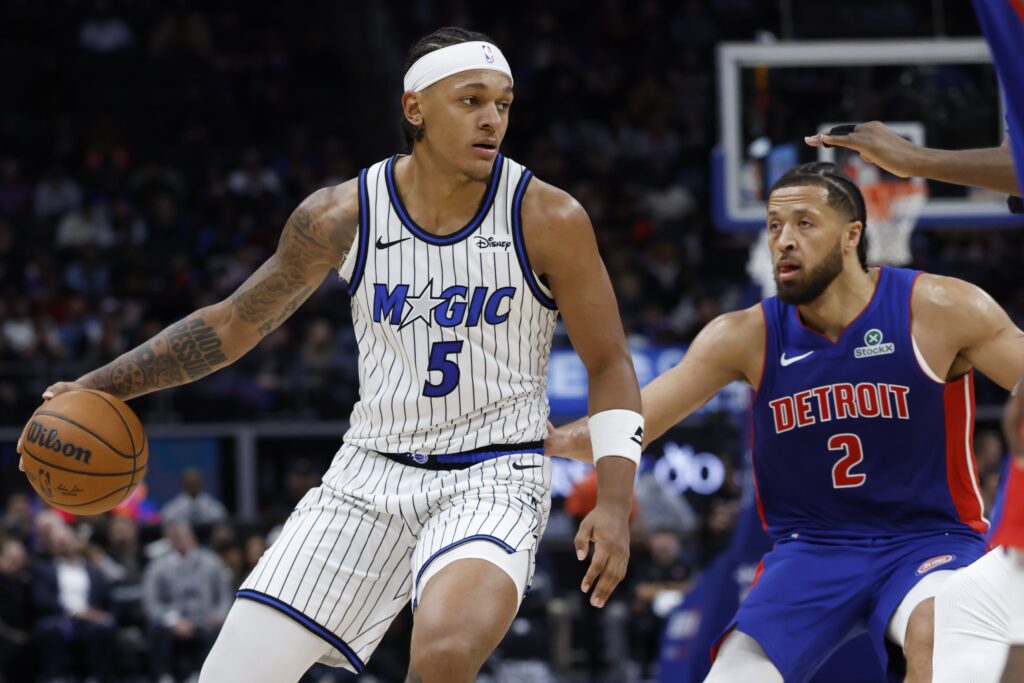
Paolo Banchero is putting up numbers that look fine at first glance, but the season has still felt heavier than it should for a player at his stage. He’s at 21.4 points, 8.5 rebounds, and 4.9 assists, shooting 45.7% from the field. The Magic are 27-24, sitting seventh in the Eastern Conference, which means every cold stretch matters because the standings are packed in that range.
The issue is not that Banchero forgot how to score. It’s that he’s running into the same problem over and over: the efficiency is fragile when opponents load up early and force him into tougher jumpers. He’s getting guarded like the Magic’s clear top option, and with that comes a lot of bodies at the nail and a lot of help digging down when he puts the ball on the floor. In that environment, the shot diet swings quickly from “strong drives and free throws” to “contested pull-ups.”
You can see it in his game-to-game volatility. One night, he looks comfortable, the next, he’s fighting the floor. Even recently, he’s had lines like 11 points on 3-of-10 shooting, then 23 points with eight assists a couple of nights earlier. That’s the profile of a star who’s still producing, but not consistently dictating terms.
The other thing that keeps showing up is the decision layer. Banchero’s playmaking has improved, but when defenses send early help, he’s getting pushed into slower reads. That leads to some possessions where the pass comes a beat late, or he tries to power through a crowd instead of hitting the easy swing. The assist number (4.9) is solid, but the offense still gets sticky when he doesn’t produce early in the clock.
Banchero’s “struggle” is really about gravity and counters. The Magic depend on him to create advantages against set defenses. When the jumper isn’t a consistent threat, opponents feel comfortable shrinking the floor and daring him to beat them with midrange volume. He’s good enough to survive that. He’s not yet consistent enough to punish it every night, and that’s why the season reads more uneven than the headline stats.
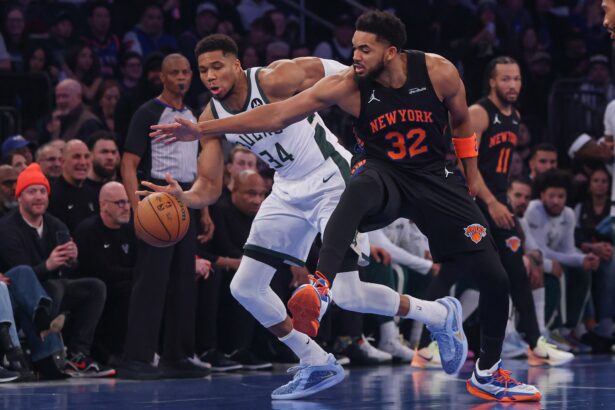
5. Karl-Anthony Towns
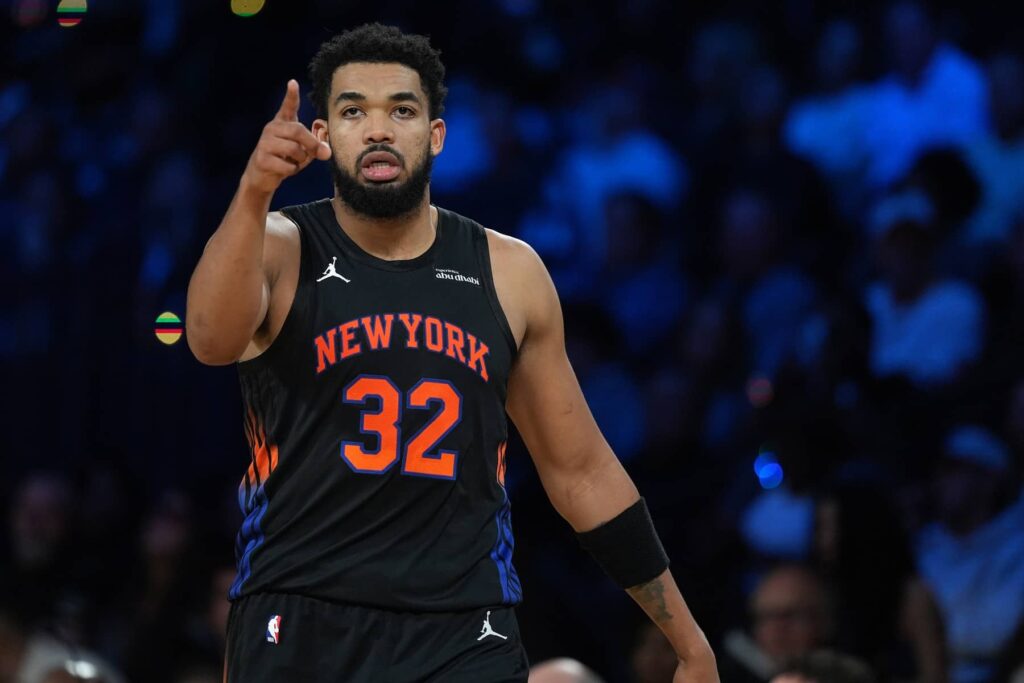
Karl-Anthony Towns is a different kind of entry for this list because the box score is productive, but the fit and the standards attached to his role make the season feel underwhelming in a real way. He’s averaging 19.7 points, 11.9 rebounds, and 2.9 assists in 49 games, shooting 46.3% from the field and 35.3% from three. The Knicks are 34-19 and second in the East, so the expectation isn’t “good season.” It’s “Does this scale cleanly in the playoffs?”
The first problem is efficiency relative to his own history. Towns is still a strong shooter for a big, but 46.3% from the field is not where you want him if he’s getting a steady diet of post touches, pick-and-pop threes, and finishes around the rim. When he’s not finishing at an elite clip, his scoring starts to look more like “solid volume” than “tilting the defense,” and that matters on a contender where possessions get tight.
The second problem is how teams are guarding him. If Towns is at the five, opponents will test him defensively in space and force the Knicks to show their cards early. If he’s next to another big look, opponents will load up on the perimeter and challenge the Knicks to win with movement instead of mismatches. Either way, Towns ends up in a lot of possessions where he has to make quick, correct reads rather than just shoot over the top.
And that’s where the frustration comes in: There have been reports that Towns is not seeing eye to eye in Mike Brown’s game scheme, and you can see him uncomfortable at times playing in the Knicks’ new system. That leads to inconsistent shooting, fewer touches that travel as more forced shots, and an overall dip in efficiency.
Towns has nights where he’s present but not imposing. He’ll grab boards, hit a couple pick-and-pop threes, and still feel like he didn’t stamp the game. Even in a recent win, he posted 11 points on 3-of-9 shooting. Those games aren’t disasters, but they’re not what you sign up for when you’re building a top-tier offense around a star big.
Towns isn’t failing. He’s just not consistently giving the Knicks the “extra gear” scoring that separates contenders from very good teams. The rebounding is elite, the spacing is valuable, but the overall impact has been more steady than dominant. On a team this good, that’s what turns a solid season into a “he’s struggling” conversation.
6. LaMelo Ball
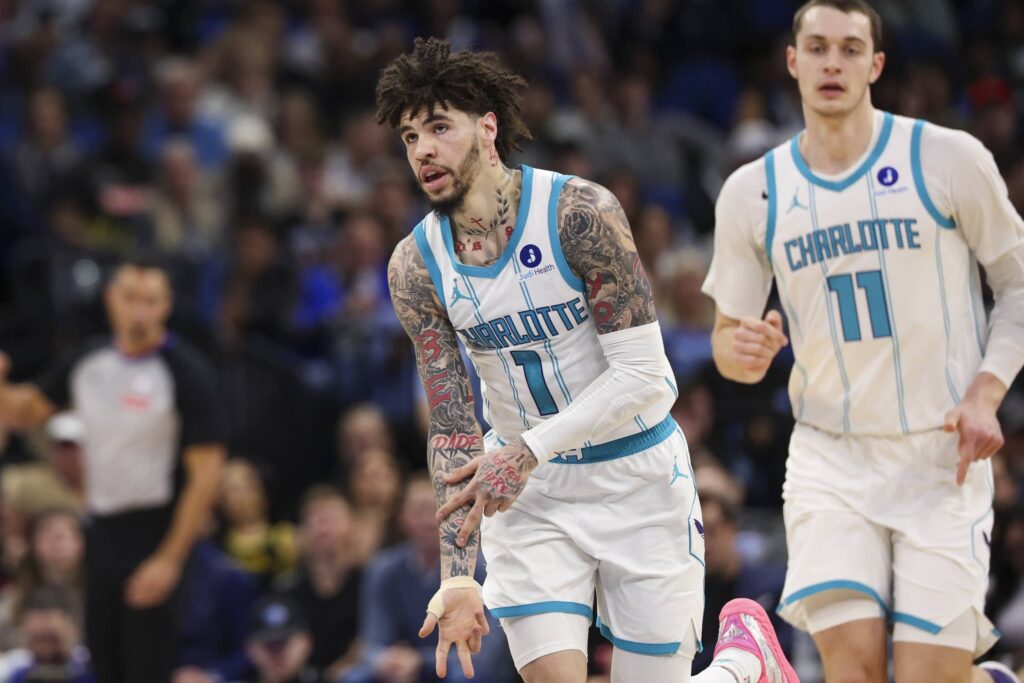
LaMelo Ball is having one of those seasons where the raw production still looks like lead-guard output, but the efficiency and the perception around him keep dragging the conversation into the mud. He’s at 19.2 points, 4.8 rebounds, and 7.4 assists, while shooting 40.2% from the field in 44 games. That’s the problem. For a high-usage creator, 40.2% from the floor is a loud number, especially when so many of his possessions end in self-created pull-ups or late-clock bailouts.
The Hornets’ season context matters, too. They’re 25-29 and 10th in the East, so there’s basically no room for sloppy stretches. And for a minute, they actually looked like they were flipping the story. The Hornets just put together a nine-game winning streak, which is the kind of run that stabilizes a locker room and forces the league to take you seriously. That streak ended Monday, but the bigger point is it happened at all.
So why does Ball still “feel” like he’s struggling? Because the nightly swing is too wide. He’s making 3.4 threes per game, and he’s at 36.2% from deep, which is good. But the overall 40.2% field-goal mark tells you the twos have been a mess. That usually shows up as rushed finishes, awkward angles in the lane, and the kind of in-between floaters that turn into empty trips when legs are not right.
Then you have the other layer: the rumors and the reputation stuff. Earlier in the season, there were reports hinting at frustration and trade noise, and Ball publicly pushed back with the now-famous “clown emoji” response. By January, the reporting tone shifted toward the idea that a trade was unlikely in-season, but could be revisited later depending on direction.
And yeah, the “unserious” label has been floating around him for a while, tied to leadership questions and the idea that his production hasn’t consistently translated to serious winning habits. That’s not a scouting report. It’s a reputation tax. But when your efficiency is this shaky, that tax gets bigger.
Ball is still a top-level passer, and the three-point shot is holding up. The struggle is the overall shot diet and the two-point finishing, because that’s what decides whether he’s controlling games or just filling the box score.
7. Jalen Williams
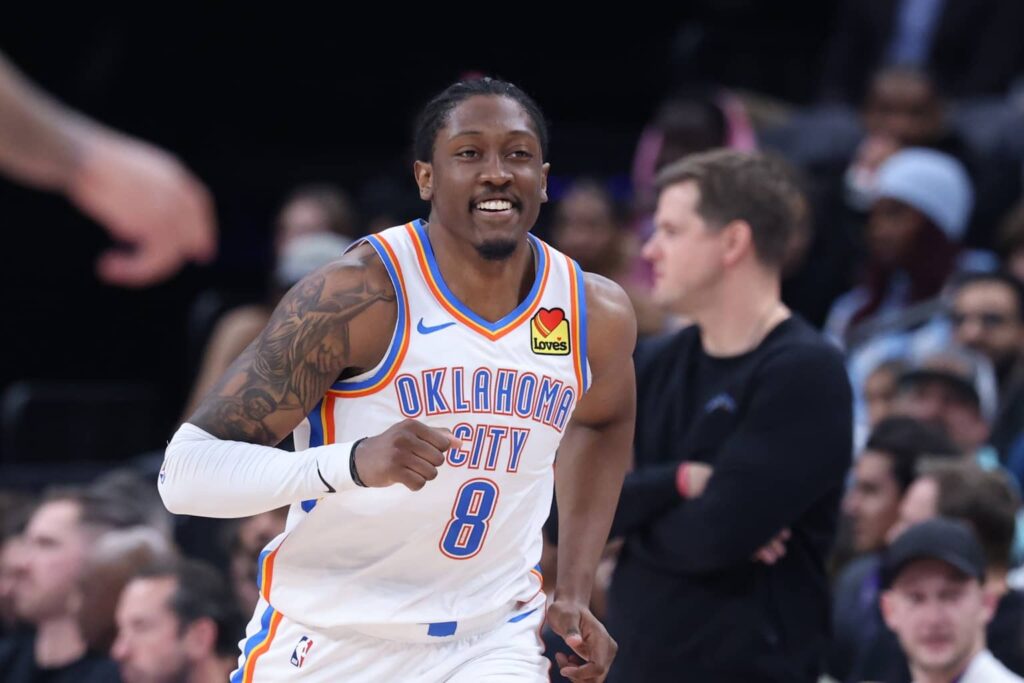
Jalen Williams is on this list because the Thunder are operating like a real contender, and his one clear weakness this season is exactly the kind of thing playoff defenses will attack. The Thunder are 40-13 and first in the West. On a team that good, “pretty solid” isn’t the standard. You’re judged on how cleanly your game scales when the floor shrinks.
Williams is averaging 17.1 points, 4.7 rebounds, and 5.4 assists, shooting 46.5% from the field. That’s a strong all-around line, and the playmaking jump is real. The issue is the three-point shot. He’s only taking 2.5 threes per game. When your volume is that low, defenses are more willing to “test” you: stunt off you, clog gaps, and dare you to prove it possession after possession. Even when you’re a good cutter and driver, that extra half-step of help changes the whole geometry for a Shai Gilgeous-Alexander-led offense.
There’s also been some stop-start rhythm. Williams recently returned after missing time, and the timing on his reads and touch finishes hasn’t looked as automatic as it did when he was rolling earlier in the year. That matters because Williams is a feel player. A lot of his value comes from beating closeouts with one hard dribble, making the next pass, and finishing through contact without wasting motion.
What makes this more than nitpicking is the role. The Thunder doesn’t need Williams to be a high-volume scorer every night. They need him to be the second-side problem solver. When opponents load up on Gilgeous-Alexander, Williams is the guy who has to punish the rotation, either by hitting the open three, driving the gap, or making the quick pass that turns a good possession into a great one. He’s doing plenty of the last two. The open question is whether teams will help off him more aggressively if the three-point volume stays this low.
Williams isn’t playing poorly, but he’s not meeting the expectations after scoring 40 points in the Finals and being primed for a massive star leap. He’s just carrying one playoff-shaped flaw right now. If the jumper stabilizes and the attempts creep up, his season stops looking like “small step back” and starts looking like “finished product.”
8. Jordan Poole
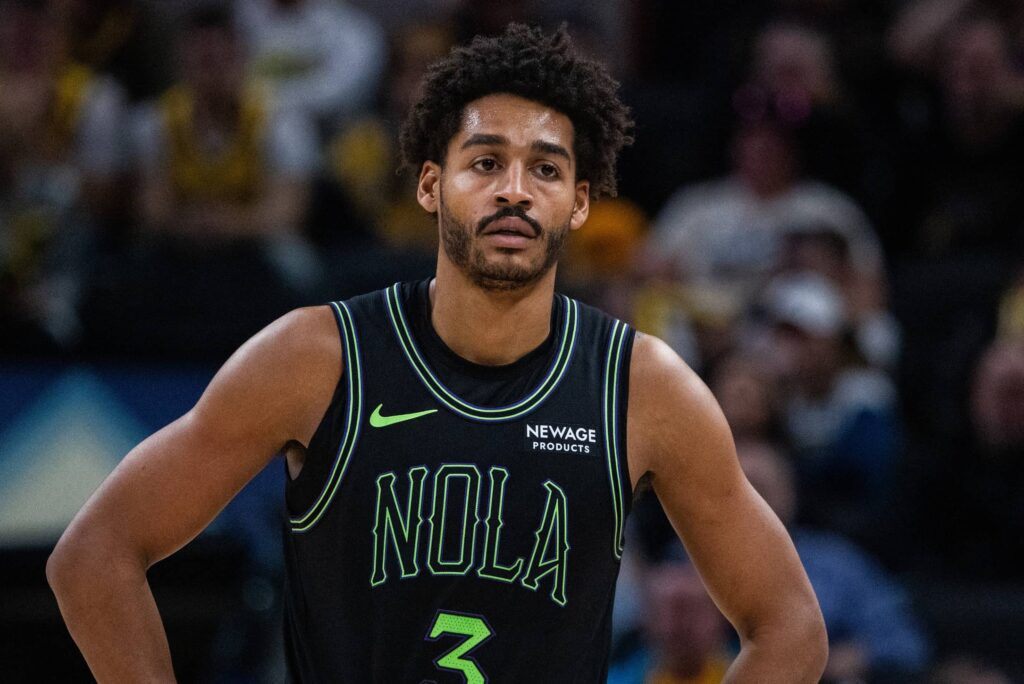
Jordan Poole is struggling because the gap between his role and his production has gotten too wide. On a minimum-variance team, you can live with cold spells. On the Pelicans, it has turned into a nightly question of whether the offense is getting value back for the possessions he uses.
The numbers are rough. Poole is at 14.5 points, 3.1 assists, and 1.8 rebounds in 28 games, shooting 37.0% from the field and 33.6% from three. That field-goal mark is the loud part. When a high-usage guard is finishing possessions at 37.0%, it drags down every lineup he anchors, because it’s not just missed shots. It’s missed shots that often become long rebounds and runouts the other way.
The season has also been defined by instability in his minutes and spot in the rotation. Will Guillory reported that Poole fell out of the Pelicans’ rotation pre-deadline as the team prepared to involve him in trade conversations. That matters because it frames the on-court issues as more than “slump variance.” It suggests the staff didn’t feel it could keep absorbing the inefficiency.
Why has it looked so bad? The simplest explanation is shot quality. Poole’s game leans heavily on pull-up threes and off-the-dribble jumpers. When he’s making them, he bends the defense. When he isn’t, the same shot diet becomes empty possessions. His 7.5 three-point attempts per game and 33.6% from deep tell you he’s still taking a volume shooter’s menu, but he isn’t converting at a level that justifies it.
The other part is physical interruption. Poole returned from an 18-game absence in mid-December. Even when a player comes back “available,” touch and balance are often the last things to fully stabilize, especially for guards living on tough jumpers.
Poole’s season is the definition of “good shots for him” turning into “bad shots for the team.” Until he either cleans up the finishing (37.0% is not survivable for this archetype) or trims the hardest attempts, he’s going to keep landing on lists like this.
9. Jabari Smith Jr.
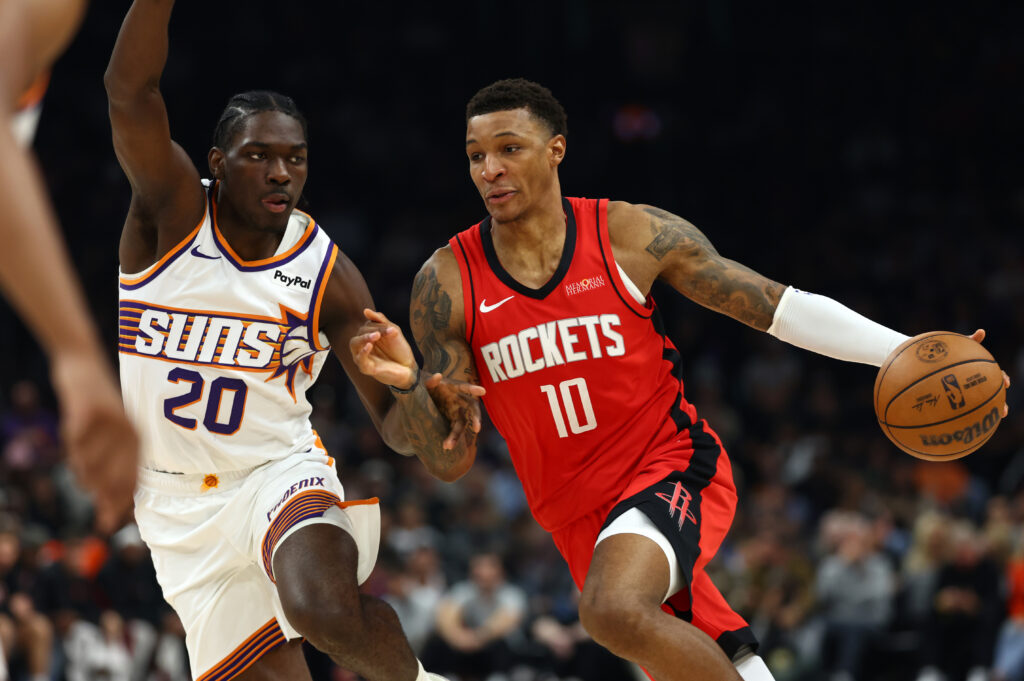
Jabari Smith Jr. is a different kind of struggle. His season line is perfectly respectable for a two-way forward: 15.2 points, 6.9 rebounds, and 1.9 assists in 50 games, shooting 43.7% from the field and 35.7% from three. The issue is that the season has included real stretches where his offense disappeared, and when you’re supposed to be a core piece, those stretches change how opponents guard your team.
Early January was the low point. Smith had been at 9.3 points on 25.5% shooting in a four-game Rockets losing run, including 5.0% from three in that span. That’s not “a few missed jumpers.” That’s defenses winning the matchup against him, daring him to shoot, and getting away with it.
This is where Smith’s profile becomes tricky. He’s a forward who needs his jumper to be a threat because it unlocks everything else. If defenders don’t respect the catch-and-shoot, they can sit on his straight-line drives and force him into contested finishes. And because he isn’t a high-volume creator, he doesn’t have a simple counter like “spam pick-and-roll until you foul out.” His impact swings on whether he hits the clean looks that come from the Rockets’ ball movement.
The good news is that the overall season percentages suggest he pulled it back toward normal. The 35.7% from three and +170 plus-minus point to a player who still fits winning lineups even when his box score isn’t loud. But the fact that he had a slump that severe tells you where his floor still is: if the jumper goes, his offense can vanish for a week.
He’s still learning how to be useful on nights when the shot isn’t there. That’s the next step. Great complementary forwards find secondary ways to hurt you. More rim pressure, more free throws, more quick decisions on the short roll. Until that evolves, Smith will keep having these “looks fine, but actually struggling” stretches.
10. Cam Thomas
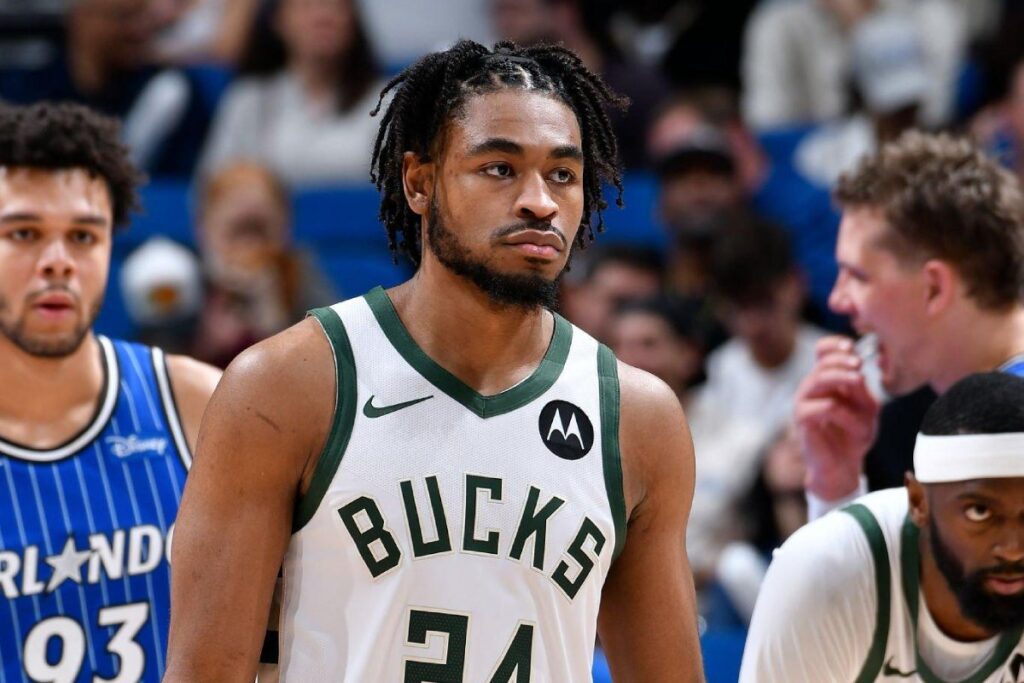
Cam Thomas is here because the season exposed the limits of his current version: real scoring talent, but not enough two-way value or availability to force a long-term commitment. The Nets waived him after the deadline, ending what could be described as a strained tenure. He didn’t hit free agency because he was too good for a tanking team. He hit free agency because the fit and the trajectory weren’t aligned.
Thomas’ season stats explain the tension. He averaged 15.6 points, 3.1 assists, and 1.8 rebounds in 24 games, shooting 39.9% from the field and 32.5% from three, while missing 20 games with a hamstring injury. That’s a classic “microwave scorer” line, but the efficiency is not strong enough to justify the defensive questions teams attach to him. If you’re a guard who is going to be targeted in actions, your offense has to be clean. Sub-40% from the field makes that argument hard.
The roster and contract context mattered. He played this season on a $5.9 million qualifying offer after failing to secure a longer-term deal, and the Nets ultimately waived him rather than carry the situation forward. Then the Bucks signed him almost immediately, which tells you the league still sees value in the archetype.
As a “struggling star” entry, the story is simple: Thomas wants to be treated like a primary scorer, but he hasn’t shot efficiently enough, stayed healthy enough, or rounded out enough of the game to make that role feel inevitable. The hamstring matters, because it can sap burst and rhythm for months. But the bigger point is that even when he played, the jumper didn’t stabilize.
Thomas is going to score in the league for a long time. The step he still owes is turning scoring into efficiency, and showing he can survive defensively for long stretches. If he does that with the Bucks, this season will look like a weird detour. If he doesn’t, it’s going to keep being the same conversation every February.





![Knicks Fans Assault Police, Destroy Cab And Five Guys Restaurant In Violent Game 4 Aftermath [Video]](https://fadeawayworld.net/wp-content/uploads/2026/06/Knicks-Fans-riot-after-Game-4-615x410.jpg)