Even in an 82-game season, some nights stand out for the wrong reasons. A single box score can capture everything that went sideways: poor shooting, turnovers, fouls, and minutes that actively hurt a team’s chances. This list focuses on those extreme outliers from the 2025-26 season so far, the stat lines that look shocking even by NBA standards.
The selections below weigh both volume and context: how many minutes were played, how inefficient the scoring was, and whether the negative plays outweighed any positives. Some of these lines come from stars having rare off-nights. Others are from rotation players getting an opportunity and failing to capitalize. Either way, the numbers are hard to ignore.
1. Ace Bailey
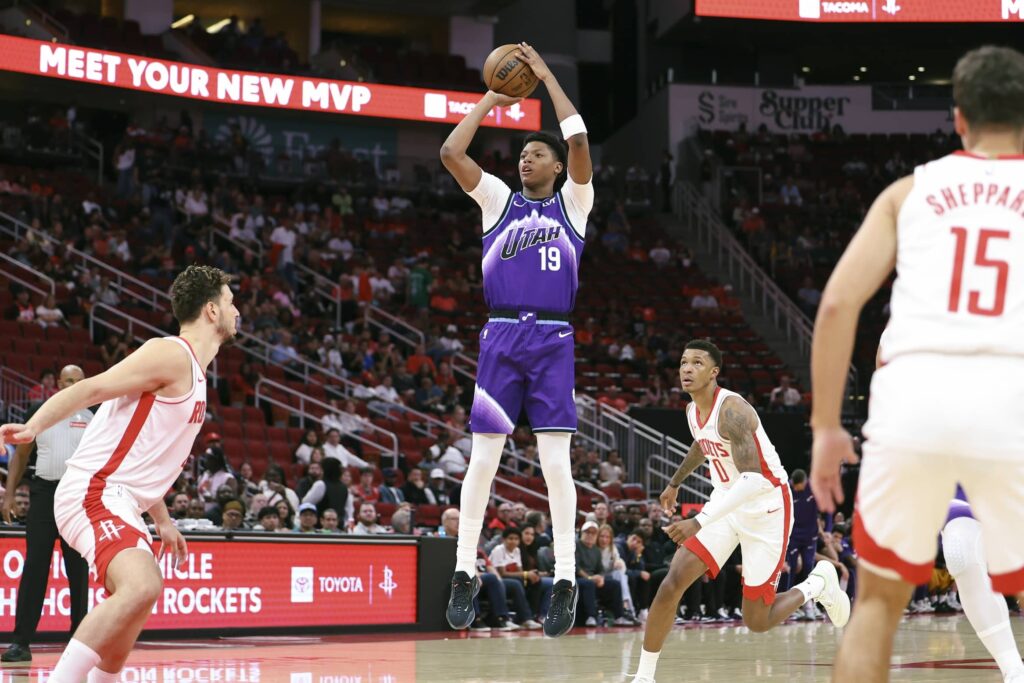
Stats: 5 PTS, 1 REB, 0 AST, 0 STL, 1 BLK, 2-5 FG, 1-3 3PT, 0-0 FT, 6 FLS, 10 MIN
This happened on Nov. 16, when the Jazz beat the Bulls 150-147 in double overtime.
Ace Bailey’s line is memorable because it’s not a bad shooting night. It’s a foul-out in basically one shift. Six fouls in 10 minutes means he was constantly late to contact or trying to recover with his hands. For a young wing, that’s the fastest way to kill your own rhythm and force the coaching staff into a rotation scramble.
The game itself was a track meet that kept escalating, which makes Bailey’s night feel even stranger. In a 150-147 game, you’d expect everyone to have counting stats just by accident. Bailey didn’t. He barely had time to exist. He did make a three and recorded a block, but every positive got drowned out by the whistle.
The bigger problem is what it does to the team. Fouling out that quickly isn’t just “rookie mistakes,” it’s lost lineup continuity. Utah had to patch together minutes in a game that required constant shot-making and clean execution. They still survived, but Bailey’s stretch was a reminder that staying on the floor is a skill on its own.
2. Gabe Vincent
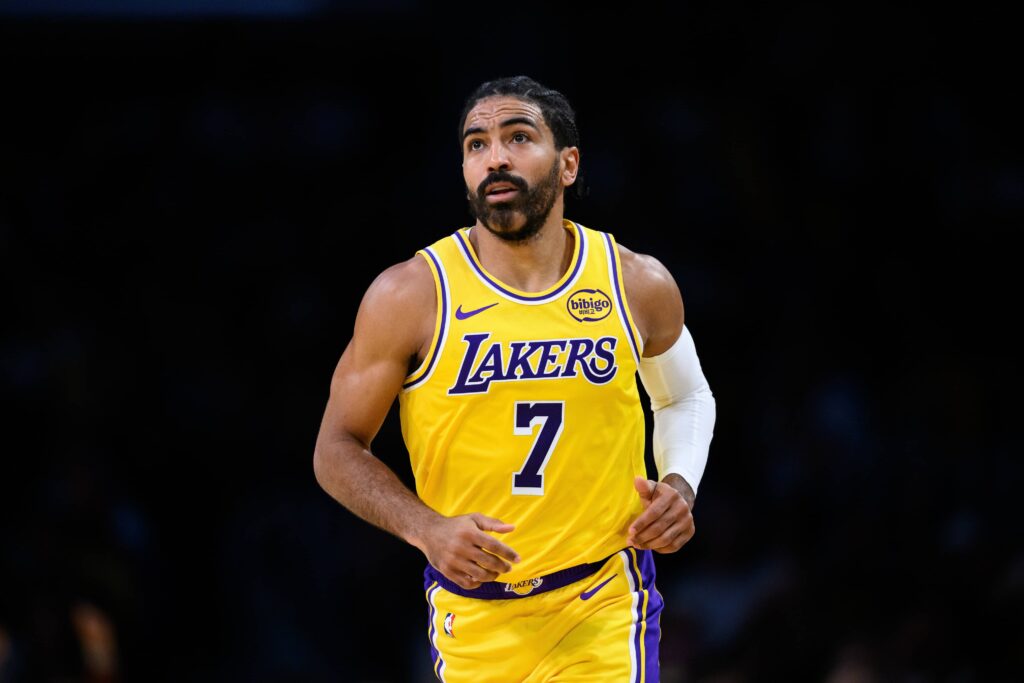
Stats: 0 PTS, 0 REB, 0 AST, 0 STL, 0 BLK, 0-2 FG, 0-2 3PT, 0-0 FT, 1 TOV, 1 PF, 18 MIN
Gabe Vincent’s “all zeros” game came on Nov. 25, in the Lakers’ 135-118 win over the Clippers. He played 18 minutes and finished with no points, rebounds, assists, steals, or blocks.
This is the cleanest version of a bad stat line because there’s nowhere to hide. Two missed threes, one turnover, one foul, and that’s it. Even in a low-usage role, 18 minutes usually produces something: a loose-ball rebound, a swing pass that becomes an assist, a deflection. Vincent got none of it.
What makes it stand out is the setting. This wasn’t the last two minutes of a blowout. It was a real rotation window in a high-profile matchup, and the Lakers simply got nothing from that spot. Los Angeles still won comfortably behind its main creators, but Vincent’s line captures the concern that followed him for stretches this season: if the jumper isn’t falling, his nights can turn into empty cardio.
3. Keyonte George
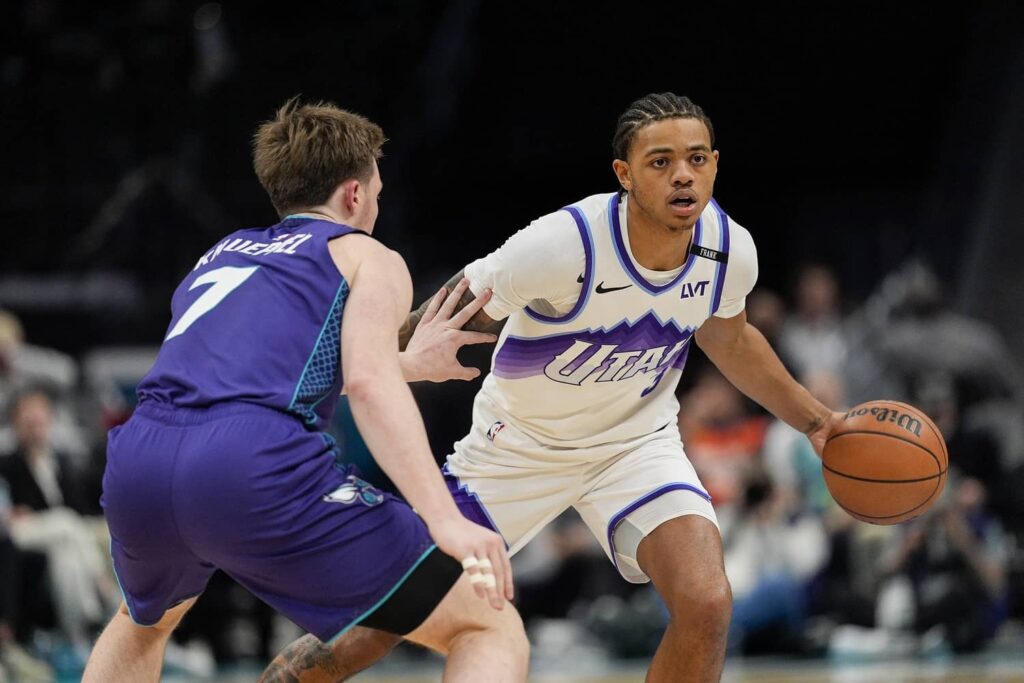
Stats: 0 PTS, 1 REB, 2 AST, 0 STL, 0 BLK, 0-6 FG, 0-3 3PT, 0-0 FT, 8 TOV, 2 PF, -27, 19 MIN
Keyonte George’s entry came on Nov. 30, when the Jazz got blown out by the Rockets, 129-101. He played 19 minutes, didn’t score, and committed eight turnovers, with a -27 plus-minus.
This is the nightmare point-guard line because it’s not just missing shots. It’s losing possessions. Eight turnovers in 19 minutes means the game was moving too fast for him, and Houston made him pay for every mistake. Turnovers don’t just waste a trip; they create transition points, and transition is how a game turns into a rout.
The Rockets’ defensive pressure was the story of the night, and George became the symbol of it. If your lead handler can’t stabilize possessions, the offense never breathes. Utah never found a steady rhythm, the margin kept growing, and George’s minutes became a negative swing rather than a bridge to the next lineup.
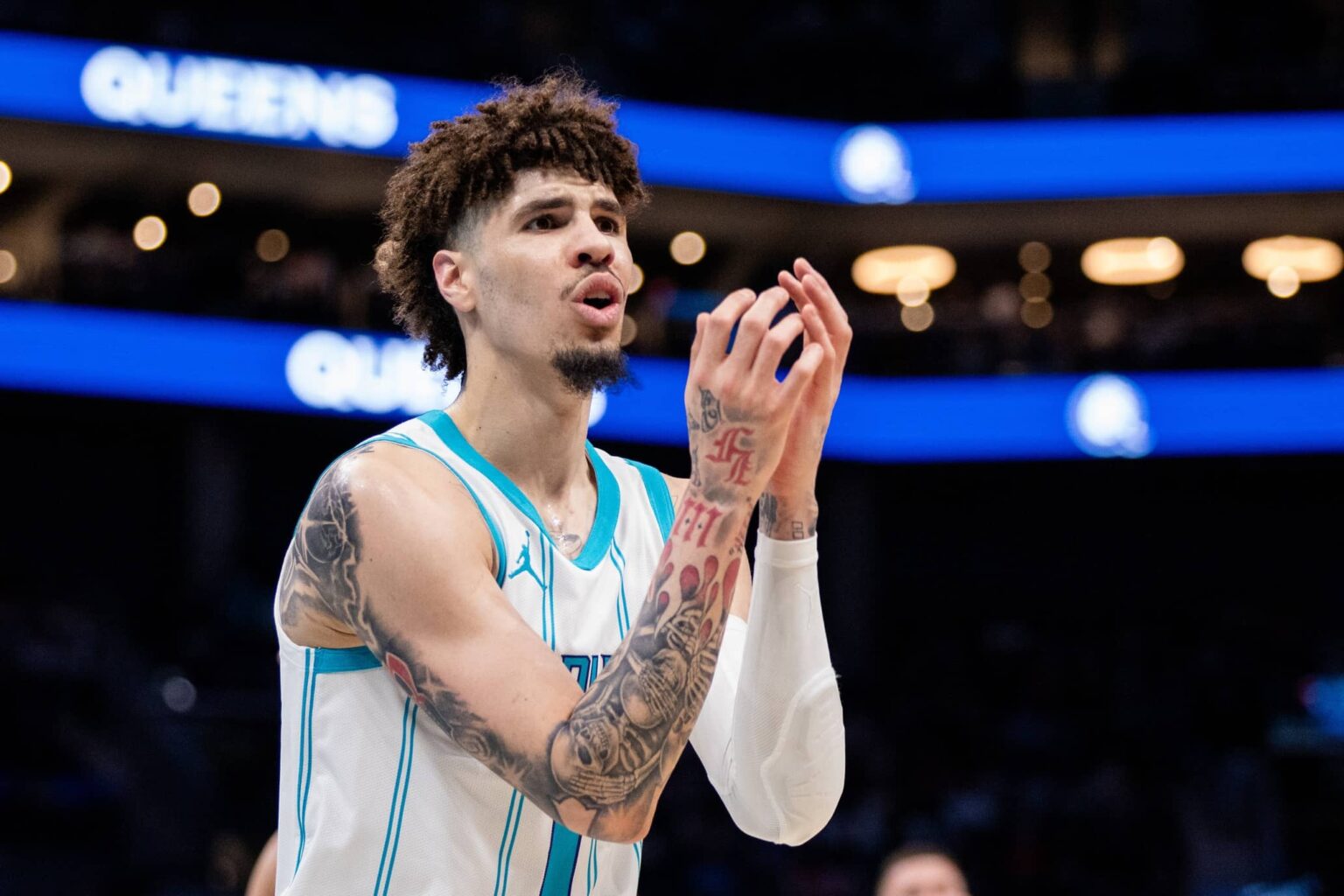
4. LaMelo Ball
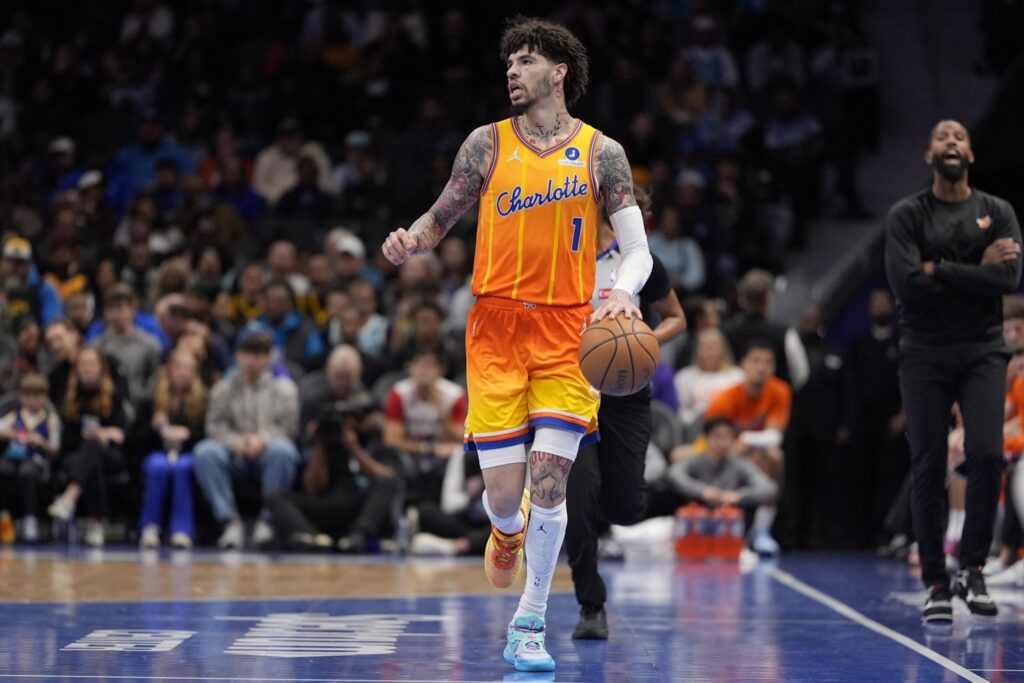
Stats: 2 PTS, 5 REB, 7 AST, 2 STL, 1 BLK, 1-15 FG, 0-10 3PT, 0-0 FT, 4 PF, 1 TOV, 18 MIN
This one came on Jan. 21, when the Cavaliers beat the Hornets 94-87 at Spectrum Center.
The surface-level takeaway is simple: Charlotte’s lead guard could not buy a bucket. LaMelo Ball scored two points, and it took him 15 shots to get there. He missed every three-pointer he took, finishing 0-for-10 from deep, which matters because that’s the swing skill that usually opens up everything else in his game. When the pull-up threes aren’t falling, the defense plays the pass, sits on the handle, and suddenly every drive becomes a crowd.
The context makes it worse. Cleveland jumped out early, and the Hornets spent the whole night chasing the game. That’s exactly when you need your primary creator to keep the offense organized: generate clean looks, collapse the defense, and at least threaten scoring so the help has to respect you. Ball did the playmaking part, with seven assists, but the scoring gravity was gone. It’s hard to bend a defense when the defense knows it can live with your jumper.
The box score also tells you this wasn’t “he was passive.” He took shots. He just missed them, and most of them were the kinds of attempts that can spiral quickly for a high-usage guard: pull-ups, quick threes, shots you take because you feel like you have to break the run. That’s how you end up with a two-point night in almost 19 minutes, even with a few defensive plays mixed in.
5. Cade Cunningham
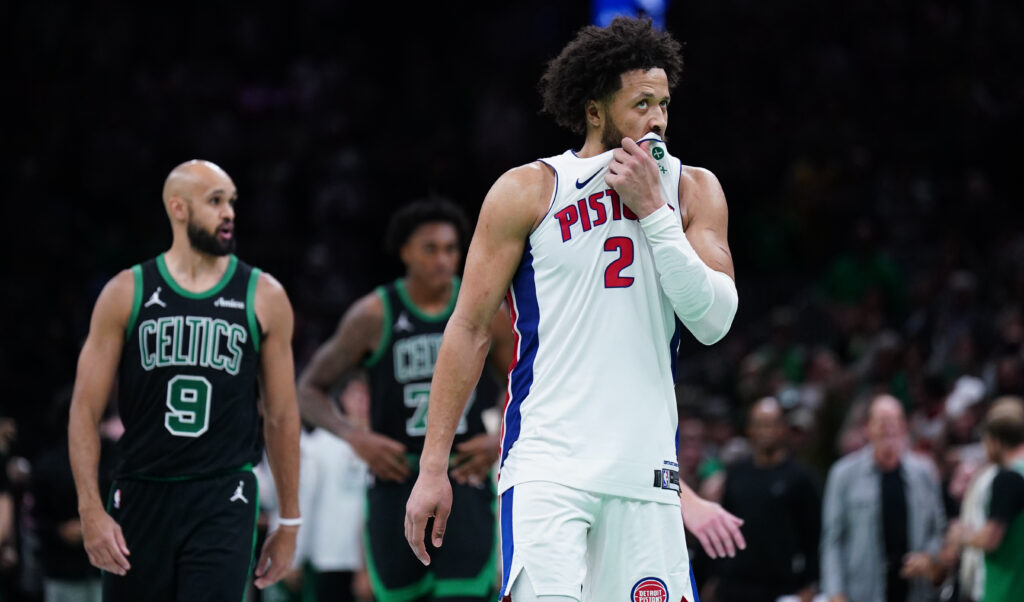
Stats: 46 PTS, 12 REB, 11 AST, 5 STL, 2 BLK, 14-45 FG, 2-11 3PT, 16-18 FT, 4 PF, 2 TOV, 45 MIN
This happened on Nov. 10, when the Pistons beat the Wizards 137-135 in overtime at Little Caesars Arena.
This is the weird entry on the list, because it’s a monster stat line that still has a “worst stat line” argument baked in. Cade Cunningham finished with 46 points and a triple-double, but it took 45 shot attempts to get there. That’s not normal volume. That’s an offense completely tilted in one player, trying to drag the game across the finish line.
And here’s the thing: the Pistons won, so you can’t call it empty. But the efficiency is the point. Fourteen makes on 45 tries is a brutal conversion rate for a primary creator, and the 2-for-11 from three shows how many of those possessions ended in difficult jumpers. The only reason the night doesn’t look even uglier is that he lived at the line (16-for-18), which kept the scoring afloat and let Detroit keep pace late.
What makes the line genuinely shocking is the combination: huge usage, heavy minutes (45), and a shot diet that basically screams “we don’t have another option tonight.” Even for a star, 45 field goal attempts is the kind of number that usually shows up in history books, not a random early-season game. It’s a reminder that volume can create greatness, but it can also create ugly basketball, and this was both at once.