Game 1 opens with one of the stranger first-round setups in the bracket. The No. 4-seeded Cavaliers have home court, the bigger names, and the higher-end offense on paper. The No. 5-seeded Raptors have the matchup fact in the series: they swept the regular-season meetings 3-0.
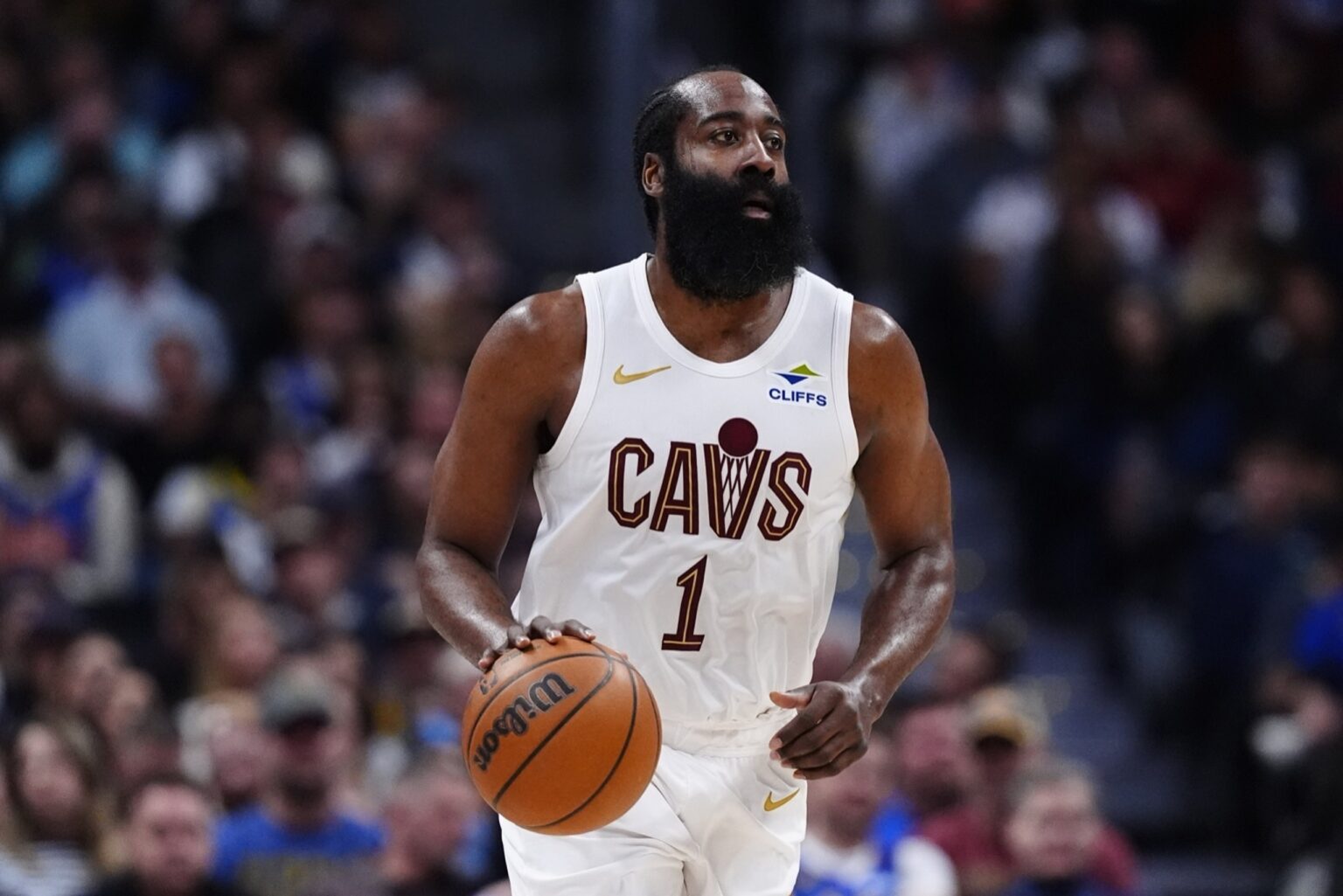
That sweep needs context. All three games were done before James Harden arrived. The Cavs are 19-6 when Harden plays, so this is not exactly the same version of the team the Raptors saw early in the season. That is what makes this opener interesting. One side has the better recent roster. The other side already proved it can make this matchup ugly.
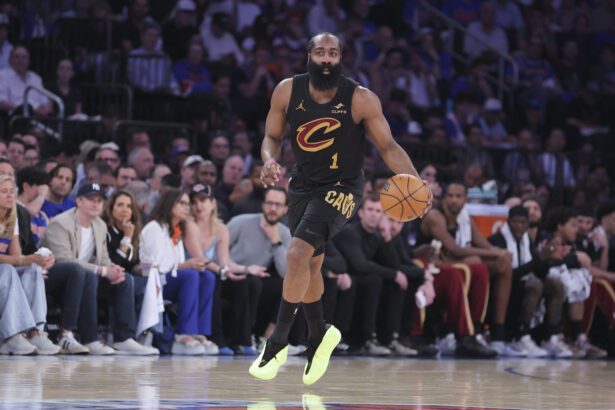
The star matchup still leans toward the Cavaliers. Donovan Mitchell finished the season with 27.9 points, 5.7 assists, and 4.5 rebounds. Harden, in his 26 games with the team, gave them 20.5 points, 7.7 assists, and 4.8 rebounds.
The Raptors answer with Brandon Ingram at 21.5 points, 5.6 rebounds, and 3.7 assists, plus Scottie Barnes at 18.1 points, 7.5 rebounds, and 5.9 assists.
The Raptors also come in feeling better about where the series starts. They closed the regular season by beating the Nets 136-101 to lock up the No. 5 seed, with Barnes posting an 18-point, 12-rebound, 12-assist triple-double, RJ Barrett scoring 26, and Ingram adding 25.
The Cavaliers beat the Wizards 130-117 in their finale, but their core pieces sat out. So the Raptors come in with more recent game rhythm from their top group, while the Cavs enter fresh and healthy enough to roll out their main lineup.
Injury Report
Cavaliers
Thomas Bryant: Out (left calf strain)
Raptors
Immanuel Quickley: Questionable (right hamstring strain)
Why The Cavaliers Have The Advantage
The easiest season-long case for the Cavaliers starts with the offense. They finished with a 119.2 offensive rating, scored 119.5 points per game, shot 48.2% from the field, and attempted 39.8 threes a night. The Raptors were good, but not at that level offensively, finishing at 115.9 in offensive rating. The Cavaliers have more natural shot creation in the half-court, and that usually becomes the first thing you trust in a Game 1.
The other season-long number that stands out is the Cavs’ upside when the core group is actually together. Harden, Mitchell, Evan Mobley, and Jarrett Allen only shared the floor for 92 regular-season minutes, but the Cavs outscored opponents by 26.7 points per 100 possessions in those minutes. It is a tiny sample, but it also tells you why the Cavaliers feel different now than they did in those three losses to the Raptors. The higher-end version of this roster was barely seen before the playoffs.
From a matchup standpoint, the Cavs’ cleanest edge is what Harden changes. The Raptors have size and activity on the wing, but Harden gives the Cavaliers another player who can slow the game down, get two defenders on the ball, and make the next read. That matters a lot against a defense built around active wings like Barnes, Ingram, and Barrett. If Mitchell is the first punch, Harden is the piece that can keep the floor organized when the first action gets crowded.
The spacing around that duo is what can really stress the Raptors. The Cavaliers have built this offense around catch-and-shoot pressure around Mitchell and Harden. Jaylon Tyson finished near the top of the league in three-point percentage, Sam Merrill was above 42% from deep, and Max Strus came back late in the season giving them another real floor spacer. If the Raptors over-help on drives, the Cavs have enough shooting to make them pay quickly.
There is also a very direct paint matchup here. The Raptors finished 24th in rebounding, and our series preview pointed right at Jakob Poeltl as a player they need more from because the Mobley-Allen front line can be a problem. That is a real issue in Game 1. If the Cavaliers win the glass and keep the Raptors from getting loose in transition, the game starts leaning toward their offense instead of the Raptors’ wing pressure.
Why The Raptors Have The Advantage
The season-long case for the Raptors starts with balance and continuity. They finished with a 115.9 offensive rating, a 113.0 defensive rating, and 29.5 assists per game. Their starting lineup had already played 348 minutes together before the regular-season finale and posted a plus-7.5 net rating. The Cavaliers, by comparison, had the fewest minutes for any team’s most-used lineup. For Game 1, that matters. The Raptors know exactly what they are. The Cavs are still building some chemistry on the fly.
The clearest on-court edge for the Raptors is their wing lineup. Barnes, Ingram, and Barrett give them three big bodies who can handle, pass, and attack weaker defenders. That is a real problem for the Cavaliers because there’s a question out there directly: who from the Cavs’ wing group can really hold up against those three for long stretches? This is the part of the matchup the Raptors will keep testing.
That is also why the 3-0 sweep should not be dismissed completely. Yes, Harden changes things. But those games still showed the Raptors have the kind of length and activity that can knock the Cavaliers out of rhythm. Their goal is not to shut off every action. It is to crowd the gaps, make Mitchell see bodies, and force the Cavaliers to prove they can make fast, clean reads for 48 minutes. If the Cavs get stagnant, the Raptors have enough size to make the floor look smaller.
The other big edge is how the Raptors can play through multiple creators without needing one player to force everything. Barnes can be the connector. Ingram can get to his pull-up and mid-post game. Barrett can attack straight lines and put pressure on the rim. If Immanuel Quickley is healthy enough to go, that gives them one more pull-up guard and one more ballhandler. That is a good way to stress a defense that was solid this year, but not dominant.
The Raptors also come in with more continuity in the exact lineups they want to use. That does not mean they are more talented. It means their reads and spacing should look cleaner right away. In Game 1, especially on the road, that can help a lot. The Cavaliers may have the better top-end offense, but the Raptors are more used to playing this exact style with this exact group.
So the Raptors’ formula is clear, too. Turn this into a wing game. Put pressure on the Cavs’ secondary defenders. Force turnovers or at least force late-clock offense. And make the Cavaliers prove their new version can beat this kind of length right away. If the game gets messy, the Raptors have a real shot to steal the opener.
X-Factors
Jaylon Tyson is a big one for the Cavaliers because he is exactly the kind of player this matchup can swing toward. He finished the season with 13.2 points, 5.1 rebounds, and 2.2 assists while shooting 44.6% from three. The Raptors are going to send extra attention toward Mitchell and Harden, especially when they get downhill. Tyson is one of the players who has to punish that. If he knocks down open catch-and-shoot threes and attacks a closeout or two, the Cavs’ offense gets a lot harder to load up against.
Jarrett Allen is another huge swing piece because the rebounding matchup is right in front of him. He finished the season with 15.4 points, 8.5 rebounds, and 63.8% shooting. The Raptors do not need Allen to become a post-up scorer. They need to keep him off the glass, and that is easier said than done. If Allen owns the paint, ends possessions, and forces the Raptors to score over length, the Cavaliers get the kind of game they want.
RJ Barrett is a real X-factor for the Raptors because he gives them another downhill scorer next to Barnes and Ingram. He finished the season with 19.3 points, 5.3 rebounds, and 3.3 assists, then scored 26 in the regular-season finale that clinched the No. 5 seed. That is a useful player in this matchup because the Cavs are going to spend so much of their attention on Barnes and Ingram as creators. If Barrett wins his touches by driving the ball and finishing through contact, the Raptors become much tougher to guard.
Jakob Poeltl is the other one because his role is tied directly to the weakest part of the Raptors’ profile. He finished with 10.7 points, 7.0 rebounds, and 2.0 assists while shooting 70.0% from the field, and the Raptors went 26-20 with him this season. The issue is whether he can hold up enough inside against the Mobley-Allen size. If Poeltl gives the Raptors steady rebounding, screen-setting, and paint defense, Game 1 can stay close deep into the fourth. If not, the Cavs’ size becomes a much bigger problem.
Prediction
Game 1 should be tighter than a normal 4-5 opener because the matchup has already been awkward for the Cavaliers. The Raptors have size on the wing, better continuity, and real confidence from that 3-0 regular-season sweep. But this still feels like the spot where the Cavs’ upgraded roster starts to show. Harden changes the decision-making. Mitchell is still the best scorer in the game. And the Mobley-Allen front line should be able to lean on the one area where the Raptors are still vulnerable. If the Cavs keep the ball and make this a half-court game, they should get control of it late.
Prediction: Cavs 112, Raptors 106