Round 1 starts with a matchup that already feels bigger than a normal 3-6 series. The Nuggets open Game 1 against the Timberwolves on Saturday, April 18, at Ball Arena, with the No. 3 seed trying to protect home court and the No. 6 seed walking into a series that has seen both teams beat each other in recent postseasons.
The regular-season matchup leaned toward the Nuggets, who won three of the four meetings. They took the first three games 127-114, 123-112, and 142-138 before the Timberwolves answered with a 117-108 win on March 1. That part matters because the Timberwolves did show they can make this series uncomfortable, but the bigger trend is still that the Nuggets got to their offense more often than not.
The series also opens with both teams coming in from very different last-week situations. The Nuggets closed the regular season on a 12-game winning streak and locked up the No. 3 seed in their finale. The Timberwolves had already secured the No. 6 seed, rested several main players in the last game, and beat the Pelicans with a bench-heavy group. So one side comes in hot, and the other comes in rested.
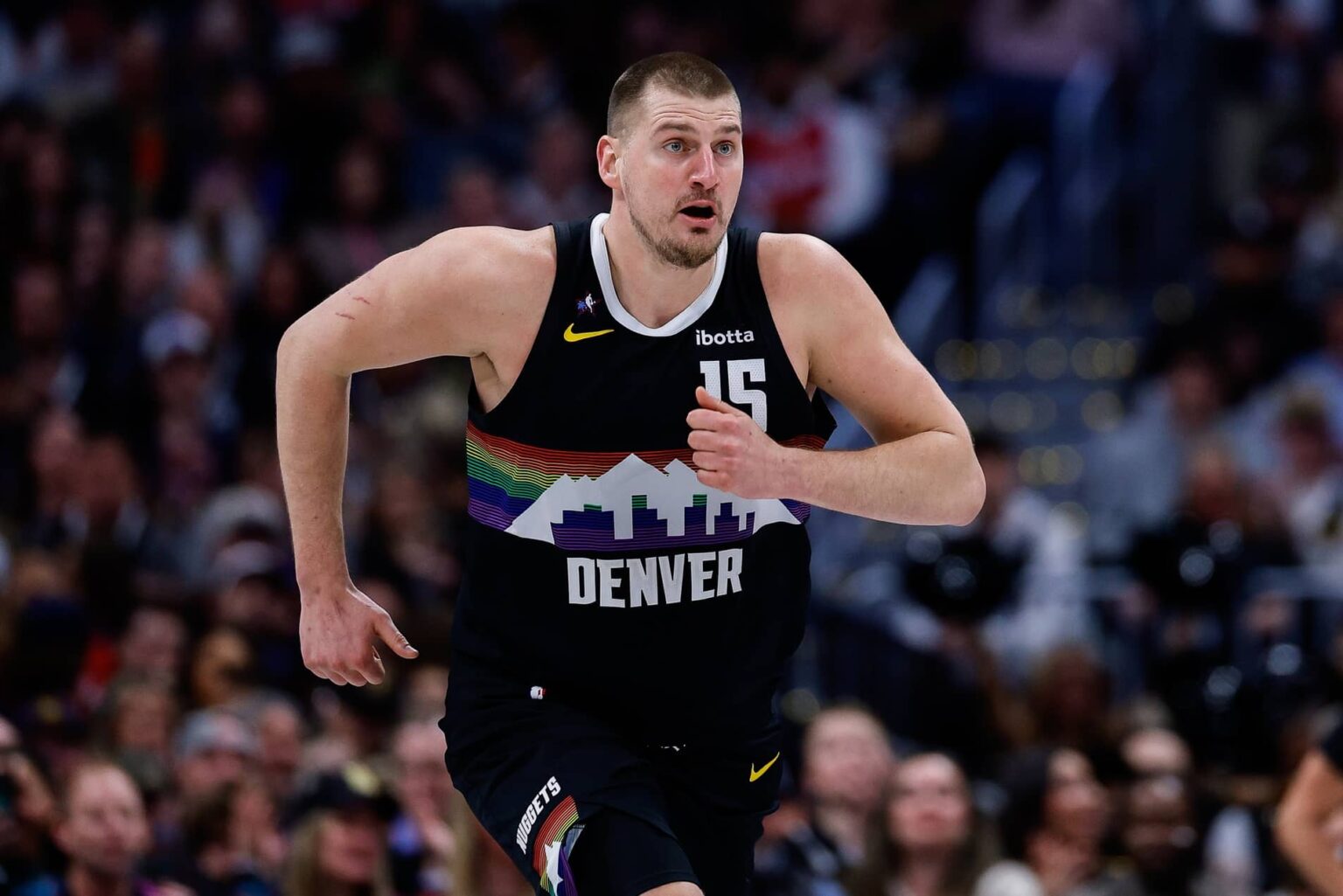
This is still a star-driven matchup first. Nikola Jokic ended the regular season with 27.7 points, 12.9 rebounds, and 10.7 assists, and he was ridiculous against the Timberwolves, putting up 35.8 points, 15.0 rebounds, and 11.3 assists in the season series. Anthony Edwards gives the Timberwolves their own high-end scorer after finishing with 28.8 points per game, but the health note is real going into Game 1.
Injury Report
Nuggets
Spencer Jones: Questionable (right hamstring strain)
Peyton Watson: Out (right hamstring strain)
Timberwolves
Anthony Edwards: Questionable (right knee injury maintenance)
Why The Timberwolves Have The Advantage
The clean numbers still point to the Nuggets. They finished with the best offense in the league at 122.6 points per 100 possessions and kept their turnover rate down to 11.6%, one of the best marks in the NBA. That is a strong Game 1 base because it means they do not give away many empty trips, and they already know this defense well. Add in the season-series edge and Jokic’s production in those four games, and it is easy to see why the opener starts leaning their way.
The real problem for the Timberwolves is the Jokic-Murray action. This is the core of the series. Jokic set 894 ball screens for Murray this season, by far the most for any one teammate combo, and the Nuggets scored 127.8 points per 100 possessions in the minutes those two shared the floor. That is why this matchup gets hard so fast. If Rudy Gobert plays up, Jokic can slip into short-roll passing. If Gobert sits back, Jamal Murray gets into pull-up rhythm. If the Timberwolves switch, Jokic gets a smaller defender on his back. There is no easy answer.
The other big Game 1 edge for the Nuggets is how many decisions they can force out of the Timberwolves’ weak side. If the Timberwolves top-lock Murray or load up hard toward Jokic, the Nuggets are quick to counter with Aaron Gordon cuts, Christian Braun dives, and second-side actions that move the defense before it can reset. That is where the Nuggets are hard to play in a series opener. They do not just run one thing well. They flow from the first action into the second and third action without wasting much time. Against a team still trying to get healthy on the wing, that can be a real problem.
Why The Timberwolves Have The Advantage
The Timberwolves’ best season-long argument is on defense. They finished at 113.5 in defensive rating and held opponents to 35.5% from three, both solid marks against a Nuggets team that still lives off rhythm, spacing, and the Jokic-Murray two-man game. They also shot 37.0% from three themselves, which gives them a real way to keep up if this turns into a shot-making game instead of a grind.
There is also one matchup stat that matters a lot here. In the regular-season series, the Timberwolves allowed only 108.6 points per 100 possessions in Rudy Gobert’s 121 minutes on the floor. That tells you the basic plan. The Timberwolves need Gobert to hold up the middle, keep Jokic from getting too deep in the paint, and clean the glass well enough that the Nuggets do not get easy second actions. If Gobert can do that, the Timberwolves have a path to making this a much uglier half-court game than the Nuggets want.
The offensive path is simpler. The Timberwolves have to attack the Nuggets at the point of the screen. The Nuggets finished only 117.4 in defensive rating, and this is not a team with elite rim protection behind Jokic. So the Timberwolves need Anthony Edwards and Julius Randle getting downhill, forcing Jokic to step up, and then making the next read before the defense gets set. If the Timberwolves just walk into late-clock isolations, that plays into the Nuggets’ hands. If they hit the paint early and force help, then the series starts to look different.
X-Factors
Aaron Gordon is a big one for the Nuggets because he fills the gaps that usually decide these matchups. He finished the season with 16.2 points, 5.8 rebounds, and 2.7 assists while shooting 38.9% from three. That matters because the Timberwolves are going to spend so much attention on Jokic and Murray. Gordon’s job is to punish that attention. If he is cutting behind the defense, hitting open corner threes, and holding up physically against bigger frontcourt matchups, he gives the Nuggets a much cleaner offensive game.
Christian Braun is another big swing player because he can help the Nuggets in the parts of the game that do not show up first in the box score. He averaged 12.0 points, 4.8 rebounds, and 2.7 assists this season. The three-point percentage was only 30.1, so the value is not just spot-up shooting. It is cutting, running the floor, and defending with enough force that the Timberwolves do not get easy perimeter matchups every trip. If Braun wins his minutes against the Timberwolves’ wings, the Nuggets get one more stable two-way piece around their stars.
Jaden McDaniels feels huge for the Timberwolves because he has to do two jobs at once. He finished with 14.8 points, 4.2 rebounds, and 2.7 assists while shooting 41.2% from three. The Timberwolves need his defense first, because he is one of the players most likely to spend long stretches chasing Murray or helping on Jokic actions. But they also need his offense. If McDaniels hits the open threes that come off Edwards drives and keeps attacking closeouts instead of holding the ball, the Timberwolves stay much more connected offensively.
Naz Reid is the other one because the Timberwolves may need his offense badly. He averaged 13.6 points, 6.2 rebounds, and 2.2 assists this season, but his shooting dropped hard after the All-Star break, from 38.5% from three before the break to 27.8% after it. That is a real Game 1 variable. If Reid is making shots, the Timberwolves can play more spread lineups and pull the Nuggets into tougher coverage decisions. If he is cold, the bench offense gets a lot thinner.
Prediction
Game 1 should have real pressure on both sides because this matchup already has history, and neither team is going to treat this like a soft opener. The Timberwolves have enough defense and enough Edwards shot creation to steal one if they keep the game in the half-court and make the Nuggets work late in the clock. But the safer read is still the Nuggets. They have the best offense in the league, the best player in the series, the cleaner two-man game, and the stronger regular-season track record in this matchup. If the Timberwolves cannot fully trust Edwards’ knee or do not get enough shooting from the wings, the game starts tilting fast.
Prediction: Nuggets 118, Timberwolves 111