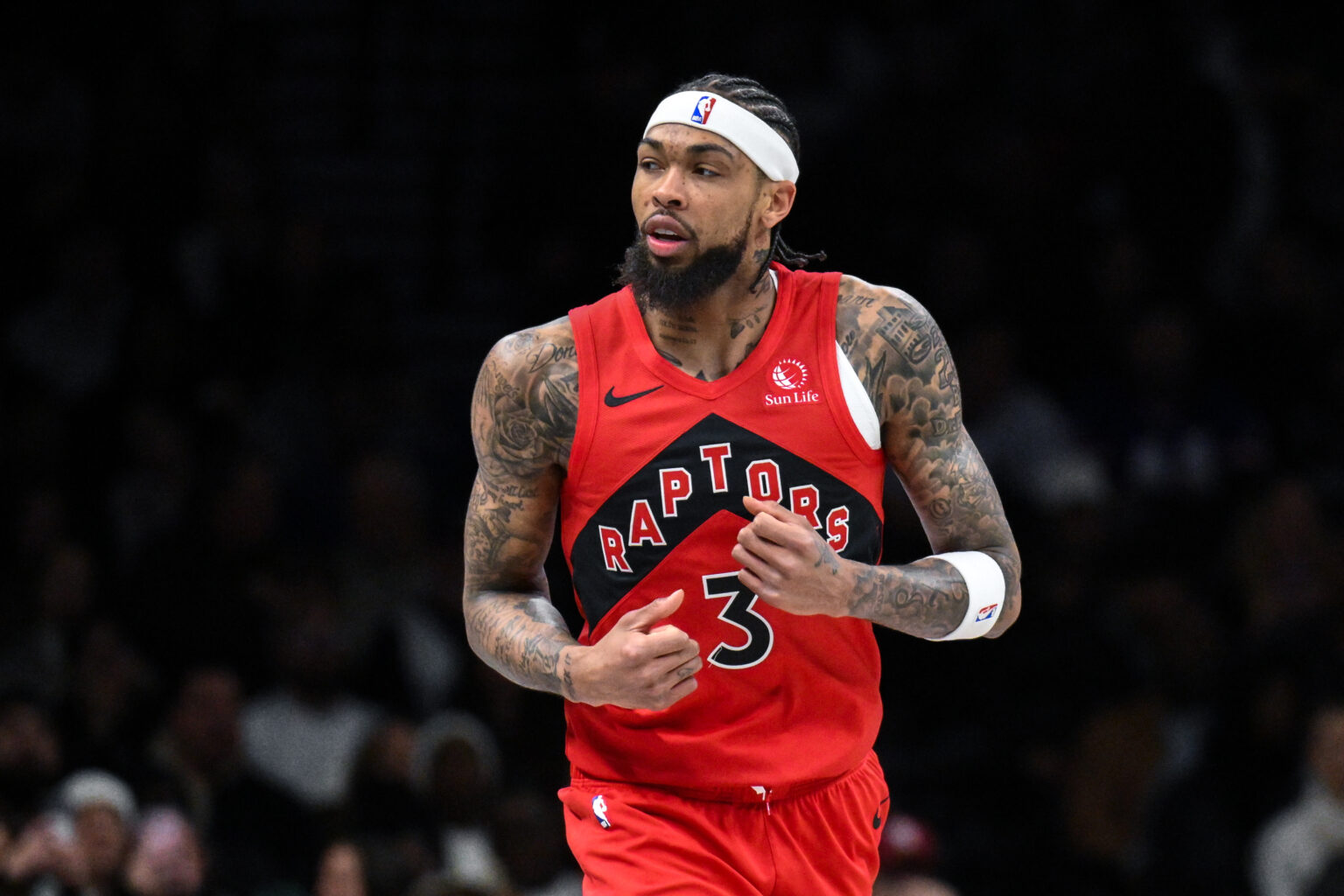
The Toronto Raptors enter the 2026 NBA Playoffs as one of the East’s most intriguing rising teams, finishing 46-36 and securing the No. 5 seed, their first postseason appearance since 2022. Built around a versatile roster, Toronto ranks top-10 in defense (111.8 PPG allowed, 9th in NBA) while generating offense through pace and playmaking.
Headlined by Scottie Barnes’ all-around brilliance and reinforced by the scoring duo of Brandon Ingram and RJ Barrett, the Raptors have assembled one of the more switchable rotations in the conference, which will be desperately needed against the Cleveland Cavaliers.
Under head coach Darko Rajakovic, this group thrives on forcing turnovers, playing tough defense, and using Barnes and Ingram’s talents to generate offense. Here is their depth and rotation breakdown for the 2026 Playoffs.
Starters
Immanuel Quickley, RJ Barrett, Brandon Ingram, Scottie Barnes, Jakob Poeltl
Toronto’s expected starting five features Immanuel Quickley, RJ Barrett, Brandon Ingram, Scottie Barnes, and Jakob Poeltl – a lineup built on size, versatility, and multi-level scoring. Quickley is the lead guard, averaging 16.4 PPG and 5.9 APG while shooting 37.4% from three, providing both shot creation and floor spacing.
Barrett has been a consistent scoring force with 19.3 PPG, 5.3 RPG, and 3.3 APG, attacking downhill and thriving in transition. Ingram adds elite shot-making with 21.5 PPG, 5.6 RPG, and 3.7 APG, giving Toronto a go-to isolation scorer late in games. Barnes is obviously the team’s engine, averaging 18.1 PPG, 7.5 RPG, and 5.9 APG, including multiple triple-doubles, while impacting every facet of the game.
Anchoring the interior, Poeltl contributes 10.7 PPG, 7.0 RPG, and 0.7 BPG, while shooting 70.0% at the rim. This starting unit has the completeness to generate offense and enough athleticism to run on defense against the talented Cavaliers.
Bench
Jamal Shead, Ja’Kobe Walter, Gradey Dick, Ochai Agbaji, Jamison Battle, Collin Murray-Boyles, Sandro Mamukelashvili, Trayce Jackson-Davis
Toronto’s bench is based on a few key contributors, led by Jamal Shead, Ja’Kobe Walter, Collin Murray-Boyles, and Sandro Mamukelashvili. Shead had 6.6 PPG and 5.4 APG this season, while Murray-Boyles added 8.5 PPG and 5.0 RPG. Mamukelashvili was excellent this season, posting 11.2 PPG and 4.9 RPG as Poeltl’s backup.
Ja’Kobe Walter has been huge for the Raptors as well, posting 7.5 PPG and 2.6 RPG on 40.9% shooting from three. Dick averaged 6.0 PPG, and Agbaji adds 4.3 PPG with strong perimeter defense, often guarding opposing guards and wings. Battle played 61 games, posting 3.1 PPG.
As a unit, Toronto’s bench averaged 33.5 PPG (24th in NBA). The Raptors lean heavily on their starters to do the damage, but their key bench players, such as Walter, Shead, Murray-Boyles, and Mamukelashvili, will need to make an impact as soon as possible.
Closing Lineup
Immanuel Quickley, RJ Barrett, Brandon Ingram, Scottie Barnes, Jakob Poeltl
In crunch time, the Raptors are expected to lean on a closing lineup of Immanuel Quickley, RJ Barrett, Brandon Ingram, Scottie Barnes, and Jakob Poeltl. This group blends shot creation, playmaking, and defensive versatility, with four players capable of initiating offense. To their credit, they contributed mostly to Toronto’s 9th-ranked defense and 11th-ranked net rating.
Barnes and Ingram will need to set the tone offensively, as each can average 20 PPG in the upcoming series. The same goes for Barrett, a swingman who has gone underappreciated at times. The center position will be key, because Mamukelashvili has outplayed Poeltl on occasions this season, and that has to be monitored in the playoffs.
Defensively, Barnes and Poeltl anchor a group that can stifle opponents. Their ability to switch across positions while protecting the rim makes them especially dangerous in tight playoff games.
Road To The NBA Finals
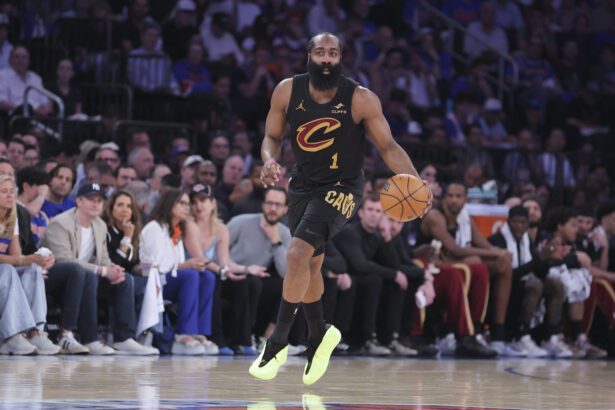
Toronto’s playoff run begins with a first-round matchup against the Cleveland Cavaliers, a very talented team led by Donovan Mitchell and James Harden. The Raptors’ success will hinge on their ability to generate efficient offense, having averaged only 114.6 PPG (21st in NBA), while maintaining their excellent defensive identity.
Barnes’ all-around production (18.1 PPG, 7.5 PPG, 5.9 APG) and Ingram’s scoring (21.5 PPG) will be critical in breaking down elite defenses, while Quickley’s playmaking (5.9 APG) must control tempo. Toronto’s rebounding (42.1 RPG), which only ranks 24th in the league, will be challenged by the presence of Evan Mobley and Jarrett Allen.
If they advance to face the Pistons/Magic/Hornets, the Raptors’ combination of length, versatility, and depth makes them a decently dangerous matchup. In the Eastern Conference Finals, a battle with the Knicks/Hawks/Celtics/76ers could be one to look out for. With a +2.9 Net Rating, top-10 defense, and multiple shot creators, Toronto has the foundation of a team capable of surprising contenders, but they might not have enough offensively to proceed far.