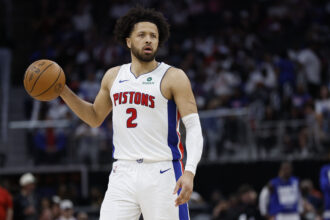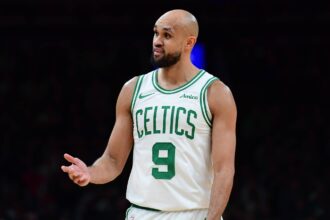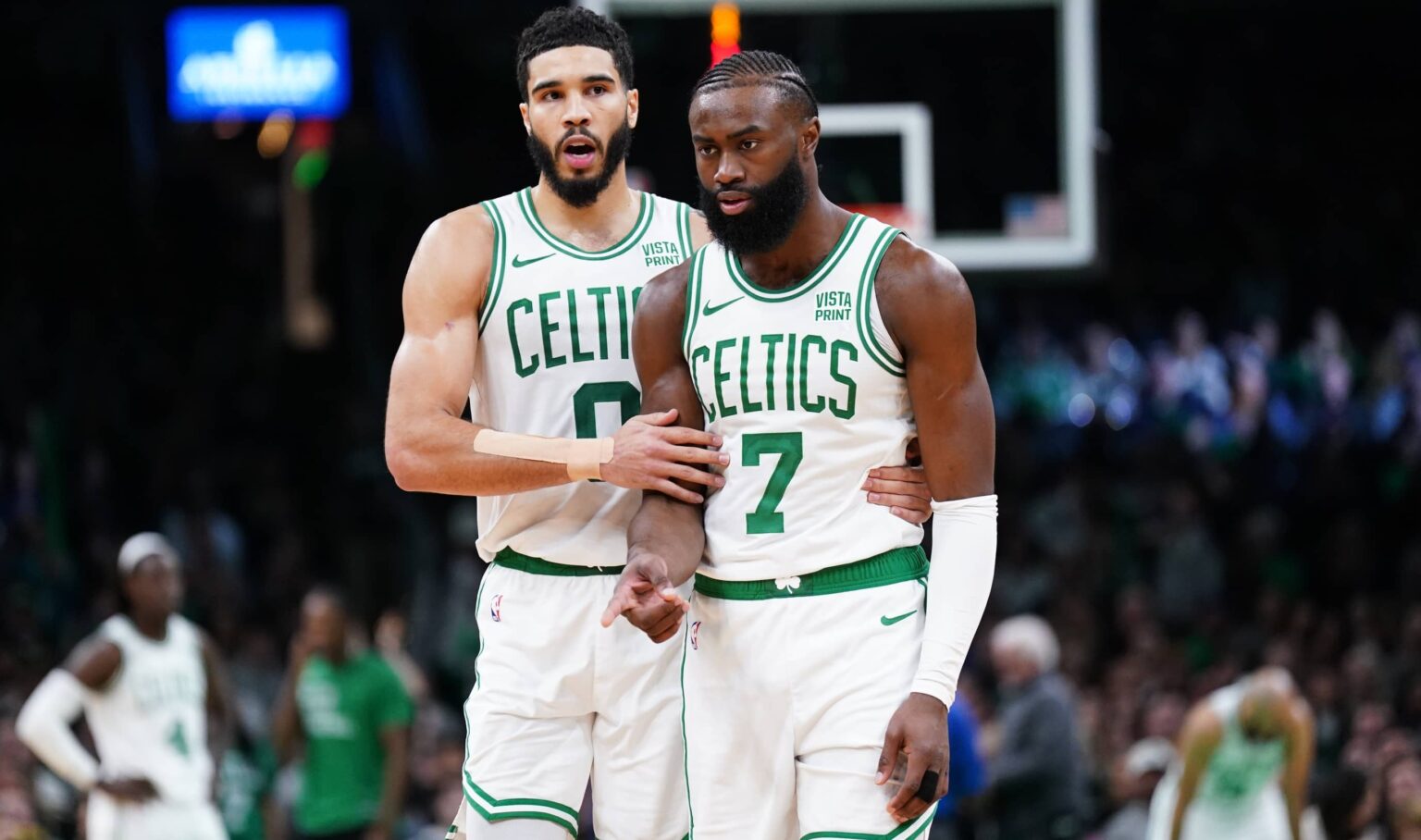
The Celtics are not entering a normal offseason. They were the No. 2 seed in the East, won 56 games, led the league in opponent points allowed at 107.2 per game, and still went home in the first round after blowing a 3-1 lead against the 76ers. That is not a small failure for a team built around Jayson Tatum, Jaylen Brown, and Derrick White.
Game 7 made the problem clear. The Celtics lost 109-100 without Tatum, who was ruled out with left knee soreness. Brown scored 33 points, and White added 26, but the Celtics shot only 39.8% from the field and 26.5% from three. The 76ers had Joel Embiid, Tyrese Maxey, and VJ Edgecombe. The Celtics had enough fight, but not enough late offense.
This is still not a rebuild. Tatum, Brown, and White are all under contract. The Celtics still have a real star base. But the contract sheet is now much thinner than the reputation of the team. The Celtics have their top three players, a few useful contracts, and a lot of cheap names that have to become real rotation players fast.
Celtics Players Already Under Contract For 2026-27
The Celtics will run it back with Tatum, Brown, White, Sam Hauser, Payton Pritchard, and several young players under contract for 2026-27. The biggest number is simple: Tatum, Brown, and White alone combine for more than $145.0 million.
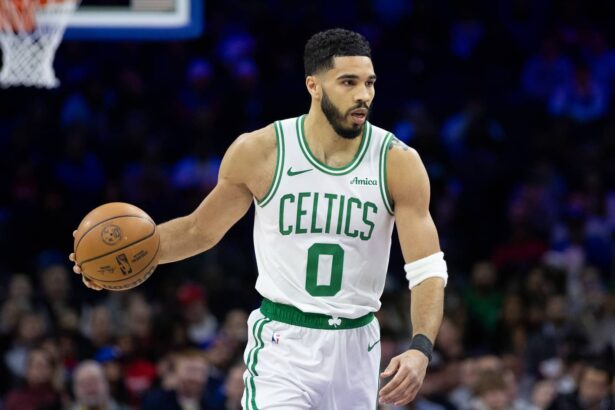
1. Jayson Tatum: $58.5 million
2. Jaylen Brown: $57.1 million
3. Derrick White: $30.3 million
4. Sam Hauser: $10.8 million
5. Payton Pritchard: $7.8 million
6. Hugo Gonzalez: $2.9 million
7. Luka Garza: $2.8 million
8. Baylor Scheierman: $2.7 million
9. Neemias Queta: $2.7 million
10. Jordan Walsh: $2.4 million
11. Amari Williams: $2.2 million
12. Max Shulga: $2.2 million, club option
The top of the sheet is not the issue. Tatum is a max player. Brown is a max player. White has become one of the best two-way guards in the league, even if his role got too heavy at times this season. The problem is what comes after them.
The Celtics are paying like a contender at the top, but the middle is not as strong as past versions. There is no Jrue Holiday salary on this sheet. No Kristaps Porzingis. No Al Horford. Nikola Vucevic is not locked in for next season. That means the Celtics have to rebuild the support system around Tatum and Brown without pretending the old depth is still there.
Tatum’s situation is the first major variable. He returned late in the season after recovering from a ruptured right Achilles tendon suffered in the 2025 playoffs. In 16 regular-season games, he averaged 21.8 points, 10.0 rebounds, and 5.3 assists. He was productive, but he was not fully back to his normal level, and then the left knee soreness kept him out of Game 7.
That matters for the whole roster. When Tatum is healthy, the Celtics can build a normal title offense. He can attack switches, draw help, shoot over smaller defenders, and create space for the rest of the team. When he is not available, Brown becomes the full-time first option, White has to create more than usual, and the role players have to take shots they are not built to carry every night.
Brown did his job this season. He averaged 28.7 points, 6.9 rebounds, and 5.1 assists while shooting 47.7% from the field. That was a serious No. 1 option season for long stretches, especially with Tatum out for most of the year. But the Celtics are still at their best when Brown is not forced to solve every late-clock possession. He is dangerous as a downhill scorer, transition player, and pressure wing. He becomes easier to defend when the offense slows and the spacing is not strong enough.
White is the third contract that shapes the team. At $30.3 million, he cannot be viewed as just a role player. He is part of the core. The good version is clear: White defends guards, blocks shots from the weak side, moves the ball, shoots open threes, and attacks closeouts. The harder version showed up this year when he had to create more offense. He can do it in stretches, but the Celtics do not want him carrying a playoff offense as the second-best creator.
That is the main lesson from the contract sheet. The Celtics have three high-level players, but only two true star salaries and one elite connector salary. After that, the roster becomes much less certain.
The Frontcourt Is A Separate Summer Decision
Vucevic should not be treated as part of the 2026-27 roster. His salary was part of this past season, but he is an expiring player. That is important because the Celtics are not stuck with his next cap number, but they also do not have a clear center answer under contract at a major level.
That creates a real offseason question. Do the Celtics try to bring Vucevic back on a smaller deal? Do they let him walk? Do they use that spot to find a more defensive center? Or do they trust Queta, Garza, and cheaper frontcourt pieces?
Vucevic made sense as a regular-season stabilizer. He can rebound, pass, shoot enough, and keep the offense organized. But playoff basketball asks more specific questions. Can the center protect the rim? Can he survive in space? Can he punish switches? Can he close games against faster lineups?
The 76ers series did not give a strong answer. The Celtics had to search for frontcourt combinations, and Queta ended up giving them 17 points and 12 rebounds in Game 7. That does not mean Queta is suddenly the full-time answer, but it does show why the Celtics need more athleticism and rim pressure at center.
Queta’s $2.7 million contract is useful. If he can be a 15-to-18-minute regular-season center, that is real value. He gives them size, rebounding, and vertical play. But the Celtics cannot enter a title season with only hope at center. Queta still has to prove he can defend without fouling, make quick decisions, and stay playable when teams pull him away from the rim.
Garza is another cheap option, but his path is different. Luka Garza can score, shoot, and help in regular-season matchups. The question is defense. In playoff series, opponents target slower bigs. If Garza cannot hold up in space, his role becomes limited.
That is why the Vucevic decision is bigger than one player. The Celtics need a center plan. Not just a body. A plan. If they bring back Vucevic, it has to be at the right number and with the right defensive pieces around him. If they move on, they need another big who can give them more mobility, rim protection, or playoff toughness.
The Celtics were first in opponent points allowed, so the defensive base was not bad. But regular-season defense and playoff center coverage are not the same thing. The 76ers found enough late offense through Embiid, Maxey, and Edgecombe. The Celtics need a frontcourt that can survive those moments better.
Hauser, Pritchard, And The Cheap Contracts Have To Carry More
The Celtics’ middle class now starts with Hauser and Pritchard. That is fine in salary terms. It is more difficult in playoff terms.
Hauser at $10.8 million is a good contract if he keeps shooting and holding up defensively. His value is not complicated. He spaces the floor for Tatum and Brown. He forces defenders to stay attached. He gives the Celtics a wing who does not need touches. That is useful.
The issue is the playoffs. Opponents will test Hauser in every series. They will put him in screening actions, force him to guard the ball, and see if the Celtics have to help. If Hauser hits threes and survives defensively, his contract is valuable. If he becomes a matchup target and goes cold, the Celtics lose one of their few reliable spacing pieces.
Pritchard at $7.8 million is also a good regular-season contract. He brings shooting, ball-handling, confidence, and pace. He can run second units, take deep threes, and change the rhythm of a game. But the same playoff problem exists. He is small, and teams attack small guards.
That does not mean Pritchard cannot be part of a winning rotation. He can. But the Celtics need enough size around him. A Pritchard lineup with Tatum, Brown, White, and a real defensive big can work. A Pritchard lineup with weaker defensive pieces becomes harder to trust.
The bigger unknown is the group behind them. Hugo Gonzalez, Baylor Scheierman, Jordan Walsh, Amari Williams, Max Shulga, Garza, and Queta are not just deep bench names anymore. At least two of them probably have to become real rotation players because the Celtics cannot fill every hole with expensive veterans.
Scheierman may have the easiest offensive path. He can shoot, pass, and play within a system. If he becomes a reliable wing shooter, the Celtics can use him. But he has to defend well enough to stay on the floor.
Walsh is the opposite type. His path is defense first. He has the tools to guard wings, but the offense has to be playable. A wing who cannot shoot becomes hard to use next to Brown and non-spacing bigs.
Gonzalez is the highest-upside wing in the group. He gives them size, athleticism, and long-term defensive potential. But young wings usually need time, and the Celtics may not have much patience if they are trying to win right away.
Shulga’s club option is small, and Williams is another low-cost frontcourt bet. These are not expensive decisions. They are roster-shaping decisions. The Celtics need cheap players who can give them real minutes because the top of the roster is already expensive.
This is where Brad Stevens has to be exact. The Celtics do not need more names. They need specific skills: another ball-handler, a playoff-level big, athletic wing defense, and enough shooting to keep the floor open for Tatum and Brown.
Final Thoughts: The Celtics Are Still Close, But Not Safe
The Celtics are still good enough to matter. That cannot be ignored. A team with Tatum, Brown, and White is not finished. A team that won 56 games while dealing with Tatum’s recovery is not broken. A team that ranked first in opponent points allowed still has a serious base.
But the margin is smaller now.
That is the real offseason story. The Celtics no longer have the same veteran depth. The center spot is unsettled. Vucevic is a decision, not a guarantee. The cheap players have to improve. Tatum has to come back healthier. Brown has to keep the same scoring level. White has to return to a role where he is connecting everything instead of carrying too much.
The first-round loss does not mean the Celtics should panic. They were without Tatum in Game 7. That is a major factor. But blowing a 3-1 lead is still a warning. The 76ers adjusted, got healthier, and found enough offense late. The Celtics did not.
The contract sheet says the Celtics still have a contender’s top three. It also says they do not have a finished roster. That is the difference.
If Tatum is right, Brown stays at an All-NBA level, and White settles back into his best role, the Celtics can still be one of the best teams in the East. But the front office has to rebuild the support group with less room for error. The next version needs a more reliable center plan, more two-way wing depth, and more playoff shooting.
The Celtics are not starting over. They are trying to extend a title window that has become more expensive and less forgiving. That is a harder job than it looks.