Game 1 was supposed to be a tone-setter for the Cleveland Cavaliers. Instead, it turned into an early warning sign. In a 111-101 loss to the Detroit Pistons, Cleveland looked disjointed, sloppy, and oddly unprepared for a young team that played with far more urgency.
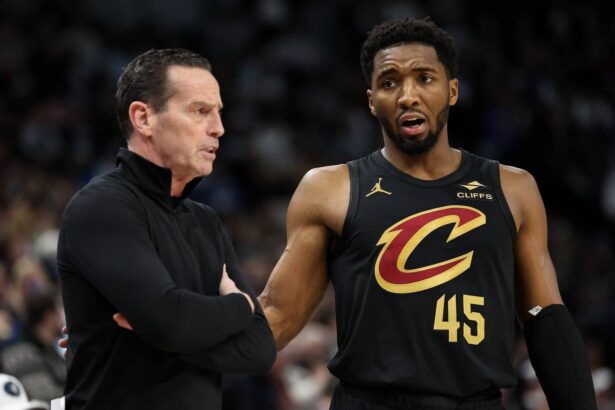
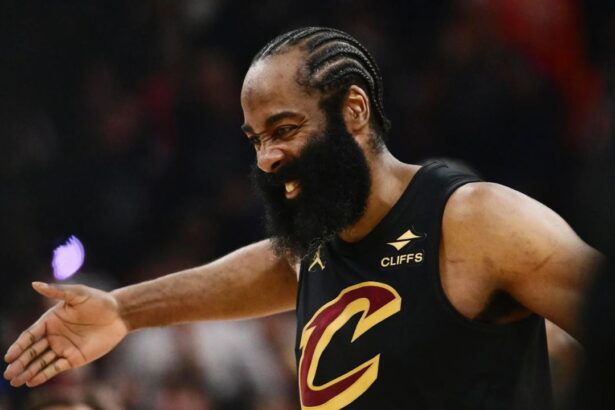
Despite solid scoring nights from Donovan Mitchell (23 points) and James Harden (22 points, 7 assists), the Cavaliers were undone by turnovers, lack of physicality, and a Pistons squad that simply outworked them in key areas. Detroit controlled the game for 91% of the time and led by as many as 18 points, making this less of a coin-flip loss and more of a statement.
Here are five reasons Cleveland stumbled out of the gate.
1. Turnovers Completely Killed Cleveland’s Rhythm
Cleveland didn’t lose this game because they couldn’t score; they lost it because they couldn’t take care of the ball. The Cavaliers committed 20 turnovers, compared to just 12 from Detroit, and that gap alone dictated the flow of the game.
Even worse, those mistakes weren’t harmless – they directly led to 31 Pistons points off turnovers, nearly a third of Detroit’s total scoring output. James Harden had 7 turnovers by himself, which is the kind of number that sinks an offense, no matter how talented it is.
Donovan Mitchell added 3 more, and suddenly, your two primary ball-handlers are handing the opponent extra possessions all night. That’s not playoff basketball; that’s survival mode.
The bigger issue is how live-ball turnovers fueled Detroit’s transition game. The Pistons turned those mistakes into 15 fast-break points compared to just 6 for Cleveland. That’s the difference between playing in the half-court versus constantly scrambling defensively, and Cleveland never recovered from that imbalance.
2. Detroit Won the Effort Areas, And It Wasn’t Close
If you want to boil this game down to one word, it’s “effort.” The Detroit Pistons dominated the hustle stats, particularly on the glass and in physical play. They outrebounded Cleveland 45-41, but the real damage came on the offensive boards: 16 offensive rebounds for Detroit compared to 11 for Cleveland.
Jalen Duren was a monster inside, grabbing 12 rebounds (7 offensive) and controlling the paint with his physical presence. Those second-chance opportunities gave Detroit extra life on possessions that should have ended, and in a playoff setting, that’s backbreaking.
On top of that, Detroit recorded 12 steals compared to Cleveland’s 7, further emphasizing how much more aggressive they were defensively. The Pistons didn’t just play harder – they imposed their will. Cleveland, meanwhile, looked like a team waiting for things to click instead of forcing them to.
3. Free Throw Disparity Told a Bigger Story
At first glance, Cleveland’s 94% free throw shooting (15-16) looks elite, and it was. But here’s the problem: they didn’t get there nearly enough. Detroit attempted 35 free throws, making 27, while Cleveland only got up 16 attempts.
That’s a 19-attempt gap, and in a game decided by 10 points, that’s massive. It reflects a Pistons team that consistently attacked the rim, forced contact, and put pressure on the defense. Meanwhile, Cleveland settled far too often, relying on jump shots instead of initiating physical offense.
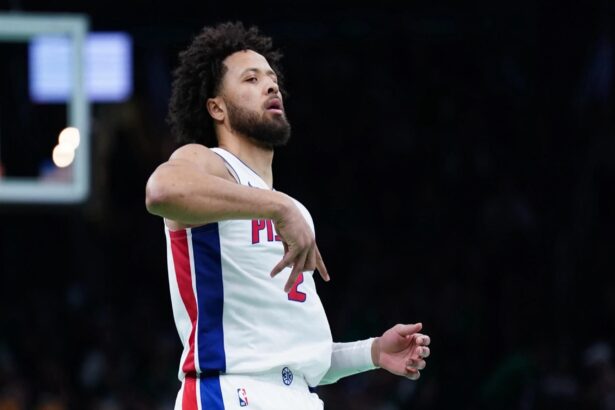
Cade Cunningham led that charge with 23 points and 9 free throw attempts, dictating tempo and forcing Cleveland into foul trouble. When one team is living at the line, and the other is barely visiting, it’s usually a sign of who’s controlling the game, and it wasn’t Cleveland.
4. Cleveland’s Stars Produced… But Not Efficiently Enough
The box score might suggest that Donovan Mitchell and James Harden did their jobs, and to a degree, they did. Mitchell scored 23 points on 9-19 shooting, while Harden added 22 points, 8 rebounds, and 7 assists.
But the efficiency and decision-making weren’t there. Harden shot just 6-15 from the field and 1-7 from three, while also committing those costly 7 turnovers. Mitchell, despite his scoring, had stretches where he forced shots instead of facilitating, finishing with just 2 assists.
Compare that to Detroit’s balance; five players in double figures, led by Cunningham, Tobias Harris (20 points), and Duncan Robinson (19 points, 5 threes). The Pistons didn’t rely on one or two guys – they attacked Cleveland from everywhere, and it showed in their control of the game.
5. Cleveland Never Dictated The Game
Perhaps the most alarming stat of the night: Cleveland led for just 6% of the game. That’s being outplayed from start to finish.
Detroit built momentum early, extended leads methodically, and never allowed the Cavaliers to feel comfortable. Even when Cleveland made small runs, they were quickly shut down by turnovers, missed opportunities, or second-chance buckets from Detroit.
The largest lead for the Pistons was 18, and it always felt like Cleveland was chasing rather than controlling. In playoff basketball, especially at home, that’s a red flag. The Cavaliers didn’t impose their identity; they reacted to Detroit’s.