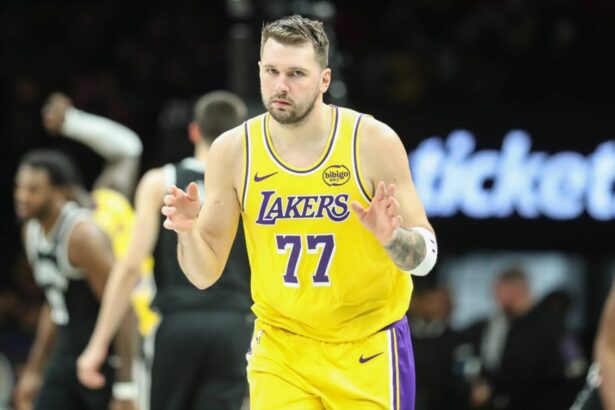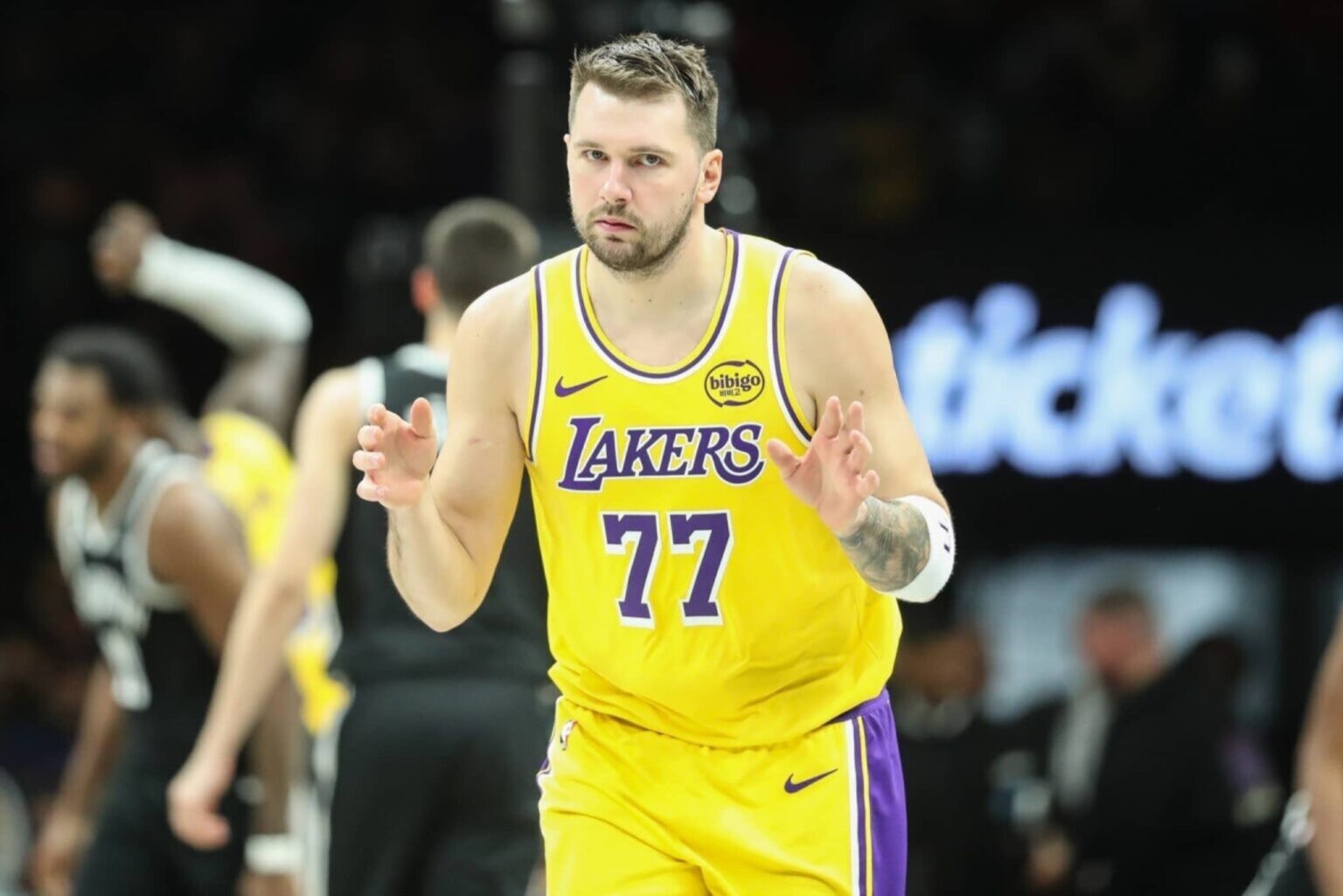
The Lakers do not need another small fix around Luka Doncic. They need a roster built for his style, his usage, and his timeline. That is why the latest report from Dan Woike and Sam Amick of The Athletic is important. Before Doncic signed his extension, the Lakers reportedly promised him a balanced roster built around the same idea that helped the 2024 Mavericks reach the NBA Finals. The plan included rim runners like Daniel Gafford and Dereck Lively II, two-way wings, and a long-term secondary playmaker.
That last part is the focus. Doncic can run an elite offense by himself, but that is not the best long-term plan. He needs another creator who can run pick-and-roll, punish weak-side rotations, play off the ball, and keep the offense alive when he sits. Kyrie Irving is the proven example, but he is not a realistic Lakers target. Irving signed a three-year, $118.5 million contract with the Mavericks and has a player option in 2027-28. Another major Lakers-Mavericks trade around him is not a serious expectation.
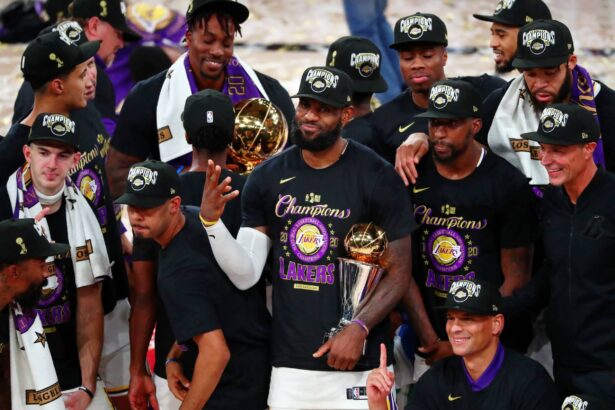
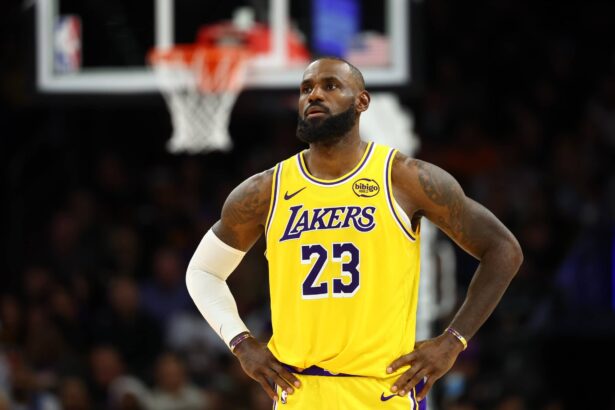
The Lakers finished 53-29, fourth in the West, but their second-round sweep against the Thunder showed the limits of a roster that still depends too much on individual creation. Doncic missed the postseason with a hamstring injury, LeBron James is entering an uncertain offseason, and Austin Reaves has a $14.9 million player option that he is expected to decline.
Here are the five best realistic long-term playmakers to pair with Doncic.
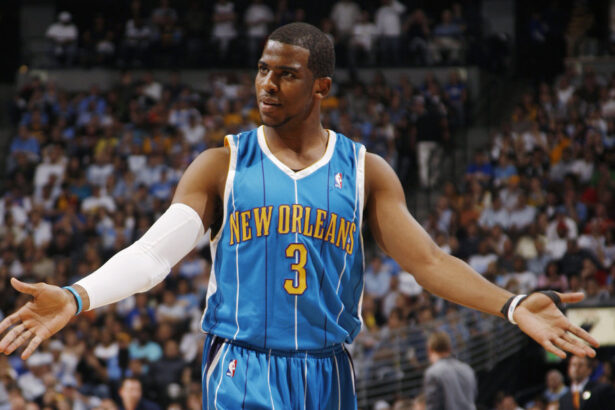
5. Dejounte Murray
Dejounte Murray is not the perfect offensive fit. That is why he is fifth. But he is one of the few available trade ideas who can give the Lakers size, defense, rebounding, and real ball-handling in one player.
Murray averaged 16.7 points, 5.4 rebounds, and 6.4 assists this season, shooting 48.4% from the field and 30.6% from three. The playmaking is useful. The three-point number is the problem. Next to Doncic, every secondary guard has to be a willing shooter. If the defense goes under screens or helps off him too much, the spacing becomes difficult.
The reason Murray still belongs here is his defensive profile. The Lakers cannot build only around offense. Doncic is strong and smart, but he is not going to chase quick guards through screens for 82 games. A strong roster around him needs guards and wings who absorb the harder defensive matchups. Murray can do that better than most names in this range.
He is 6’4″ with length, can rebound, and can pressure the ball. That gives the Lakers a different structure. Doncic can guard weaker wings, Murray can take the main guard assignment, and the team can avoid exposing Doncic as the first defender in too many actions.
The contract is also tradable. Murray is due $32.8 million next season and has a $30.7 million player option for 2027-28. That is large, but not impossible. It puts him in the same salary zone as many second or third options, not the same zone as true max players.
The path would likely require a trade. The Pelicans finished 26-56, so they have a clear reason to reset parts of the roster if they decide Murray is not central to the next stage.
A Reaves sign-and-trade could create the framework if the Lakers and Reaves fail to agree on a new contract. It would be a major choice, not a small adjustment. Reaves is younger, a better shooter, and already has chemistry with Doncic. Murray gives more size and defense, but he gives less shooting.
That is the trade-off. Murray would make more sense if the Lakers believe they need a bigger backcourt defender more than a pure spacer. He can bring the ball up, run second-unit offense, get downhill, and make basic reads. He can also rebound and push in transition, which helps a Doncic team play before the defense is set.
The concern is half-court fit. Doncic will have the ball. James, if he returns, will still need touches. A rim-running center will occupy the dunker spot or roll lane. That means the second guard cannot be ignored on the perimeter. Murray’s 30.6% from three is not enough. If that number does not rise, playoff defenses will test him.
This is why Murray is more of a roster-balance option than an offensive answer. He would not recreate the Doncic-Irving formula. He would create a bigger and more defensive version of the backcourt. That can work, but only if the Lakers surround both with shooting.
Murray is realistic because the salary can be matched and the Pelicans may not want to stay attached to an expensive veteran guard after a 26-win season. He is not higher because the shooting fit is a real concern.
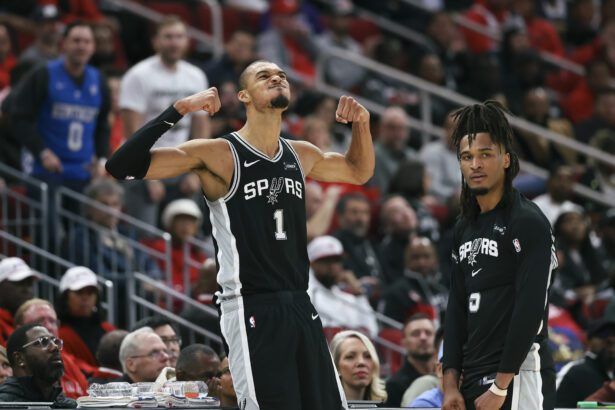
4. Immanuel Quickley
Immanuel Quickley is a better offensive fit than Murray. He is younger, a stronger shooter, and more comfortable playing next to other creators. That gives him a strong case as a long-term partner for Doncic.
Quickley averaged 16.4 points, 4.0 rebounds, and 5.9 assists this season, shooting 44.3% from the field and 37.4% from three. He also finished with a 57.7% true shooting mark. Those numbers fit the role. He is not a pure star guard, but he can run offense, shoot off the catch, shoot off movement, and create enough separation with his floater package.
The strongest part of Quickley’s fit is that he does not need to dominate the ball to help Doncic. He has experience playing as a combo guard. He can start possessions, but he can also space away from the ball and attack the second side. That is important because a Doncic team needs players who can be effective without controlling the first action.
When Doncic draws two defenders, Quickley can attack a tilted defense. He is not the strongest finisher at the rim, but he has touch, speed, and enough pull-up shooting to keep defenders attached. His 37.4% three-point shooting on volume gives the Lakers a stable perimeter option.
Quickley’s passing is not elite, but it is strong enough for the role. He averaged 5.9 assists with only 2.0 turnovers. That is the type of control the Lakers need when Doncic sits. The offense cannot become isolation basketball every time Doncic leaves the floor. Quickley can run high pick-and-roll, get into early offense, and keep shooters involved.
The contract is the main barrier. Quickley is on a five-year, $162.5 million deal with the Raptors, with a $32.5 million annual salary. That is not a discount. It is a starter-level commitment through his prime years.
That is where the Raptors’ roster context becomes important. They finished 46-36 and were fifth in the East, so they are not under pressure to tear the roster down. But they also have major salaries tied to Scottie Barnes, Brandon Ingram, R.J. Barrett, Jakob Poeltl, and Quickley. If the Raptors decide they need more frontcourt balance, more flexibility, or a different guard profile, Quickley is a contract that could be discussed.
For the Lakers, the realistic route would be a trade built around salary matching. If Reaves leaves through a sign-and-trade framework, Quickley becomes a logical replacement. The Lakers would not be getting a better player than Reaves in every area, but they would be getting a more traditional point guard with stronger defensive tools at the position.
The fit with Doncic is very good in theory. Quickley can run delay actions, come off pindowns, handle late-clock possessions, and hit threes when Doncic forces help. He would not solve the Lakers’ rim-running issue or wing defense issue by himself, but he would solve a large part of the secondary creation problem.
There is one concern. Quickley is not a big guard. He is not a bad defender, but he is not the type of guard who can erase Doncic’s weaker matchups. If the Lakers play Doncic and Quickley together, they still need a strong defensive wing and a rim protector behind them.
That is why he is fourth, not second. The offensive fit is strong. The contract is reasonable for a starter. The age fits Doncic’s timeline. But the Raptors do not need to sell, and the Lakers would have to pay real value to get him.
Quickley is a realistic target only if the Lakers are willing to move from internal continuity into a more structured guard rotation. He would help, but he would cost.
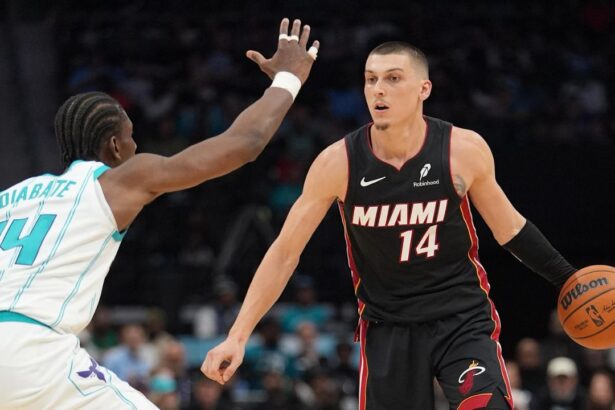
3. Darius Garland
Darius Garland is the best pure offensive name on the realistic side. If this article were only about skill fit, he could be second. The reason he is third is price, salary, and trade difficulty.
Garland averaged 18.8 points, 2.4 rebounds, and 6.7 assists this season, shooting 46.0% from the field and 39.6% from three. He also posted a 58.2% true shooting mark. Those are strong numbers for a guard who can play on or off the ball.
His fit next to Doncic is obvious. Garland can shoot. He can run pick-and-roll. He can hit pull-up threes. He can punish teams that load up on Doncic. He is fast enough to bend a defense before the help is set, and he has enough passing touch to keep a rolling big involved.
This is the closest realistic version of the Doncic-Irving basketball idea. Garland is not Irving as a scorer, isolation player, or finisher, but he has some of the same structural value. He gives Doncic another guard who forces defensive attention above the break. That changes the threat on the floor.
With Garland, the Lakers could run Doncic as the main initiator, then use Garland as the second-side attacker. They could also invert possessions and let Garland start the action while Doncic works against a smaller defender after a switch. That would make it harder for teams to load two defenders at Doncic early in the clock.
The issue is defense. A Doncic-Garland backcourt would need serious help behind it. Garland is not a large guard. He is skilled and competitive, but opponents would attack that pairing with size. The Lakers would need a strong defensive wing and a vertical center to protect the structure.
The second issue is contract size. Garland is owed $42.2 million in 2026-27 on a five-year, $197.2 million deal. That is star money. Any Lakers trade would need major salary matching, and that points back to Reaves if he is signed at a large number.
Garland was traded from the Cavaliers to the Clippers in the James Harden deal, with the Clippers receiving a second-round pick in addition. The Clippers finished 42-40 and were ninth in the West, so they are not in a position where every veteran’s path is certain.
That creates a possible opening. Kawhi Leonard remains expensive, Garland is expensive, and the Clippers are stuck between competing and retooling. If they decide to rebuild the roster, Garland could be a high-value trade piece. He is still young enough to have value, but expensive enough to make team-building harder if the rest of the roster is not a true contender.
For the Lakers, Garland would be a major swing. It would likely require Reaves in a sign-and-trade if he pushes for over $40.0 million per season. That makes it less simple than chasing a free agent like Coby White. It also means the Lakers would have to decide whether Garland is enough of an upgrade over Reaves to lose Reaves’ size, chemistry, and contract control.
The answer is not automatic. Garland is a better pure ball-handler and a better pull-up shooter. Reaves is bigger, more efficient this season, already trusted by Doncic, and easier to keep. The Lakers should not trade Reaves for Garland just to make a move.
But if Reaves’ contract number becomes too high, or if his camp prefers another situation, Garland becomes one of the most logical alternatives. He gives the Lakers the high-level guard creation that the report described. He can run offense when Doncic sits and still help when Doncic returns.
Garland is third because his skill fit is excellent, but the deal would be expensive and risky. The Lakers would need to be sure the offensive jump is worth the defensive burden and financial cost.
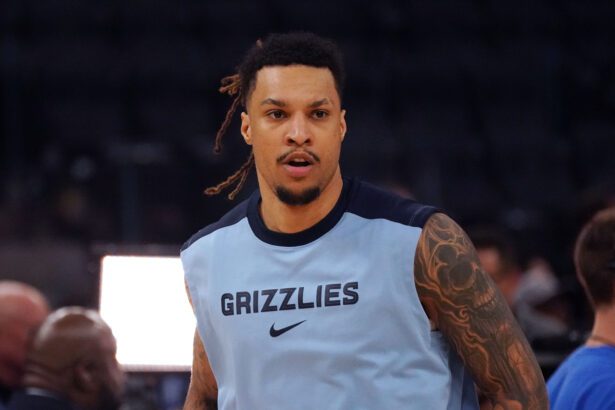
2. Coby White
Coby White is the most realistic outside target on this list. He is not the most talented player here, but his combination of age, shooting, free agency status, and role fit makes him a serious option.
White averaged 17.4 points, 3.4 rebounds, and 4.0 assists this season, shooting 44.6% from the field and 36.2% from three. He attempted 6.4 threes per game and posted a 59.5% true shooting mark. That is strong scoring efficiency for a guard who played through a midseason move and a changing role.
The free agency angle is the reason he is this high. He is a 2026 unrestricted free agent after completing his three-year, $36.0 million contract. The Hornets own his Bird rights, but White can choose his next team if he wants a different role.
The Hornets are not in a weak situation anymore. They finished 44-38 and have LaMelo Ball, Brandon Miller, Kon Knueppel, and other young pieces. That makes it harder to pull White away. He has a path to stay and play on a young playoff-level team.
But the Lakers can offer a more specific role next to Doncic. White would not need to be the main guard. He would be asked to pressure the rim, shoot threes, attack closeouts, and run offense for second units. That is a role he can handle.
White has improved as a scorer because his game is not only catch-and-shoot. He can shoot behind screens, attack off the dribble, and get to the free-throw line. He is not Irving or Garland as a passer, but the Lakers do not need him to be a full-time offensive engine. They need a guard who can create enough so Doncic is not the only pressure point.
This is where the fit becomes strong. Doncic draws help early. White can attack late. Doncic can create corner threes. White can make above-the-break threes. Doncic can play at a slower pace. White can inject speed into bench groups. The styles are different, but they can work together.
The financial path depends on what happens with James and Reaves. If James leaves and the Lakers create room, White becomes more realistic as a free-agent target. If James returns and Reaves stays, the Lakers probably do not have enough space. In that case, they would need a sign-and-trade, and that would bring hard-cap concerns.
A Reaves sign-and-trade for White would be unlikely unless Reaves wants the Hornets and the Hornets prefer him over paying White. That is not impossible, but it is not the most likely outcome. White joining the Lakers becomes more believable if the Lakers lose one of their major salary pieces and create a direct path.
White is not a perfect guard. He is not a high-level defender, and he is not a top-tier passer. His assist numbers are solid, not special. But he fits the Lakers’ need for another scorer who can play next to a high-usage creator. He is young enough to fit Doncic’s prime, and he should be cheaper than Reaves, Garland, or Quickley.
That last point is important. The Lakers cannot give every guard $35.0 million or more and still build the rim-running and wing-defense parts of the Doncic plan. White may offer a better cost-value balance. If his market lands in a reachable range, he could be the right outside bet.
White is second because he gives the Lakers a realistic free-agent path, real shooting volume, and enough creation without needing to become a star. He is not the best player on the list. He may be the easier external target.
1. Austin Reaves
Austin Reaves is still the answer. The Lakers can search the market, explore sign-and-trades, and study every guard with shooting and pick-and-roll skill. None of those paths is more logical than keeping the player Doncic already wants beside him.
According to the report from Dan Woike and Sam Amick of The Athletic, Doncic has made it clear that he wants to keep playing with Reaves. The report also said Doncic believes in Reaves as a long-term piece next to him. That is the most important part of this whole discussion. The Lakers are not guessing on the fit. Doncic has already approved it.
The production supports the opinion. Reaves averaged 23.3 points, 4.7 rebounds, and 5.5 assists this season, shooting 49.0% from the field and 36.0% from three. He also posted a 64.1% true shooting mark, which is elite efficiency for a guard with his scoring load.
That is why Reaves should not be treated as just a nice internal option. He was one of the best offensive players on the roster. He can run pick-and-roll, draw fouls, shoot off the catch, attack gaps, and make fast decisions after the defense rotates. He is not only a spot-up guard next to Doncic. He is a second creator with enough size and skill to work in playoff settings.
The Lakers need that. Doncic teams are at their best when the second guard can punish pressure. If Doncic gets trapped, Reaves can receive the ball and attack four-on-three. If Doncic rests, Reaves can start possessions. If Doncic plays off the ball for a possession, Reaves can create the first advantage.
Reaves is not Irving as a one-on-one scorer, but he gives the Lakers a different kind of value. He is efficient. He is calm. He gets to the line. He makes the extra pass. He can play with James, Doncic, or bench units. That flexibility is hard to replace.
The contract is the only question. Reaves has a $14.9 million player option for 2026-27, and he is expected to decline it. There’s a potential five-year, $240.7 million maximum structure the Lakers could offer him, although that number would be very aggressive.
Final Thoughts
The Lakers have to be careful. Paying Reaves like a superstar would limit their ability to solve the other needs in the Doncic plan. They still need a center who can play above the rim. They still need two-way wings. They still need more athletic defense. If Reaves gets too close to max money, the roster math becomes dangerous.
But letting him go would create a bigger problem. The Lakers would then have to replace his scoring, his passing, his chemistry with Doncic, and his trust inside the organization. That would not be simple. White is a strong target, Garland has higher pure guard talent, Quickley has a good structure fit, and Murray offers defense. None of them give the Lakers the same certainty.
Reaves also fits the long-term timeline better than James. That does not mean James is finished, but the franchise is now being built around Doncic. Reaves is 27. Doncic is 27. That pairing can remain intact for several seasons. If the Lakers want stability around Doncic, Reaves should be part of the first layer.
The defensive questions are real. Reaves is not a stopper. He can compete, but he should not be asked to guard elite guards every night. That means the Lakers must build the rest of the roster with size and athletic defense. This is not a reason to move Reaves. It is a reason to avoid pairing him with too many defensive liabilities.
The best version of the Lakers has Doncic as the main engine, Reaves as the secondary playmaker, a vertical center in the Gafford-Lively mold, and two wings who can defend and shoot. That matches the reported plan more than any outside trade idea.
Reaves is first because he checks every realistic box. He is already in the building. He has produced at a high level. Doncic trusts him. He can play on and off the ball. He is young enough to stay with the new timeline. The Lakers may need to negotiate hard on the number, but the basketball answer is direct.
If the Lakers are serious about the roster they reportedly promised Doncic, they should begin with Reaves. Then they can chase the rim runner and the defensive wings. Moving him should only happen if the contract number becomes too high or if he forces a different outcome. Otherwise, the best long-term playmaker next to Doncic is already there.