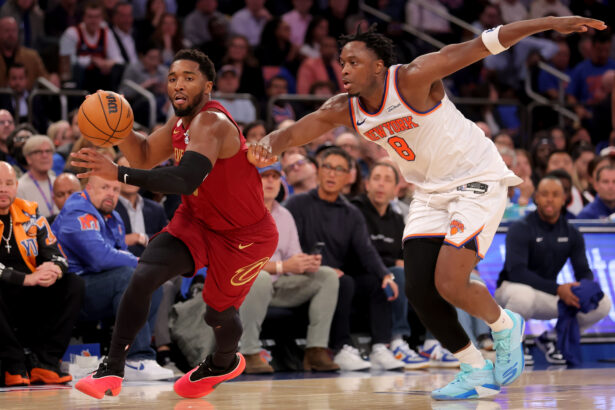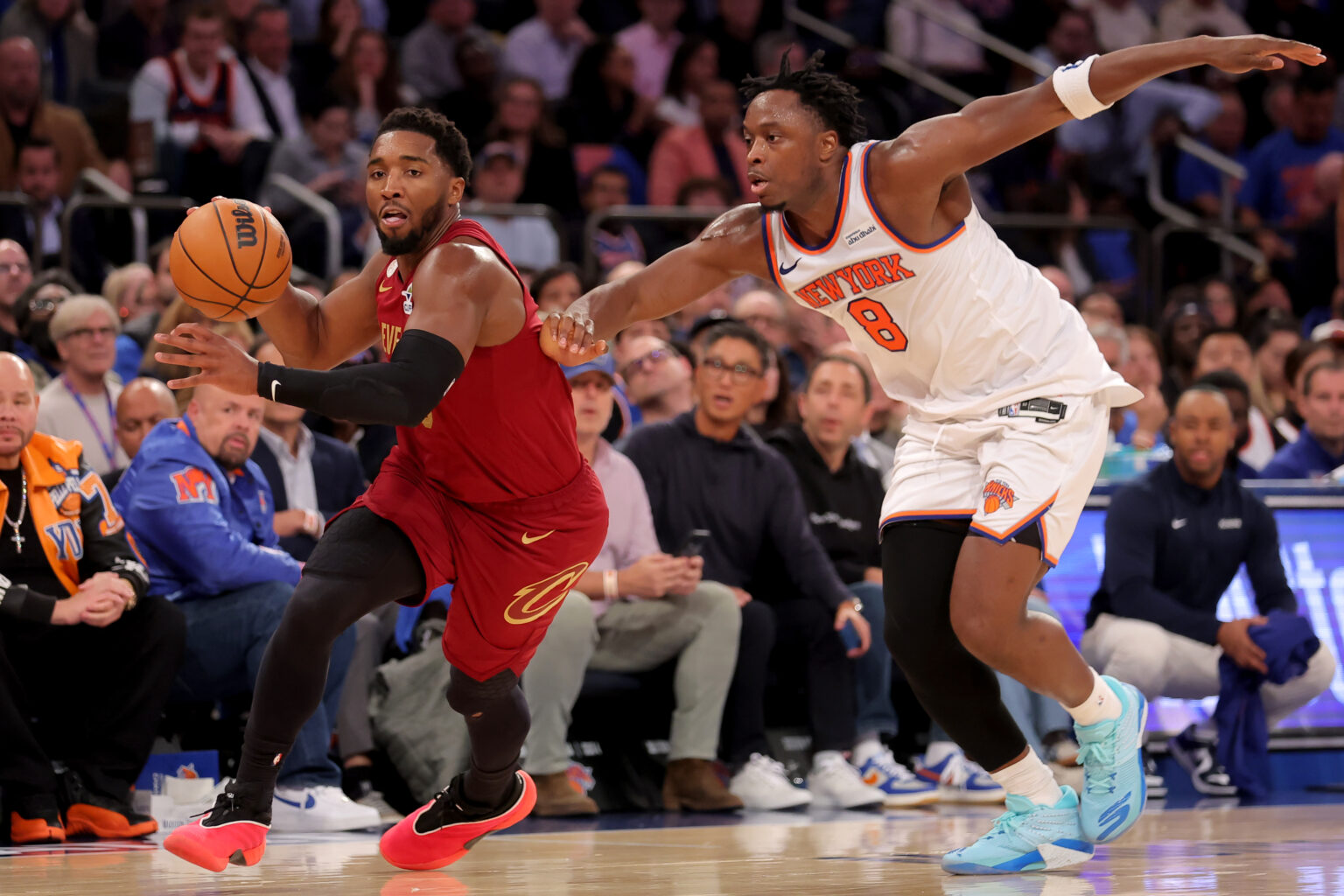
The Knicks and Cavaliers meet in the Eastern Conference Finals, with the bracket finally landing on the matchup many expected before the playoffs started. The Knicks enter as the No. 3 seed after a 53-29 regular season. The Cavaliers enter as the No. 4 seed after a 52-30 season. Game 1 is Tuesday, May 19, at Madison Square Garden at 8 p.m. ET. The Knicks have home-court advantage because the Cavaliers knocked out the No. 1 seed Pistons in Game 7.
The rest gap is a major part of the series. The Knicks finished their second-round sweep of the 76ers on May 10, so they will enter Game 1 with nine days of rest. The Cavaliers played a Game 7 on Sunday, won 125-94, and have only one full day off before the series starts. That does not decide the series, but it matters against a Knicks team that plays with pace, size, and constant off-ball pressure.
The regular-season series gives the Knicks a small edge. They went 2-1 against the Cavaliers, winning 119-111 on opening night and 126-124 on Christmas before the Cavaliers answered with a 109-94 win on Feb. 24. The Cavaliers held the Knicks to 11 points in the third quarter and won the second half with defense, size, and Mitchell-Harden shot creation.
Jalen Brunson averaged 26.0 points, 3.3 rebounds, and 6.8 assists on 46.7% from the field and 36.9% from three during the regular season. Karl-Anthony Towns averaged 19.9 points, 11.8 rebounds, and 2.9 assists on 47.1% from the field and 35.7% from three. For the Cavaliers, Donovan Mitchell averaged 27.9 points, 4.5 rebounds, and 5.7 assists on 48.3% from the field and 36.4% from three, while James Harden averaged 20.5 points, 4.8 rebounds, and 7.7 assists on 46.6% from the field and 43.5% from three after joining the team.
Injury Report
Knicks
OG Anunoby: Questionable (right hamstring strain)
Cavaliers
Larry Nance Jr.: Out (illness)
Knicks Analysis For The Series
The Knicks enter with the better playoff profile. They are 8-2 through two rounds, and their numbers are a big sign of domination. They have a 126.0 offensive rating in the playoffs, averaging 120.4 points while shooting 51.7% from the field and 40.8% from three. That is elite shot-making, but it is also process. The Knicks are moving the ball, attacking weak defenders, and creating threes through Brunson’s pressure and Towns’ passing.
Their second-round dominance was extreme. The Knicks outscored the 76ers by 89 points in four games, the third-most lopsided non-first-round series in NBA history. Through 10 playoff games, they have a plus-194 point differential, the best mark in NBA history through that stage. The Knicks are not just winning close games. They are burying teams when the matchup turns in their favor.
Brunson is still the offensive base. In the playoffs, he is averaging 27.4 points and 6.1 assists in 34.7 minutes. The Cavaliers have bigger guards than the 76ers, but they do not have an easy Brunson answer. Mitchell is too important offensively to spend every possession chasing him. Harden can be targeted. Max Strus and Sam Merrill can be screened. Dean Wade gives more size, but he cannot stay attached to Brunson through every handoff and re-screen.
Towns is the tactical piece that can stress the Cavaliers’ frontcourt. Evan Mobley and Jarrett Allen give the Cavaliers size, rim protection, and rebounding, but Towns forces one of them away from the paint. He is averaging 17.4 points, 10.0 rebounds, and 6.6 assists in the playoffs. His assist number is the real issue for the Cavaliers. If the Cavaliers blitz Brunson or overhelp on drives, Towns can catch in space, hit cutters, or swing into open threes.
The Knicks also have the perimeter defense to make the Cavaliers work. OG Anunoby, Mikal Bridges, Josh Hart, and Miles McBride give Mike Brown four different bodies for Mitchell and Harden. The Knicks will not stop both guards. That is not the point. The point is to make every possession longer, force the ball into the middle of the floor, and avoid giving the Cavaliers easy corner threes.
The concern is rim pressure. The Cavaliers are bigger than the 76ers were, and Allen is playing his best basketball of the postseason. If the Knicks lose the defensive glass, the series becomes harder. Mitchell Robinson will matter because Towns cannot spend the entire series wrestling Allen and Mobley while also carrying offensive creation.
Cavaliers Analysis For The Series
The Cavaliers arrive with less rest, but they also arrive with real momentum. Their Game 7 win over the Pistons was their best performance of the playoffs. They shot 50.6% from the field, held the Pistons to 35.3%, won the rebounding battle 50-41, and advanced with a 31-point road win. Allen scored 23 points, Mitchell had 26 points and eight assists, Mobley finished with 21 points and 12 rebounds, and Merrill added 23 points off the bench.
That Game 7 showed the Cavaliers’ best version. Mitchell did not force the game early. He used his gravity to move the defense, got others involved, then attacked when the Pistons adjusted. That is the version the Cavaliers need in this series. Mitchell averaged 26.3 points, 4.3 rebounds, and 5.3 assists through the first two rounds, but the Knicks will be more disciplined than the Pistons. He has to create advantages without hunting hero shots too early.
Harden gives the Cavaliers a second primary creator, and that is their biggest edge compared to most Knicks opponents. He averaged 20.8 points, 5.1 rebounds, and 6.4 assists in the playoffs. The problem is turnovers. Harden is averaging 4.8 turnovers per game in the postseason. The Knicks are too dangerous in transition for that number to hold. If Harden turns the ball over against Hart, Bridges, and Anunoby, the Cavaliers will give up the exact kind of open-floor chances that fuel Knicks runs.
The Cavaliers’ frontcourt is the best argument for the upset. Mobley averaged 18.2 points, 9.0 rebounds, and 3.6 assists during the regular season, while Allen averaged 15.4 points and 8.5 rebounds on 63.8% from the field. That is a strong counter to Towns and Robinson. The Cavaliers can play two bigs, protect the rim, and force Brunson to finish over length.
The issue is spacing. Allen is not a shooter. Mobley is improved, but still not a high-volume floor spacer. If both are on the floor, the Knicks can help off one big and keep extra size near the paint. The Cavaliers need Merrill, Strus, and Wade to punish those choices. Merrill’s 23 points and five threes in Game 7 were not just a bonus. They were a preview of what the Cavaliers need to survive this matchup.
The Cavaliers can win this series if they control the glass, keep turnovers down, and make the Knicks defend late-clock Mitchell-Harden actions every night. They cannot win it if this becomes a depth and pace series. The Knicks have more two-way wings, more rest, and a more stable playoff offensive rhythm.
Key Factors
Jalen Brunson is the Knicks’ main engine. He averaged 29.0 points and 6.0 assists on 51.3% from the field, 44.8% from three, and 91.3% from the line in the second round. That is high-volume scoring with elite efficiency. The Cavaliers have to keep him out of the middle without sending constant help. If Brunson gets to his left hand and forces Allen or Mobley into early help, the Knicks will create open threes.
Karl-Anthony Towns is the matchup lever. He does not need to score 25 every night. He needs to make the Cavaliers’ bigs defend in space and keep the offense connected. In the 76ers series, he averaged 15.5 points, 8.0 rebounds, and 7.5 assists in only 23 minutes per game, while shooting 61.8% from the field and 54.5% from three. That passing can break the Cavaliers’ help defense.
OG Anunoby is the health variable. If he is close to full strength, the Knicks have their best two-way wing back. He is averaging 21.4 points in the playoffs and shooting 53.8% from three, while also giving the Knicks a defender who can spend time on Mitchell or Harden. If his hamstring limits lateral movement, the Cavaliers will attack him in space early.
Donovan Mitchell has to be the best scorer in the series for the Cavaliers to win. His regular-season line of 27.9 points, 4.5 rebounds, and 5.7 assists is strong enough, but this series requires efficiency under pressure. The Knicks will show him length, bodies, and late help. If Mitchell turns those possessions into paint touches and spray-outs, the Cavaliers can score enough. If he settles into contested pull-ups, the Knicks will live with the math.
Evan Mobley has to win the Towns minutes or at least make them even. He averaged 16.6 points, 7.8 rebounds, and 4.2 assists through the first two rounds, but the Cavaliers need more scoring aggression from him. The Knicks will test his confidence as a shooter and passer. If Mobley makes quick reads at the elbow, the Cavaliers can beat pressure. If he holds the ball, the Knicks’ wing defenders will recover.
Jarrett Allen is coming off two straight massive Game 7 performances. He had 22 points and 19 rebounds to eliminate the Raptors, then had 23 points and seven rebounds against the Pistons. That is the version the Cavaliers need. Allen has to punish switches, own the offensive glass, and force Robinson into foul trouble. If Allen is quiet, the Cavaliers lose their clearest physical edge.
Series Prediction
The Knicks enter with more rest, home-court advantage, better playoff numbers, and a stronger wing rotation. Their offense has been the best story of the East playoffs. Their defense has enough bodies to make Mitchell and Harden work. Their spacing is better. Their depth is more reliable. Their top players have been sharper for longer.
The Cavaliers can stretch the series because their frontcourt is productive and Mitchell is the best pure scorer in the series. But the Knicks have more ways to win. They can win through Brunson, through Towns’ passing, through Anunoby’s two-way impact, or through bench shooting. The Cavaliers need too many things to line up after two straight seven-game series.
Winner: Knicks in 6