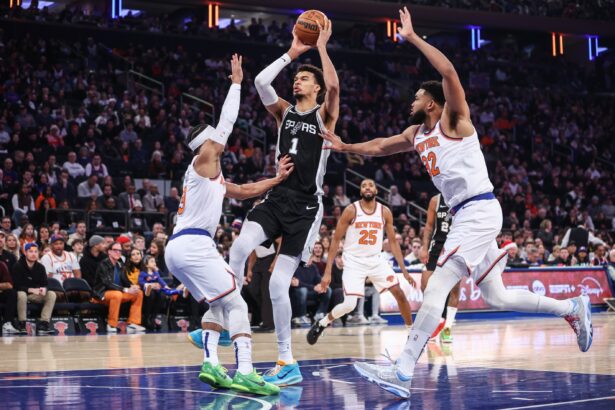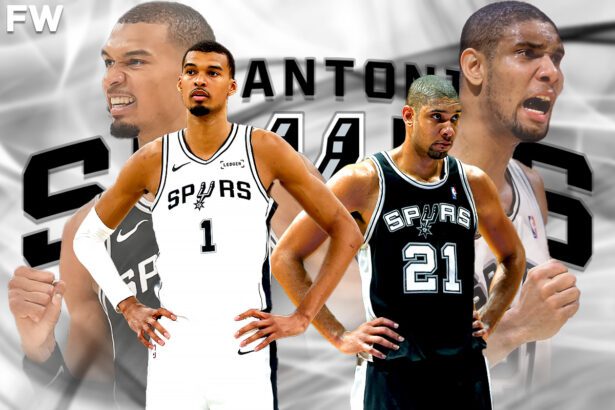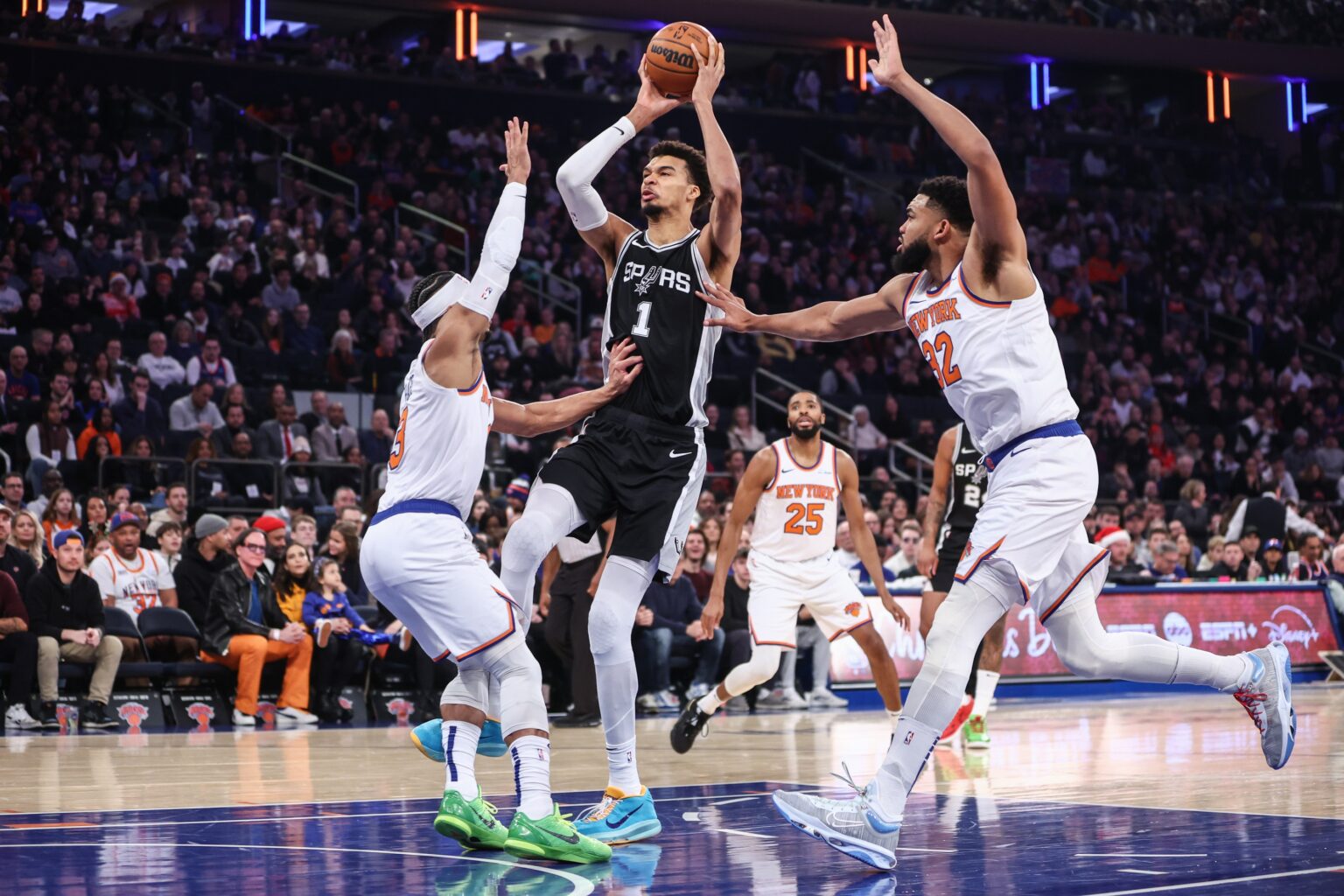
The Spurs and Knicks meet in the NBA Finals in a matchup built around size, defense, shot creation, and two very different playoff roads. The Spurs enter with home-court advantage after a 62-20 regular season. The Knicks enter after a 53-29 regular season and an 11-game playoff winning streak. Game 1 is Wednesday, June 3, at Frost Bank Center at 8:30 p.m. ET. Games 1, 2, 5, and 7 are at Frost Bank Center. Games 3, 4, and 6 are at Madison Square Garden.
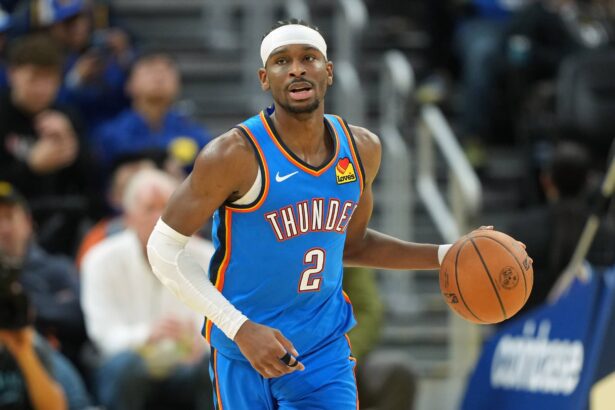
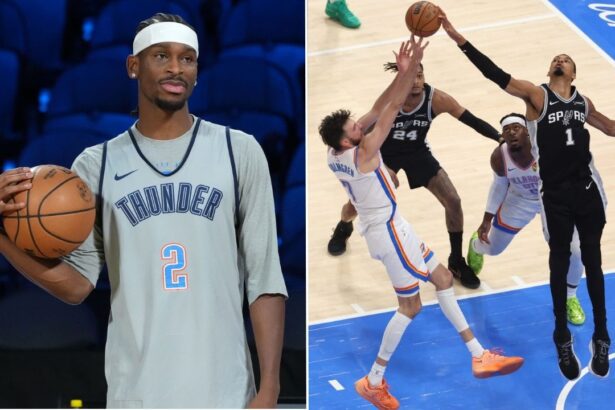
The Spurs needed seven games to beat the defending champion Thunder in the Western Conference Finals. They won Game 7 on the road, 111-103, with Victor Wembanyama scoring 22 points and grabbing seven rebounds. The Knicks had the opposite path. They swept the Cavaliers in the Eastern Conference Finals and enter with nine days of rest before Game 1. The Knicks also won the NBA Cup Final against the Spurs in December, while the teams split the regular-season series.
This is a Finals with two elite playoff profiles. The Knicks lead all playoff teams in offensive rating at 123.3, defensive rating at 103.5, and net rating. The Spurs are right behind them with the second-best playoff defense at 104.4 and the second-best net rating. The matchup is simple at the top: the Knicks have the best offense left, while the Spurs have the best defensive player in the world and the more difficult road to the Finals.
Injury Report
Spurs
No key players listed.
Knicks
No key players listed.
De’Aaron Fox, Mitchell Robinson, Josh Hart, and OG Anunoby are injury storylines to monitor before Game 1, but there’s stil no official Game 1 status for any of them. Anunoby returned during the Eastern Conference Finals, while Robinson has been working back from a fractured right pinky finger before the Finals break.
Spurs Analysis For The Series
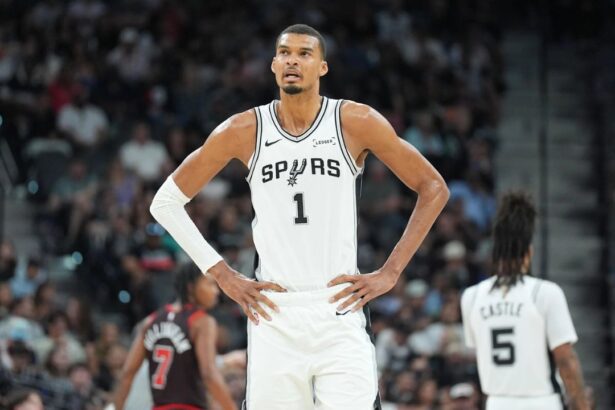
The Spurs’ case starts with Victor Wembanyama. He has been the best overall player in the playoffs. In 17 postseason games, Wembanyama is averaging 23.2 points, 10.8 rebounds, 2.7 assists, and 3.5 blocks while shooting 51.0% from the field, 37.0% from three, and 87.0% from the line. That is elite two-way production, and it is not empty volume. His rim protection changes how teams attack before they even start the possession.
The Western Conference Finals made that obvious. Wembanyama averaged 27.3 points, 10.9 rebounds, 3.1 assists, 1.4 steals, and 2.7 blocks against the Thunder and won Western Conference Finals MVP. The Spurs beat the No. 1 seed and defending champions because Wembanyama controlled the defensive floor and still scored enough to punish single coverage.
The Knicks will not guard him with one player. Anunoby will get time on him. Karl-Anthony Towns will see him. Mitchell Robinson will be used as the more physical big. Josh Hart may dig down. Mikal Bridges will help from the wing. None of those are full answers. The point for the Knicks is to make Wembanyama catch the ball farther out, make him pass, and force the Spurs’ young guards to make shots late in the clock.
That is where the Spurs’ supporting cast becomes more than just background help. De’Aaron Fox is giving them 16.4 points, 4.0 rebounds, and 5.9 assists in the playoffs, and his 1.8 turnovers per game are important against a Knicks defense that lives on pressure. Stephon Castle has been even bigger, putting up 19.2 points, 4.9 rebounds, and 6.7 assists while shooting 48.1% from the field and 36.3% from three.
Dylan Harper adds 13.1 points, 5.3 rebounds, and 2.6 assists in only 25.6 minutes, giving the Spurs another downhill body when Fox or Castle sits. Devin Vassell is not shooting great overall at 41.1% from the field, but he is still making 2.3 threes per game and gives them needed wing volume. Julian Champagnie has been the cleanest spacing piece, hitting 39.3% from three in the playoffs, and he just scored 20 points with six made threes in Game 7 against the Thunder.
The Knicks cannot defend this series like Wembanyama is the only problem. The Spurs have enough secondary scoring, guard creation, and spot-up shooting to punish that plan.
The Spurs also have a pace edge. They averaged 119.8 points, 47.0 rebounds, 28.1 assists, 7.5 steals, and 5.5 blocks during the regular season. The Knicks were at 116.5 points, 45.6 rebounds, 27.4 assists, 8.1 steals, and 3.9 blocks. The Spurs can win in the half-court, but they are more dangerous when Fox, Castle, and Harper turn stops into early offense.
The pressure point is shooting. The Knicks are better from three. They shot 37.3% from deep during the regular season compared to 35.9% for the Spurs. That gap can decide a tight series. If the Spurs’ role players hit enough corner threes, their size and rim pressure can carry the matchup. If they go cold, the Knicks can shrink the floor around Wembanyama and force harder shots.
Knicks Analysis For The Series
The Knicks have been the most dominant playoff team by the numbers. They enter the Finals on an 11-game winning streak, with sweeps of the 76ers and Cavaliers. Over that run, they have outscored opponents by 262 points, the largest margin in NBA history across an 11-game playoff stretch. They are not just winning. They are removing teams from games early.
Jalen Brunson is the base. In 14 playoff games, Brunson is averaging 26.9 points, 2.8 rebounds, and 6.6 assists in 36.1 minutes while shooting 48.6% from the field and 35.2% from three. He is not just getting numbers. He is controlling matchups, forcing switches, and making defenses choose between blitzing him or giving him the middle of the floor.
The Spurs have better guard size than most Knicks opponents. Castle can guard him. Fox can pressure him in spots. Vassell and Champagnie can switch late. But Brunson is too strong and patient to be solved by size alone. The Spurs have to keep him away from the elbows, because once he gets there, he can score, draw help, or find Towns at the top.
Karl-Anthony Towns is the bigger tactical problem. He is averaging 16.9 points, 10.6 rebounds, and 5.9 assists in the playoffs while shooting 57.2% from the field, 48.9% from three, and 89.1% from the line. That passing number is the main stat. Towns has become a real hub. If the Spurs send two to Brunson, Towns can catch, pass, shoot, or drive before Wembanyama fully resets.
The Knicks also have the wing group to make the Spurs work. OG Anunoby has averaged 20.3 points, 8.3 rebounds, and 1.3 steals in the playoffs, and his size is the main reason the Knicks can give Wembanyama different looks instead of leaving one big on him all game. Mikal Bridges has added 14.6 points, 3.1 rebounds, 2.5 assists, and 1.1 steals while shooting 58.6% from the field, giving the Knicks another long defender who can guard, run the floor, and punish gaps.
Josh Hart gives them rebounding and pressure. Miles McBride gives them guard defense off the bench. Landry Shamet shot 92.0% from three in the Eastern Conference Finals and gives them another spacing piece. This is why the Knicks can switch more, help earlier, and still keep enough shooting on the floor.
The problem for the Knicks is the paint. Wembanyama is not Joel Embiid, Evan Mobley, or Jarrett Allen. He covers more ground and changes more shots. The Knicks have been elite because Brunson and Towns create high-value offense. Against the Spurs, some of those looks will become floaters, kickouts, and contested threes. That is where the series can turn.
Key Factors
Victor Wembanyama has to be the best player in the series for the Spurs to win. He probably will be. The question is whether he can dominate against a Knicks team with more rest, more shooting, and more wing size than any team the Spurs have faced.
The Spurs need Wembanyama to punish switches, protect the rim without fouling, and force Towns to defend every possession. If Wembanyama makes Towns work on both ends, the Knicks’ offensive structure becomes harder to maintain. If Towns survives defensively and keeps passing over the top, the Spurs lose their biggest edge.
Jalen Brunson is the Knicks’ best chance to control the pace. He has to make the Spurs defend multiple actions, not just one high screen. The Knicks will use ghost screens, empty-corner pick-and-roll, Towns handoffs, and off-ball cuts to move Wembanyama before Brunson attacks.
Brunson cannot get stuck hunting matchups for 18 seconds. The Spurs are too long for that. He has to attack early, force help, and trust the pass. If Brunson gets Wembanyama in rotation, the Knicks can win that battle.
Karl-Anthony Towns is the Knicks’ series lever. His 48.9% from three in the playoffs is a major problem for the Spurs because it can pull Wembanyama away from the rim. His 5.9 assists per game are just as important because the Spurs will send size at Brunson.
Towns has to be careful with fouls. The Spurs will attack him through Wembanyama seals, Fox drives, and Castle cuts. If Towns gets into early foul trouble, Robinson has to play more, and the Knicks lose spacing.
Stephon Castle has a hard job. He has to guard Brunson, handle pressure, and attack a strong Knicks defense. He does not need to be the Spurs’ leading scorer. He needs to make the right read when the Knicks load up on Wembanyama.
Castle’s size can bother Brunson, but he has to avoid cheap fouls. Brunson is too smart. If Castle reaches, leans, or bites on footwork, the Knicks will live at the line. If Castle stays disciplined, the Spurs have a real defensive matchup to build around.
Prediction
This should be a long series. The Knicks have the better playoff numbers, the hotter offense, and more rest. Their 123.3 offensive rating and 103.5 defensive rating are not small samples anymore. Brunson is playing like a Finals-level guard, Towns is passing better than ever, and the wing depth gives them real answers.
Still, I trust the Spurs slightly more because Wembanyama is the one matchup the Knicks cannot fully solve. The Knicks can make him work. They can make him pass. They can win games with shooting and Brunson’s late-clock scoring. But over seven games, Wembanyama’s rim protection, the Spurs’ size, and the Fox-Castle-Harper pressure should create enough problems.
The Knicks are better than their seed. They have looked like the best team in the playoffs for three weeks. But the Spurs beat the defending champions in seven games, have home-court advantage, and have the best player in the series. That is enough.
Winner: Spurs in 7