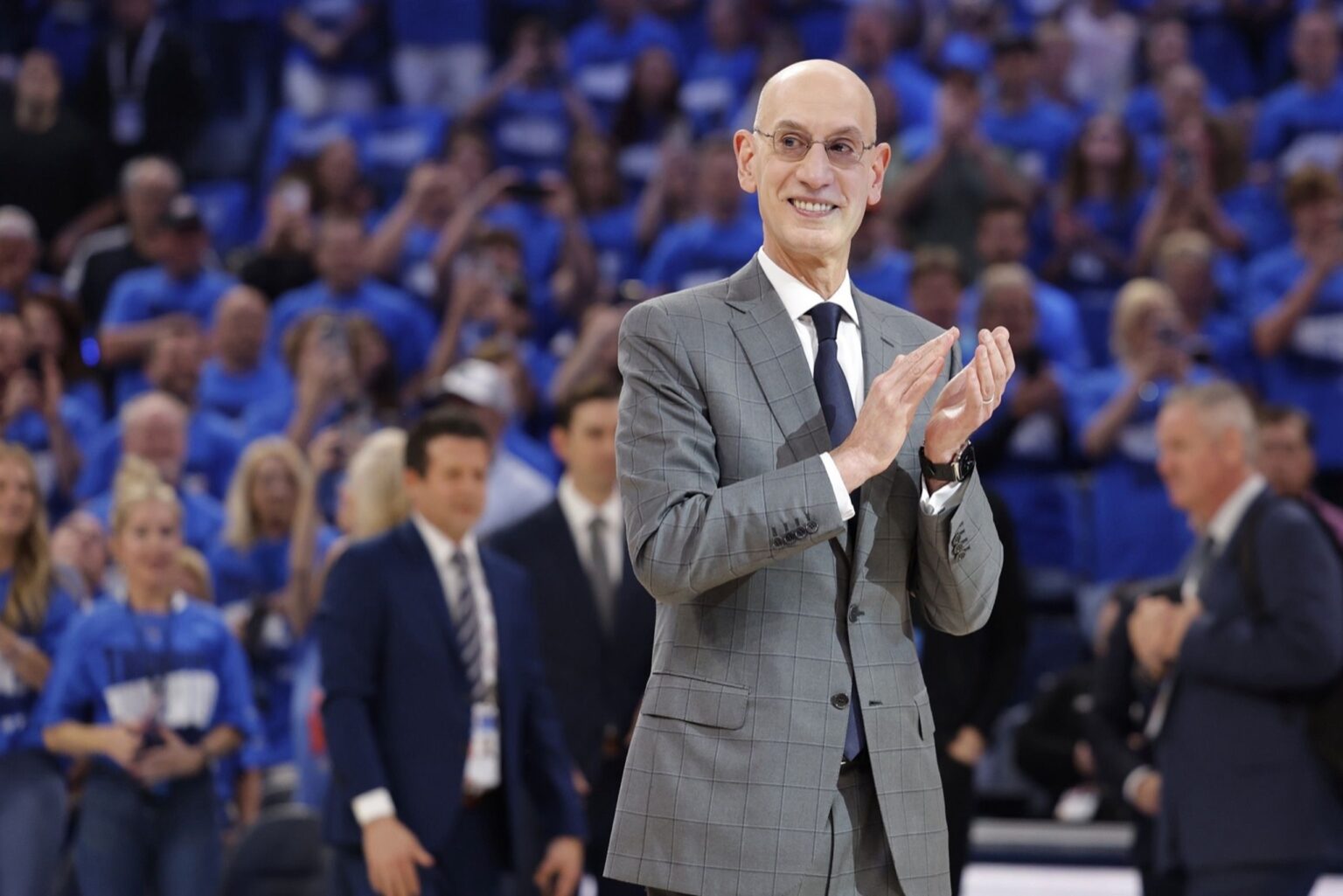
Adam Silver addressed the NBA’s long-term future while speaking this week, with league expansion once again taking center stage. As speculation continues to build, the commissioner made it clear that adding teams remains an active discussion rather than a closed chapter.
“We are looking at Las Vegas. We have looked at Seattle, and other markets as well,” Silver said. “Seattle and Las Vegas are two incredible cities. I don’t have any doubt that Las Vegas could support a team.”
While no timeline has been set, Silver’s comments reinforced that expansion remains a matter of when, not if. First up is Seattle, which continues to be viewed as a natural fit given its basketball history. With the former Seattle SuperSonics, the precedent has already been set for a successful team in the city.
Meanwhile, Las Vegas has emerged as a rapidly growing market with proven support for major professional sports. As the current site of the NBA Cup tournament, the league has already established a presence in the city, and fans have been clamoring for a team there for years.
Beyond those two markets, other cities have been suggested as potential hosts for an expansion team, including Vancouver, Mexico City, and Nashville, among others. For now, however, Las Vegas and Seattle remain the clear front-runners.
Silver said a decision could come in 2026, but it may still be years before a new team actually takes the floor. In the meantime, his focus has also shifted to a separate issue that has dominated the current season.
Injuries across the NBA have fueled debate about player workload and whether the league’s schedule is contributing to the problem. The commissioner believes the solution is more complicated than simply shortening the season.
“I do think we have to look at the schedule,” Silver said. “The issue is, I want to be true to the data. The majority of the injuries are coming earlier in the season. We need more space between the games, and players need an off-season, but there are huge economic consequences if you start shortening the season.”
Playing fewer games might seem like an easy way to reduce injuries, but the numbers suggest otherwise. This season, many setbacks occurred within the first few weeks, and Silver believes that points to deeper factors at play.
Whatever the case, giving players more time off between games may be the most realistic compromise. It allows players’ bodies to recover without significantly compromising the financial structure of the regular season.
Either way, between expansion and injury management, Adam Silver has major decisions ahead. How the league responds to these challenges could help shape its long-term health for years to come.
For now, Silver appears focused on balance rather than bold swings. Expansion remains strictly on the horizon, while any changes to the schedule will come cautiously and with data in hand. That measured approach reflects a league intent on stability as much as growth, even as outside pressure continues to mount.