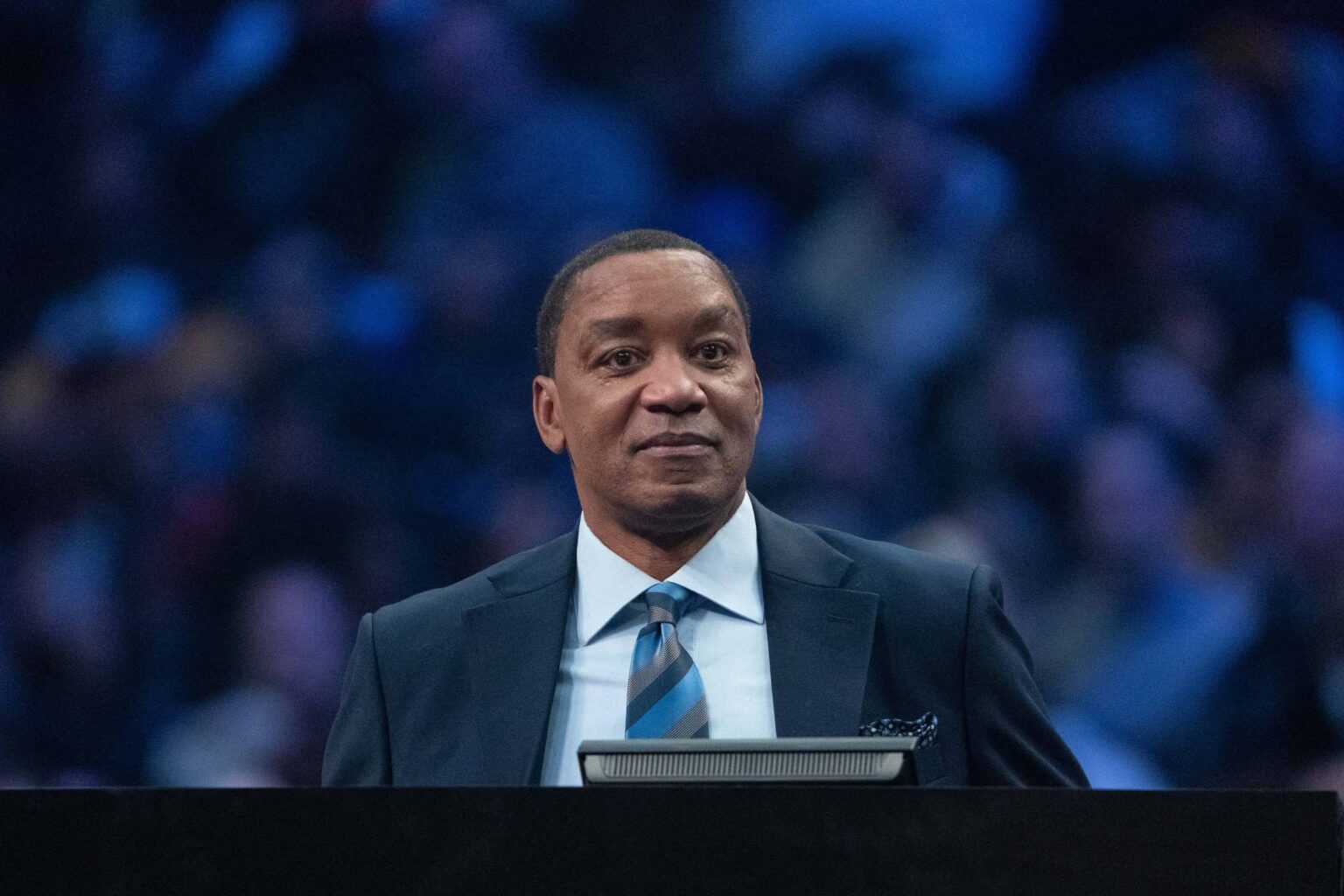
For decades, the tension between Isiah Thomas and Michael Jordan has been one of the most debated personal rifts in NBA history. On the court, their rivalry was fierce and unforgettable. Off the court, it has always been framed as cold, distant, and unresolved. Now, Thomas has laid out, in his own words, the exact moment he believes everything truly fell apart.
Speaking on the New Era Detroit podcast, Isiah made it clear that the fracture was not born from competition, the Dream Team controversy, or even the infamous Pistons–Bulls battles. According to him, the breaking point came much later, and much more publicly.
“That’s up to him, right? And this is what I’ve been clear about and will stand on business about, right? Me and my family, while he was in Chicago, we were extremely nice to him, you know, just as brothers, right? Now, we competed on the floor, but outside of the floor, his family hung out with my family sometimes.”
“We had friends and everything, so I always thought we was cool. And even my son had a Jordan jersey hanging up in his bedroom, right? So I never thought we had this kind of beef, right? And when the Dream Team stuff happened, he came out quickly and said he had nothing to do with it.”
“I believed him, because I know how the media can twist and spin stuff, so I never really put that on him, right? But then when The Last Dance came out, you know, everybody’s sitting at home. He’s sitting at a little table like this with his drink, you know, and just like I’m dressed now, you saw me in The Last Dance.”
“He asked me, could I come do his video, and said, I can’t tell my story without you. You’ve been so influential, inspirational with me, so forth and so on. His producer sending me emails, so forth and so on. Still got all the emails, right? So it’s COVID and everybody’s sitting at home, and he comes out and says, I hate Isaiah Thomas.”
“That stuck, man, right? After, like I say, I put on a three-piece suit, came dressed, and so I feel like he set me up in his video, right? So then afterwards, he had people calling, hey, tell Isaiah, you know, I didn’t mean it and everything else. And this is what I’ve said, and I’m gonna say it here, and I’ve always said it every time somebody asks me: if you didn’t mean it, and you said it to the world publicly, then apologize publicly.”
“Don’t have no private meeting with me and say, you know, hey, I didn’t mean it. But if you meant it, stand on it. But if you didn’t mean it, then say it publicly. He’s chosen not to say it publicly, so until he does, this is where it’s at, and I’m good with that.”
For fans, the story adds another layer to a rivalry that has always been more complex than wins and losses. What hurt Isiah Thomas most was not being excluded, criticized, or challenged. He felt betrayed by someone he believed respected him beyond basketball.
Until that public acknowledgment comes, Thomas says he is at peace with the distance. The door, it seems, is not locked. But it is no longer his to open.