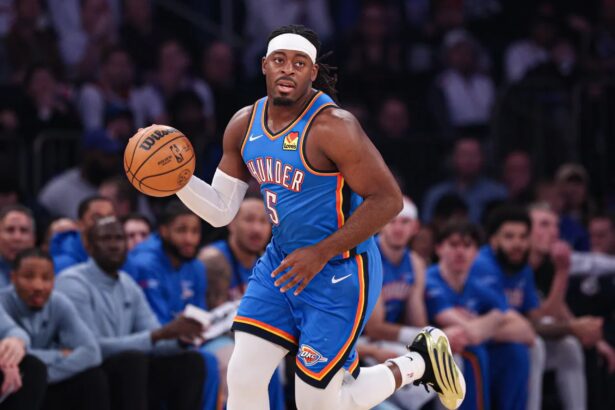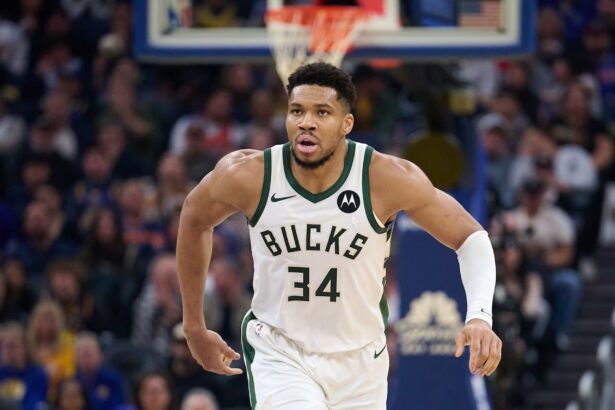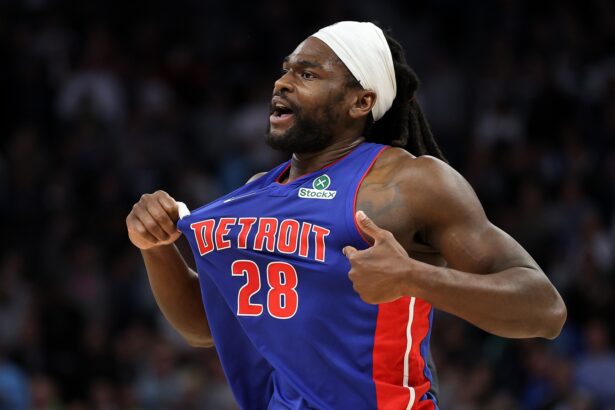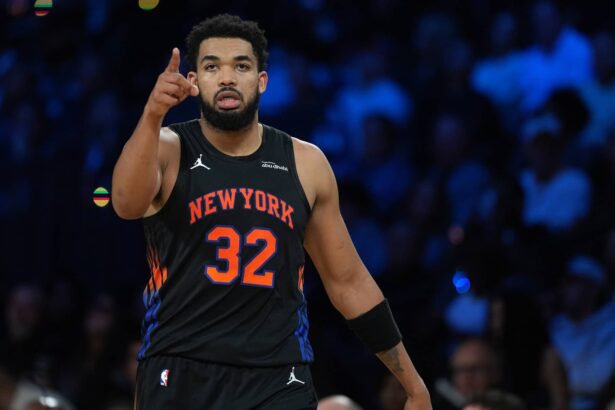
After building the pyramid for point guards and then doing the same exercise for shooting guards, the next step is small forwards. This is the most flexible star position in the league right now, because the best wings can do a little of everything: score at three levels, defend multiple matchups, and handle enough creation to run offense when possessions slow down.
This pyramid will follow the same logic as the previous ones. It is not a career ranking, and it is not based on reputation. It is strictly a 2025-26 season evaluation, organized into tiers based on performance, consistency, and impact on winning.
The Best
Jaylen Brown, Kawhi Leonard, Kevin Durant
Jaylen Brown has played like a No. 1 option all season. He’s putting up 29.3 points, 6.9 rebounds, and 4.7 assists a night, and he’s doing it on 48.3% from the field. The Celtics are 35-19 and second in the East, which is the key piece here: this is superstar volume attached to elite team results. When you’re scoring like that for a top-two seed, you’re not “having a hot year.” You’re driving outcomes.
Brown’s value at small forward is that he wins possessions in multiple ways. He can get downhill when teams switch smaller guards onto him, and he can score in the midrange when the paint is crowded. The assists matter, too. That 4.7 number is part of why the Celtics offense doesn’t stall into “your turn, my turn” basketball. He’s making reads earlier, and the defense has to respect his pull-up and his strength, which opens passing windows other wings don’t create.
The other separator is how dependable his production has been. The Celtics don’t need Brown to be perfect from three to win games, because his pressure points are physical. He forces rotations. He forces fouls. And because the Celtics are already strong structurally, his scoring spikes often become back-breaking. This season has felt like Brown operating at the top of his range, not just riding a streak.
Kawhi Leonard is here because the “Kawhi game” still works when the possessions get ugly. Leonard is at 27.9 points and 6.4 rebounds on 49.1% shooting. The Clippers are 26-28 and 10th in the West, which is not the record you want in a top tier, but his individual impact has been clean enough to keep him in this group. Their offense has leaned on him in the simplest way possible: give him the ball, let him get to his spots, and trust the shot quality.
Leonard’s season reads like a reminder of what elite wing scoring is supposed to look like. It’s not just points. It’s points that don’t come with chaos. He gets to the elbow, he gets to the short midrange, and he doesn’t need a perfect possession to get a shot he likes. That’s a small forward skill that translates no matter what the matchup is. When teams take away the first action, he still has a second answer that doesn’t rely on speed.
The “Best” case for Leonard is also about scarcity. There are not many wings who can create a good shot late in the clock without the offense getting disorganized. Even with the Clippers hovering around the play-in line, his nightly baseline has been so high that you can’t drop him a tier just because the team has been uneven.
Kevin Durant being in this tier at 37 is still absurd. Durant is averaging 25.8 points, 5.3 rebounds, and 4.4 assists, while shooting 50.6% from the field. The Rockets are 33-20 and fourth in the West, which is why this season sits in the top tier instead of being treated like “vintage production on a mediocre team.” He’s doing high-level scoring while also being part of a top-four seed’s identity.
Durant’s shot profile remains the cheat code. He can score over switches, he can score over drop coverage, and he can score over good contests. That’s why his efficiency holds even when the defense is locked in. And the 4.4 assists matter because it shows he’s not just hunting shots. He’s still punishing the help when teams try to load up.
What separates Durant from the next tier is the full package: elite efficiency, elite volume, and real winning context. A lot of wings can give you 23 to 25 points. Few can do it with this accuracy while keeping their team near the top of the conference. This is still one of the most scalable offensive stars in the league, and 2025-26 has proven it again.
Elite Stars
Deni Avdija, LeBron James, Scottie Barnes
Deni Avdija has basically turned into a jumbo creator this season, and the numbers are wild. Avdija is at 25.2 points, 7.2 rebounds, and 6.6 assists while shooting 46.3% from the field. The Trail Blazers are 27-29 and ninth in the West, so the team results don’t lift him into the top tier, but the role is huge and the production is real. He’s not doing this as a third option. He’s doing it as the offense.
The reason Avdija is Elite Stars instead of “Best” is basically one thing: team-level gravity. The Trail Blazers haven’t been strong enough to force the league to treat him like an MVP-level wing. But the skills have popped. He’s rebounding like a forward, passing like a lead guard, and scoring with enough volume that you have to game plan for him. That 6.6 assists number is the giveaway. This isn’t just “hot shooting.” It’s creation.
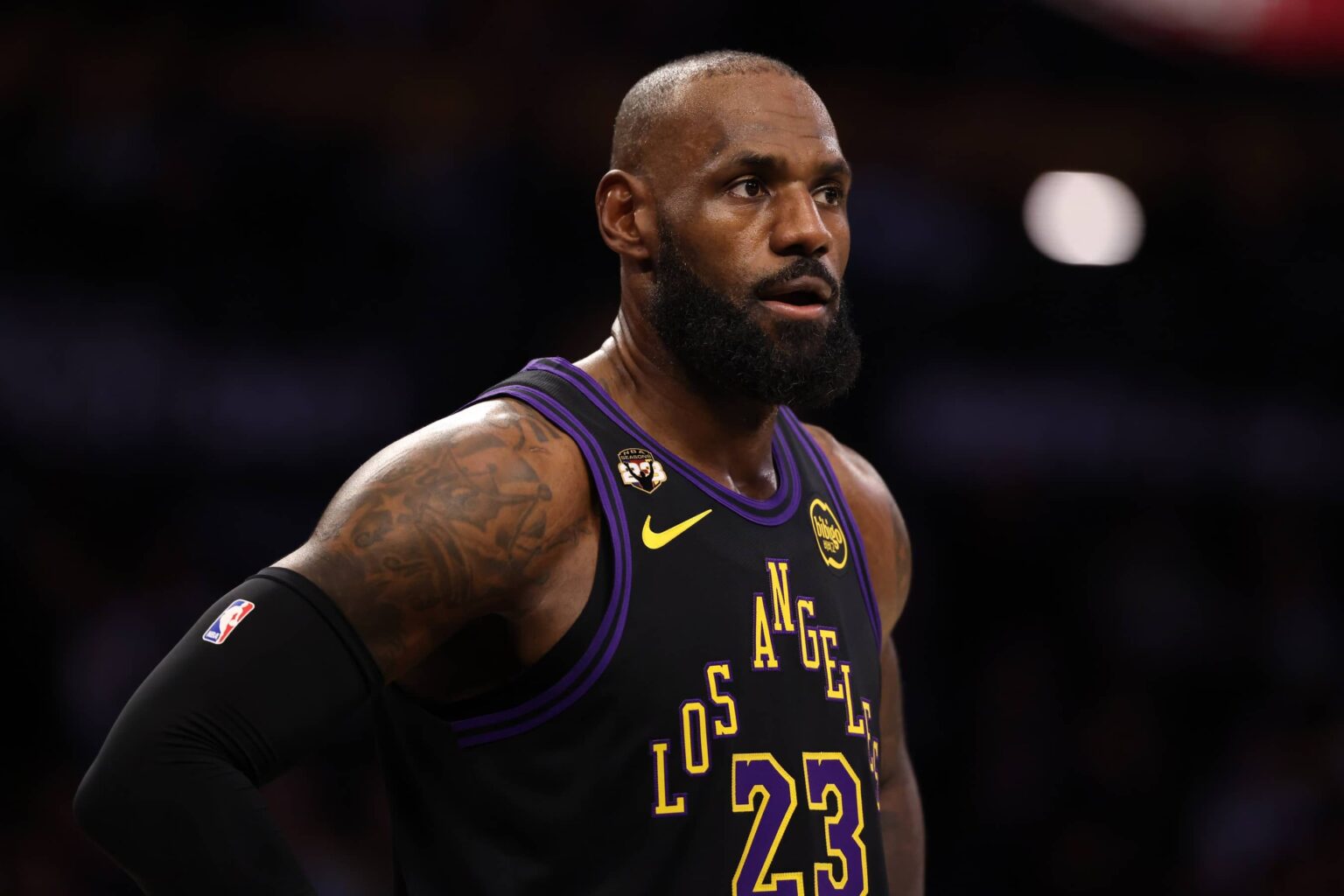
LeBron James is still an Elite Star because the floor he provides is still ridiculously high. James is at 22.0 points, 5.8 rebounds, and 7.1 assists on 50.2% shooting. The Lakers are 33-21 and fifth in the West, which matters because this isn’t a “farewell tour” season. He’s still the organizer of a top-five seed, still the guy who decides pace, and still the player who can swing a game with decision-making.
The biggest LeBron separator at small forward is that he can carry offense without needing to score 30. The 7.1 assists show what he’s still doing: controlling possessions. When the Lakers are stuck, they don’t just call a play, they put the ball in his hands and trust him to find the weak spot. And because his scoring is still efficient, defenders can’t treat him like a pure passer.
He’s also still giving you the “big game moments” that justify the tier. He became the oldest player to record a triple-double, doing it with 28 points, 12 assists, and 10 rebounds in a win before the break. It’s proof that he can still bend a game when the spotlight gets bright.
Scottie Barnes is an Elite Star because his season impact is two-way and role-flexible. Barnes is at 19.3 points, 8.4 rebounds, and 5.6 assists on 50.4% shooting. The Raptors are 32-23 and fifth in the East, so this production is landing in a real winning environment. He’s not just stacking stat lines. He’s doing it while the team is actually moving up the standings.
Barnes doesn’t score like the “Best” tier wings, and that’s why he’s one tier lower. But the combination of rebounding, passing, and defense is the reason you keep him in Elite Stars. He plays like a connector who can still take over pockets of the game, and his assist volume shows he’s not a passenger. When the Raptors need organization, he can run actions. When they need stops, he can take the harder wing matchups.
If you’re building a playoff team, Barnes is the type of wing who makes everything easier. He creates extra possessions with rebounds, he keeps the ball moving, and he gives you size without losing skill. That’s the exact profile that separates “good starter” from “star wing,” even if the scoring average isn’t huge.
Exceptional
Cooper Flagg, Trey Murphy III, Michael Porter Jr., Kon Knueppel, Peyton Watson
Cooper Flagg is in this tier because his season has already been significant, even with the injury. Flagg is averaging 20.4 points, 6.6 rebounds, and 4.1 assists as a rookie, and it’s happened on a Mavericks team that has been under real pressure in the standings. The Mavericks are 19-35 and 12th in the West, which means his scoring has come with defenses fully aware he’s the centerpiece right now.
What still keeps him “Exceptional” is the way the scoring has looked. He was on a massive stretch during the losing streak, and he even got a career-high of 49 points already. He’s creating and finishing in real half-court possessions. That’s why he already belongs in the wing conversation.
Trey Murphy III has been one of the cleanest high-volume shooters at the position this year. Murphy is at 22.1 points, 5.7 rebounds, and 3.8 assists on 47.6% shooting. The three-point volume is huge, at 8.6 three-point attempts per game. That is a real “defense has to shift” number.
The Pelicans are 18-38 and 14th in the West, which keeps him out of the upper tiers. But Murphy’s season is the definition of an “Exceptional” wing: scalable scoring, real spacing gravity, and enough secondary playmaking that he’s not a one-trick guy. And because he’s doing it at this efficiency, it’s not just volume for volume’s sake.
Michael Porter Jr. has put up a true star scoring line with the Nets: 25.0 points, 7.2 rebounds, 3.2 assists on 47.4% shooting. He’s also bombing threes, with 9.5 attempts per game and 38.5% accuracy. That’s a premium small forward shot profile.
So why isn’t he in Elite Stars? It’s mostly the team context. The Nets are 23-30 and sitting outside the top 10 in the East. On a better team, this exact same stat line would push him higher because the scoring is that valuable. But this pyramid is about impact on the season’s games, and winning has to be part of the evaluation.
There’s also been a little noise around him because of how good the year has been individually compared to the recognition. In his return game in Denver, he scored a season-high 38, which underlines the ceiling nights he’s had. He’s been a real offensive centerpiece. The tier is not a diss. It’s just the line between “big year” and “big year that lifts a top seed.”
Kon Knueppel is the position-bendy inclusion here, but he belongs because his rookie production has already translated to real team minutes and real team results. Knueppel is averaging 18.9 points, 5.5 rebounds, and 3.6 assists while shooting 48.4% from the field. The Hornets are 26-29 and ninth in the East, which is a real play-in level season, not a pure tank situation.
The reason I’m comfortable calling him a small forward in this pyramid is simple: role. He’s playing a wing job. He’s spacing, he’s attacking closeouts, and he’s not being hidden. Even at 20, he’s holding up physically enough that coaches can keep him on the floor. That matters more than what the depth chart says.
He stays in “Exceptional” because the league is still adjusting to him. Once teams fully prioritize him in scouting, you want to see how he responds when the clean looks go away. But the baseline is strong: efficient scoring, real rebounding for his position, and enough passing that he’s not a dead-end player.
Peyton Watson is the “exceptional role wing” archetype who keeps a good team’s ceiling intact. Watson is at 14.9 points, 4.9 rebounds, and 2.0 assists, and he’s doing it on 49.6% shooting for the Nuggets. The team sits at 35-20 and third in the West, which is why his value matters: these minutes are happening on a real contender, and he went up to 21.9 points and 5.5 rebounds in January when Nikola Jokic got sidelined.
Watson’s season is less about raw scoring and more about how he changes lineups. He can take wing assignments, he can run the floor, and when he hits open threes, the Nuggets look impossible to guard. He even had a career night: 29 points on 11-of-17 shooting with five threes in early February. Those are the nights that swing playoff series when defenses tilt too hard toward the stars.
Quality Starters
Miles Bridges, Brandon Miller, Franz Wagner, Brandon Ingram
Miles Bridges is having a classic “quality starter” season. Bridges is at 18.2 points, 6.1 rebounds, and 3.5 assists while shooting 44.9% from the field. Those numbers are strong, and the Hornets being 26-29 makes it even more relevant because these aren’t just empty minutes. He’s been a steady scorer and a real secondary creator.
Bridges lands in this tier because the efficiency and the two-way impact don’t consistently push him into the higher groups. He can absolutely have big nights, like his 26-point performance against the Hawks, which is a good example of what he can do when he’s rolling. But over the full season, he’s been more “reliable starter” than “game-planning star.”
Brandon Miller has taken a jump in usage and responsibility, and the scoring reflects it: 20.6 points per game with 4.7 rebounds and 3.3 assists. The efficiency is the reason he stays in Quality Starters, with 42.5% from the field. He’s taken on harder shots and tougher possessions, and the trade-off has been some volatility.
What I like about Miller’s season is that the aggression is real. He’s not waiting for someone else to create. He’s trying to break the defense himself. And because the Hornets are at least competitive in the East play-in chase, those reps have actual weight.
Franz Wagner would normally be higher because his season production is clearly above “quality starter” level. Wagner is averaging 21.3 points, 5.8 rebounds, and 3.6 assists, while ESPN lists him at 47.9% from the field and 36.5% from three. The Magic are 28-25 and seventh in the East, which is the kind of team context that usually supports a higher tier.
The reason he sits here is availability. Wagner is out indefinitely with a left ankle injury, and he has missed 25 of the last 29 games since the high ankle sprain in December. In a season-only pyramid, that’s a major hit. It’s hard to rank a player as an “Exceptional” or “Elite Star” this season when he simply hasn’t been on the floor enough.
When he has played, Wagner has looked like the Magic’s most stable wing creator. That’s why the per-game line is so strong even in a season disrupted by injury. If he comes back healthy and closes the year strong, he’s the easiest “tier jump” candidate on the entire small forward list.
Brandon Ingram is another player whose production screams “higher tier,” but the role and context place him here. Ingram is at 21.8 points, 5.7 rebounds, and 3.7 assists on 47.4% shooting, and StatMuse lists his three-point percentage at 36.5%.
Ingram is Quality Starters in this pyramid because his season impact has felt more like a high-end secondary star than a true “carry” wing. The guys above him have either been higher-volume scorers, more consistent two-way levers, or the central engine of their team’s identity. Ingram’s line is very good, but it hasn’t forced the league to warp coverage every night the way the top tiers do.
That said, this is still a valuable season as an All-Star once more. He’s efficient enough to fit next to other creators, skilled enough to run offense in stretches, and big enough to get his shot off against most wing defenders. For a playoff team, that’s the profile that can decide a series if the matchup breaks right.