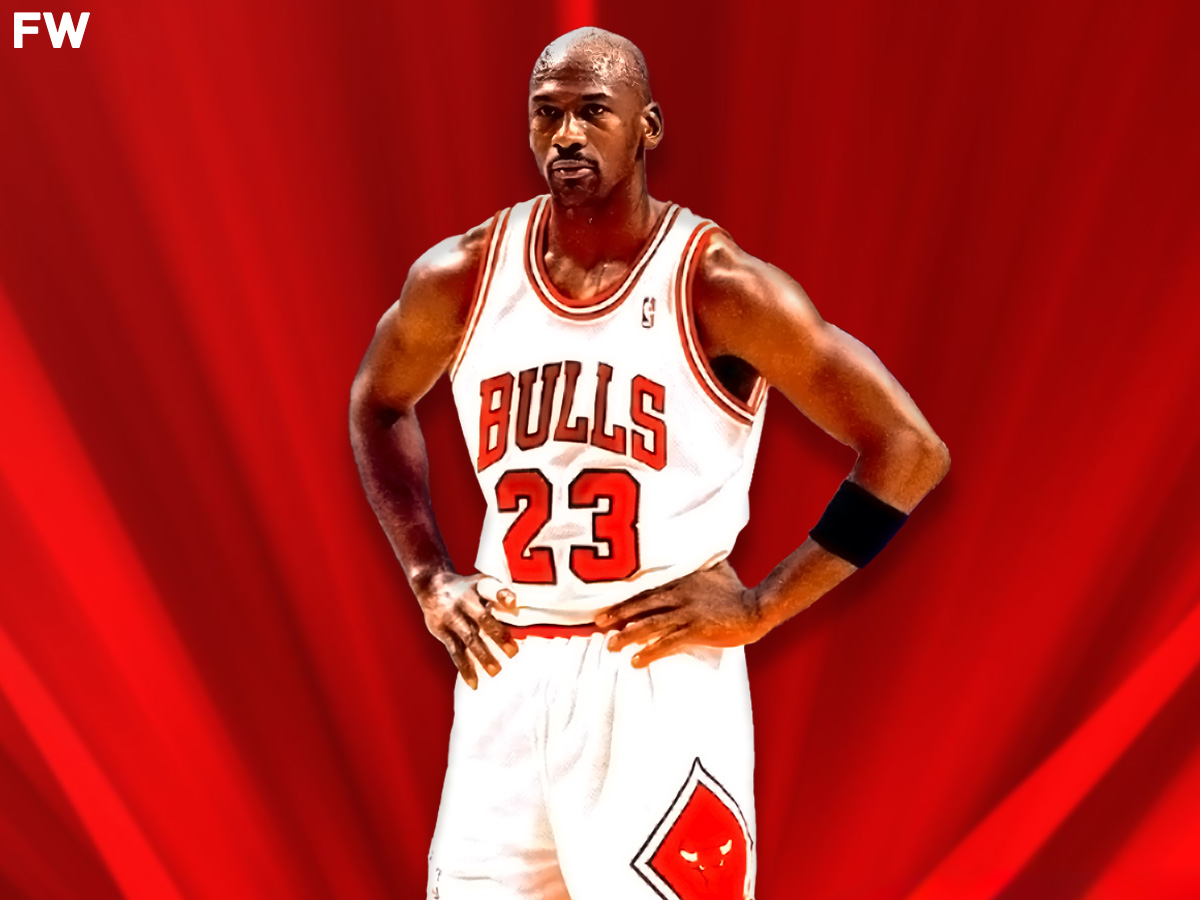
John Starks didn’t complicate the GOAT debate. He went straight to the point. For him, it’s Michael Jordan. And the reason isn’t only numbers or championships. It’s how Jordan built those championships and what he demanded from the people around him.
Speaking on the Strong Talk podcast, Started said:
“Definitely Michael Jordan. I ain’t going that far. Michael was just different. He was a different animal. His mentality, his will to overcome anything on the court. And he was a highly intelligent player.”
“The Last Dance showed that. People said it made him look bad. No. It showed his greatness. It showed what a great player can do for teammates who are not at his level. He pushed them mentally to get there.”
“You look at Scottie Pippen and what he went through before they broke through in 1990. He pushed Horace Grant, B.J. Armstrong, even Steve Kerr later on. He had to bring his team up to his level for them to break through. And once they did, they kept winning.”
“Michael made his teammates better because he grew them.”
“Now you look at LeBron James. He didn’t grow players the same way. He joined talent. He went to play with Dwyane Wade and Chris Bosh in Miami. He came back to Cleveland because of Kyrie Irving. Then he went to the Lakers and brought Anthony Davis.”
“Michael took homegrown players, drafted guys, and built them up. Then added small pieces around them and turned them into champions. That’s where I give him the edge over LeBron. He could take simple pieces and turn them into something great.”
Starks didn’t watch this from a distance. Their rivalry wasn’t quiet either. It included heated moments, including that famous 1993 altercation, something Starks later reflected on when talking about how the two eventually built mutual respect and even a friendship over time.
He saw firsthand how Jordan took a team that was still developing and pushed it into a championship-level group, something he’s told before as well, when he picked Jordan over LeBron James in a hypothetical draft scenario.
The numbers back that up. Jordan had a 33-12 record against Starks, including 18-6 in the regular season and 15-6 in the playoffs. Over those matchups, Jordan averaged 32.0 points, 5.6 rebounds, and 5.0 assists, while Starks averaged 12.7 points, 2.8 rebounds, and 3.7 assists.
That gap tells part of the story. Starks pointed to The Last Dance as an example of that mindset. While some viewers felt the documentary made Jordan look harsh or overly demanding, Starks saw it the opposite way. To him, it showed what greatness looks like when it isn’t softened.
It showed how a player at that level pulls teammates up, even if it means pushing them beyond their comfort zone.
That’s where his argument really takes shape. Jordan didn’t step into a finished system with established stars. He grew that system. When the Chicago Bulls were still trying to break through, players like Scottie Pippen and Horace Grant were not fully formed.
They had talent, but they needed development, and Jordan took responsibility for that in his own way. He pushed them mentally, demanded consistency, and made it clear what level they had to reach.
That’s where he draws the contrast with LeBron James. Starks isn’t denying LeBron’s greatness, and he acknowledges everything LeBron has achieved, from championships to longevity. But he views the path differently. In his eyes, LeBron consistently placed himself in situations where high-level talent was already present or brought in.
Miami paired him with Dwyane Wade and Chris Bosh. Cleveland had Kyrie Irving in place during his return. The Lakers‘ move quickly turned into a partnership with Anthony Davis.
Each of those decisions made sense from a competitive standpoint, but Starks sees them as a different kind of team-building.
There’s also a tone in how Starks talks about Jordan that goes beyond systems or teammates. It’s about presence. The feeling was that when Jordan stepped on the court, everything shifted. That edge, that constant pressure he applied, wasn’t limited to opponents. It extended to his own locker room.
That’s what Starks values most. Not just winning, but how those wins were built, and how one player could elevate an entire group to a level they hadn’t reached before.