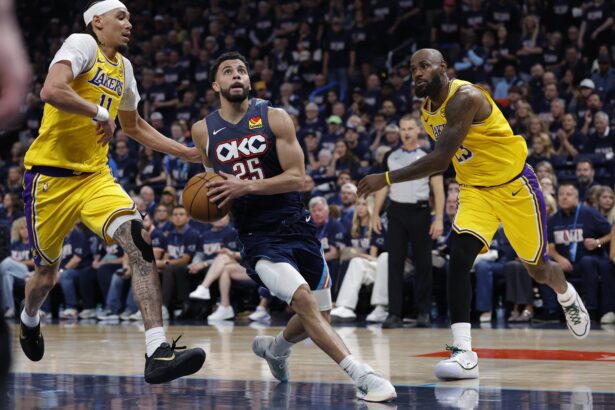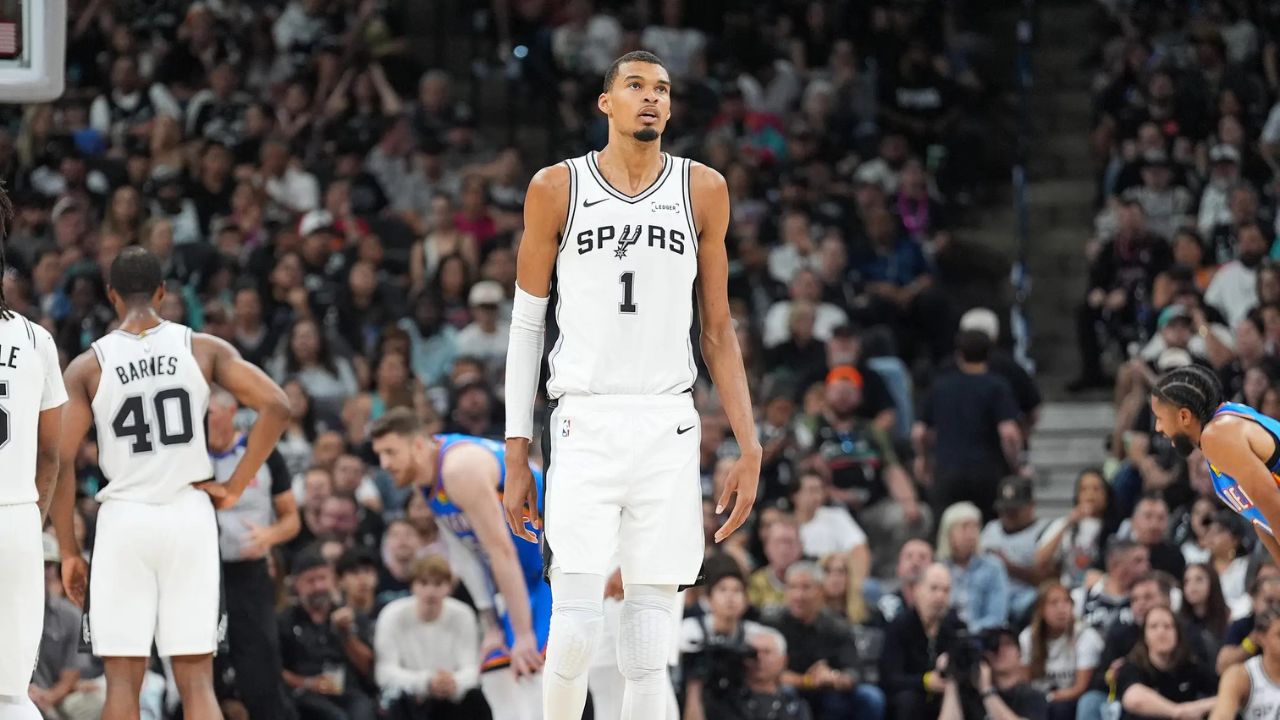
The Spurs are not supposed to be in control of this series. The Thunder are the No. 1 seed, the defending champions, and the team with home-court advantage in Game 7. They also have the MVP in Shai Gilgeous-Alexander, one of the deepest guard rotations in the league, and a roster built to survive almost every matchup.
The Thunder are the No. 1 seed, but after six games, the Spurs have made this series feel much more even than it was supposed to be. The Spurs have outscored the Thunder 678-660 in the series. They are scoring 113.0 points per game, compared to 110.0 for the Thunder. They are also winning on the glass, 48.0 rebounds per game to 43.2. Those extra rebounds have helped the Spurs control more possessions and survive bad shooting stretches.
The Spurs also have the toughest player to handle in this series. Victor Wembanyama is putting up 28.2 points, 11.5 rebounds, and 3.3 assists per game in the series. Shai Gilgeous-Alexander is still producing at 24.3 points, 2.7 rebounds, and 8.8 assists, but the Spurs have made him work harder than usual. That is the real story.
Game 7 is still on the road. That is a real problem. But the Spurs have already won once in the Thunder’s building, and they have won three of the last six games with very different formulas. One came through Wembanyama’s historic Game 1. One came through a defensive Game 4. One came through a Game 6 blowout where the guards and shooters destroyed the Thunder’s rhythm.
That is why the upset is real.
1. Victor Wembanyama Has Been The Hardest Player To Guard
Game 7 usually becomes simple. The best players have to solve the hardest coverage. In this series, the Thunder have the MVP, but the Spurs have the player who changes the court more.
Victor Wembanyama has been the most difficult matchup in the West Finals. His series line is 28.2 points, 11.5 rebounds, and 3.0 blocks per game. The scoring is the main number, but the way he gets there is the bigger problem. He has hurt the Thunder as a post target, a trail shooter, a lob threat, an offensive rebounder, and a weak-side rim protector. That is too many jobs for one defender.
The Thunder have tried different looks. Chet Holmgren gives them length. Isaiah Hartenstein gives them strength. Help defenders dig down. Guards show bodies early. The plan worked in Game 5, when Wembanyama had 20 points on 4-for-15 shooting and only six rebounds. The Thunder made his touches harder, forced him into traffic, and kept the Spurs from getting easy points inside.
But the response came fast. In Game 6, Wembanyama had 28 points, 10 rebounds, three blocks, two steals, and two assists. He also went 4-for-9 from three. That is the version of him the Thunder can’t solve. If he is hitting trail threes and above-the-break threes, Holmgren and Hartenstein have to guard higher. Once they guard higher, the paint opens for De’Aaron Fox, Stephon Castle, and Dylan Harper.
That is the tactical pressure. Wembanyama does not need 40 points for the Spurs to win. He needs to force the Thunder bigs away from the rim, punish single coverage, and protect the paint without fouling. When he gives the Spurs something close to 30 points, 10 rebounds, and three blocks, the whole rotation gets easier.
The Thunder can still throw bodies at him. They can make him catch farther from the basket. They can run after misses and force him to defend in space. But Game 6 showed the danger of that plan. If he starts the game with made threes, the Thunder’s defensive structure has to stretch. That is when the Spurs’ offense gets much better.
Game 7 is not only Wembanyama against Gilgeous-Alexander. But if the game becomes a half-court, star-driven possession game, Wembanyama gives the Spurs the bigger two-way swing. He can be the best scorer on one end and the best defender on the other. That is the main reason the Spurs have a real path.
2. The Spurs Have A Defensive Formula Against The Thunder
The Thunder had one of the most stable offenses in the league all season, but the Spurs have turned this series into a very different game. In two of the last three games, the Thunder scored 82 and 91 points. That is not normal for this team.
Game 4 was the first warning. The Spurs beat the Thunder 103-82 and held them to 33.0% shooting from the field and 6-for-33 from three. That was not just missed shots. It was shot pressure. The Spurs contested everything, loaded the gaps, and turned normal Thunder drives into late-clock decisions. Gilgeous-Alexander finished with 19 points on 6-for-15 shooting and four turnovers.
Game 6 was the second warning. The Thunder lost 118-91 and scored only 38 points after halftime. The game broke open in the third quarter when the Spurs went on a 20-0 run. During that stretch, the Thunder missed 13 straight shots. That is not only variance. That is a team losing its spacing, rhythm, and patience.
The Spurs have a real defensive structure for Gilgeous-Alexander. They don’t guard him with only one player. Castle gives them size and point-of-attack pressure. Vassell can switch onto him. Fox can bother the ball and recover. Wembanyama changes the finishing angles behind the play. The Thunder’s usual advantage is that Gilgeous-Alexander gets two feet in the paint and forces help. In this series, the Spurs are showing bodies early, then trusting the next rotation.
The result has been visible. Gilgeous-Alexander had 15 points on 33.3% shooting in Game 6. He had only four assists, and the Thunder were outscored by 28 points in his minutes. That is rare. He still got to his spots at times, but the Spurs kept him away from easy rhythm.
The Thunder’s shooters have also felt the pressure. In Game 6, the Thunder starters went 3-for-18 from three. Gilgeous-Alexander went 0-for-5, and Lu Dort went 1-for-9. Jaylin Williams went 0-for-4 off the bench. The Thunder also went 0-for-8 from three in the third quarter when the Spurs took the game.
Game 7 will test the same question again. Can the Thunder get enough quick advantage before the Spurs load up? Can Holmgren make enough jumpers to punish Wembanyama’s help? Can Dort, Caruso, and Williams hit enough spot-up threes to stop the Spurs from shrinking the floor?
The answer has not been strong enough across six games. The Thunder had their big offensive game in Game 5 with 127 points, but the Spurs have more defensive wins in the recent sample. In a Game 7, that is dangerous for the favorite.
3. The Spurs Are Winning The Physical Game
The Spurs are not only surviving with talent. They are winning the numbers that decide close games. They are ahead in series scoring, but the rebounding gap is just as important. The Spurs are at 48.0 rebounds per game. The Thunder are at 43.2. It may not seem much, but that’s not a random difference when it comes to late-game possessions.
That edge gives the Spurs more room for error. They can miss more threes. They can survive a Fox shooting night like Game 6, when he went 1-for-9 from the field and 0-for-3 from three. They can handle some turnovers because Wembanyama, Castle, Harper, Vassell, and the big rotation keep creating second chances and ending defensive possessions.
The Thunder are built to win with pressure. They force bad passes, speed teams up, and turn mistakes into easy points. But the Spurs’ size makes that harder to sustain. Even when the Thunder force a miss, the possession is not always over. The Spurs have enough length to chase loose balls, attack the glass, and make the Thunder defend for another full action.
Game 5 showed what the Thunder need. Holmgren had 16 points and 11 rebounds. Hartenstein added 12 points, 15 rebounds, and six offensive boards. That was 28 points and 26 rebounds from their two 7-footers. When that happens, the Thunder can win the interior fight and keep Wembanyama away from easy dominance.
But Game 6 flipped the series again. Wembanyama was back to 28 and 10. The Spurs’ guards gave them production on the glass, too. Harper had six rebounds. Fox had five. The Spurs did not need only center rebounds. They rebounded by committee, which is a better Game 7 formula because it does not depend on one player.
The Thunder also have a health problem with their wing balance. Jalen Williams returned in Game 6 after re-aggravating his left hamstring earlier in the series, but he played only 10 minutes and scored one point. That makes the Thunder thinner on the wing. If Williams is not fully explosive, the Thunder lose one of their best size-plus-creation pieces. That puts more weight on Gilgeous-Alexander, Holmgren, and the guards.
The Spurs can use that. They can put more size on the floor without losing ball movement. They can attack the offensive glass against smaller lineups. They can also force the Thunder to choose between more spacing and more rebounding.
In a Game 7, that tradeoff is huge. If the Thunder go small, the Spurs can punish the rim and glass. If the Thunder stay big, the Spurs can use Wembanyama as a spacer and force slower defensive coverage. That is a real advantage.
4. The Spurs’ Guards Are Handling The Thunder’s Pressure
The Thunder’s best team strength is usually their pressure. They have Gilgeous-Alexander, Alex Caruso, Cason Wallace, Dort, and other physical guards who can turn possessions into uncomfortable possessions. They are built to make young teams panic.
The Spurs have not fully avoided that pressure, but they have found enough answers. The biggest reason is that their guard and wing group has grown in the series. Castle, Harper, Vassell, and Fox all give the Spurs different ways to start offense. That is important because the Thunder want to turn every possession into one first action, one stop, and one runout.
Castle has become one of the most important players in the matchup. In Game 6, he had 16 points and nine assists. That is not a normal playoff line in an elimination game for a young guard. He handled pressure, defended Gilgeous-Alexander, and made fast decisions when the ball came back to him. His size also lets the Spurs run offense without giving the Thunder a small guard to hunt.
Harper is another reason the Spurs can win Game 7. He had 18 points, six rebounds, and four assists in Game 6. He also became one of five rookies in NBA history to record at least 200 points, 70 rebounds, 50 assists, and 20 steals in one postseason. That is not fake production. That is a real playoff performer giving the Spurs scoring and defense in the same role.
Vassell gives the Spurs the shot profile they need. In Game 6, he had 12 points and went 4-for-7 from three. That number is important because the Thunder’s defense can survive one or two shooters. It gets harder if Wembanyama, Vassell, Castle, and Harper are all credible from outside.
Fox is the wild card. His Game 6 box score looked bad: five points, 1-for-9 from the field, 0-for-3 from three. But he still had seven assists, five rebounds, and finished plus-17. That tells the real story. He did not need to score to help the Spurs win. He pushed pace, made connective passes, defended enough, and kept the game organized.
That gives the Spurs a stronger Game 7 floor. If Fox scores, the offense can hit another level. If he does not, they still have Castle, Harper, Vassell, and Wembanyama to create enough shots.
The Thunder still have more proven guard depth. But the gap is not the same as it looked before the series. The Spurs’ young guards are not playing like passengers anymore. They are deciding quarters.
5. The Thunder’s Edge Has Shrunk At The Wrong Time
After Game 3, it looked like the Thunder’s depth would decide the series. Their bench outscored the Spurs’ bench 76-23 in that game. Through the first three games, the Thunder reserves had a 183-64 scoring edge. That is a massive gap, and it explains why the Thunder could survive slow starts and still control games.
But the series has changed since then.
The Spurs won Game 4 by 21 points and Game 6 by 27 points. Both games were built on defense first, but the secondary scoring was also much better. In Game 6, Harper had 18 points. Castle had 17 and nine assists. Vassell hit four threes. Luke Kornet gave them important defensive minutes during the third-quarter run. That is how a team beats the Thunder. It can’t just be Wembanyama against the world.
The Thunder still have Caruso, Wallace, McCain, Jaylin Williams, and Hartenstein. That is real depth. But Game 7 is not a normal depth game. Rotations shrink. Stars play longer. Every non-shooter gets tested. Every weak defender gets put into action. That means the Thunder’s bench advantage may not be as powerful as it was in Game 3.
The Jalen Williams situation is also a major part of this. If he is limited, the Thunder lose one of the few players who can combine scoring, passing, defense, and size. That forces more burden onto role players. It also lets the Spurs load more bodies toward Gilgeous-Alexander.
The Thunder can still win because their best version is excellent. Gilgeous-Alexander can get 35. Holmgren can have a Game 5-type night. Caruso can hit threes and flip defensive possessions. Hartenstein can dominate the offensive glass. But the Spurs have already shown they can take away multiple options at once. They have held the Thunder under 92 points twice in three games.
That is why Game 7 feels dangerous. The favorite has home court, the MVP, and the championship memory. But the underdog has the best rim protector, the best series scorer, the rebounding edge, the recent defensive wins, and enough young guards to survive pressure.
The Spurs don’t need a perfect game. They need Wembanyama near 30 and 10. They need to keep Gilgeous-Alexander out of easy rhythm. They need to win the glass. They need Castle and Harper to keep making fast decisions. They need the Thunder role players to feel the same pressure they felt in Games 4 and 6.
That is realistic. That is why the Spurs are ready to shock the Thunder in Game 7.