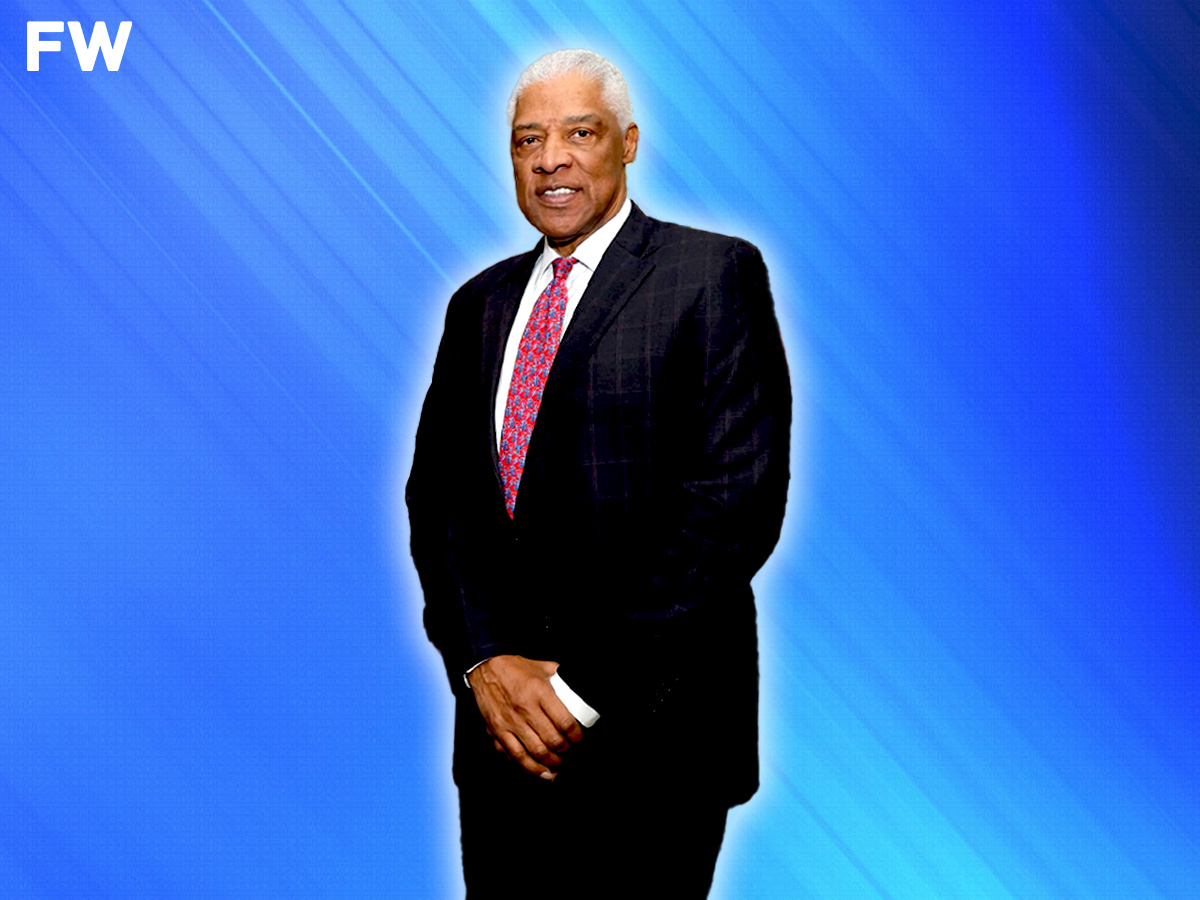
Julius Erving has always carried himself with grace. But behind the elegance of ‘Dr. J’ was a generation shaped by war, assassinations, and fear.
Speaking recently on the Joe and Jada podcast, Erving reflected on how different the world felt when he was coming of age in the 1960s. For him, basketball was never just a sport, it was a refuge.
“I think they got drafted into the Army. Like a lot of my friends from high school, they got drafted in the Army. Some of went to Vietnam and never came back. When people talk about basketball, basketball was a game. As an amateur, it wasn’t a livelihood, but it was a game and it was a diversion from a lot of the things that were bad about the society that we lived in.”
“I came out of high school in 68. Mr. Martin Luther King was assassinated in 69. Malcolm X was assassinated in 64. JFK was actually, mean, came up in, you know, dealing with tragic stuff during the teenage years, the Cold War between us and Russia, you know, during that time.”
“There were times that it was fire drills in school where you had to figure out how to go in the basement or hide just in case there was a plane coming by attacking the United States, dropping bombs. So going to college in 68 and a pro career. You give you something to focus on, concentrate on, you know, having something to take my mind away and my heart away from some of the bad things that were happening in the world.”
Erving graduated from high school in 1968, right in the heart of one of the most turbulent stretches in American history. The Vietnam War was escalating. The military draft was real and immediate. Teenagers were not just planning college. They were wondering whether they would be sent overseas.
The losses were personal.
For many young men of that era, the draft was not an abstract policy debate. It was friends disappearing. It was classmates coming home in coffins. It was uncertainty hanging over everyday life. The backdrop to his rise makes that statement powerful. Malcolm X was assassinated in 1965, President John F. Kennedy was killed in 1963, and Martin Luther King Jr. was assassinated in 1968, the same year Erving finished high school.
The country felt unstable. The Cold War between the United States and the Soviet Union created constant tension. Nuclear fear was not theoretical. It was practiced.
That was normal for teenagers at the time.
Today, it is hard to imagine high school students rehearsing for nuclear attacks. Back then, it was part of the routine. That kind of environment shapes how you see opportunity. It shapes how you view something as simple as a basketball game.
For Erving, going to college and eventually beginning a professional career gave him focus. It gave him structure and something positive to chase in a world that often felt heavy.
Erving would go on to become one of the most influential players in basketball history, helping merge style, athleticism, and grace into a new era of the game. But that success did not happen in isolation from history. It happened in spite of it.
For Dr. J, basketball was never just about scoring or championships. It was about survival, hope, and direction during a time when many of his peers never got the same chance.