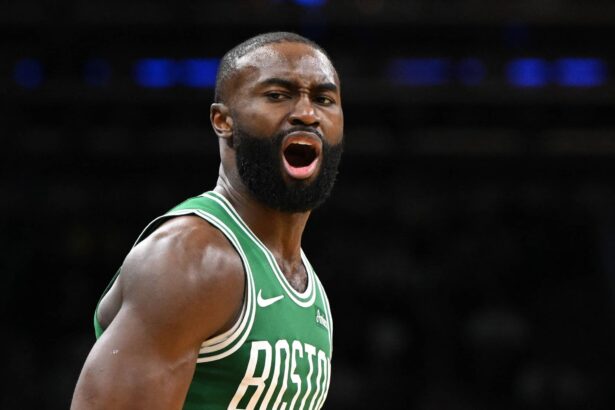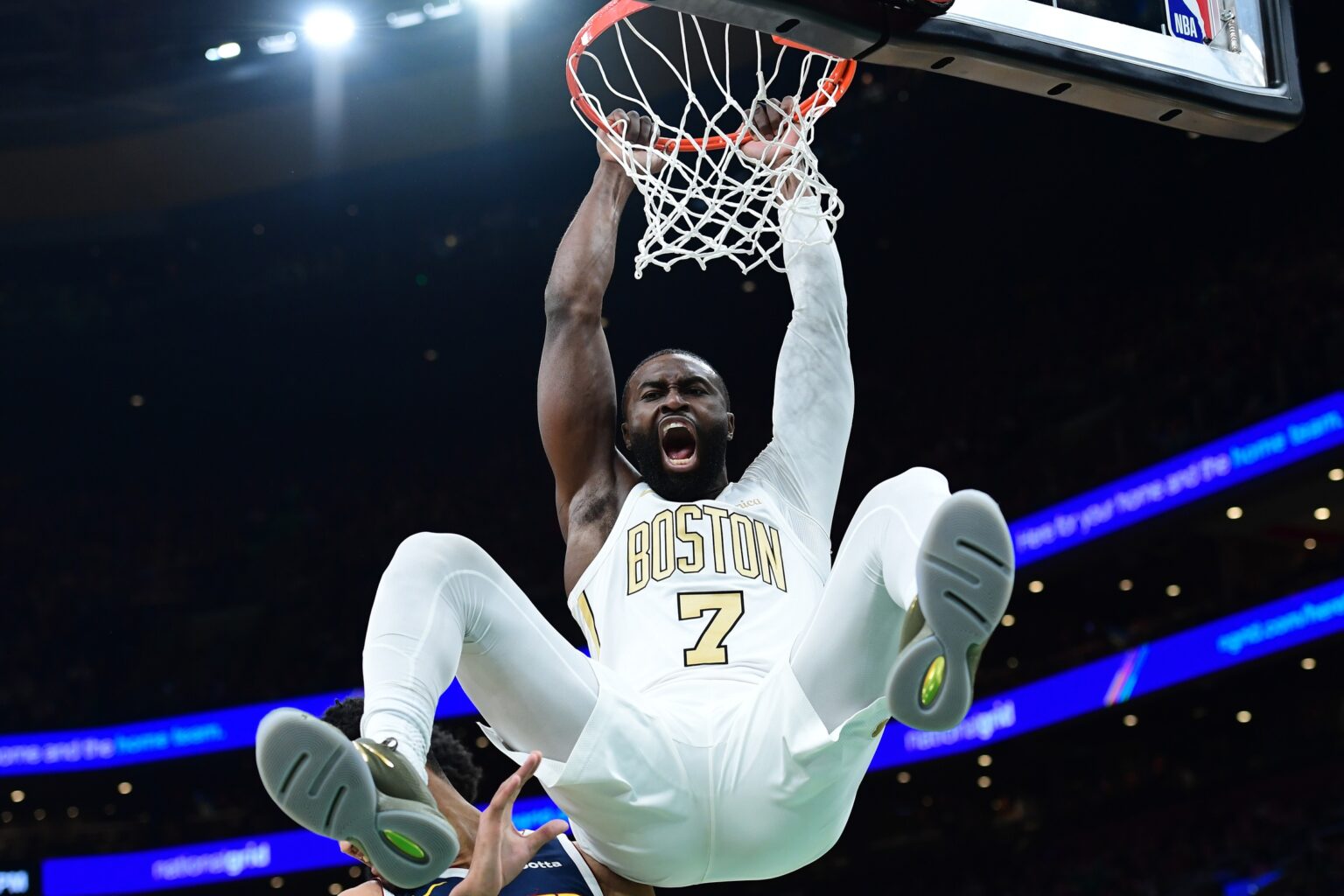
The Boston Celtics are 28-17 and sitting 2nd in the East, which is wild when you remember they’ve been doing this without Jayson Tatum for basically the whole season. They’ve had to live on structure, shot quality, and Jaylen Brown carrying the “top option” burden every night, but the results haven’t dipped the way most teams would if you removed their best player.
That’s why the deadline chatter around them is more targeted than dramatic. The main theme in recent reporting is that they’ve been sniffing around a real starting-caliber big, and one of the louder “linked” names has been Ivica Zubac, with Michael Scotto (HoopsHype) reporting the Celtics have shown interest.
So instead of doing fantasy fireworks, we’re going to keep this simple and make a straight deadline prediction: what the Celtics actually try to add, what they’re willing to pay, and why the most realistic outcome is a couple of practical upgrades, not a roster rewrite.
The Celtics Add A Top Inside Presence
The reporting thread you can’t ignore is that the Celtics have been sniffing around starting-caliber centers. That’s not fan-fiction, it’s been framed as a real deadline priority in multiple places, and it makes sense on the court.
The Celtics have survived with effort, spacing, and guard play, but playoff basketball always comes back to the same ugly question: can you get a stop at the rim without sending help, and can you survive the glass when the other team decides to punish you for being small?
This is where Nic Claxton becomes the cleanest “fits what you do” solution. He’s averaging 12.8 points, 7.5 rebounds, and 4.0 assists while shooting 58.4% from the field, and that assist number matters more than people realize.
The Celtics don’t need a post-up big who demands touches, they need a rim runner who can defend in space and keep the ball moving when teams load up on Brown. Claxton checks that box, because he can short-roll, make the next pass, and keep your spacing actions alive instead of killing them with a panic dribble.
Contract-wise, Claxton is expensive enough to be real, but not so expensive that it turns into a cap disaster. He’s making $25.4 million this season, and he’s under contract through 2027-28. That matters for the Celtics because this is not a pure rental season. If Tatum comes back late, or if this season is more about holding the fort until next year, you still want any “big move” to carry forward, not evaporate in July.
The Nets are 12-31, but that doesn’t automatically mean they’re running a fire sale. They could be in “asset collection” mode, willing to listen on deals involving contracts like Nic Claxton (and even Michael Porter Jr.) if the return meaningfully advances their long-term flexibility, not a team that has to dump players immediately.
On Claxton specifically, Brian Lewis (New York Post) reported that he has been unfazed by the trade chatter and views it as part of the business. Michael Scotto (HoopsHype) also added the Nets view Claxton as a part of their future, so they’re not exactly eager to move him.
So if the Celtics want Claxton, they have to make it worth it for the Nets with real draft compensation and/or clean flexibility, not just matching salary.
That’s where Anfernee Simons enters as the clean mechanism. He’s at 13.9 points, 2.5 rebounds, and 2.5 assists this season, and the volatility is the whole story. One week he looks like a pure bench flamethrower, the next week he’s quiet, then he pops for something ridiculous like the 39-point explosion that showed up against the Heat last week.
On an expiring $27.7 million contract, that profile is actually useful to the Nets. If they’re building around young guards and need adult offense to get through the season, Simons can do that. And if they don’t want to pay him in free agency, he’s a clean “cap reset” that ends on its own.
That’s why this specific structure is believable:
Boston Celtics Receive: Nic Claxton
Brooklyn Nets Receive: Anfernee Simons, 2027 first-round pick, 2031 first-round pick
From the Celtics’ side, the pitch is simple. You’re buying rim protection and playoff-proof mobility, and you’re doing it without gutting your wing rotation. The Celtics’ current big rotation is basically Neemias Queta as the only true interior body, plus Chris Boucher as a depth option.
Queta has genuinely turned into a real contributor, 10.2 points, 8.0 rebounds, and 1.3 assists while shooting 65.0% from the field, which is not a fluke stat line. But Queta as your “only” big is asking for trouble against the wrong matchup, and Boucher’s production this season has been minimal, 2.3 points and 2.3 rebounds on 31.8% shooting. If you’re trying to win four rounds, that’s thin.
The Celtics also get to keep the defensive identity that’s carried them without Tatum. Their team profile has still graded like a contender, with the 3rd best net rating in the league, while allowing the 3rd lowest points. Claxton is the kind of center who enhances that, because he lets you switch more actions, stay home on shooters, and stop “helping yourself into” open threes.
For the Nets, the argument is less about wanting Simons and more about the reality of timelines. At 12-30, you can justify holding Claxton, but you can also justify turning one big contract into two future firsts plus an expiring scorer who helps you function until the offseason.
And if there’s even a chance they decide to pivot harder into asset accumulation, taking picks in 2027 and 2031 is exactly how you build the kind of long-range flexibility that lets you pounce when the next star becomes available.
This is the type of move the Celtics actually make if they feel the market is soft. It’s not flashy, it’s not a headline-grabber like the Zubac chatter, but it’s more directly aligned with what wins playoff games. And the funniest part is that it would make the Celtics more dangerous even if Tatum never plays this season, because it reduces the number of possessions where they have to survive with perfect effort.
Replacing Simons With A Young Bench Scorer
If the Celtics move Simons in a center deal, they still need somebody who can manufacture points when the offense stalls. Not “nice ball movement,” not “good shots,” real creation.
Especially because Jaylen Brown is already doing enough for two people, averaging 29.8 points, 6.8 rebounds, and 4.9 assists on 48.4% shooting. The Celtics cannot ask him to also be the entire bench offense in the playoffs. That’s how you end up with the 2020s version of “great season, ran out of gas.”
This is where the Bones Hyland angle becomes fun, because it’s exactly the kind of small, practical move contenders make when they don’t want to blow up the roster. The Timberwolves are 27-18, sitting in the West playoff picture, and Hyland has become one of those “surprisingly important” bench pieces whose emergence might change how they approach the deadline.
Hyland’s raw numbers do not scream blockbuster, 6.4 points, 1.3 rebounds, and 2.5 assists. But the context is what matters: he’s been used as an energy shot-creator, he can spike a quarter with two deep threes and a nasty pull-up, and that’s exactly the profile the Celtics would want in a secondary unit if Simons is gone.
The Celtics don’t need Hyland to be consistent for 82 games, they need him to have two playoff games where he swings a non-Brown minute stretch and forces the opponent to call a timeout.
The contract detail is the real reason this is on the table. Hyland is on a one-year $2.4 million deal. That’s an expiring flyer. For a team like the Timberwolves, which already has other guard options and has been dealing with the awkward development situation around Rob Dillingham, the logic of cashing Hyland out for a wing body is not insane. It’s not that Hyland is bad; it’s that roster math forces choices.
So this is the kind of “clean swap” I’d expect Brad Stevens to sniff around:
Boston Celtics Receive: Bones Hyland
Minnesota Timberwolves Receive: Josh Minott
There’s a wrinkle here that actually makes it cleaner than it looks. Josh Minott has been out recently, but his season stat line is legitimately interesting for a cheap wing: 6.3 points, 4.0 rebounds, 1.1 assists, and 50.4% shooting. His contract is also small, $2.3 million. That’s the type of flyer contender teams love because it doesn’t restrict anything, and it still has developmental upside.
From the Timberwolves’ perspective, Minott as a “two-way wing swing” makes more sense than another small guard. Their roster is built around star power and size, and their weak spots tend to show up in the same places every year: wing depth, secondary defense, and staying athletic when the legs get tired. Minott is not a perfect player, but the archetype is helpful, and the cost is basically nothing.
From the Celtics’ perspective, Hyland gives you optionality. If he’s hot, you play him. If he’s getting hunted, you bench him. That’s it. And because he’s expiring, there’s no long-term commitment. You’re not trying to lock him into the future, you’re trying to find one more playable guy for the April rotation.
This is the type of move I’d bet on, because it’s the Celtics version of “improve without disrupting.” Small money, small risk, clear role.
Waiting Until The Offseason For A Splash
The Zubac noise is real, and it’s not the only big-man rumor attached to the Celtics. There’s been reporting tying the Celtics to multiple “bigger center” ideas, including Zubac and even the long-shot dream of Jaren Jackson Jr. That’s the part that gets fans excited because it feels like a real upgrade, not a rotation tweak.
But here’s the thing. The Celtics are already winning at a contender pace without Tatum. That is not supposed to happen. It’s the kind of season where you don’t interrupt the rhythm unless you are absolutely sure the move is a net positive. A big midseason trade is not just talent, it’s new defensive coverages, new communication habits, and new late-game roles. Teams blow series because of that stuff all the time.
And the Celtics’ roster actually has a clean logic right now. Brown is the engine. Simons has functioned as the variable bench scoring burst when needed. The defense has stayed connected enough to survive. If you trade for a bigger name, you risk creating a “who sacrifices what” problem, especially if Tatum has any chance of returning later in the year.
The cap and asset conversation is the other reason this leans offseason. If the Celtics are considering any type of cap relief move after parting with Kristaps Porzingis and Jrue Holiday last summer, it makes far more sense to wait until the summer, when you can structure it cleanly and when you actually know what Tatum’s availability looks like next season.
(And to be clear, I’m not saying they should move Derrick White next season, I’m saying if you’re making a large structural decision, the offseason is where it belongs.)
This is also where the Simons “expiring” detail becomes the center of the strategy. He is the one obvious piece that can change the deadline calculus because he’s a real salary slot that ends at the end of the season. That creates a decision tree:
If the Celtics believe they can re-sign him at a number they like, keeping him is fine. If they think he’s walking, or they don’t want the next deal, then he becomes the logical salary to flip into a longer-term piece, like Claxton in the framework above.
And if they don’t love any available big, then the smartest play might be to do nothing major, keep the group together, and treat this as a “hold the line” season until Tatum is truly back.
That’s why I’m not buying “fireworks” for the Celtics. Not because they can’t, but because they don’t have to. The team is already 2nd in the East, and there’s a real chance the best move is to protect the floor, not chase a higher ceiling at the cost of stability.
Final Thoughts
This deadline is not about the Celtics chasing another star. It’s about tightening the margins. They’ve been linked to bigger center options, and the Zubac talk is the type of rumor that will keep getting repeated until the deadline clock hits zero.
But the more realistic Celtics path is a two-step: add one legitimate interior presence if the price is right, then patch the bench scoring if moving Simons creates a hole. With the Clippers making a run for the Play-In, the Zubac talk already looks over.
If the Claxton path is available, that’s the one I’d push hardest, because it solves a playoff problem, it carries forward beyond this season, and it helps the Celtics win ugly. The Nets are not eager to move him, which means the Celtics would have to pay real picks, but that’s exactly why it would be worth doing.
And if the Celtics don’t land a big, I still don’t think that means they “failed.” The real story of this season is that they’re winning anyway, and they’ve built a functional identity without their best player. That kind of momentum is fragile.
Sometimes the sharpest move is the quiet one, and this feels like a deadline where the Celtics stay disciplined, avoid the shiny objects, and only strike if the deal cleanly fits what they already are.