The Detroit Pistons are in that rare “this is real” stage now, where the regular season stops being the story and the playoffs become the filter. They’ve stacked wins, built an identity, and now the only question is what kind of move turns them from a great team into a nightmare matchup.
The Minnesota Timberwolves are winning too, but their season still feels like it has a missing chapter. Some nights the offense looks smooth, other nights it turns into a slow, sticky grind where they’re hunting for a new counter. That’s usually when good teams start thinking less about talent and more about fit, pace, and who can solve a playoff possession.
The Brooklyn Nets sit on the other side of the timeline. When you’re not winning right now, the deadline becomes a choice: keep productive players and stay stuck, or flip value into picks and flexibility. That’s why this kind of three-team “who says no?” framework always shows up in NBA discourse, and Bill Simmons tossed around the basic idea of a multi-team shuffle like this, the kind where every team talks themselves into it because it hits a different need.
Mock Trade Idea
Pistons Receive: Michael Porter Jr., Donte DiVincenzo
Timberwolves Receive: Jaden Ivey
Nets Receive: Tobias Harris, 2026 first-round pick, 2026 first-round pick swap rights (Spurs hold rights to swap), 2032 first-round pick, 2026 second-round pick (via Hornets), 2027 second-round pick (via Nets or Mavericks)
Why This Makes Sense For The Pistons
This is the kind of “rich team move” that top seeds have to be willing to make if they actually want the Finals and not just a cute regular-season banner. The Pistons are 25-8 because their base is real, they defend, they have a star engine, and they don’t beat themselves. But the playoffs don’t care about vibes. They care about whether you can generate clean looks when the first action gets blown up, and whether opponents respect your shooting enough to stop packing the paint.
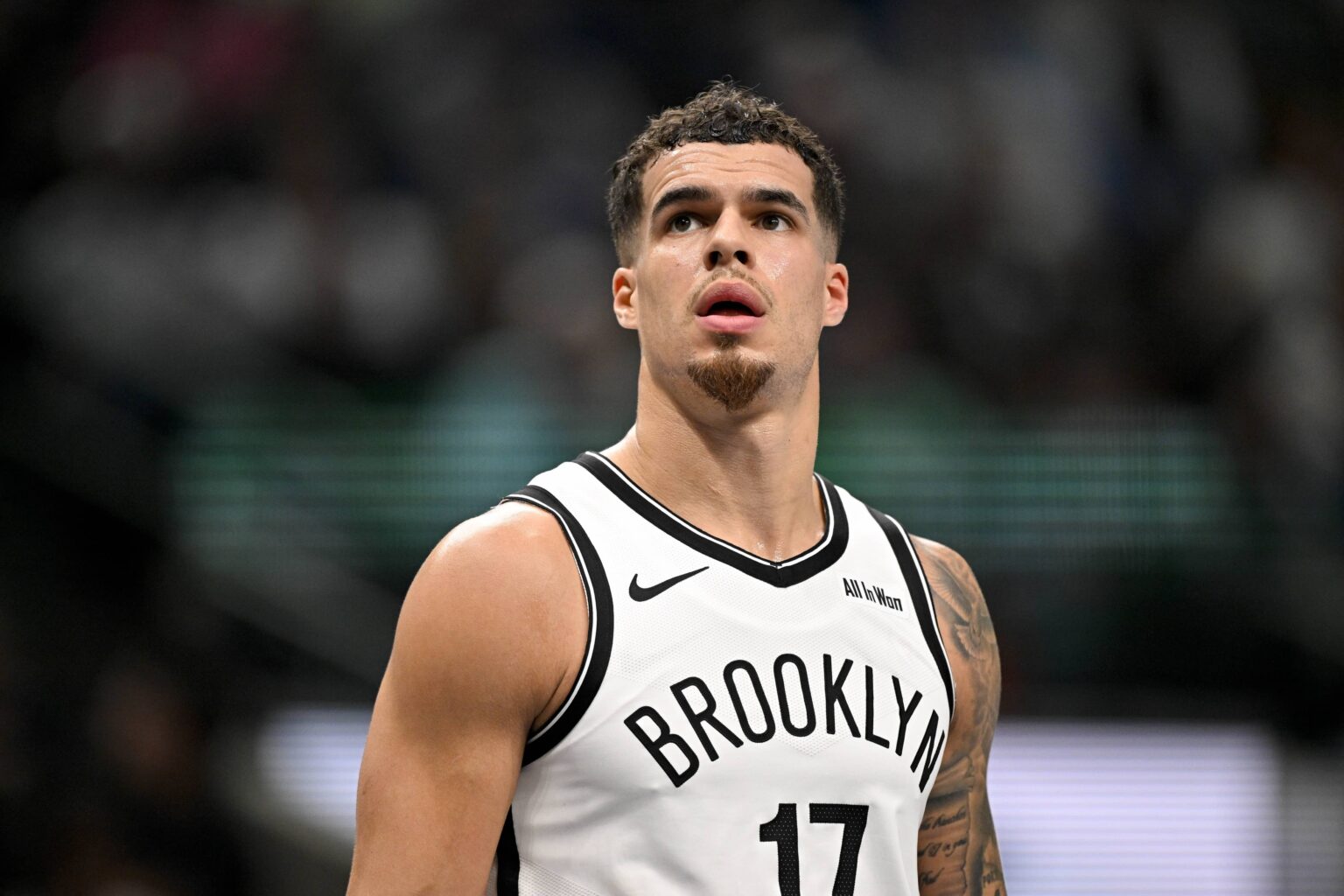
Michael Porter Jr. solves the hardest problem: wing scoring that scales. He’s not a “system shooter,” he’s a “your defense did everything right and I scored anyway” shooter. He’s putting up 25.7 points and 7.3 rebounds on a rebuilding Nets team where defenses load up on him nightly. Plug that exact shot profile next to Cade Cunningham, and suddenly the Pistons have two different styles of “pain.” Cade hurts you with pace control, manipulation, and late-clock creation. Porter hurts you by turning good contests into moral victories.
Then Donte DiVincenzo is the second piece that makes this feel like a contender trade and not a fantasy one. If you’re a top seed, you’re always hunting for guards who can defend up a position, move without the ball, and survive playoff scouting. DiVincenzo’s 13.5 points, 4.5 rebounds, and 4.0 assists don’t even capture how valuable he is as a connector. He’s the guy who keeps an offense from stalling when the stars get doubled, because he’ll instantly swing, relocate, and punish the late rotation.
The outgoing cost is the part Pistons fans will argue about. Jaden Ivey has tools, but his current reality is telling: he’s at 8.4 points, 2.1 rebounds, 1.8 assists this season, and the “future star” conversation has cooled into “useful piece who needs a clear lane.” If the Pistons truly believe this is the timeline, moving Ivey for a more playoff-relevant package is exactly the cold-blooded decision contenders make.
And Tobias Harris, while still productive, is also the definition of “replaceable salary” on a contender. He’s at 13.4 points, 4.6 rebounds, 2.5 assists with solid efficiency. That’s helpful, but it’s not the type of player who swings a series. Porter can. DiVincenzo can swing a quarter. That’s the difference between “best team in January” and “still standing in June.”
Why The Timberwolves Do This
The Timberwolves’ problem is subtle. They’re good. They’re winning. They have serious talent. But when games get tight, they can drift into being a little too predictable. The offense can bog down into tough pull-ups and late-clock bailouts, and that’s exactly where an athletic guard who can knife into the paint changes the geometry.
That’s Jaden Ivey’s entire selling point. Not as a primary star, but as a speed weapon. He forces defenses to turn their heads because he’s one of those guards who can go from standing still to at-the-rim in two dribbles. If you already have real scoring gravity on the floor, that downhill pressure becomes way more valuable than it looks on a box score.
And the Timberwolves’ current season arc screams “we need another driver who doesn’t need the offense built around him.” They’ve been in high-leverage games, and the conversation around them keeps circling back to consistency, urgency, and having enough counters when the first option gets taken away. Ivey gives them a different tempo button. He can change the pace of a game in five minutes, which matters in a playoff series where opponents start getting comfortable.
The other angle is role clarity. In Detroit, Ivey is stuck between identities: he’s not the primary guy because Cade exists, and he’s not always the perfect off-ball piece either. In Minnesota, he can be sold a cleaner job. Attack gaps, pressure the rim, run in transition, and be the chaos agent when the offense turns stagnant. It’s the “sixth starter” archetype that actually wins in the postseason.
And if the Timberwolves are giving up a veteran like DiVincenzo in this framework, that’s the gamble: you’re trading some reliability for a higher-variance punch. DiVincenzo is the guy you trust to make the right play. Ivey is the guy who can break the defense before it even sets. Depending on the matchup, that might be exactly the missing ingredient.
The Nets Gain A Massive Haul
This is the simplest part. The Nets are 10-20. They’re not one move away. They’re multiple seasons away unless they stack picks and land a true franchise cornerstone. And when you’re in that stage, the smartest thing you can do is convert “good player on a big contract” into “a pile of controllable shots at the future.”
Michael Porter Jr. is the exact type of player rebuilding teams wrestle with. On one hand, he’s a legit lead scorer right now, and he’s producing like a borderline superstar. On the other hand, his value might never be higher than it is when he’s putting up career numbers, and he’s already being tied to deadline buzz with teams looking for another scoring star. That’s when you sell.
Taking on Tobias Harris in the deal is basically the tax the Nets pay to maximize the pick return. He’s still a useful veteran, but for a rebuilding roster, his main purpose is to make the math work and keep the locker room functional while the young guys play. And if he’s truly “OUT” right now, that only makes the Nets’ incentive stronger to treat him as a temporary salary instead of a core piece.
The real win is the draft capital. Two first-rounders in the mix, swap mechanics, and extra seconds are exactly the kind of volume that lets a rebuild breathe. It gives the Nets multiple bites at the apple, and it gives them ammo to move up if they find “their guy.” If you’re 10-20, you don’t need to win the Porter Jr. trade in a vacuum. You need to win the next three years.
And the reason this concept feels believable is because the Porter Jr.’s conversation has already shifted into “what contender would actually pay,” not “should the Nets move him.” When that’s the vibe around a player, the rebuild team usually listens.