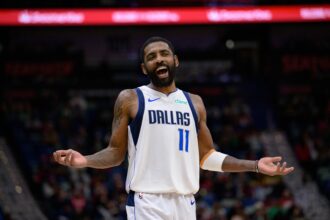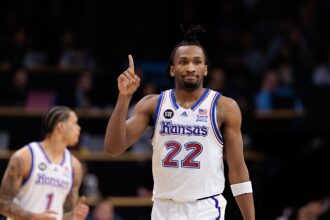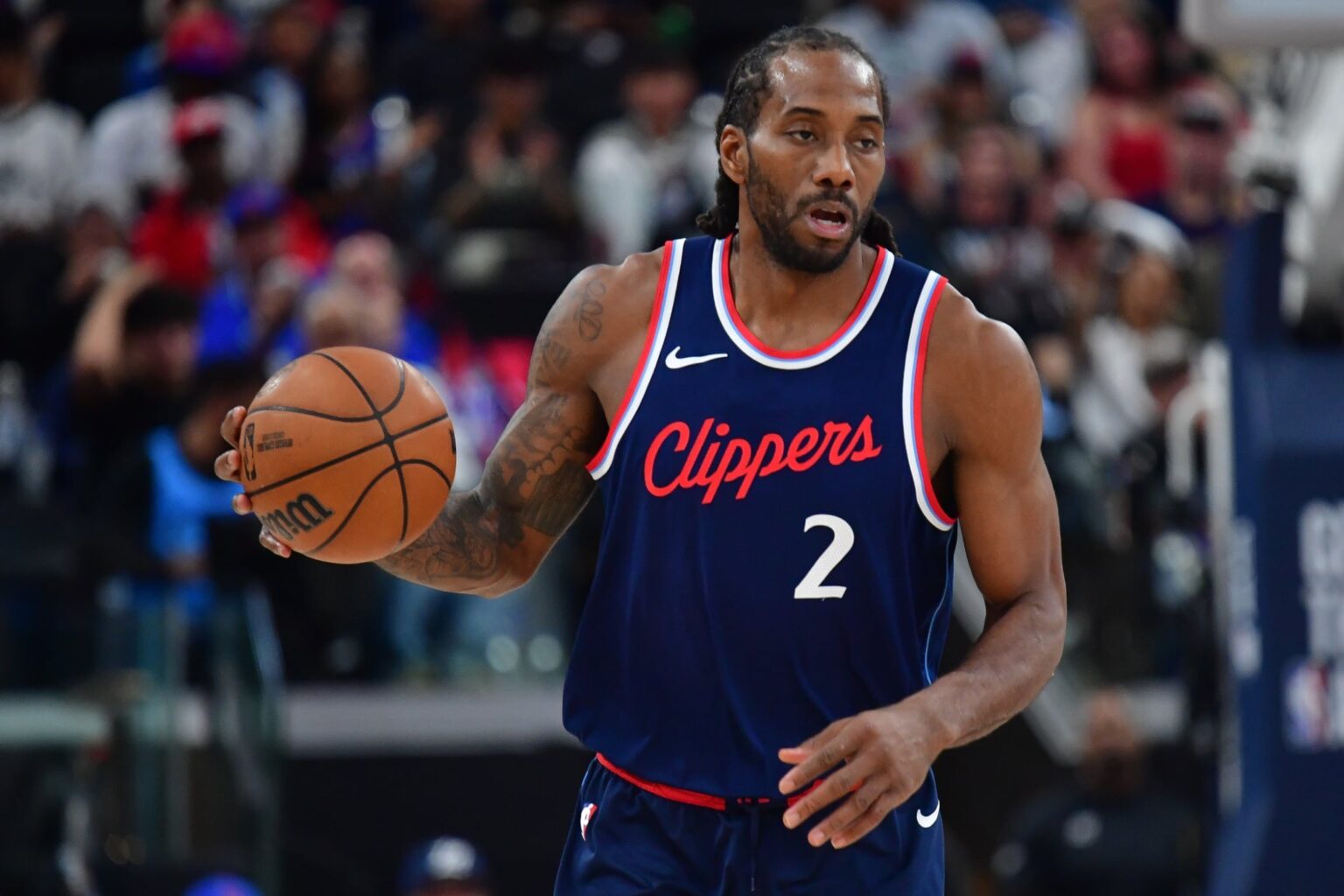
The Clippers now have a rare trade position after landing the No. 5 pick through the Pacers’ protected selection. They are not at the bottom of the league, but they are close enough to the top of the draft to build a serious move. That changes the whole offseason. Staying at No. 5 would give them a strong prospect. Using that pick with veteran salary could give them a reset point.
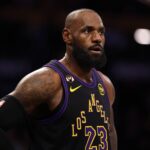
Kawhi Leonard is the center of the idea. Marc Stein reported that the Warriors made a serious run at Leonard before the trade deadline and were expected to look into the situation again in the offseason. That report gives this framework a real base. It is not only a superstar name attached to Stephen Curry. It matches the Warriors’ short-term pressure and the Clippers’ possible need to choose a new direction.
The Wizards are the third team because they own the No. 1 pick after winning the 2026 NBA Draft Lottery. They finished 17-65, had the worst record in the NBA, and now hold their first top pick since the John Wall draft in 2010. That pick can become AJ Dybantsa, Darryn Peterson, Cameron Boozer, or another top prospect. It can also become the most valuable trade asset in the league for one night.
Here is a three-team trade idea that moves Leonard to the Warriors, gives the Clippers the No. 1 pick, and gives the Wizards a massive first-round pick package.
The Potential Blockbuster Trade
Golden State Warriors Receive: Kawhi Leonard, Bradley Beal
Washington Wizards Receive: No. 5 pick (via Clippers), No. 11 pick (via Warriors), 2029 first-round pick (via Pacers), 2029 first-round pick (via Warriors)
Los Angeles Clippers Receive: No. 1 pick (via Wizards), Jimmy Butler, Brandin Podziemski
The Financial Structure Behind The Deal
Using 2026-27 salaries, the Warriors send out Jimmy Butler at $56.8 million and Podziemski at $5.7 million. That is around $62.5 million in outgoing salary. They receive Kawhi Leonard at $50.3 million and Bradley Beal at around $5.6 million if he exercises his 2026-27 player option. That is around $55.9 million in incoming salary. The Warriors take back less salary than they send out, which makes their side of the structure much easier. Butler is in the final season of his two-year, $111.0 million deal, while Leonard is entering the final year of his three-year, $149.5 million extension.
The Clippers send out Leonard and Beal for around $55.9 million. They receive Butler and Podziemski for around $62.5 million. That means the Clippers are taking back roughly $6.6 million more than they send out. Under normal over-the-cap matching rules, that can be possible, but the apron position becomes the key detail. If the Clippers are above the first apron, they cannot take back more salary than they send out. If they are above the second apron, aggregation limits create another problem. In this case, the Clippers are projected to have cap space to absorb that extra money in the deal.
The Wizards do not take back salary in this framework. That is the main reason the structure is useful for them. They turn the No. 1 pick into the No. 5 pick, the No. 11 pick, and two 2029 first-round picks while keeping their cap sheet clean. For a 17-win team, that is the only financial argument strong enough to consider moving down from the top of the draft.
Why The Warriors Push All-In For Kawhi Leonard
The Warriors do this because Kawhi Leonard gives them a higher-end postseason ceiling than Jimmy Butler at this stage. That is the core of the move. It is not only about adding another scorer. It is about changing the quality of the top option next to Curry.
Leonard averaged 27.9 points, 6.4 rebounds, 3.6 assists, 1.9 steals, and 0.4 blocks in 65 games this season. He shot 50.5% from the field, 38.7% from three, and 89.2% from the line, with a 62.9% true shooting mark. That is elite production. It is also a much larger scoring role than Butler gave the Warriors this season.
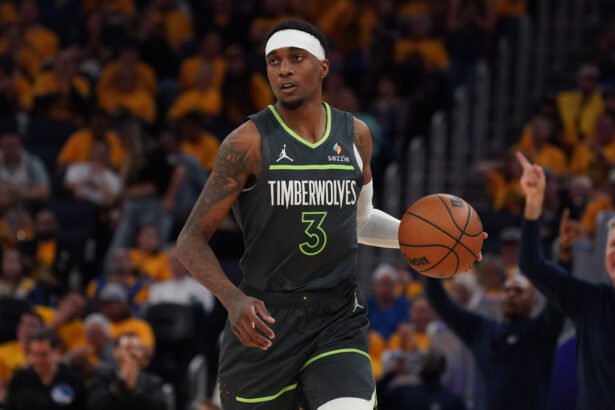
Jimmy Butler put up 20.0 points, 5.6 rebounds, 4.9 assists, 1.4 steals, and 0.2 blocks in 38 games. He shot 51.9% from the field, 37.6% from three, and 86.4% from the line. His efficiency was excellent, but the ACL tear that derailed his season made him an instant movable salary. That is not a small difference for a team trying to win with Curry near the end of his prime.
This deal is also a salary bet. Butler is owed $56.8 million in 2026-27. Leonard is owed $50.3 million in 2026-27. The Warriors would move a younger player in Podziemski and two first-round assets, but they would also turn Butler’s contract into Leonard and Beal. That gives them more shot creation and slightly lower top-end salary next season.
The Beal part should not be oversold. Bradley Beal played only six games for the Clippers and averaged 8.2 points, 0.8 rebounds, and 1.7 assists on 37.5% shooting. He is no longer the $50 million player he was with the Suns. That is actually why he becomes interesting here. After his buyout, he signed a two-year, $11.0 million deal with the Clippers. At that salary, Beal is not required to be a star. He is a bench creator, a spot starter, and a lower-cost offensive option coming off a season-ending hip injury.
The cost is real. Brandin Podziemski averaged 13.8 points, 5.1 rebounds, and 3.7 assists while shooting 45.5% from the field and 37.1% from three in 82 games. He is 23, cheap, and controlled through 2026-27. Giving him up with the No. 11 pick and a 2029 first-round pick is painful. It should be painful. Leonard is not available in a blockbuster trade without serious value going out.
The Warriors finished 37-45 and stayed at No. 11 in the lottery. Their position is direct. They can use the No. 11 pick, keep Podziemski, and extend the timeline. Or they can accept that Curry’s window is not long and trade future value for one more high-level playoff roster. This deal chooses the second path.
There is risk. Leonard is 35 next season, has a long injury history, and carries a $50.3 million salary that’s set to expire. Beal’s body has also been a concern for years. But the Warriors would not be making this move for regular-season stability. They would be making it because Leonard at his best gives them a true playoff answer against elite wings, switching defenses, and late-clock possessions.
The logic is harsh, but clear. Butler is still very good. Leonard is still closer to a No. 1 postseason option.
Why The No. 1 Pick Changes Everything For The Clippers
The Clippers do this only if they accept that a controlled reset is better than extending the same cycle. That is the hard part. Leonard just had a major scoring season. Trading him after a 27.9-point year would look aggressive. It would also be defensible.
The Clippers finished 42-40. They were competitive, but not close to title certainty. Leonard carried a huge part of the season, and the roster still landed in the play-in zone. That is the warning. If a team needs a 35-year-old Leonard to play at near-career-best levels only to finish slightly above .500, the long-term outlook is weak.
This deal gives the Clippers the No. 1 pick, Podziemski, and Butler. That is not a full teardown. It is a pivot. They would move Leonard, Beal, the No. 5 pick, and the 2029 Pacers first-round pick, but they would come out with control of the top of the draft. That is the main prize.
The No. 1 pick gives them access to the best prospect in the class. If the target is AJ Dybantsa, the idea is simple. They get a younger primary wing to build around. Dybantsa averaged 25.5 points, 6.8 rebounds, and 3.7 assists at BYU while shooting 51.0% from the field. He gives the Clippers a star-development path instead of another short veteran window.
Podziemski is also important. He is not only a throw-in. He is a productive young guard with real NBA minutes, a low salary, and extension control. His 13.8 points, 5.1 rebounds, and 3.7 assists give the Clippers an immediate rotation piece who can play next to a young wing. He rebounds well for his position, moves the ball, and does not require high usage to function.
Butler’s role is different. He is not the future of the Clippers. His value is short-term structure and contract timing. He would make $56.8 million in 2026-27, then come off the books. That gives the Clippers a veteran face for one year, an expiring salary that can be moved again, and a way to avoid dropping completely to the bottom while the No. 1 pick develops.
This is why the trade is more practical than a simple Leonard-for-picks idea. The Clippers get the top pick without taking on long-term bad money. Butler is expensive, but short. Podziemski is cheap. The No. 1 pick is the foundation. That combination creates a clearer plan than keeping Leonard until his value falls.
The biggest problem is emotional and political. Leonard has been the franchise’s defining player in this era. Trading him would be an admission that the build did not reach its goal. But front offices are not paid to protect old plans. They are paid to know when the next plan has to start.
Why The Wizards Turn No. 1 Into A Full Rotation Package
The No. 1 pick is the most valuable asset in this trade, but the Wizards’ situation is not as simple as taking the best prospect and waiting three years. This is not a normal blank-slate rebuild. With Trae Young and Anthony Davis already on the roster, this team has expensive star power, real name value, and immediate pressure to become more competitive.
That changes the logic of the pick. The Wizards do not only need upside. They need playable depth. They need cheap rotation contracts. They need multiple young players who can help stabilize the roster around two high-salary stars with availability concerns.
Anthony Davis is set to make $58.5 million in 2026-27, while Young has a $49.0 million player option. That puts around $107.4 million into two players before the Wizards address the rest of the roster. That kind of salary structure makes it difficult to chase another major veteran without creating a top-heavy team. It also makes free agency less reliable as a path to fixing the rotation.
Young averaged 17.9 points and 8.0 assists in only 15 games this season. Davis averaged 20.4 points, 11.1 rebounds, 2.8 assists, 1.1 steals, and 1.7 blocks in 20 games. The talent is not the issue. The issue is how much support the roster needs around them, and how hard it becomes to buy that support with veteran salaries.
That is why this package has real logic for the Wizards. They would turn the No. 1 pick into the No. 5 pick, the No. 11 pick, the 2029 Pacers first-round pick, and the 2029 Warriors first-round pick. They would still remain in the top five of the 2026 NBA Draft, while adding another lottery pick in the same class and two future first-round picks.
The No. 5 pick keeps them close to the top talent tier. They would still have access to a major prospect, whether that is a wing, guard, or frontcourt piece who fits next to Young and Davis. The No. 11 pick gives them another young player on a rookie-scale contract, and that second lottery contract is central to the value of the deal. For a team trying to become competitive without much financial flexibility, one cheap contributor is useful. Two are much more important.
The 2026 class also makes this kind of move easier to defend. If the Wizards believe the gap between No. 1 and the next group is not massive, trading down becomes a practical team-building decision. The move would not be about rejecting a top prospect. It would be about turning one asset into several pieces that better match the roster’s needs.
The future picks add another layer. The 2029 Warriors first-round pick has serious long-term value because of timing. Stephen Curry will be 41 during the 2029-30 season, which makes that pick more uncertain than a normal distant first-round selection. The 2029 Pacers first-round pick gives the Wizards another asset they can either keep or use in a later trade.
There is still a major risk. If AJ Dybantsa becomes a franchise player, the Wizards would be judged harshly for moving out of No. 1. That is the cost of passing on the top of the draft. But Washington’s roster construction makes the discussion more complicated. A team with Young and Davis does not need only one more name. It needs a complete rotation.
For that reason, this deal would be a bet on draft depth, cost control, and volume. The Wizards would not be trading No. 1 because the pick lacks value. They would be trading it because No. 5, No. 11, and two future first-round picks may give them a better way to build a real playoff-level roster around two expensive stars.
Final Verdict
This framework would depend on one uncomfortable question for each team.
For the Warriors, the question is whether keeping the No. 11 pick, Podziemski, and a distant first-round pick is more valuable than upgrading their top-end playoff talent. With Curry still playing at a high level, the answer is probably no. Their path is not patience. Their path is one more serious push before the roster has to fully change.
For the Clippers, the deal is about timing. Trading Leonard after a strong individual season would be difficult, but waiting too long could be worse. The No. 1 pick gives them a direct reset point, not a slow rebuild with unclear upside. Adding Podziemski also gives them a young rotation guard who can help immediately and still fit the next version of the roster.
For the Wizards, the decision is the most complicated. Giving up the No. 1 pick is always dangerous, especially in a class with high-end talent. But their roster construction is unusual. Young and Davis already take up major salary, and the team needs depth, shooting, defense, and younger legs around them. Two lottery picks and two future first-round picks give them more ways to build a real rotation than one prospect alone.
This trade would not be safe. It would be expensive for the Warriors, emotionally difficult for the Clippers, and risky for the Wizards. But it has a clear basketball logic. Each team would be choosing a direction instead of staying in the middle.
The Warriors would choose urgency.
The Clippers would choose a new timeline.
The Wizards would choose volume, cost control, and roster balance.
That is why the deal is extreme, but not empty.