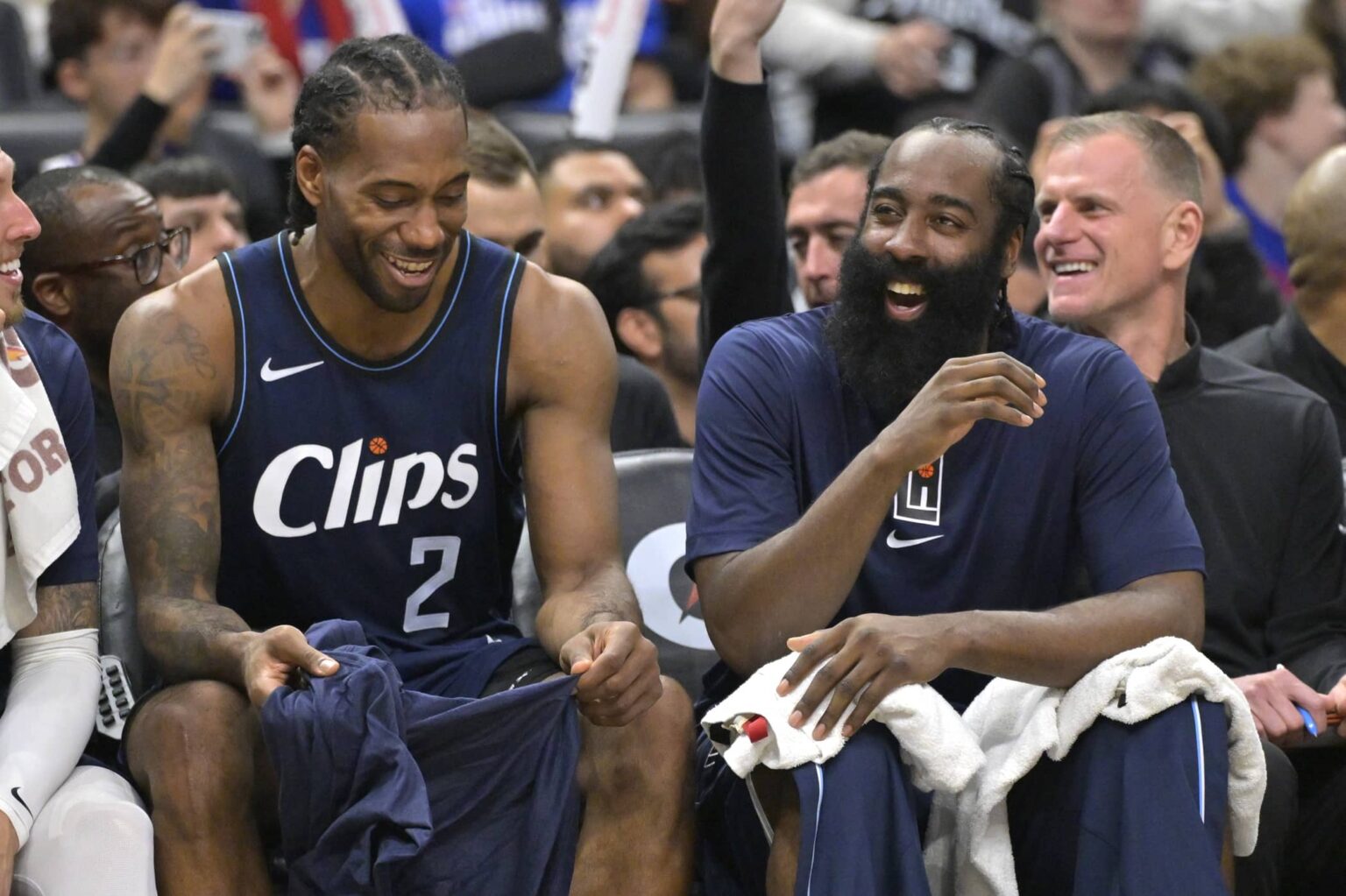
The Clippers are 21-24, sitting 10th in the West, and the funniest part is how this season has felt like two completely different teams wearing the same jerseys.
They opened with a brutal 6-21 hole, the kind of start that screams “sell everything that isn’t nailed down.” Then the switch flipped. Over their last 19 games, they’ve won 15 of them, and suddenly this isn’t a rescue mission anymore, it’s a deadline opportunity.
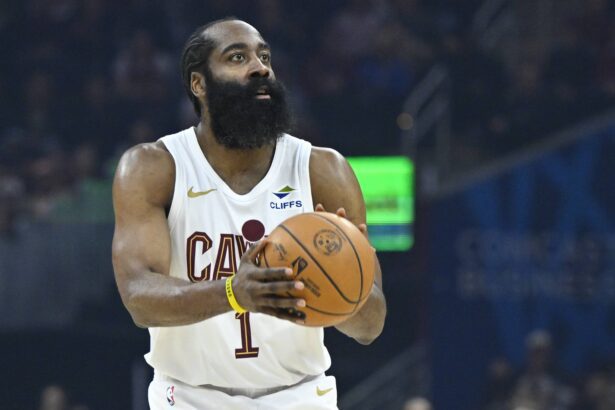
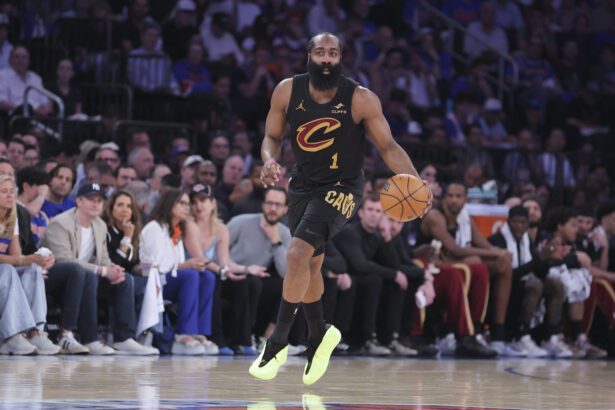
And the stars have been playing like stars. Kawhi Leonard is putting up 28.1 points, 6.2 rebounds, 3.4 assists with monster two-way impact. James Harden is right there with 25.6 points, 8.1 assists, 4.9 rebounds in a workload-heavy role that’s basically been the engine. Meanwhile, Ivica Zubac has been a walking double-double at 14.8 points, 11.1 rebounds, 2.3 assists, finishing everything in sight, and he’s even sitting at 60.3% from the field.
So yeah, the vibe has changed. A few weeks ago, they looked like sellers. Now they look like a team that can be annoying in a Play-In, and even scarier if they climb into the top eight. That’s why the deadline matters, not because they need a “save the franchise” swing, but because one or two clean upgrades can take a good story and turn it into a real problem.
And that’s exactly what we’re doing here: predicting the moves the Clippers make before the trade deadline, based on the smoke that’s already out there, the roster math, and what this team actually needs to survive April basketball.
Ivica Zubac Stays Put Amid All The Celtics Rumors
Michael Scotto of HoopsHype reported on Tuesday, January 6, that the Celtics have “shown interest” in trading for Ivica Zubac, with the Pacers also mentioned as another East team that’s checked in.
The logic is obvious. The Celtics are always hunting for playoff-proof size, and Zubac has quietly turned into one of the most valuable “not-a-star-but-kills-you” bigs in the league. He’s not just rebounding and finishing dump-offs, he’s been legitimately productive this season at 14.8 points, 11.1 rebounds, 2.3 assists, on 60.3% shooting. That’s not “role player center,” that’s borderline All-Star-level output for a team that actually uses a traditional five.
And the contract makes him even more attractive. Zubac is under a three-year, $58.6 million structure across 2025-26 through 2027-28. That’s exactly the type of number teams love at the deadline: big enough to matter, small enough to move, and stable enough to justify paying real assets.
The rumors themselves have had real reporting fuel, too. Zubac has been mentioned in Celtics center-upgrade conversations in the broader rumor cycle, with multiple rumor roundups and trade-target pieces floating the idea of them sniffing around big-man help. That’s not the same as “Celtics are about to offer the farm,” but it’s enough to keep his name in the mix.
Here’s the thing, though. From the Clippers’ side, it makes almost no sense now.
If they were still sitting in 14th and dead in the water, you can talk yourself into selling high. But the entire reason the Clippers have escaped the early-season grave is because they’ve finally found a functional identity again, and Zubac is a huge part of that. You don’t trade away your only reliable interior anchor while you’re actively stacking wins and clawing into the Play-In picture. That’s how you go from “dangerous” to “done.”
There’s also the simple basketball reality: in a playoff setting, you need an adult at center. You need someone who can rebound, punish small lineups, set real screens, and give you a stable defensive base. Zubac is all of that. And even if you want to talk about “small-ball closing lineups,” you still need the 30 minutes where you’re not trying to play cute.
So this is the prediction: the Zubac rumors stay rumors. The calls probably happen, because calls always happen, but the Clippers don’t budge. Zubac stays put, because trading him now would be the kind of self-inflicted wound that kills all the momentum they just built.
Adding Extra Pieces To The Backcourt
This is where the deadline gets real.
The Clippers have stars, and they have a system that’s finally stabilized, but their roster still screams for two things: one more guard who can carry offense when Harden sits, and one more perimeter defender who can actually make life miserable for elite creators.
That’s why the Coby White angle keeps popping up, and why I think the Clippers go for it.
White is exactly the kind of “mid-tier star” that changes a team’s day-to-day life. He’s averaging 18.8 points, 3.5 rebounds, 4.7 assists, shooting 45.1% from the field and 36.3% from three this season. That’s real production, not empty-calorie stuff, and it fits the Clippers perfectly because he can score without being spoon-fed, and he can run offense without hijacking possessions.
There’s also actual smoke tying him to a trade. The Clippers are a team to watch for White, and reports have tied the Bulls with fielding calls. That’s not “random trade machine talk,” that’s at least a real breadcrumb pointing toward interest.
Now add the second piece: Isaac Okoro.
Okoro isn’t a headline name, but he’s a playoff tool. He’s averaging 8.5 points, 2.8 rebounds, 1.4 assists this season, which is not going to make anybody faint. But if you’ve watched the Clippers in big games, you know the problem: too many possessions where they’re asking their stars to do everything, and too many matchups where they need one more tough, switchable perimeter body to soak up difficult assignments.
Okoro is that. He’s the “I’ll pick up full court, I’ll chase, I’ll switch, I’ll make your life annoying” guy. And that matters when your playoff path runs through a conference full of high-level guards.
So here’s the predicted blockbuster framework:
Los Angeles Clippers Receive: Coby White, Isaac Okoro
Chicago Bulls Receive: Bogdan Bogdanovic, Bradley Beal, Kobe Brown, Chris Paul, 2026 second-round pick (via Grizzlies), 2030 first-round pick, 2031 second-round pick
This is the part where people scream, “that’s a lot,” and yeah, it is. But the Clippers are not shopping in the bargain bin anymore. They’re trying to turn a Play-In fight into a real seed climb, and that costs something.
Also, the Clippers’ side of this trade is doing two things at once: upgrading talent and cleaning the books.
Let’s not dance around the Chris Paul piece, because this isn’t a “limited role” situation anymore. The Clippers sent Paul home in early December in a stunning separation, with ESPN reporting the team told him he was no longer with them while they explored what came next.
From a deadline standpoint, moving that slot is about cleaning the entire situation, not chasing a marginal on-court upgrade. It clears the noise, it clears the roster spot, and it lets the Clippers fully pivot into the version of this team that’s actually winning games now.
Then there’s Bradley Beal, who is even simpler. Beal suffered a left hip fracture and is out for the season, and he was already putting up career-low production at 8.2 points in a tiny sample. If you’re trying to win games in January and February, a dead roster spot matters. If you’re trying to win a Play-In game, it matters even more.
So in this framework, the Bulls take on the outgoing money and get the real prize: draft capital, including a first. The Clippers get the actual basketball value: White’s creation, Okoro’s defense, and a cleaner backcourt hierarchy.
On-court, this makes the Clippers way more functional.
You can stagger Harden and White so the offense doesn’t fall off a cliff when Harden sits. White can run second units, attack in transition, and punish teams that load up on Kawhi. Harden gets to pick his spots more, instead of being asked to play 38 minutes of “please save us” every night.
And Okoro is the kind of defender who lets the Clippers be more aggressive. You can throw him at the first option, let Kawhi roam more, and save your stars from doing the dirty work every single possession.
This is the “deadline move that changes your ceiling” prediction. Not because White is some top-10 guy, but because he plugs a real hole in a way that makes sense immediately.
One More Shooter And Backup Big Man
Once you make the “guard upgrade” swing, the rest of the deadline becomes about lineup insulation.
The Clippers have been winning, but you still feel the roster stress points when the game slows down. They need one more shooter who actually scares defenses, and they need a backup big who can play real minutes without the entire structure collapsing.
That’s why I like this smaller, cleaner follow-up deal:
Clippers Receive: Buddy Hield, Trayce Jackson-Davis
Warriors Receive: Brook Lopez, Kobe Brown, 2026 second-round pick (BKN swap rights)
Buddy Hield’s season line is modest: 7.9 points, 2.4 rebounds, 1.4 assists, and he’s only at 34.8% from three in that role. But the whole point with Hield is not “look at the raw averages,” it’s what defenses think he is. Even when his shot is running cold, teams still treat him like a microwave. They still stay attached. They still hesitate to help. And that gravity matters when your offense is built around stars who want space to operate.
Then there’s Trayce Jackson-Davis, who is exactly what the Clippers need behind Zubac: energy, rim protection bursts, and someone who can survive real minutes without turning the paint into a layup line.
His season averages sit at 4.2 points, 3.2 rebounds, 0.9 assists, with 0.6 blocks in limited minutes. But again, this is a role buy. He’d be a short-burst, high-energy center whose value is sprinting, defending, blocking shots, and changing the vibe. That’s exactly what you want as a backup big in the playoffs: don’t try to be a star, just give me six good minutes at a time.
Financially, it’s clean too. Hield earns $9.2 million this season, while Jackson-Davis sits at $2.2 million. And on the other side, Brook Lopez is on the Clippers’ books at $8.75 million.
Now, does it feel weird to move Lopez? A little. But look at the production: Lopez has averaged 6.3 points and 2.6 rebounds in a limited role this season. He still blocks shots, he still has stretch gravity, but the Clippers can replace that specific function more cheaply, and they can use the roster spot on a younger, more mobile backup who matches the pace they want to play.
This is also where Kobe Brown becomes the grease piece. He’s at 2.8 points and 1.7 rebounds in a small role. If including him helps close the deal, you do it, because the Clippers are trying to win now.
So the logic is simple:
The Warriors get a veteran big in Lopez, a young flyer in Brown, and a second-round sweetener. The Clippers get a shooter who bends spacing, and a backup big who can actually move.
And the Clippers’ offense gets cleaner instantly. Hield running around off-ball next to Harden is annoying to guard. Hield next to Kawhi is even worse, because you can’t load up the same way. It’s not about Hield becoming a star, it’s about defenders not being allowed to cheat.
Retool To Fight For The Playoffs
If the Clippers pull off these two deals, the roster stops looking like a fun story and starts looking like a real playoff headache.
You’re basically building a rotation that can win in multiple ways.
The core stays the same: Kawhi is still your two-way demon, Harden is still the engine, and Zubac is still the interior foundation. And that foundation has been strong enough to drag them from a dead season into the mix.
But now you’re adding layers.
Coby White becomes the other guard that fixes the biggest problem the Clippers have had all year: what happens when Harden sits, or when teams trap Harden and dare somebody else to beat them. White can create. He can score. He can keep pace. And his 18.8 points and 4.7 assists profile is exactly the kind of production that plays in a playoff setting when you’re not asking him to be “the guy,” you’re asking him to be “the second punch.”
Okoro becomes the guy you throw at the other team’s most annoying guard so your stars don’t have to spend 40 minutes fighting through screens. His box score isn’t sexy, but the defensive job matters more than the points.
Hield becomes the spacing weapon. Even in a down year statistically, defenses still treat him like a fire alarm, and that’s all the Clippers need.
And Trayce Jackson-Davis becomes the backup big who can survive the non-Zubac minutes with energy, mobility, and rim protection bursts.
So the revamped rotation starts looking like this, in real basketball terms:
Harden and White split the creation duties and can stagger all game. Kawhi stays the closer and the matchup-breaker. Zubac stays the anchor. Okoro becomes the defensive plug-and-play piece you bring in when the opponent’s guard starts cooking.
Hield becomes the movement shooter that keeps the floor stretched. Jackson-Davis becomes the backup big who sprints, contests, and keeps the energy up.
Most importantly, the Clippers stop being fragile.
Right now, they’re winning, but you can still see the thin margins. One cold shooting night, one bad bench stretch, one matchup where the perimeter defense gets stressed, and the whole thing can wobble.
These moves make them sturdier. They raise the floor, and they raise the ceiling.
And here’s my actual take: if the Clippers are serious about jumping from “Play-In team” to “nobody wants to see them,” this is the type of deadline they need. Keep Zubac, because you don’t trade your backbone mid-run. Then go get one more real creator and one more real defender, and add one more shooter plus a backup big so the rotation doesn’t die the second you go to the bench.
That’s how you climb into the top eight, and that’s how you turn a chaotic season into a playoff matchup nobody’s excited about.