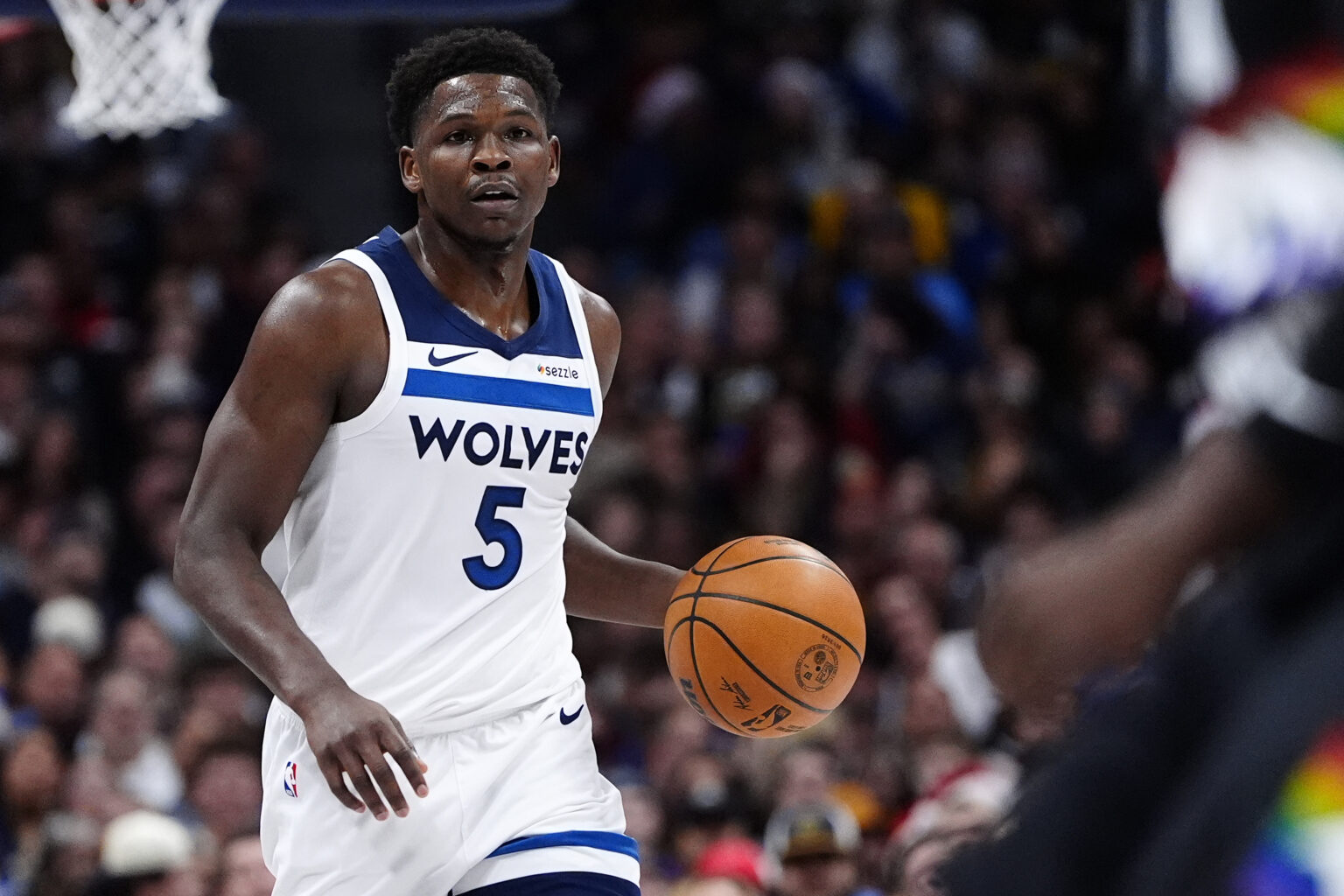
The Minnesota Timberwolves are certainly a talented team as they will likely make the playoffs without a concern about the play-in tournament. However, with Anthony Edwards in the backcourt, they need to give him a new starting point guard to elevate the team to a higher level.
The T’Wolves occupy the 5th spot in the West, but most would place them a step behind elite contenders such as the Oklahoma City Thunder and Denver Nuggets.
Minnesota is currently making do with 38-year-old Mike Conley and natural shooting guard Donte DiVincenzo occupying that position, but that won’t be enough to seriously contend for a title in the stacked Western Conference. That’s why we propose four point guards the Timberwolves should target this season.
It won’t be easy to get a deal done, especially since Julius Randle, Rudy Gobert, and Naz Reid will likely be untouchable, but with the right negotiation, anything is possible. Let’s get into the names.
1. Coby White
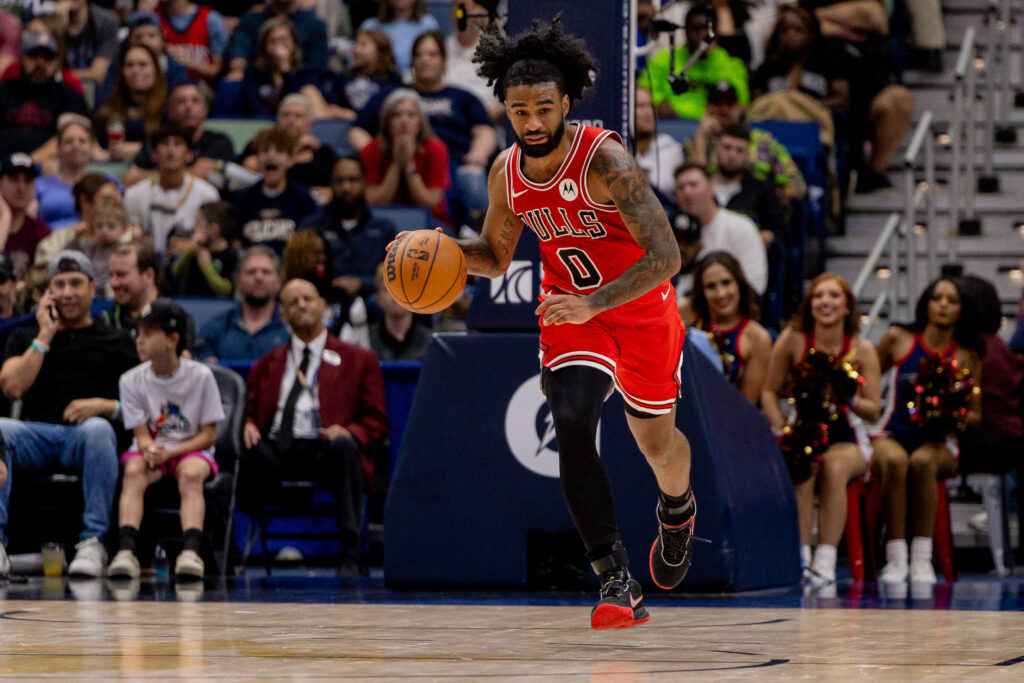
2025-26 Season Statistics: 18.4 PPG, 3.4 RPG, 4.6 APG, 0.6 SPG, 0.0 BPG
Proposed Trade Details
Minnesota Timberwolves Receive: Coby White
Chicago Bulls Receive: Donte DiVincenzo, Rob Dillingham, 2029 first-round pick, 2030 second-round pick, 2032 second-round pick
Coby White has evolved into one of the league’s most reliable combo guards, averaging 18.4 points, 4.6 assists, and 3.4 rebounds this season while carrying a strong offensive load for Chicago. He has become far more comfortable leading an offense, exactly what Minnesota needs.
White’s scoring efficiency and willingness to play both on and off the ball make him far more than just a volume scorer, and at 25 years old, he fits squarely within Minnesota’s competitive timeline. White is an ideal complement to Anthony Edwards.
He can handle primary ball-handling duties in stretches, allowing Edwards to attack from the wing rather than constantly facing loaded defenses. White’s pull-up shooting forces defenders over screens, opening driving lanes for Edwards and rim opportunities for Rudy Gobert.
Unlike Mike Conley at this stage, White can also pressure the rim consistently, something Minnesota’s offense often lacks when Edwards sits. Overall, Chicago would receive future assets and young talent, while Minnesota upgrades its long-term backcourt without touching its frontcourt core.
Not to mention, White wouldn’t need to be a traditional floor general every possession, his versatility allows Chris Finch to stagger ball-handling responsibilities and keep pace high. Among the available options, White offers the best skillset right now.
2. Collin Sexton
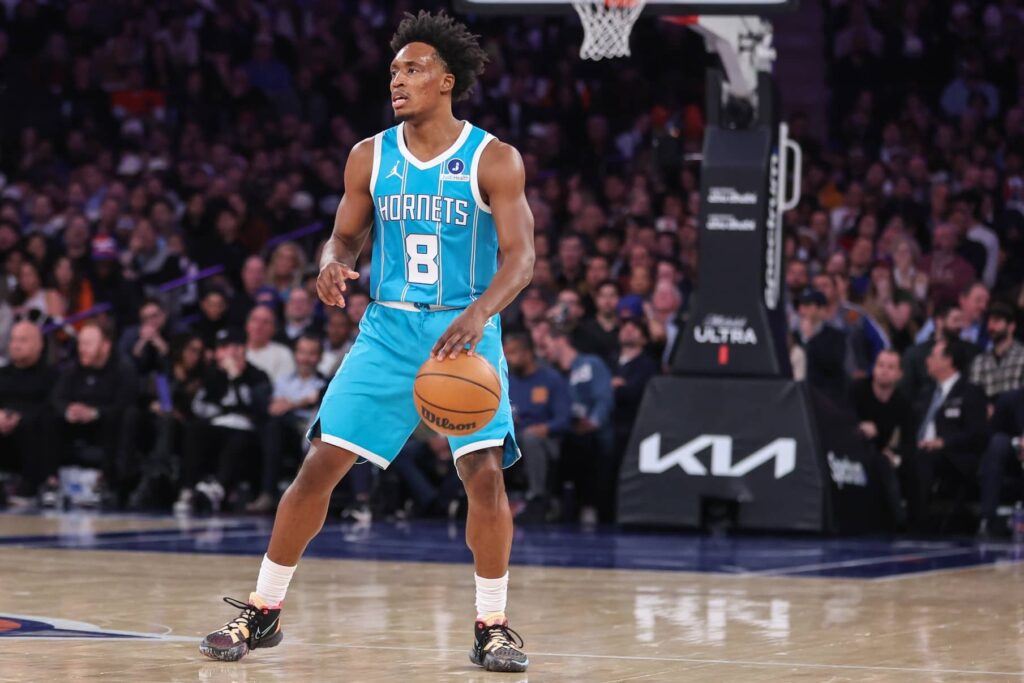
2025-26 Season Statistics: 15.3 PPG, 2.0 RPG, 4.1 APG, 0.8 SPG, 0.2 BPG
Proposed Trade Details
Minnesota Timberwolves Receive: Collin Sexton
Charlotte Hornets Receive: Donte DiVincenzo, 2030 second-round pick, 2032 second-round pick
Collin Sexton’s numbers this season. 15.3 points and 4.1 assists per game, don’t fully capture the pressure he puts on defenses. Sexton remains one of the league’s fastest straight-line drivers and is always in aggressive attack-mode. While he’s often labeled a scorer first, his playmaking has steadily improved, especially when paired with spacing bigs who can finish inside.
In Minnesota, Sexton’s role would be clearly defined: lead the charge and make shots when Anthony Edwards draws extra attention. Sexton thrives in uptempo systems, and the Timberwolves have increasingly leaned into transition scoring behind Edwards’ athleticism.
His downhill style would complement Gobert’s screen setting and Naz Reid’s floor spacing, creating cleaner offensive sequences without overcomplicating the playbook. The appeal of this deal lies in its efficiency.
Sexton is heading to free agency this summer, so the asset cost is relatively light, and Minnesota doesn’t sacrifice future flexibility. While Sexton isn’t a pass-first point guard, his ability to manufacture offense could be invaluable in playoff environments where possessions stagnate. The T’Wolves could always use Sexton’s scoring when Edwards is being hounded on the perimeter.
3. Dennis Schroder
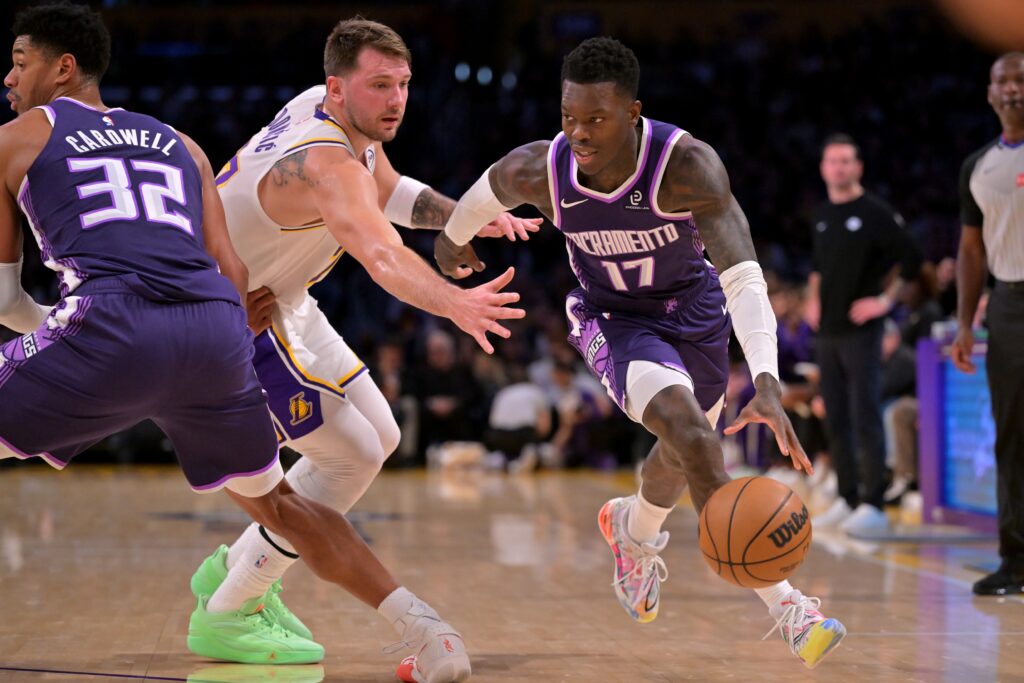
2025-26 Season Statistics: 12.9 PPG, 3.3 RPG, 5.8 APG, 0.8 SPG, 0.2 BPG
Proposed Trade Details
Minnesota Timberwolves Receive: Dennis Schroder
Sacramento Kings Receive: Donte DiVincenzo, 2030 second-round pick, 2032 second-round pick
Dennis Schroder is one of the league’s most dependable veteran point guards, averaging 12.9 points and 5.8 assists while maintaining strong defensive activity at the point of attack. His speed, experience, and ability to manage game flow stand out, and the Timberwolves need that presence more than ever.
For Minnesota, Schroder represents a short-term, win-now solution. He excels at getting teams into sets, manipulating pick-and-roll coverage, and pushing tempo without turning games chaotic.
That skillset would be invaluable alongside Edwards, who often shoulders too much creation responsibility late in games. This move wouldn’t be about long-term potential, it would be about playoff readiness.
The 32-year-old has thrived in high-pressure environments internationally and in the NBA, and his experience navigating postseason defenses would help stabilize Minnesota’s offense in tight games. At a modest trade cost, he’s an upgrade without question.
4. Brandin Podziemski
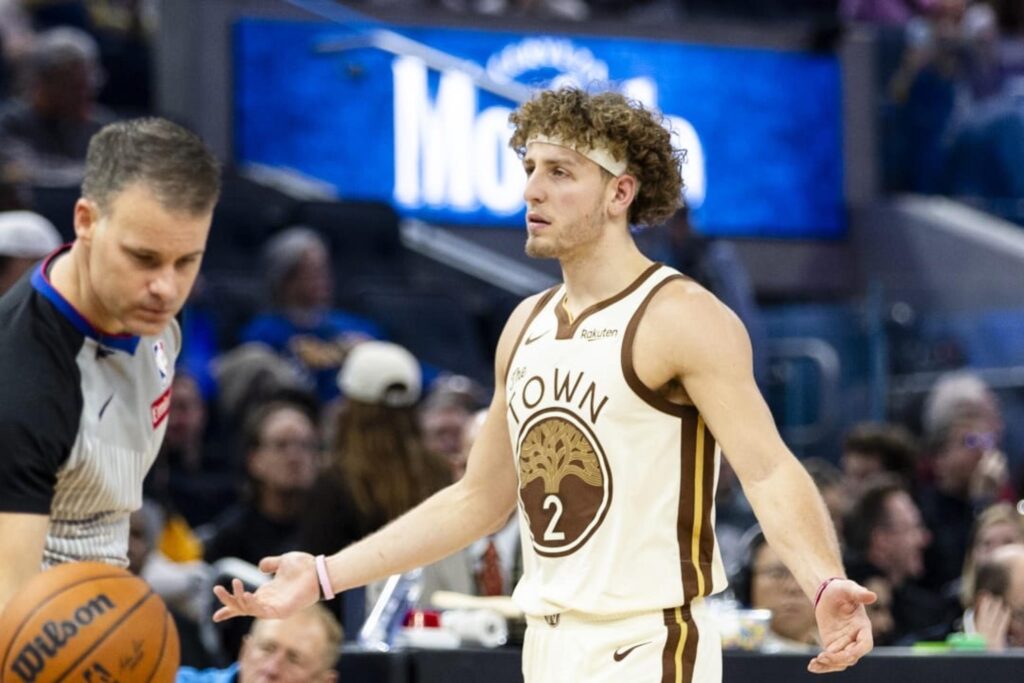
2025-26 Season Statistics: 11.8 PPG, 4.5 RPG, 3.3 APG, 1.0 SPG, 0.2 BPG
Proposed Trade Details
Minnesota Timberwolves Receive: Brandin Podziemski
Golden State Warriors Receive: Donte DiVincenzo, Rob Dillingham, 2030 second-round pick
Brandin Podziemski’s impact goes beyond his 11.8 points, 4.5 rebounds, and 3.3 assists per game. He is one of the league’s best connective guards and his basketball IQ and off-ball movement have made him a favorite in Golden State’s motion-heavy system.
In Minnesota, Podziemski would function as a glue piece who enhances flexibility. He can play next to Edwards and lead the offense while also using his sharpshooting skills. His rebounding and defensive instincts fit seamlessly with the Timberwolves’ identity, and he brings experience from playing in a winning system with Golden State.
This trade would be a forward-looking bet as much as a short-term improvement. Podziemski is still developing, but his growth aligns with Edwards’ prime years. While he may not immediately solve every half-court issue, his versatility and competitive edge would raise Minnesota’s offense considerably.