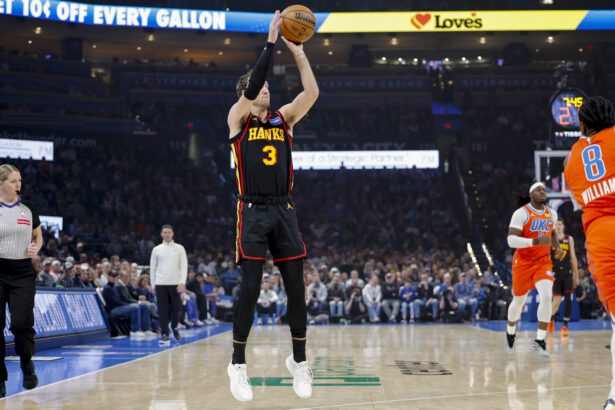
On January 1, 2026, the Washington Wizards were 9-24. The season felt like more of the same: empty offense late in games, a young roster still learning, and a fan base that had heard “rebuild” before. Then, in a little more than a month, the Wizards somehow ended up holding Trae Young and Anthony Davis at the same time, plus a stack of future draft leverage.
- The Big Bradley Beal Move (And The Immediate Chris Paul Flip)
- Rebuilding Jordan Poole’s Value, Then Cashing Out
- Selling High On Kyle Kuzma To Get A Khris Middleton Asset
- Using CJ McCollum’s Expiring Money For Trae Young
- Using Khris Middleton’s Contract To Make A Blockbuster Anthony Davis Deal
- Hitting The Jackpot With Their Draft Picks
That swing did not start this season. It started when Will Dawkins took the job in June 2023, and the front office finally treated the roster like an asset sheet, not a sentimental project.
The first big move was obvious: Bradley Beal had to go. The Beal deal sent him to the Suns and, more importantly, brought back four first-round pick swaps and six second-round picks.
The next swing was Kyle Kuzma. The Wizards moved him in a multi-team deal that landed Khris Middleton as a tradable contract and more draft value. Middleton was never the point. The point was turning a good player on a bad team into pieces that stay useful when the timeline changes.
Fast-forward to early January 2026: the Wizards land Trae Young, a real engine who can bend a defense every possession. Then, on February 4, they tack on Anthony Davis in a deadline blockbuster. In a span where the standings did not change much, the Wizards’ future did. Here’s how it happened.
The Big Bradley Beal Move (And The Immediate Chris Paul Flip)
The first domino was Bradley Beal, and the key detail is that the Wizards were not trading a normal max player. Beal had a no-trade clause in his five-year, $251.0 million contract, which meant he controlled the destination.
That explains why the return looked strange if you only watched the names. When the Wizards agreed to send Beal to the Suns in June 2023, they didn’t get back a blue-chip young star. They got flexibility and leverage:
Chris Paul, Landry Shamet, four first-round pick swaps (2024, 2026, 2028, 2030), and six second-round picks. The swaps were the real prize. Swaps are clean. You don’t need the other team to implode all the way to the bottom. You just need them to be worse than you in the specific year, and you get to slide up.
The other detail that made the math work is the contract reality. Beal’s deal was still massive after the trade, with $207.74 million over the next four seasons, including a $57.0 million-plus player option in 2026-27. That’s why the Wizards’ front office treated the trade like a balance-sheet move: take the long, hard money off the books, turn it into picks and swaps, and then use the incoming veteran contract as a tool.
Beal was still a great player when the Wizards did it, too. In his last season with the Wizards (2022-23), he averaged 23.2 points, 5.4 assists, and 3.9 rebounds. The problem wasn’t that Beal couldn’t play. The problem was the combination of cost, control (the no-trade clause), and team direction.
Now, the second part: the Wizards never planned to keep Chris Paul. He was the bridge contract. Paul had just averaged 13.9 points, 8.9 assists, and 4.3 rebounds the prior season. But the bigger point was his money and the structure. Paul had two years left, and the $30.0 million salary for 2024-25 was non-guaranteed. That meant the Wizards could either (1) flip him immediately, or (2) keep him briefly and still have a clean off-ramp later. Either way, the Wizards had options.
They chose the fastest option. Less than a month after the Beal trade, the Wizards sent Paul to the Warriors and took back Jordan Poole. The full value of that flip is easy to miss if you only say “Paul for Poole.” The Wizards were converting an older guard into a younger scorer who could soak up usage, plus draft value. In that same deal, the Wizards also landed a protected 2030 first-round pick and a 2027 second-round pick.
Poole was expensive, but that was the point. He had signed a four-year, $128.0 million extension with $123.0 million guaranteed. The Wizards weren’t scared of the number because they were not buying “cap space” in July 2023. They were buying a controllable player contract that could either turn into production or turn into a trade chip later.
And on the court, Poole’s profile was clear: volume scoring, on-ball reps, and shot creation. In 2022-23 with the Warriors, he averaged 20.4 points, 4.5 assists, and 2.7 rebounds, with shooting splits of 43.0% from the field, 33.6% from three, and 87.0% from the line. The Wizards didn’t need him to be perfect. They needed him to play, put up numbers, and reshape his value in the market, because that’s how you turn an “ugly” contract into something usable.
Rebuilding Jordan Poole’s Value, Then Cashing Out
The Wizards didn’t trade for Jordan Poole to decide his entire future in one season. They traded for him to control the minutes, control the usage, and see if they could turn a messy league-wide reputation into a cleaner asset. That’s why they didn’t rush to flip him right away. They gave Poole a full year in a featured role, then moved when the market was warmer. It’s not romantic. It’s roster management.
The “value-up” season was 2024-25. Poole averaged 20.5 points, 4.5 assists, and 3.0 rebounds in 68 games, with shooting splits of 43.2% from the field, 37.8% from three, and 88.3% from the line. Those numbers matter because teams don’t trade real contracts for “maybe.” They trade for production they can point to. The Wizards basically rebuilt Poole’s resume: high-usage scorer, durable, can run offense for long stretches, can hit threes at volume. Even if the defense is still a question, that profile has a market.
Then came the cash-out. On June 24, 2025, Shams Charania reported the Wizards and Pelicans had agreed to a deal: the Wizards received CJ McCollum, Kelly Olynyk, and a future second-round pick; the Pelicans received Poole, Saddiq Bey, and the No. 40 pick in the 2025 draft.
Now, the contract logic, because this is the entire point of this trade. Poole’s deal was big money for multiple seasons (four years, $128.0 million). The Wizards turned that longer commitment into shorter, cleaner money. CJ McCollum was on a two-year extension that ran through 2025-26, which means he was an expiring contract the Wizards were poised to move. For 2025-26, his salary slot sat at $30.7 million, which is exactly the type of number that works as “matching money” in a star trade.
So this wasn’t the Wizards picking McCollum because he fit their long-term core. It was the Wizards picking the contract shape: expiring money plus a second-round pick, while moving off multi-year risk. That’s how you set up the next swing. When a star gets uncomfortable, the teams that can “buy low” are the ones holding contracts they can move quickly without destroying their own cap sheet.
Selling High On Kyle Kuzma To Get A Khris Middleton Asset
This one happened at the 2025 trade deadline, and it was the cleanest example of the Wizards’ new logic: sell the “good player on a bad team” at peak usefulness, and take back a contract you can flip later. The deal was completed in early February 2025 as a four-team trade, with Kyle Kuzma going to the Bucks and Khris Middleton landing on the Wizards.
The Bucks received Kuzma, Jericho Sims, and a 2025 second-round pick. The Wizards received Middleton, rookie guard AJ Johnson, and a 2028 first-round pick swap. The Knicks received Delon Wright and cash, and the Spurs received Patrick Baldwin Jr. and cash.
Kuzma’s peak value was about age, role, and contract length. Kuzma had re-signed in the summer of 2023 on a reported four-year, $102.0 million deal, which put him on a mid-size $22.4 million number that contenders can actually fit into their books.
On the court at the time of the trade, Kuzma was averaging 15.2 points, 5.8 rebounds, and 2.5 assists, even with the efficiency taking a hit (42.0% from the field, 28.1% from three). That’s not star production, but it’s the type of forward profile teams chase when they’re trying to win two months later.
Middleton was the real lever. The Wizards didn’t take him because he matched their youth timeline. They took him because the contract shape was useful. Middleton was on a player option for 2025-26 worth $33.3 million, which made him effectively “soon-to-be expiring” from the moment he arrived.
That number is big enough to be a centerpiece in salary matching for a true star. And at the time of the trade, the Wizards were sitting at an NBA-worst 8-41, while the Bucks were a mid-pack East team (27-22 on Feb. 5, 2025), so both sides were acting from totally different incentives.
Using CJ McCollum’s Expiring Money For Trae Young
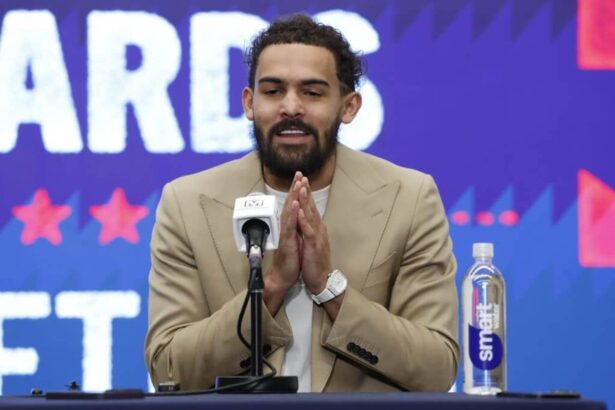
The Trae Young move is where the Wizards turned “cap math” into an actual star. The trade was announced on January 9, 2026: the Wizards received Trae Young, and the Hawks received CJ McCollum and Corey Kispert.
This is why McCollum mattered. He wasn’t just a good veteran. He was a clean money slot the Hawks could accept without taking on long-term risk. McCollum was averaging 18.8 points in 35 games with the Wizards, which made him a credible “keep playing and stay competitive” piece for the Hawks right away.
But the bigger part is the contract calendar: McCollum was sitting on a $30.6 million expiring deal, which made the outgoing salary easy for the Wizards to use in a deal like this without chaining themselves to a multi-year obligation.
The “buy low” part is also about context. Young’s 2025-26 season in Atlanta was basically destined for a trade with his injury bug, and the Hawks were openly better when he didn’t play. The Hawks were 2-8 in games Young played and 16-13 when he didn’t.
Stat-wise, Young had averaged 19.3 points and 8.9 assists in just 10 games, shooting 41.5% from the field and 30.5% from three. That’s not “peak Trae.” That’s “reduced sample, reduced heat, and a front office willing to reset.”
Contract pressure pushed this too. Young had a player option for about $49.0 million in 2026-27 and was not offered an extension last offseason, which is exactly the kind of timeline that forces a decision.
Meanwhile, the Wizards became quite aggressive out of nowhere, since no real contender had shown up in talks for Young. The Wizards basically said: we’ll take the volatile star now, because we already have the losing, the picks, and the runway.
Using Khris Middleton’s Contract To Make A Blockbuster Anthony Davis Deal
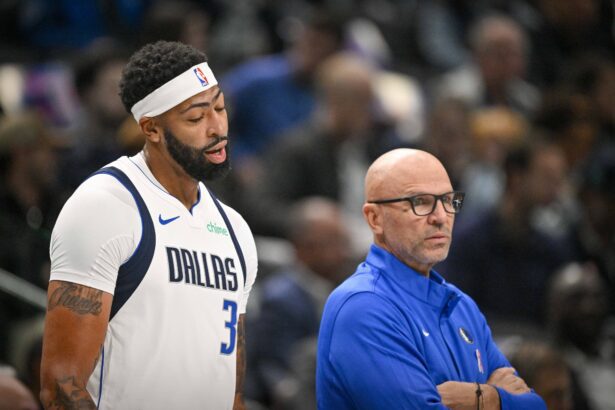
This one hit right on the edge of the trade deadline yesterday: the Wizards acquired Anthony Davis, Jaden Hardy, D’Angelo Russell, and Dante Exum from the Mavericks. The Mavericks received Khris Middleton, AJ Johnson, Malaki Branham, Marvin Bagley III, plus two future first-round picks and three future second-round picks.
The “Middleton slot” is the whole story. Middleton’s $33.3 million number for 2025-26 is the type of expiring salary that lets you absorb a bigger contract without having to gut the rest of the roster. Middleton was never the final destination. He was the shipping container. And once the Wizards had that container, they could take a swing when a team got motivated to move a star contract.
Anthony Davis was exactly that kind of star contract in 2025-26. He’s still Anthony Davis when he’s on the floor, but availability and money change the market. Davis was averaging 20.4 points, 11.1 rebounds, and 2.8 assists over 20 games, and he’d been out since mid-January with a torn ligament in his left hand. The Mavs were 19-31, 12th in the West, basically stuck.
A lot of contenders did the quick mental math and backed off. Not because Davis can’t swing a playoff series, he still can, but because the market was messy. ESPN’s Tim MacMahon reported the Mavericks were actively exploring the trade market, and that the situation was complicated by Davis’ durability history and his desire to land a big extension in the offseason.
That combination usually crushes leverage: teams that are “one piece away” don’t want to pay a star price for a player who might miss months, then immediately needs a massive new deal.
That’s where the Wizards came in. The Mavericks had acquired Davis as the headline return in the Luka Doncic trade, and basically everything around that bet went sideways: injuries, losing, and then a full organizational pivot toward flexibility and building around Cooper Flagg.
MacMahon noted the Mavericks had been shopping Davis since the early November firing of Nico Harrison, a move tied to the fan backlash from the Doncic trade.
The Wizards read the same market everyone else did: interest was cautious, leverage was low, and this was a rare window where a rebuilding team could outbid the “we’ll wait and see” offers without sacrificing its own blue-chip young core. So they put a cleaner, slightly stronger package on the table and got the Mavericks to blink.
Obviously, there’s the paycheck after. Davis’ 2025-26 base salary is $54.1 million, with $58.4 million in 2026-27, and a $62.7 million player option for 2027-28. That’s why this can fairly be called “buy low.” The Wizards didn’t get him for pennies, but they got him in the exact window where other teams are scared of the medical file and the cap hit at the same time.
Hitting The Jackpot With Their Draft Picks
The cleanest part of this whole Wizards rebuild is that the front office didn’t treat the draft like a separate project. They treated it like the spine of everything. While the vets were being flipped for swaps and expiring money, the Wizards kept landing real long-term pieces on rookie-scale contracts. That’s the cheat code: star hunting only works if you’ve got cheap, playable talent behind it.
Start with Alex Sarr in the 2024 draft. The Wizards took Sarr No. 2 overall, and it immediately gave them a defensive anchor and a modern big man they can actually build around. In 2025-26, Sarr has been productive enough to impact now, not just later: 17.4 points, 7.7 rebounds, and 2.8 assists per game, hitting 49.6% from the field with 33.3% from three. That’s huge because it explains why the Wizards could even think about taking on big salaries like Trae Young and Anthony Davis. You’re not doing that if your best young guy is a “project.” Sarr is already producing.
That same 2024 draft also brought Kyshawn George. He was taken 24th overall by the Knicks and moved to the Wizards on draft night. The leap from Year 1 to Year 2 is basically the reason the Wizards can talk themselves into being aggressive. As a rookie in 2024-25, George averaged 8.7 points, 4.2 rebounds, and 2.5 assists. This season (2025-26), he’s up to 15.3 points, 5.6 rebounds, and 5.0 assists per game. That’s starter numbers in a contender, which matters when you’re trying to support a high-usage star guard in Trae Young.
Then came Tre Johnson in the 2025 draft. The Wizards took him No. 6 overall, and he’s already giving them exactly what rebuilding teams beg for: real scoring gravity from a rookie guard without needing everything built perfectly around him. Johnson is at 12.9 points, 2.7 rebounds, and 2.2 assists per game in 2025-26, shooting 44.4% from the field, 39.3% from three, and 89.1% from the line. He is the exact profile you want next to a star creator: quick-trigger shooting, spacing, and easy points.
Put those three together, and the logic snaps into place: the Wizards could flip veterans for swaps and expiring contracts because they were also building a cheap, real core at the same time. That’s why the Wizards didn’t just “make trades.” They built a runway.