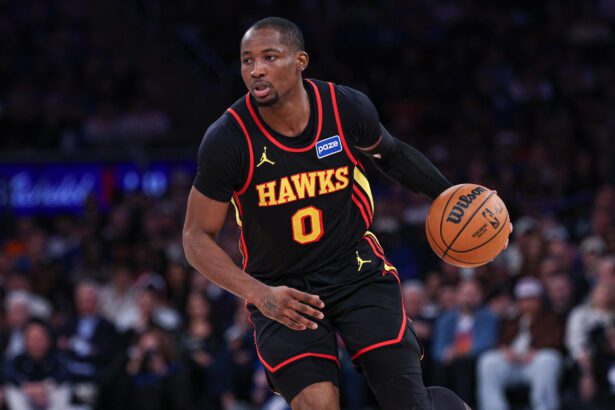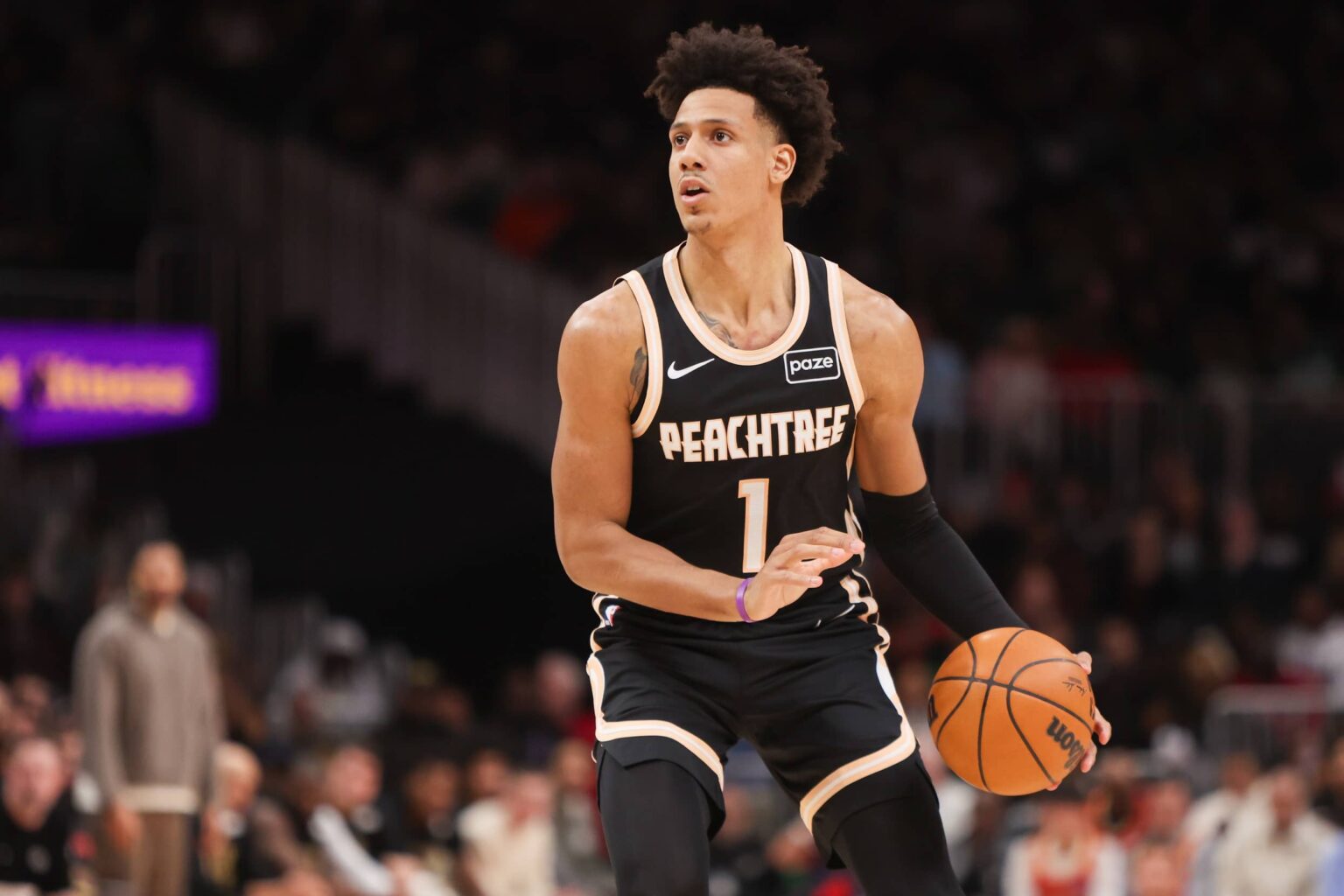
The Atlanta Hawks enter the 2026 NBA Playoffs as one of the more intriguing teams in the Eastern Conference since the Trae Young trade. After finishing 46-36 and securing the No. 6 seed, Atlanta established itself as a top-10 offense (118.5 PPG) with a pace that ranked among the top five of the league. Their first-round matchup against the New York Knicks will be an interesting one to follow.
With CJ McCollum orchestrating the offense and rising star Jalen Johnson emerging as a two-way engine, head coach Quin Snyder has built a roster capable of playing fast, switching defensively, and spacing the floor at multiple positions. The question now shifts from potential to execution; can this rotation hold up across a seven-game series and make a legitimate push toward the Finals?
Starters
CJ McCollum, Nickeil Alexander-Walker, Dyson Daniels, Jalen Johnson, Onyeka Okongwu
Atlanta’s starting unit is expected to revolve around CJ McCollum, Nickeil Alexander-Walker, Dyson Daniels, Jalen Johnson, and Onyeka Okongwu, a lineup that has shot creation, size, and defensive versatility.
McCollum averaged 18.7 PPG, 4.1 APG, and shot 35.7% from deep, serving as the primary initiator in pick-and-roll sets, while Daniels contributed 11.9 PPG, 6.8 RPG, and 2.0 SPG, often taking on the toughest perimeter assignment. Alexander-Walker, another breakout performer, posted a career-high 20.8 PPG on 39.9% from deep, so he is needed to score at a high level.
Johnson has been the All-Star centerpiece, posting 22.5 PPG, 10.3 RPG, and 7.9 APG, thriving in transition and as a secondary playmaker. Anchoring the defense, Okongwu averaged 15.2 PPG, 7.6 RPG, and 1.1 BPG, while holding opponents to 48.0 FG%, making him critical in playoff rim protection.
As a unit, this group can certainly score without sacrificing defensive ability. In terms of the starters’ matchup, the Hawks can match up well with the Knicks on both ends, although they will need McCollum, Alexander-Walker, and Johnson to have big scoring nights to have a chance to advance.
Bench
Gabe Vincent, Buddy Hield, Corey Kispert, Caleb Houstan, Zaccharie Risacher, Jonathan Kuminga, Mouhamed Gueye, Jock Landale*
The Hawks’ bench unit is deep and flexible, led by veteran sharpshooter Buddy Hield and wing scorer Corey Kispert. Hield averaged 5.1 PPG while shooting 41.2 3P% on 2.4 attempts per game, providing instant offense, while Kispert chipped in 9.2 PPG with a 35.4 3-PT%, spacing the floor effectively in second units.
Gabe Vincent adds playoff experience and defensive pressure, contributing 3.9 PPG and 1.6 APG, while Jock Landale (currently injured) supplies frontcourt depth with 9.1 PPG, 4.1 RPG, and strong screen-setting. Zaccharie Risacher has flashed upside with 9.6 PPG and 36.8 3P%, offering length and shooting off the bench. Houstan can chip in some shooting, nailing 52.4% in the regular season.
Jonathan Kuminga adds downhill scoring with 12.2 PPG and 46.3 FG%, giving Atlanta another physical presence at the forward spot. Gueye is an athletic forward, so he can cover for Okongwu as needed.
Collectively, Atlanta’s bench averaged 37.1 PPG, ranking 16th in the league. Their ability to maintain spacing and push tempo keeps the Hawks competitive when starters sit. Is it enough to compare to the Knicks’ bench? Perhaps not quite, but they will need to step up.
Closing Lineup
CJ McCollum, Nickeil Alexander-Walker, Dyson Daniels, Jalen Johnson, Onyeka Okongwu
In high-leverage situations, Quin Snyder is expected to lean on a closing five of CJ McCollum, Nickeil Alexander-Walker, Dyson Daniels, Jalen Johnson, and Onyeka Okongwu. This lineup prioritizes shot-making and spacing, with three elite perimeter threats surrounding Johnson’s playmaking and Okongwu’s interior defense.
This group has the weapons to score well, especially when running on the break. McCollum’s isolation scoring and their athleticism make them difficult to guard late in games.
Defensively, Daniels and Okongwu anchor a unit that can hold opponents to tougher possessions, while forcing turnovers. The versatility of Johnson allows Atlanta to switch across multiple positions, giving them flexibility against elite playoff offenses. Also, don’t be surprised if Buddy Hield or Jonathan Kuminga gets inserted into the closing lineup at times for more shooting or athleticism, respectively.
Road To The NBA Finals
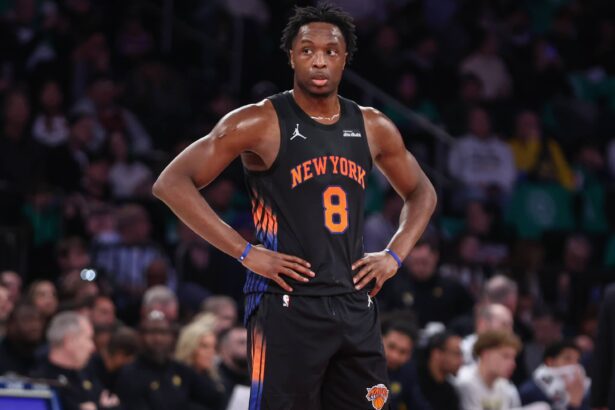
Atlanta’s path to the Finals begins with a first-round matchup against the New York Knicks, a physical and defensive-minded opponent that will test their consistency. The Hawks will need strong production from their backcourt, particularly McCollum and Daniels’ all-around impact, to break down New York’s half-court defense.
If they advance, potential matchups against the Boston Celtics or Philadelphia 76ers will be tough for them. Progressing further, a matchup with the Pistons/Hornets or Cavaliers/Raptors would be another difficult one for them. Atlanta averaged 118.5 PPG during the regular season, but must rebound (43.5 RPG, 18th in NBA) to sustain success. Their defense, also ranked 18th, will be key against high-powered offenses deeper in the bracket.
Ultimately, the Hawks’ ceiling hinges on their versatility and shot-making. With a roster that blends veteran scoring, emerging stars, and defensive length, Atlanta has the statistical profile (6th in PPG, 5th in Pace) of a dangerous postseason team – one capable of exceeding expectations if their rotations tighten and stars deliver in the biggest moments.