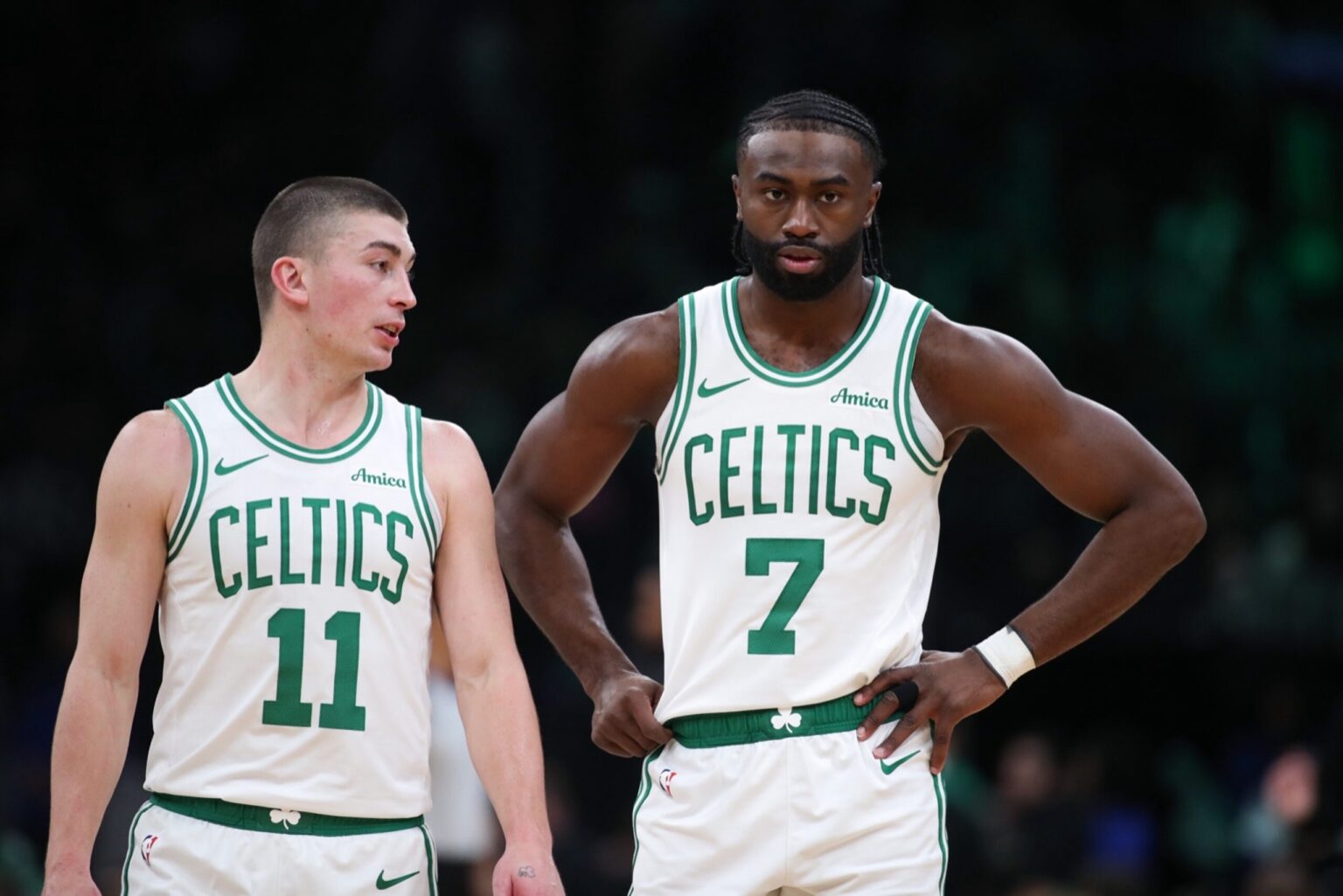
Bill Simmons did not hold back when breaking down how the Boston Celtics let a 3–1 series lead slip against the Philadelphia 76ers, pointing to coaching decisions, tactical shifts, and a clear identity loss as the core reasons behind the collapse.
“I thought Joe Mazzulla was incredible in the regular season. I voted for him for Coach of the Year. I thought he was incredible. I don’t know what they were thinking with this playoffs. I have so many questions. Did Philadelphia 76ers win the series, or did Boston Celtics blow it? I think the answer is both.”
“They went back to their 2024 style without the same players. That’s my biggest issue. They slowed it down. They didn’t play with pace. They gave up on their bench. I was saying it on the podcast at the time. I didn’t understand it. This is my honest feeling.”
“I think Mazzulla treated this series like, let’s figure out what we have for when we play the New York Knicks and the Detroit Pistons and whoever comes out of the West. I’m going to use this as my litmus test series. I’m going to see what I have with Nikola Vucevic. I’m going to shorten my rotations. I’m going to try to do the 2024 thing again. They got away from what succeeded for them.”
“The bench was the superpower of this team. It was guys like Hugo and Walsh coming in and being maniacs for five, six minutes. He punted on it. Then in Game 7, it’s like, Scheierman, can you go back to being awesome like you were the last two months of the season? It’s like, you’ve been yanking me around.”
“Of course he went zero points in Game 7. This guy was a real asset down the stretch. I really think Mazzulla screwed the series up, and I’m always going to think that.”
Simmons started by crediting Joe Mazzulla for an excellent regular season, even calling him his Coach of the Year pick. Yet his tone shifted sharply when discussing the playoffs. According to Simmons, Boston abandoned what made them successful. The Celtics thrived on pace, depth, and energy during the season, but in the series, they slowed the game down and leaned into a style that no longer fit their roster.
One of the biggest issues was the treatment of the bench. During the regular season, role players played a major part in Boston’s success. Baylor Scheierman averaged 19.6 minutes, Jordan Walsh logged 17.8 minutes, Hugo Gonzalez played 14.6 minutes, and Luka Garza contributed 16.2 minutes per game. That depth gave Boston energy and flexibility.
In the playoffs, those numbers dropped sharply. Scheierman fell to 14.1 minutes, Walsh to 12.7, Garza to 8.4, and Gonzalez to just 4.8. Simmons highlighted this as a major misstep. He believed the Celtics’ bench was their ‘superpower,’ yet it was effectively removed from the equation when it mattered most.
That decision showed up clearly in Game 7. Boston suddenly needed production from players who had been taken out of rhythm. Scheierman, who had been impactful late in the season, scored zero points. The inconsistency in role definition hurt the team’s flow and confidence.
Shooting trends further exposed the problem. In the three games Boston won, they shot above 36% from three, including 42.6% in Game 3 and 45.3% in Game 4. In the four losses, they failed to reach even 30%, dropping as low as 26.0% in Game 2 and 26.5% in Game 7. The offense became predictable, stagnant, and heavily reliant on tough shot-making.
Simmons also questioned the overall approach. He suggested Mazzulla treated the series like an experiment, using it to evaluate lineups and rotations for future rounds instead of focusing on closing out Philadelphia. That mindset proved costly as the Sixers adjusted and capitalized.
To be fair, Jayson Tatum’s absence in Game 7 played a role. Still, Boston had opportunities. Jaylen Brown delivered 33 points, yet the team could not execute late. Meanwhile, Joel Embiid and Tyrese Maxey stepped up with dominant performances, combining for 64 points in the deciding game.
Simmons summed it up clearly. This was not just a case of Philadelphia winning. Boston lost control of its identity. They moved away from pace, minimized their depth, and failed to adapt once momentum shifted.
After the loss, Mazzulla addressed becoming the first coach in Celtics history to blow a 3–1 lead, acknowledging the reality of chasing championships and the risk that comes with it. The fallout is already shaping the offseason. Derrick White has emerged as a potential trade candidate as Boston looks to make major roster changes, and reports suggest Aaron Gordon could be among the targets as they try to retool around their core.
For a team with championship expectations, the collapse raises serious questions. The system worked for months. In the biggest moments, they chose to move away from it. That decision defined the series and ultimately ended their season.